
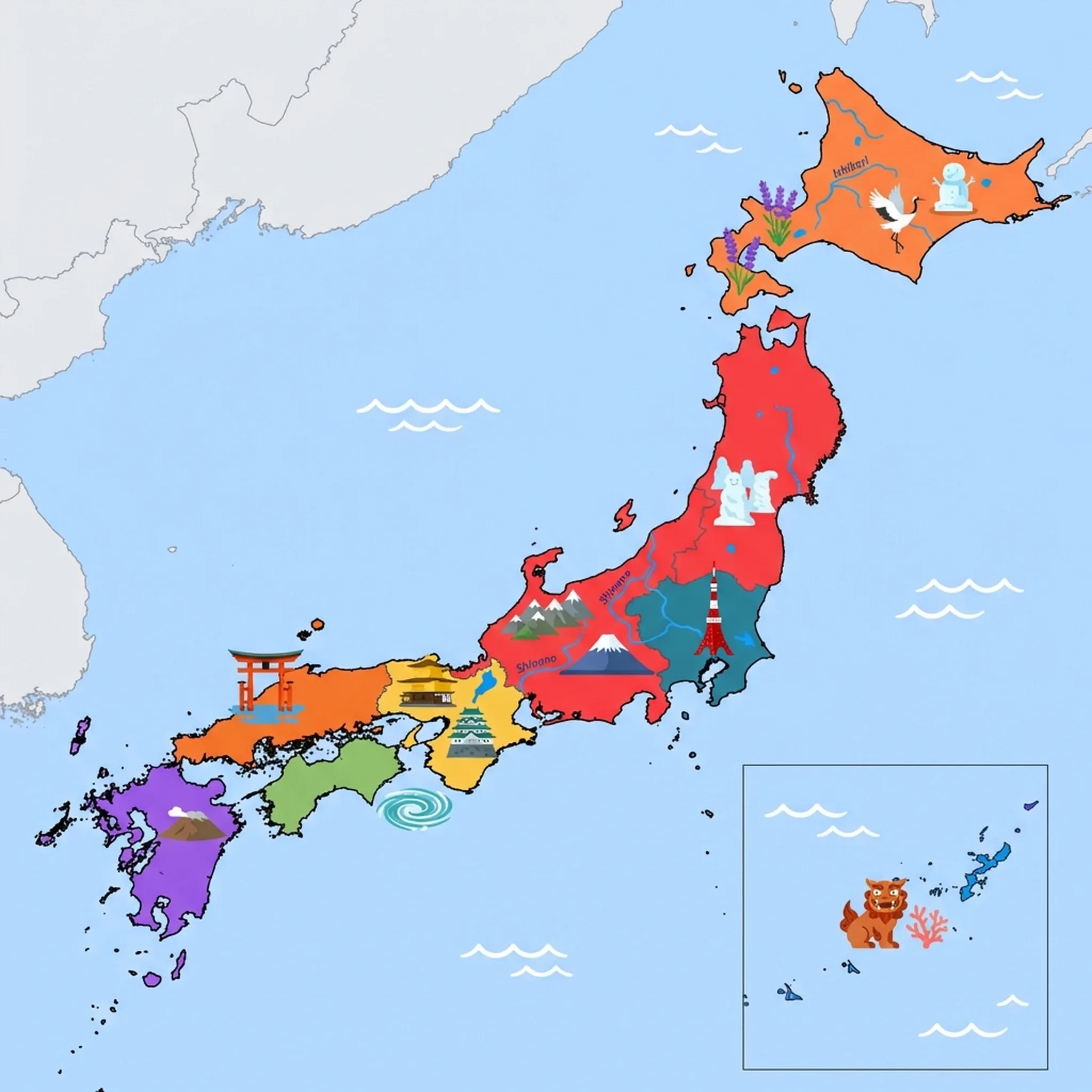
Click a region to explore
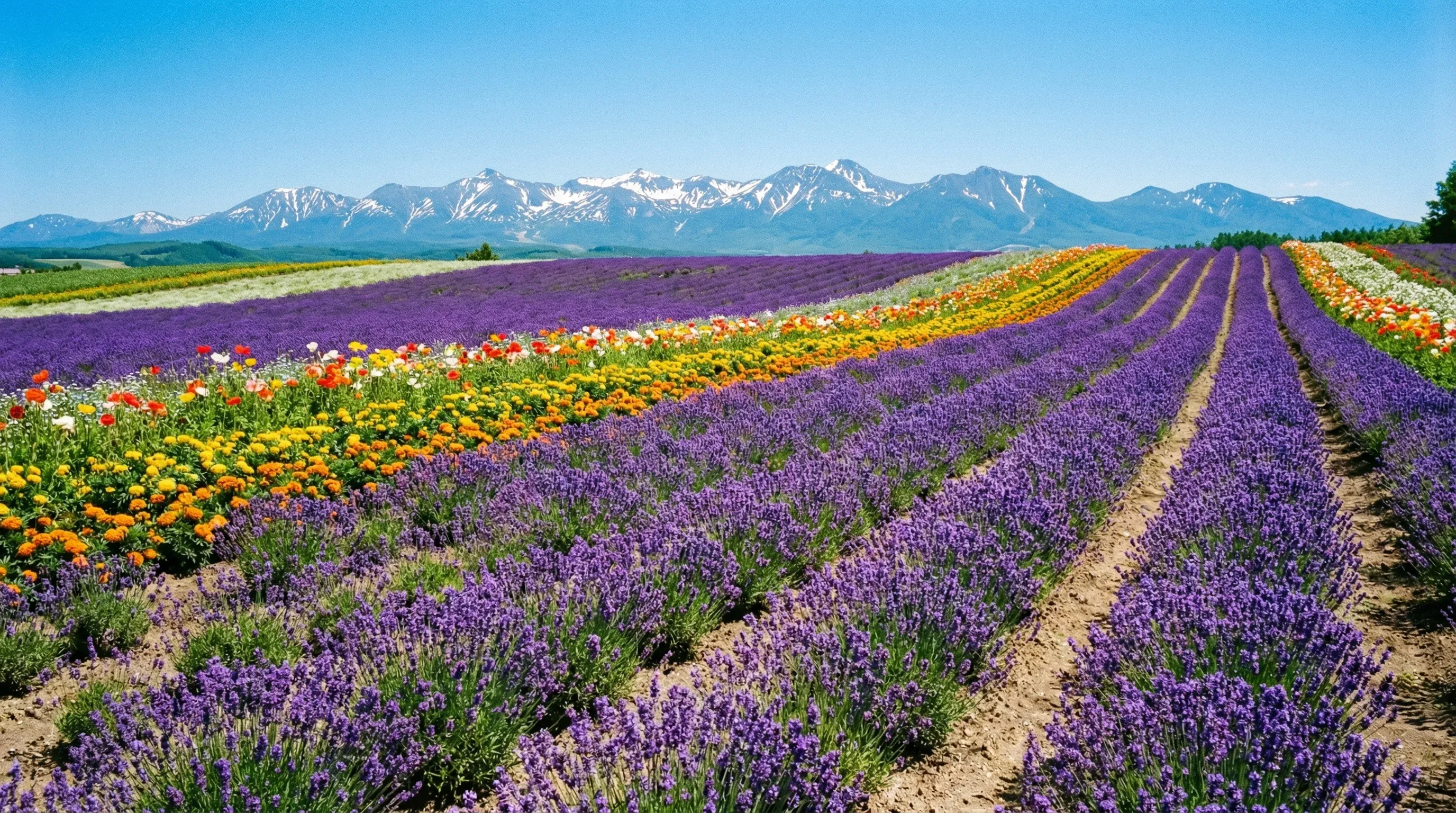
Hokkaido offers a version of Japan that surprises many visitors: vast, open horizons, straight roads, and a pioneer spirit more akin to the American West or Scandinavia than to Tokyo. For families who find the humidity of mainland Japan's summer oppressive, Hokkaido is the perfect escape—it remains cool, dry, and pleasant with fields of lavender and sunflowers blooming under blue skies. In winter, it transforms into one of the world's premier snow destinations. The "Japow" (Japan Powder) attracts skiers globally, but the Sapporo Snow Festival—with its massive ice sculptures—is a magical experience for non-skiers too.
The region is driven by agriculture and nature. The food here is fresh and rich—think corn, potatoes, melon, and the best dairy in Japan. Soft-serve ice cream is practically a dietary staple here, much to the delight of children. Indigenous Ainu culture is also a unique aspect of Hokkaido; families can learn about the original inhabitants of these lands at various museums and cultural centers, adding an educational layer to the trip. Because the island is so large and public transport is more sparse than on the mainland, this is the one region in Japan where renting a car is highly recommended (and often necessary) for families, allowing for the freedom to stop at farm stands and scenic lookouts.
Key Attractions
The Asahiyama Zoo near Asahikawa is arguably the best zoo in Japan for children. It pioneered "behavioral exhibits" where animals are seen in action—penguins take a guided walk through the zoo in winter, and seals swim through vertical glass tubes right in front of visitors' faces. It's engaging and designed specifically to help kids see animals from new angles.
For a summer visit, Farm Tomita in Furano is essential. The rolling hills of purple lavender and rainbow-colored flowers are visually stunning and provide a safe, open space for children to walk. Be sure to try the lavender soft-serve ice cream! Further south, Jigokudani (Hell Valley) in Noboribetsu offers a safe but thrilling look at volcanic activity. Wooden boardwalks lead you right over steaming vents and sulfurous streams—it looks like another planet but is very accessible.
In the capital, Sapporo, the Former Hokkaido Government Office (the "Red Brick Office") offers a glimpse of the island's colonization history in a lovely park setting. For nature on a grand scale, Akan-Mashu National Park features the mysterious Lake Mashu, known for having some of the clearest water in the world, often shrouded in mist.
Practical Advice
Hokkaido is huge. Do not underestimate travel times. A drive from Hakodate (south) to Shiretoko (northeast) can take 8+ hours. Plan to visit just one or two zones (e.g., Sapporo & Furano, or Eastern Hokkaido). Winter driving requires experience with snow and ice; if you aren't confident, stick to trains and ski resort buses.
Food & Drink
Typical meal times: Standard Japanese times apply (Lunch 11:30 am–2:00 pm), but in rural areas, restaurants may close early or have irregular hours.
Typical meal costs: Ramen is cheap at ¥900–1,200 (approx. $6–8 USD / €5.50–7.50 EUR). Seafood bowls (Kaisendon) are pricey but worth it: ¥2,500–4,500 (approx. $16–30 USD / €15–28 EUR).
Dietary requirements: Seafood and dairy are everywhere. Vegetarians can enjoy the amazing local produce (corn, potatoes), but must be vigilant about dashi (fish stock) in soups.
Signature dishes:
- Soup Curry – A spicy, watery curry loaded with chunky vegetables and a chicken leg, originating in Sapporo. You can choose the spice level, making it kid-friendly.
- Genghis Khan (Jingisukan) – Mutton or lamb grilled on a helmet-shaped skillet with vegetables. It's a fun, communal BBQ experience.
- Miso Ramen – Sapporo is the birthplace of miso ramen, featuring a rich, hearty broth often topped with butter and corn—a hit with kids.
- Hokkaido Dairy – Milk, cheese, and especially soft-serve ice cream. You will find unique flavors like melon and lavender.
Why this score?
As Japan's northern frontier, it offers a more rugged experience with vast national parks like Shiretoko and active volcanic landscapes. While still very safe and accessible by car, the weather extremes and presence of wildlife like brown bears provide a higher sense of adventure than central Japan.
Why this score?
Sapporo provides top-tier medical services comparable to Tokyo, and resort areas like Niseko have clinics specifically catering to English-speaking international tourists. Even in remote areas, the medical infrastructure is modern, though travel times to major hospitals can be longer due to the island's scale.
Why this score?
Hokkaido is a major draw for international skiers in winter (Niseko) and East Asian tourists seeking cool summer weather and flower fields. While it lacks the dense historical sites of Honshu, its reputation for nature and food maintains a strong, consistent flow of global visitors.

Accommodation varies wildly by season. Ski resorts in Niseko are luxury/high cost in winter. Summer camping is very popular and cheap. A standard hotel in Sapporo is ¥10,000–18,000 (approx. $65–120 USD / €60–110 EUR). Car rental adds roughly ¥8,000–12,000 (approx. $53–80 USD / €50–75 EUR) per day.

Getting Here & Around
Getting Here
- Airports – New Chitose Airport (CTS) near Sapporo is the main gateway, with frequent flights from Tokyo (1.5 hours).
- Train – The Hokkaido Shinkansen runs from Tokyo to Hakodate (Southern Hokkaido) in about 4 hours. It does not yet reach Sapporo.
- Ferry – Long-distance ferries connect Oarai (near Tokyo) to Tomakomai, popular for those bringing their own cars.
Getting Around
- Car – The best way to see the flower fields and national parks. Roads are wide and easy to drive in summer.
- Train – Connects major cities (Sapporo, Asahikawa, Hakodate) reliably, but infrequent in rural areas.
- Bus – Long-distance buses are a budget alternative to trains for inter-city travel.
Nearby Airports (12 airports)
Asahikawa
AKJAsahikawa
Sapporo
CTSSapporo
Hakodate
HKDHakodate
Kushiro
KUHKushiro
Monbetsu
MBEMonbetsu
Memanbetsu
MMBMemanbetsu
Obihiro
OBOObihiro
Okushiri
OIROkushiri
Sapporo
OKDSapporo
Rishiri
RISRishiri
Nakashibetsu Airport
SHBNakashibetsu
Wakkanai
WKJWakkanai
View full flight map for Japan →
Official Links

Packing List
Essential if you plan to rent a car; strict legal requirement.
In winter, city sidewalks are sheets of ice. You need specialized traction.
Summer sunrise is extremely early (around 3:30-4:00 am) and curtains may be thin.
Nature-heavy areas have horseflies (abu) and gnats in summer.
Public bins are extremely rare; you are expected to carry your rubbish home or to your hotel.
Most public restrooms do not provide paper towels or hand dryers.
You will remove shoes frequently at temples, restaurants, and fitting rooms. Laces are a hassle.
Japan is still cash-heavy and you will accumulate many coins (¥100, ¥500) quickly.
Japanese brands are often weaker than Western ones; bring your preferred brand from home.

Activities & Best Times

Hiking, wildlife, outdoor exploration, ecotourism
Home to multiple world-class national parks including Shiretoko (UNESCO) and Daisetsuzan, offering pristine wilderness and unique wildlife viewing. Peak season aligns with the summer window when mountain trails and coastal nature reserves are fully accessible for hiking and exploration.

Urban tourism, museums, historical sites, architecture
Sapporo and Hakodate offer a unique blend of modern Japanese urbanism, historic Western-influenced architecture, and world-class art installations like Moerenuma Park. Cultural experiences are best in the warmer months for walking, while winter months offer distinctive seasonal charm despite the cold.

Amusement parks, family entertainment venues
Features internationally recognized family attractions like Rusutsu Resort and Shiroi Koibito Park, plus massive indoor/outdoor aquatic centers. Peak operation occurs during summer holidays when all outdoor amusement rides and splash parks are fully functional.

Sport tourism, fitness activities, active recreation
Dedicated outdoor activity hubs in Niseko and Rusutsu offer high-standard adventure courses and mountain-based sports facilities. These centers operate primarily in the non-winter months, with peak conditions during the stable weather of mid-summer.

Beach resorts, marine activities: diving, snorkelling, kite surfing, wind surfing, sailing
The region features rugged, scenic coastal areas like Kamui Cape and Cape Soya rather than traditional warm-water resorts. Suitable for coastal exploration during the brief summer window when temperatures are comfortable for maritime sightseeing.

Learning experiences, scientific sites, historical education
Features several major aquariums and marine parks that provide significant educational value for families. These indoor facilities are year-round attractions but see peak visitation during traditional school holiday periods.

Attractions (39 total)



Public Holidays & Calendar Next 12 months
Public holidays, festivals, cultural celebrations, and seasonal natural phenomena coming up in Hokkaido over the next 12 months.
Loading holidays and events...

Travel Advisory
All six major agencies agree that Japan is a safe destination where standard travel safety awareness is sufficient for visitors.
Safety Topics
Traveller Advice (3 groups)

Ensure you carry your original passport with you at all times as it is a legal requirement for foreign nationals in Japan.

While Japan is very safe, female travelers should remain vigilant in popular nightlife districts due to reported incidents of harassment or assault.

Japan is generally welcoming, but travelers should be aware that same-sex marriage and some related legal protections are not yet fully recognized by national law.
Agency Summaries
Travelers should follow standard safety protocols and stay informed of weather alerts and local guidance from Japanese authorities.
Japan is considered safe for New Zealanders, though awareness of seismic activity and petty crime in entertainment areas is advised.
The overall risk level is low, but travelers should be aware of regional risks such as earthquakes and potential crime in urban nightlife districts.
Japan offers a stable environment similar to Australia, with low crime rates but specific risks related to nightlife scams and natural disasters.
Standard safety measures are sufficient for travel to Japan. Visitors are encouraged to register for security updates and review local medical laws.
Japan is generally safe for travelers, though visitors should remain alert to natural hazards and stay informed via local media.
Information is provided for general guidance only and does not constitute travel, safety, medical, or legal advice. Conditions may change. Users are responsible for independently verifying information before travel.