
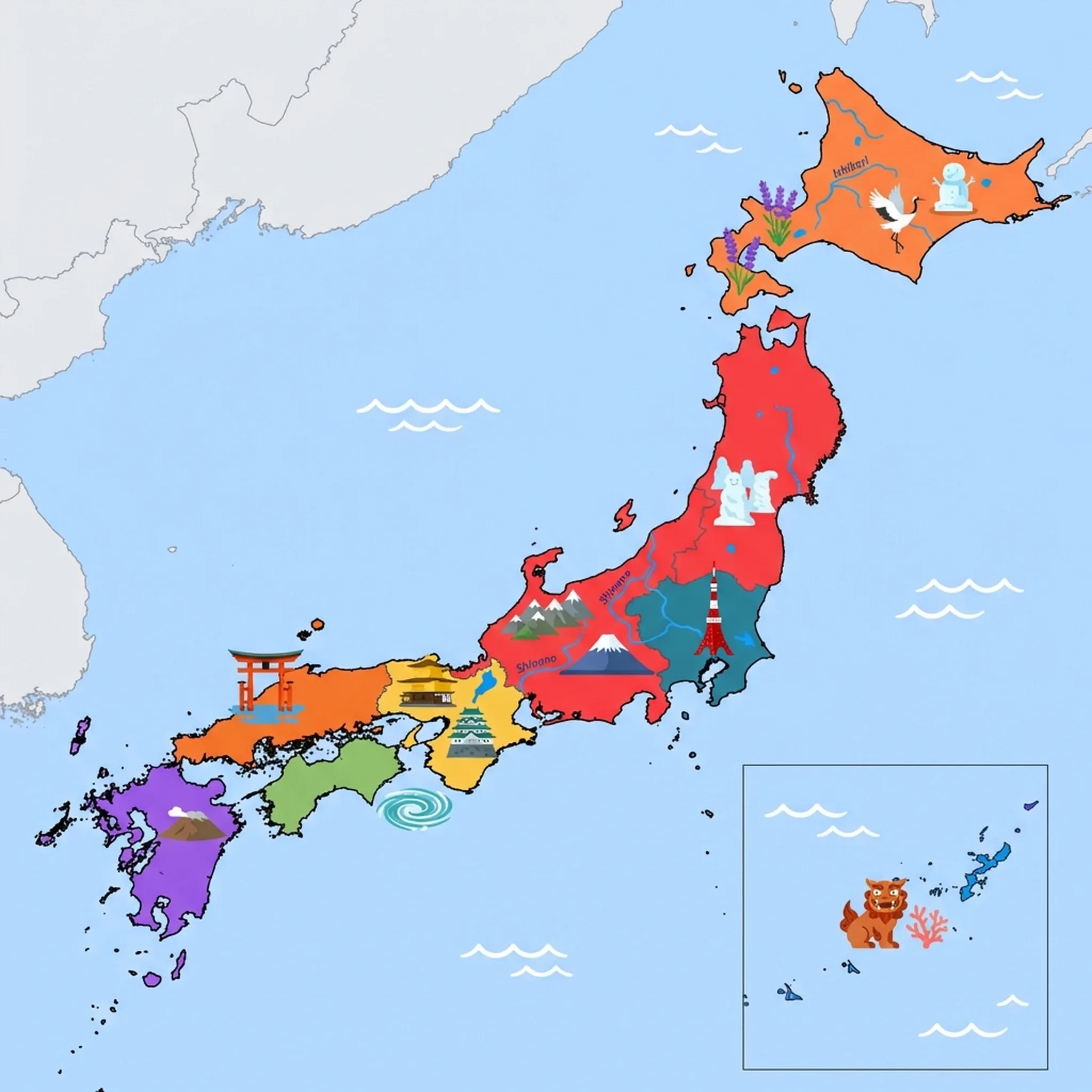
Click a region to explore
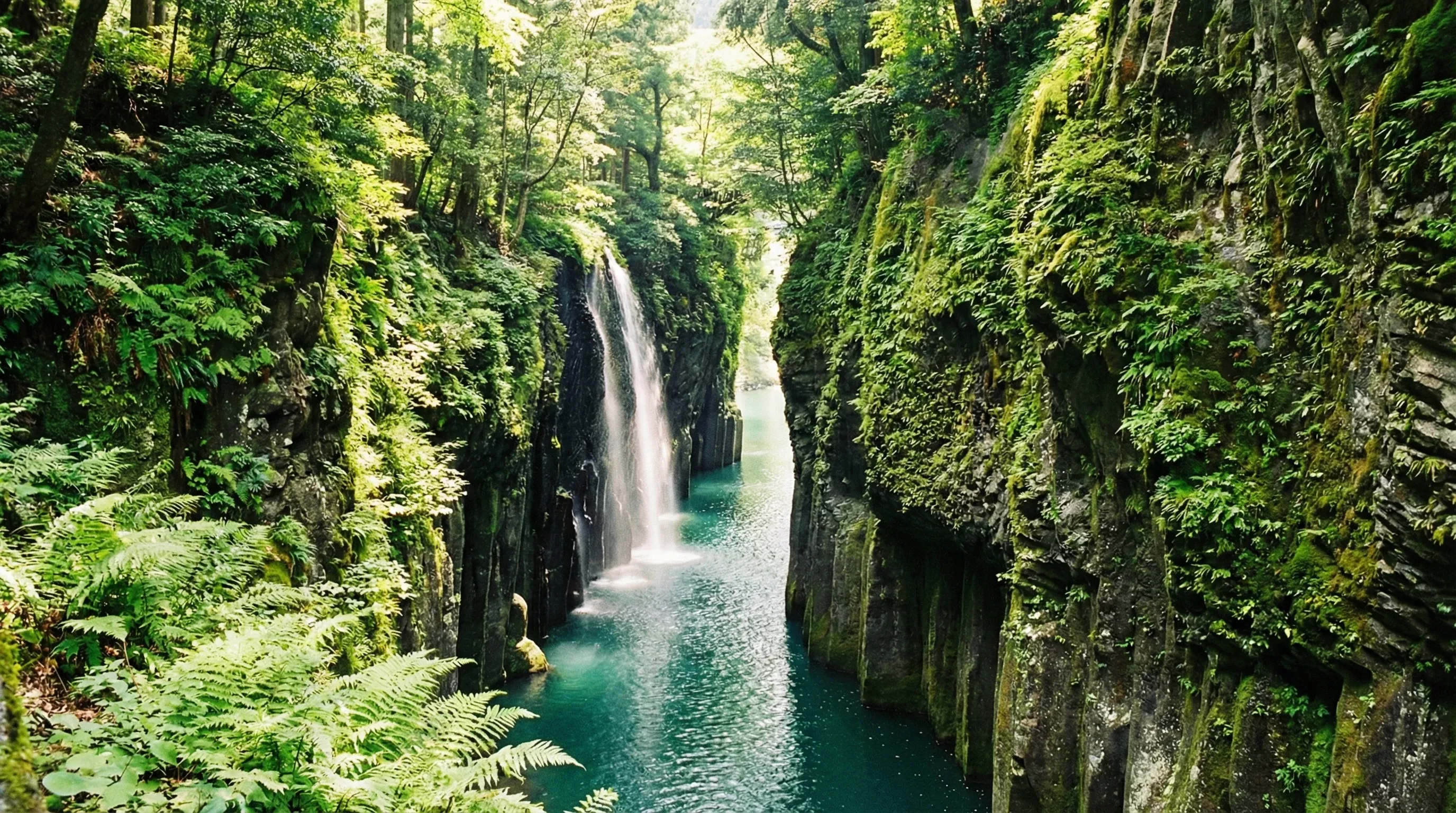
Kyūshū feels closer to Asia than Tokyo in both geography and spirit. As the closest point to Korea and China, it has been a gateway for trade and culture for millennia, resulting in a distinct culinary scene and an open, friendly local character. The island is geologically alive; steam rises from street drains in towns like Beppu, and the landscape is dominated by the massive caldera of Mount Aso and the active peak of Sakurajima in Kagoshima. For kids, this visible volcanic activity is a real-life science lesson that is both thrilling and accessible.
The pace here is slower and the climate warmer than on Honshu. Kyushu is fantastic for road trips, with scenic drives winding through green mountains and along rugged coastlines. It is also famous for its distinct trains—the "Design & Story" trains by JR Kyushu are attractions in themselves, featuring wooden interiors, playful designs, and unparalleled views, making travel fun for children. History here is diverse, ranging from the hidden Christian sites of Nagasaki to the primeval forests of Yakushima (a ferry ride away). It is a region that rewards exploration, offering everything from sand baths where you get buried in hot volcanic sand to high-tech theme parks.
Key Attractions
For a unique day out, Huis Ten Bosch in Nagasaki is a massive recreation of a Dutch town, complete with life-sized canals, windmills, and fields of tulips. It sounds kitsch, but the quality is high, and it includes adventure parks, illumination shows, and dinosaur attractions that kids adore. Nature lovers must visit Mount Aso; when gas levels are low, you can drive or take a bus right up to the crater edge of one of the world's largest volcanic calderas.
Animal encounters are great here too. The African Safari (Kyushu Natural Animal Park) near Beppu lets families ride a "Jungle Bus" to hand-feed lions and bears with tongs—a thrilling experience. For sea life, Marine World Uminonakamichi in Fukuoka is excellent, located in a large seaside park perfect for cycling and picnics. History buffs should visit Dejima in Nagasaki, the fan-shaped island that was once the only place Westerners were allowed to exist in Japan during its isolation period.
Near Fukuoka, Dazaifu Tenmangu Shrine is dedicated to the god of learning. It has a beautiful approach lined with shops selling grilled rice cakes (umegae mochi), and the grounds are lovely for a family stroll.
Practical Advice
Kyushu is connected by the Shinkansen, but the interior (Aso, Kurokawa Onsen) requires buses or a rental car. The "JR Kyushu Rail Pass" is excellent value. Be aware that in summer, Kyushu is susceptible to typhoons and heavy rain; keep itineraries flexible in August/September.
Food & Drink
Typical meal times: Lunch 11:30 am–2:00 pm. Dinner 6:00 pm–9:30 pm. Fukuoka's Yatai (food stalls) open around 6:00 pm and go late.
Typical meal costs: Tonkotsu Ramen is very affordable: ¥700–1,000 (approx. $4.70–6.70 USD / €4.30–6.20 EUR). Izakaya meals: ¥3,000 (approx. $20 USD / €18.50 EUR) per person.
Dietary requirements: Pork is king here (Tonkotsu). Vegetarians will struggle more than in Tokyo. Look for Indian restaurants or specialized vegan cafes in Fukuoka city.
Signature dishes:
- Tonkotsu Ramen – The rich, creamy pork-bone broth ramen famous worldwide (like Ichiran) was born in Fukuoka (Hakata). It's hearty and kids usually love the noodle texture.
- Chicken Nanban – Fried chicken soaked in sweet vinegar and topped with tartare sauce. A Miyazaki specialty that is an absolute favorite with children.
- Champon – A Nagasaki noodle dish loaded with seafood, pork, and vegetables in a creamy but mild broth.
- Castella – A sponge cake introduced by Portuguese merchants in the 16th century, now a Nagasaki specialty. Sweet, moist, and perfect for snacks.
Why this score?
The island features active volcanic terrain and unique steaming landscapes that provide a moderate sense of geological adventure. While the rail network is excellent, exploring the interior often requires driving, and the terrain is generally more dramatic and less urbanized than the central Honshu corridor.
Why this score?
Fukuoka is a significant medical hub with high-quality hospitals that offer some English support. Throughout the island, medical standards are very high, though in more rural hot spring towns, language barriers are more likely during a medical encounter compared to Tokyo or Osaka.
Why this score?
Kyushu is a major destination for regional Asian tourism, particularly from South Korea and China, but it is still gaining traction with Western long-haul travelers. Highlights like the hot springs of Beppu, the history of Nagasaki, and the active volcano of Mt. Aso make it a recognized but secondary international circuit.

Generally cheaper than Honshu. Hotel rooms in Fukuoka are reasonable, and food is famously cheap and high quality. A bowl of world-class ramen is under ¥1,000 (approx. $6.70 USD / €6.20 EUR). Family hotels run ¥12,000–20,000 (approx. $80–135 USD / €75–125 EUR).

Getting Here & Around
Getting Here
- Train – The Kyushu Shinkansen connects Hakata (Fukuoka) to Kagoshima in the south. Hakata is accessible from Osaka/Hiroshima via the Sanyo Shinkansen.
- Airports – Fukuoka Airport (FUK) is incredibly convenient, located just 5-10 minutes by subway from the city center.
- Ferry – High-speed hydrofoils connect Fukuoka to Busan (South Korea).
Getting Around
- Train – The scenic tourist trains (like "Yufuin no Mori") are popular and require advance booking.
- Car – Recommended for exploring the volcanic interior (Aso/Kuju) and coastline.
- Bus – The "SunQ Pass" allows unlimited highway bus travel, which is often cheaper and more direct than trains for cross-island trips.
Nearby Airports (12 airports)
Amakusa Airport
AXJAmakusa
Fukue
FUJFukue
Fukuoka
FUKFukuoka
Saga Airport
HSGSaga
Iki Airport
IKIIki
Kikaiga Shima Airport
KKXKikaiga Shima
Miyazaki Airport
KMIMiyazaki
Kumamoto Airport
KMJKumamoto
Kagoshima Airport
KOJKagoshima
Nagasaki
NGSNagasaki
New Tanegashima Airport
TNENakatane
Tsushima
TSJTsushima
View full flight map for Japan →
Official Links

Packing List
Many 'mixed' hot springs or sand baths require or allow swimwear, unlike traditional onsen.
Essential for the many free foot baths (ashiyu) found in onsen towns.
Kyushu gets sudden, heavy downpours, especially in early summer.
Roads around Mt. Aso and coastlines are very winding.
Public bins are extremely rare; you are expected to carry your rubbish home or to your hotel.
Most public restrooms do not provide paper towels or hand dryers.
You will remove shoes frequently at temples, restaurants, and fitting rooms. Laces are a hassle.
Japan is still cash-heavy and you will accumulate many coins (¥100, ¥500) quickly.
Japanese brands are often weaker than Western ones; bring your preferred brand from home.

Activities & Best Times

Hiking, wildlife, outdoor exploration, ecotourism
Home to the UNESCO-listed ancient forests of Yakushima and the massive volcanic landscapes of Mt. Aso, providing world-class hiking. Peak months offer the most comfortable temperatures for exploration, while summer remains popular despite high humidity.

Urban tourism, museums, historical sites, architecture
Features significant historical sites like Kumamoto Castle and the unique international heritage of Nagasaki alongside world-class museums in Fukuoka. Spring and autumn offer the most pleasant conditions for exploring urban landmarks and heritage districts.

Amusement parks, family entertainment venues
Huis Ten Bosch is a globally unique destination park known for its scale and high-quality seasonal lighting events. Peak times align with spring flower festivals and winter illuminations, which are primary draws for international families.

Learning experiences, scientific sites, historical education
Offers top-tier marine science engagement at major aquariums like Marine World Uminonakamichi and Io-World Kagoshima. These facilities are high-quality all-weather options, with peak interest during international and domestic school holiday windows.

Sport tourism, fitness activities, active recreation
Includes purpose-built outdoor activity centers like Aso Farm Land and Forest Adventure Itoshima which cater to active families. The temperate shoulder and peak months avoid the excessive summer heat and June rains, ensuring better safety and enjoyment.

Beach resorts, marine activities: diving, snorkelling, kite surfing, wind surfing, sailing
Aoshima 'Devil's Washboard' is a geological curiosity, not a beach resort. Urban beaches in Fukuoka are not internationally competitive.

Attractions (32 total)



Public Holidays & Calendar Next 12 months
Public holidays, festivals, cultural celebrations, and seasonal natural phenomena coming up in Kyūshū over the next 12 months.
Loading holidays and events...

Travel Advisory
All six major agencies agree that Japan is a safe destination where standard travel safety awareness is sufficient for visitors.
Safety Topics
Traveller Advice (3 groups)

Ensure you carry your original passport with you at all times as it is a legal requirement for foreign nationals in Japan.

While Japan is very safe, female travelers should remain vigilant in popular nightlife districts due to reported incidents of harassment or assault.

Japan is generally welcoming, but travelers should be aware that same-sex marriage and some related legal protections are not yet fully recognized by national law.
Agency Summaries
Travelers should follow standard safety protocols and stay informed of weather alerts and local guidance from Japanese authorities.
Japan is considered safe for New Zealanders, though awareness of seismic activity and petty crime in entertainment areas is advised.
The overall risk level is low, but travelers should be aware of regional risks such as earthquakes and potential crime in urban nightlife districts.
Japan offers a stable environment similar to Australia, with low crime rates but specific risks related to nightlife scams and natural disasters.
Standard safety measures are sufficient for travel to Japan. Visitors are encouraged to register for security updates and review local medical laws.
Japan is generally safe for travelers, though visitors should remain alert to natural hazards and stay informed via local media.
Information is provided for general guidance only and does not constitute travel, safety, medical, or legal advice. Conditions may change. Users are responsible for independently verifying information before travel.