
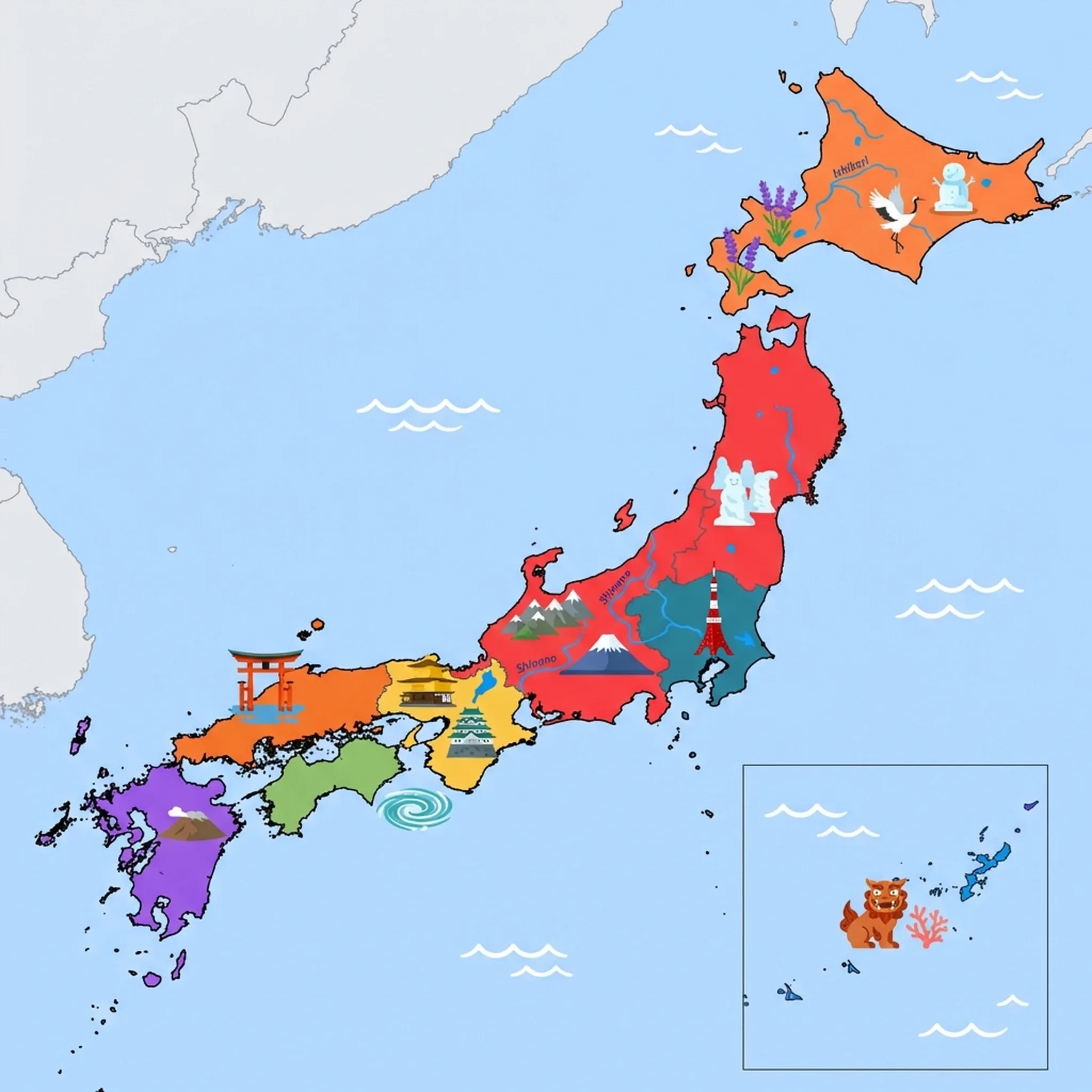
Click a region to explore
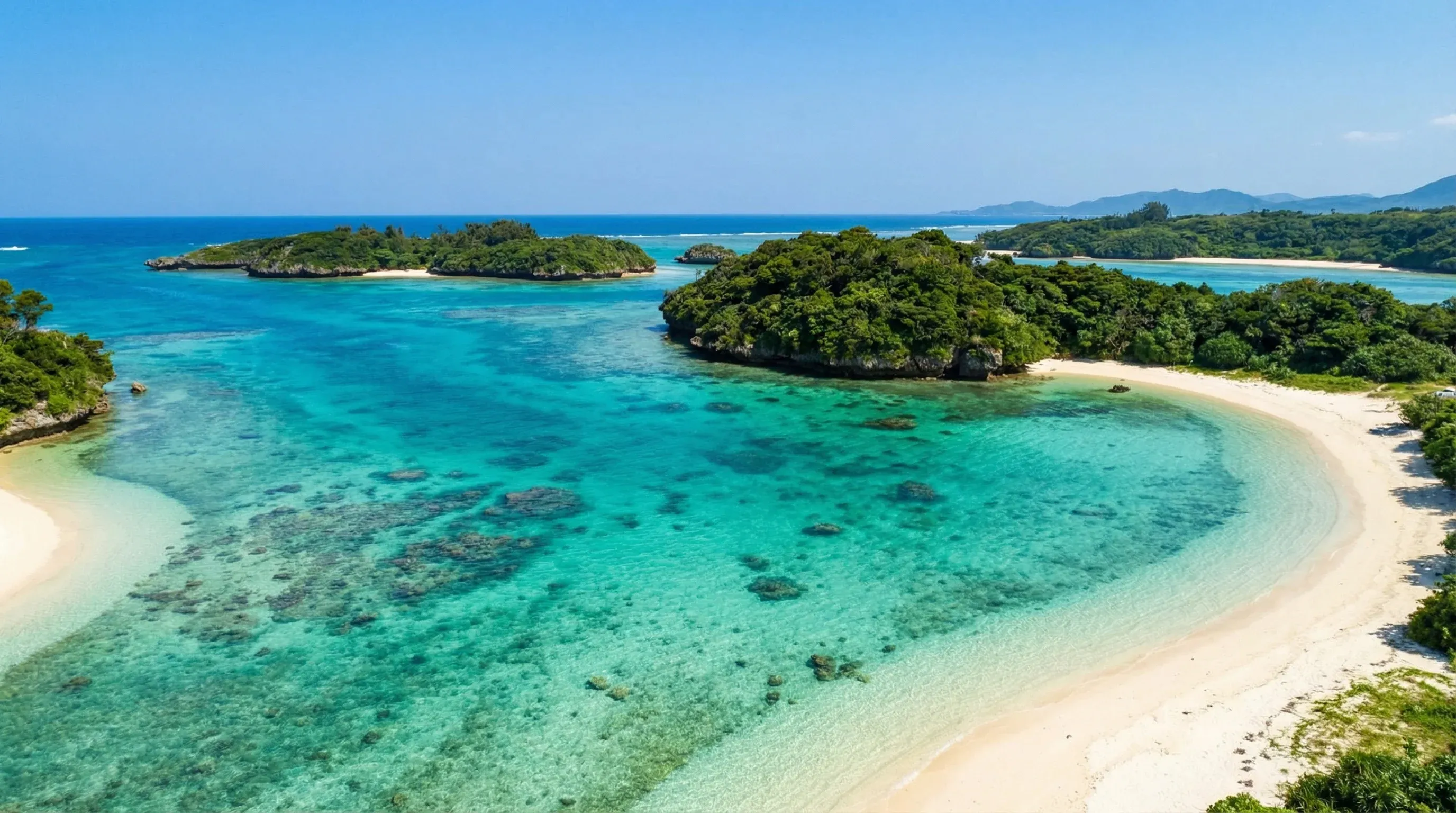
Okinawa is technically Japan, but it feels like a different country. Once the independent Ryūkyū Kingdom, it has its own language, architecture, music, and food. For families, this is the premier beach destination in East Asia. The main island offers a mix of American influence (due to military bases) and local culture, with large resorts, shopping malls, and arguably the best aquarium in the country. Travel further south to the Yaeyama islands like Ishigaki, and the vibe becomes rural and tropical—sugar cane fields, buffalo carts, and pristine coral reefs.
The ocean here is the main playground. Snorkeling is accessible even for young children in shallow, protected lagoons. The water is warm year-round, though the best beach weather is April to October. Culturally, it's very laid back. "Okinawa Time" is a real concept; things happen when they happen. This relaxed attitude is great for families who want to escape the rigid punctuality of mainland Japan. The history here includes the tragical Battle of Okinawa, and the Peace Memorial Park provides a solemn educational aspect, but the overwhelming feeling of the islands today is one of peace and celebration of life (and longevity—Okinawa is a famous "Blue Zone").
Key Attractions
The Okinawa Churaumi Aquarium is the region's superstar. Its main tank is one of the largest in the world, holding massive whale sharks and manta rays. It's mesmerizing for kids and adults alike. Nearby, the Nakijin Castle Ruins offer a chance to run around ancient stone walls with sweeping ocean views—a World Heritage site that feels like an adventure playground.
On Ishigaki Island, Kabira Bay is famous for its emerald waters. Swimming is prohibited due to currents, but glass-bottom boats take you out to see vibrant coral and fish without getting wet. For a cultural deep dive, Okinawa World on the main island is a theme park built over a massive natural cave. It features traditional Eisa drumming shows and workshops where kids can try glass blowing or pottery. To see the royal history, visit Shikina-en Garden, a villa with a unique blend of Japanese and Chinese architectural styles.
Practical Advice
You need a car. Outside of Naha city (which has a monorail), public transport is sparse and slow. Renting a car gives you freedom to find hidden beaches. Sun is very strong here; rash guards (swim shirts) are essential for kids.
Food & Drink
Typical meal times: Lunch 11:30 am–2:30 pm. Dinner 6:00 pm–10:00 pm. Izakayas are lively and often feature live sanshin music.
Typical meal costs: Soba noodles: ¥700–900 (approx. $4.70–6 USD / €4.30–5.60 EUR). Set meals: ¥1,000–1,500 (approx. $6.70–10 USD / €6.20–9.30 EUR).
Dietary requirements: Pork is in almost everything (broth, toppings). Tofu is famous (Jimami tofu is made from peanuts—warning for allergies!).
Signature dishes:
- Okinawa Soba – Wheat noodles (not buckwheat) in a pork broth, topped with stewed pork belly (Rafute). It's the soul food of the islands.
- Goya Champuru – A stir-fry of bitter melon (goya), tofu, egg, and spam or pork. The bitterness is an acquired taste, but it's super healthy.
- Taco Rice – Tex-Mex taco ingredients (ground beef, cheese, lettuce, salsa) served over Japanese white rice. A kid favorite born from the American military presence.
- Blue Seal Ice Cream – The local ice cream brand, featuring flavors like Beni-imo (purple sweet potato) and Chinsuko (salt cookie).
Why this score?
The main island is heavily developed and features a significant US military presence, leading to a mix of resort living and suburban infrastructure. While activities like jungle trekking on Iriomote or scuba diving offer some adventure, the majority of family tourism is centered around accessible beaches and resorts.
Why this score?
The presence of the US military means that many medical professionals in Okinawa have experience with foreigners and speak English. Naha has several large, modern hospitals, though travelers on smaller outlying islands like Ishigaki or Miyako will find much more limited emergency facilities.
Why this score?
Okinawa is a premier beach and diving destination for domestic and East Asian travelers, though it remains a niche choice for those traveling from outside the region. Its unique Ryukyuan culture and world-class aquarium at Churaumi maintain a steady flow of international interest.

Resort hotels in summer can be very expensive (luxury level), often exceeding ¥50,000 (approx. $335 USD / €310 EUR) per night. Off-season (winter) is much cheaper. Food is generally cheap. Car rental is a mandatory cost to factor in, usually ¥6,000–10,000 (approx. $40–67 USD / €37–62 EUR) per day.

Getting Here & Around
Getting Here
- Airports – Naha Airport (OKA) on the main island is the hub. Ishigaki (ISG) and Miyako (MMY) have direct flights from Tokyo and Osaka.
- Ferry – Inter-island ferries connect the remote islands (e.g., Ishigaki to Taketomi). There are no ferries from mainland Japan to Okinawa for passengers.
Getting Around
- Car – Essential for the main island and larger remote islands like Ishigaki.
- Monorail – The "Yui Rail" serves Naha city and the airport, but does not go to the resorts or aquarium.
- Ferry – Fast boats connecting islands are prone to cancellation during rough seas/typhoons.
Nearby Airports (5 airports)
Ishigaki
ISGIshigaki
Miyako Jima
MMYMiyakojima
Okinawa
OKAOkinawa
Shimojishima Airport
SHIMiyakojima
Kumejima
UEOKume-jima
View full flight map for Japan →
Official Links

Packing List
The subtropical sun is far stronger than on the mainland; sunscreen washes off.
Many beaches have coral fragments or stonefish; bare feet can be dangerous.
Absolutely essential for renting a car, which you will likely need.
Protect the coral environment while protecting your skin.
Public bins are extremely rare; you are expected to carry your rubbish home or to your hotel.
Most public restrooms do not provide paper towels or hand dryers.
You will remove shoes frequently at temples, restaurants, and fitting rooms. Laces are a hassle.
Japan is still cash-heavy and you will accumulate many coins (¥100, ¥500) quickly.
Japanese brands are often weaker than Western ones; bring your preferred brand from home.

Activities & Best Times

Hiking, wildlife, outdoor exploration, ecotourism
The region features unique subtropical biodiversity including mangrove forests and the Yanbaru wilderness, providing a distinct alternative to mainland Japan's forests. Spring and autumn offer the most pleasant conditions for outdoor exploration, avoiding the extreme humidity and heavy rains of mid-summer.

Beach resorts, marine activities: diving, snorkelling, kite surfing, wind surfing, sailing
Upgrade to very_good - Okinawa has genuine subtropical credentials with crystal-clear waters, significant reef systems, and established beach resort infrastructure. Competitive with regional Southeast Asian destinations.

Urban tourism, museums, historical sites, architecture
Centered on the unique Ryukyu Kingdom heritage, the region boasts UNESCO sites like Shuri Castle and traditional gardens that reflect maritime trading history. These sites are best explored in the milder months to avoid the oppressive tropical heat and humidity of the summer season.

Learning experiences, scientific sites, historical education
The world-class Churaumi Aquarium is the standout educational facility, offering deep insights into the Kuroshio Current's marine life. As a primarily indoor destination, it is an excellent year-round option for families, peaking during the major Japanese school holiday periods.

Sport tourism, fitness activities, active recreation
The islands offer specialized infrastructure for adventure-based sports like forest trekking and zip-lining within established outdoor activity centers. Activity is most enjoyable during the transitional seasons of spring and autumn when temperatures are milder and rain is less frequent.

Amusement parks, family entertainment venues
While mostly domestic in scale, the region's theme parks and large-scale aquatic parks provide reliable family entertainment tied to local nature. Summer holidays are the primary peak, although the tropical climate makes spring and winter breaks more comfortable for park-goers.

Attractions (22 total)



Public Holidays & Calendar Next 12 months
Public holidays, festivals, cultural celebrations, and seasonal natural phenomena coming up in Okinawa & Ryūkyū Islands over the next 12 months.
Loading holidays and events...

Travel Advisory
All six major agencies agree that Japan is a safe destination where standard travel safety awareness is sufficient for visitors.
Safety Topics
Traveller Advice (3 groups)

Ensure you carry your original passport with you at all times as it is a legal requirement for foreign nationals in Japan.

While Japan is very safe, female travelers should remain vigilant in popular nightlife districts due to reported incidents of harassment or assault.

Japan is generally welcoming, but travelers should be aware that same-sex marriage and some related legal protections are not yet fully recognized by national law.
Agency Summaries
Travelers should follow standard safety protocols and stay informed of weather alerts and local guidance from Japanese authorities.
Japan is considered safe for New Zealanders, though awareness of seismic activity and petty crime in entertainment areas is advised.
The overall risk level is low, but travelers should be aware of regional risks such as earthquakes and potential crime in urban nightlife districts.
Japan offers a stable environment similar to Australia, with low crime rates but specific risks related to nightlife scams and natural disasters.
Standard safety measures are sufficient for travel to Japan. Visitors are encouraged to register for security updates and review local medical laws.
Japan is generally safe for travelers, though visitors should remain alert to natural hazards and stay informed via local media.
Information is provided for general guidance only and does not constitute travel, safety, medical, or legal advice. Conditions may change. Users are responsible for independently verifying information before travel.