
Click a region to explore
Shikoku is often the forgotten island of Japan tourism, which is exactly why it is perfect for families seeking authenticity and nature without the crowds. The island is mountainous and green, fringed by the calm Inland Sea on the north and the wild Pacific Ocean on the south. It is famous for the "88 Temple Pilgrimage," and while you likely won't do the whole walk with kids, the sight of white-clad pilgrims (henro) walking the roads adds a unique spiritual atmosphere to the region.
For active families, Shikoku is a playground. The Yoshino River offers some of the best rafting in Japan (with family-friendly gentle courses). The Shimanami Kaido—a series of bridges connecting Shikoku to Hiroshima prefecture—is a world-class cycling route where you can rent bikes and ride over the sea. The region is also the "Udon Kingdom" of Japan (specifically Kagawa prefecture), where you can learn to make noodles by dancing on the dough—a hilarious and fun activity for children. The vibe here is rustic and welcoming; it feels like the Japan of 30 years ago.
Key Attractions
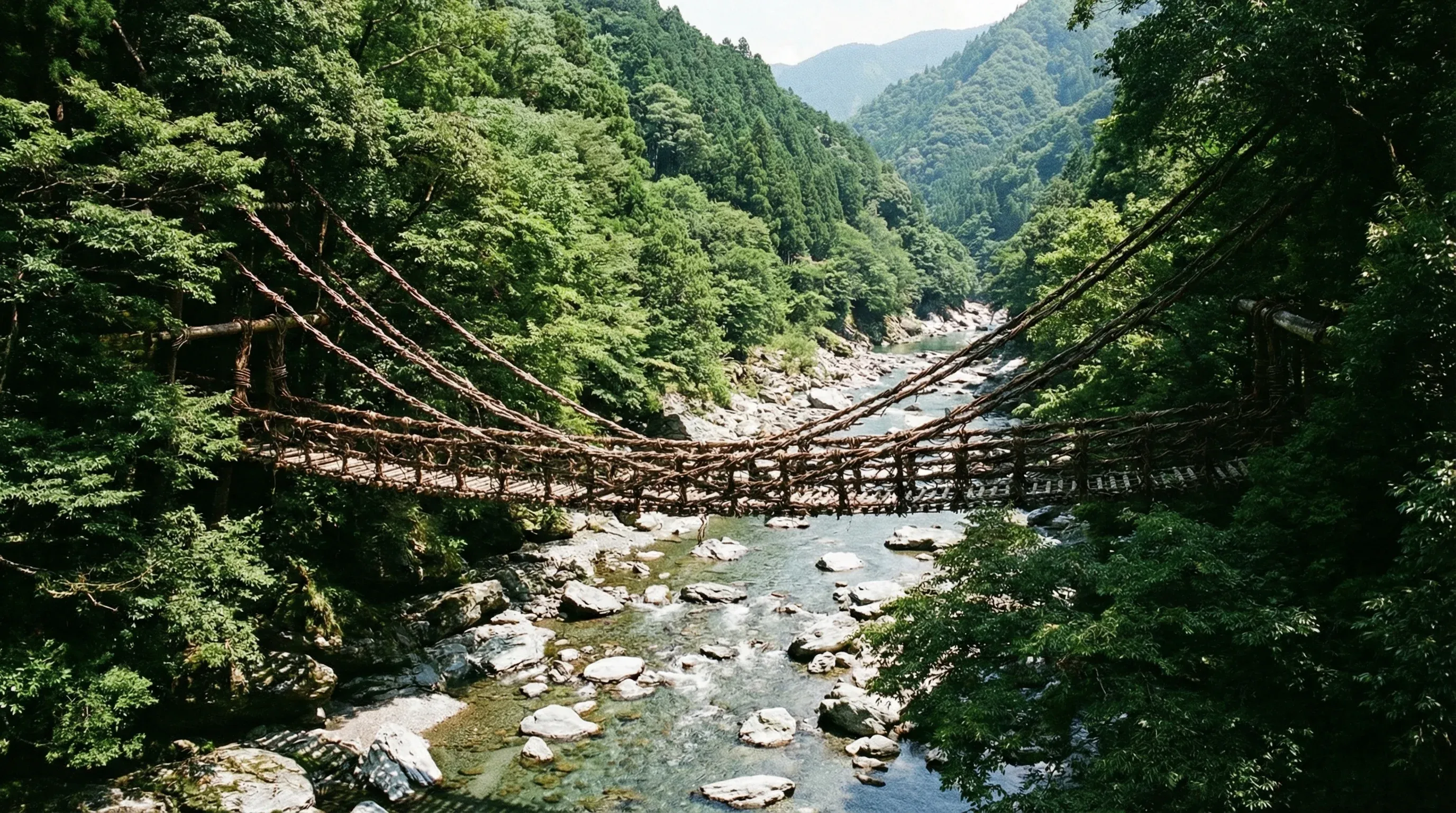
Nature is the main draw. The Naruto Whirlpools are a natural phenomenon where tidal currents create massive whirlpools up to 20 meters in diameter. You can view them from a boat or the "Uzu-no-Michi" walkway built under the bridge—glass floor panels allow you to look straight down into the swirling water. In the interior, the Oboke Gorge features emerald waters and boat tours, as well as the thrilling "Iya Kazurabashi" (vine bridges) that sway as you cross them.
Culture buffs must visit Dogo Onsen Honkan in Matsuyama, one of Japan's oldest hot springs. Its labyrinthine wooden corridors and traditional atmosphere are said to have inspired the bathhouse in Studio Ghibli's Spirited Away. Nearby, Matsuyama Castle is one of the few original castles left in Japan; you can take a chairlift up to it, which is half the fun for kids. In Kochi, the Kochi Prefectural Makino Botanical Garden is a lush, sprawling hillside garden dedicated to the father of Japanese botany, offering a peaceful retreat.
Practical Advice
Shikoku has no Shinkansen. Travel is by limited express trains (like the "Shiokaze") or car. Renting a car is highly recommended to reach the Iya Valley or coastal surf spots in Kochi. The "All Shikoku Rail Pass" is great value if you stick to the train network.
Food & Drink
Typical meal times: Lunch 11:00 am–2:00 pm (Udon places often close when noodles run out!). Dinner 6:00 pm–9:00 pm.
Typical meal costs: Udon is incredibly cheap: ¥300–600 (approx. $2–4 USD / €1.80–3.70 EUR) per bowl. Izakaya dinner: ¥3,000–5,000 (approx. $20–33 USD / €18.50–31 EUR).
Dietary requirements: Udon broth is dashi (fish) based. Bonito (fish) is the main crop of Kochi. Vegetarians need to be very specific.
Signature dishes:
- Sanuki Udon – Thick, chewy wheat noodles from Kagawa. You often serve yourself from a tap of broth and pick your own tempura toppings.
- Katsuo no Tataki – Bonito (skipjack tuna) seared over a straw fire, sliced thick, and served with garlic and ponzu. Iconic to Kochi.
- Sudachi/Yuzu – Shikoku is famous for citrus. You will find yuzu-flavored drinks, ice creams, and condiments everywhere.
- Tai-meshi – Sea bream over rice, a specialty of Ehime, served either cooked with the rice or as raw sashimi with egg yolk.
Why this score?
The interior of Shikoku, particularly the Iya Valley, is one of the more rugged and remote-feeling areas in Japan. Narrow mountain roads, historic vine bridges, and river rafting offer a genuine sense of off-the-beaten-path adventure that is harder to find on the more developed Honshu mainland.
Why this score?
While every prefectural capital on the island has high-standard medical facilities, the rural interior is sparsely populated with fewer clinics. Medical care is reliable by global standards, but English-speaking capabilities among staff in Shikoku's smaller towns are generally low compared to the 'Golden Route' regions.
Why this score?
Shikoku is the least-visited of Japan's four main islands by international tourists, often appealing to niche travelers interested in the 88-temple pilgrimage or art islands like Naoshima. While it has beautiful scenery, its tourism volume is primarily domestic, and it lacks the high-profile global landmarks found elsewhere.

Very affordable. Udon lunches are pocket change. Accommodation is cheaper than mainland tourist hubs. A nice ryokan with dinner might cost ¥15,000–20,000 (approx. $100–135 USD / €95–125 EUR), but business hotels are ¥6,000–9,000 (approx. $40–60 USD / €37–56 EUR).

Getting Here & Around
Getting Here
- Train – The Marine Liner connects Okayama (on Honshu) to Takamatsu (Shikoku) in about 1 hour across the Great Seto Bridge.
- Airports – Matsuyama (MYJ), Takamatsu (TAK), and Kochi (KCZ) have domestic flights from Tokyo/Osaka.
- Bus – Highway buses cross the bridges from Kobe/Osaka to Tokushima and other cities.
Getting Around
- Car – The best way to explore the deep interior (Iya Valley) and the surfing coast of Kochi.
- Train – The JR Shikoku network circles the island but doesn't cross the mountainous center effectively.
- Cycling – The Shimanami Kaido is a major transport route for cyclists entering from Honshu.
Nearby Airports (4 airports)
Kochi
KCZKochi
Matsuyama
MYJMatsuyama
Takamatsu Airport
TAKTakamatsu
Tokushima
TKSTokushima
View full flight map for Japan →
Official Links

Packing List
The interior mountain roads are narrow and incredibly winding.
You will visit many temples and traditional buildings requiring shoe removal.
Many udon shops in the countryside operate on a ticket machine or cash-only basis.
If you try any pilgrimage walking, you need hands-free carrying.
Public bins are extremely rare; you are expected to carry your rubbish home or to your hotel.
Most public restrooms do not provide paper towels or hand dryers.
Japan is still cash-heavy and you will accumulate many coins (¥100, ¥500) quickly.
Japanese brands are often weaker than Western ones; bring your preferred brand from home.

Activities & Best Times

Hiking, wildlife, outdoor exploration, ecotourism
Home to the rugged Iya Valley and sacred pilgrimage routes, Shikoku offers an authentic immersion into Japan's deep wilderness. Temperate spring and autumn months are ideal for trekking vine bridges and mountain trails without oppressive humidity.

Urban tourism, museums, historical sites, architecture
Features the world-renowned Setouchi art islands and the historic Dogo Onsen, offering a sophisticated blend of contemporary art and ancient heritage. Spring and autumn provide the best conditions for exploring gardens and outdoor art installations.

Sport tourism, fitness activities, active recreation
Boasts world-class cycling infrastructure on the Shimanami Kaido and extensive trekking via the 88-temple pilgrimage. These activities are most enjoyable during the mild temperatures of the shoulder seasons.

Spa retreats, wellness centers, peaceful getaways
Anchored by Dogo Onsen, one of Japan's most legendary and authentic thermal bath complexes. The experience is best during the cooler months when the contrast with the hot spring waters is most restorative.

Scenic drives, countryside tours, route-based travel
The UFO Line and Shimanami Kaido offer spectacular scenic driving across mountain ridges and sea bridges. Late spring and autumn provide the clearest visibility and safest driving conditions.

Beach resorts, marine activities: diving, snorkelling, kite surfing, wind surfing, sailing
Naruto Whirlpools and 'mirror beaches' are scenic spectacles but not beach destinations. Downgrade to marginal.

Events, celebrations, seasonal attractions
The Awa Odori festival in Tokushima is a major international cultural draw in August. Cherry blossom season in April offers a significant secondary window for traditional aesthetic appreciation.

Winter sports, ski resorts, snow activities
Small-scale ski resorts on Mt. Ishizuchi provide a niche winter experience for families already in the region. The season is short, relying on the coldest mid-winter window for viable snow coverage.

Amusement parks, family entertainment venues
Regional attractions like New Reoma World serve domestic tourism but lack the global scale of major international parks. Visitation peaks during Japanese school holiday periods in spring and summer.

Attractions (26 total)



Public Holidays & Calendar Next 12 months
Public holidays, festivals, cultural celebrations, and seasonal natural phenomena coming up in Shikoku over the next 12 months.
Loading holidays and events...

Travel Advisory
All six major agencies agree that Japan is a safe destination where standard travel safety awareness is sufficient for visitors.
Safety Topics
Traveller Advice (3 groups)

Ensure you carry your original passport with you at all times as it is a legal requirement for foreign nationals in Japan.

While Japan is very safe, female travelers should remain vigilant in popular nightlife districts due to reported incidents of harassment or assault.

Japan is generally welcoming, but travelers should be aware that same-sex marriage and some related legal protections are not yet fully recognized by national law.
Agency Summaries
Travelers should follow standard safety protocols and stay informed of weather alerts and local guidance from Japanese authorities.
Japan is considered safe for New Zealanders, though awareness of seismic activity and petty crime in entertainment areas is advised.
The overall risk level is low, but travelers should be aware of regional risks such as earthquakes and potential crime in urban nightlife districts.
Japan offers a stable environment similar to Australia, with low crime rates but specific risks related to nightlife scams and natural disasters.
Standard safety measures are sufficient for travel to Japan. Visitors are encouraged to register for security updates and review local medical laws.
Japan is generally safe for travelers, though visitors should remain alert to natural hazards and stay informed via local media.
Information is provided for general guidance only and does not constitute travel, safety, medical, or legal advice. Conditions may change. Users are responsible for independently verifying information before travel.