
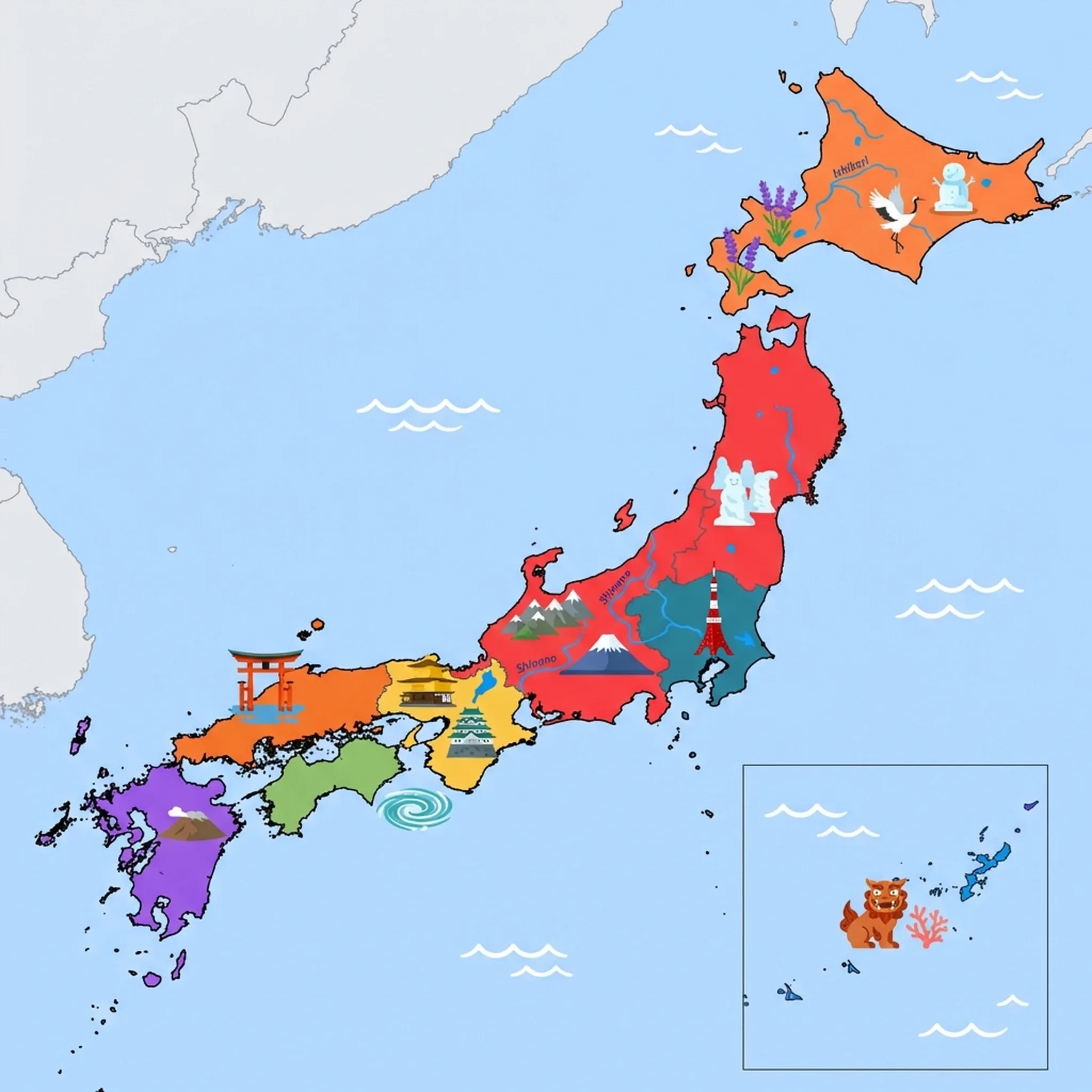
Click a region to explore
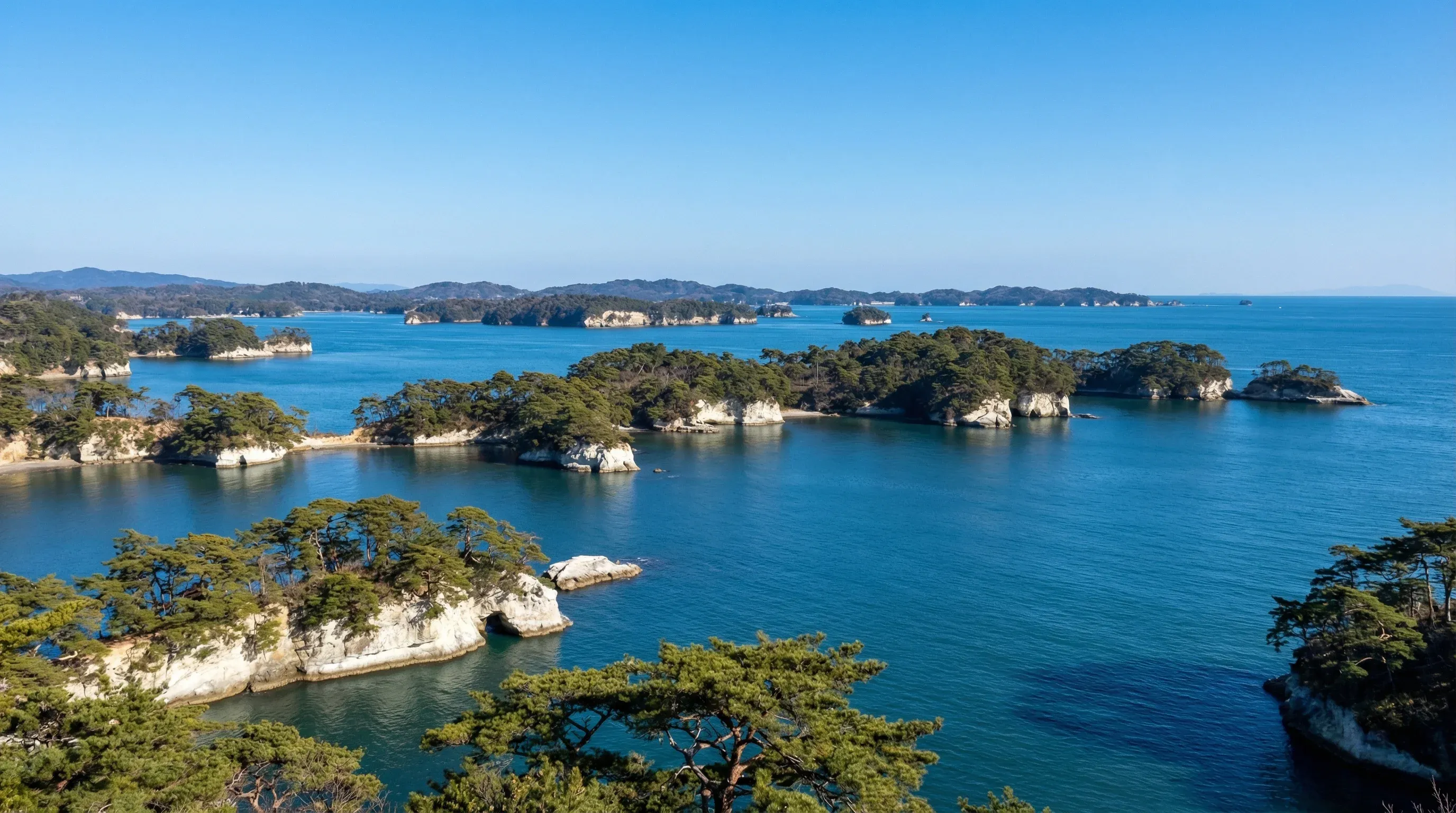
Tōhoku is the Japan of folklore and winter ballads. Known for its harsh winters and warm hospitality, it remains one of the least visited regions by international tourists, which is a shame because it offers incredible culture and nature. In summer, the region explodes with energy during the "Three Great Festivals" (like the Nebuta Matsuri in Aomori with its giant lit-up floats), which are spectacular visual treats for children. In winter, the "Snow Monsters" (frozen trees) of Zao and the deep powder snow provide a winter sports experience that feels wilder and more local than Hokkaido.
The region is steeped in history. Unlike the merchant bustle of Osaka or the courtly refinement of Kyoto, Tōhoku feels like the frontier. You can visit preserved samurai houses that feel like movie sets and ancient temples hidden in cedar forests. The coastline, recovering from the 2011 tsunami, is ruggedly beautiful and offers lessons in resilience and nature's power (with excellent new museums dedicated to disaster prevention). For families, Tōhoku offers space. The parks are huge, the crowds are thin, and the food is hearty and filling—perfect for fueling up after a day of hiking around crater lakes or exploring limestone caves.
Key Attractions
History comes alive at Kakunodate Samurai District in Akita. The wide streets and weeping cherry trees line authentic samurai mansions that you can enter; it's like walking into the Edo period. Similarly, Ouchi-juku in Fukushima is a former post town with thatched-roof buildings. It's famous for serving soba noodles eaten with a leek instead of chopsticks—a fun challenge for kids!
For nature, Lake Towada and the nearby Oirase Stream offer some of the most beautiful easy hiking in Japan. The path along the stream is flat and passes dozens of waterfalls, making it perfect for families. In the south, Aquamarine Fukushima is a massive aquarium that focuses on the currents of the Pacific Ocean. It includes a fishing area where kids can catch and eat their own fish, teaching them about the food chain.
Cultural seekers should visit Chuson-ji Temple in Hiraizumi, a UNESCO site famous for its Golden Hall. For a unique spiritual experience, Mt. Haguro (Dewa Sanzan) has a stone staircase of 2,446 steps leading through an ancient cedar forest to a five-story pagoda. While the full climb is tough, the lower section is magical and accessible.
Practical Advice
The Tohoku Shinkansen makes access easy, but local travel is slow. Trains in rural areas may run only once every few hours. Check timetables religiously. Winters are severe; if driving, you need snow tires and experience. The region is huge—focus on either the north (Aomori/Akita) or south (Sendai/Yamagata/Fukushima).
Food & Drink
Typical meal times: Early. Lunch 11:30 am–1:30 pm. Dinner 5:30 pm–8:30 pm. In rural onsen towns, restaurants may close by 7:00 pm.
Typical meal costs: Very reasonable. Lunch sets: ¥1,000–1,500 (approx. $6.70–10 USD / €6.20–9.30 EUR). Kaiseki dinner at a ryokan is usually included in the room price.
Dietary requirements: Tōhoku cuisine is salty and preserved (pickles, dried fish). Fresh vegetables are abundant in summer (Apples in Aomori, Cherries in Yamagata). Vegetarian options are rare in rural areas.
Signature dishes:
- Wanko Soba – An eating challenge from Iwate where servers toss mouthful-sized portions of noodles into your bowl until you cover it. Kids love the game aspect of it.
- Gyutan – Grilled beef tongue, the specialty of Sendai. It's tender and usually served with oxtail soup and barley rice.
- Kiritanpo – Pounded rice wrapped around cedar skewers and grilled with miso, or put in hot pot. A comfort food from Akita.
- Aomori Apples – The best apples in the world. You will find apple pie, apple juice, and apple curry everywhere in Aomori.
Why this score?
Tohoku is characterized by wild coastlines, high mountains, and significant winter snowfalls that create a rugged environment. The region feels more spacious and less manicured than central Japan, requiring more independent travel planning and offering more physical challenges for outdoor-oriented families.
Why this score?
Sendai is a major academic and medical center with top-tier hospitals and some international capacity. The rest of the region is well-served by Japan's national health system, though the rural nature of many attractions means help may be farther away and language barriers more pronounced than in major cities.
Why this score?
Despite its stunning landscapes and famous summer festivals, Tohoku receives only a small fraction of Japan's international visitors. It is largely seen as a domestic destination, though interest is growing among repeat visitors seeking 'authentic' Japan away from the crowds of Tokyo and Kyoto.

Accommodation is generally cheaper than Tokyo/Kyoto, but transport costs can be higher due to distances. A ryokan stay with two lavish meals costs ¥15,000–25,000 (approx. $100–165 USD / €95–155 EUR) per person. Local food is cheap and generous.

Getting Here & Around
Getting Here
- Train – The Tohoku Shinkansen connects Tokyo to Sendai (1.5 hours) and Aomori (3 hours). It splits to serve Akita and Yamagata as well.
- Airports – Sendai Airport (SDJ) is the main hub. Aomori (AOJ) has flights from Sapporo and Tokyo.
Getting Around
- Train – The "Joyful Trains" (tourist trains like the Pokemon train) are fantastic for kids but require booking. Local lines are infrequent.
- Car – Highly recommended for accessing the Sanriku coast and mountain onsens.
- Bus – Essential for reaching hot spring towns like Ginzan Onsen from the train stations.
Nearby Airports (9 airports)
Aomori
AOJAomori
Akita
AXTAkita
Fukushima
FKSFukushima
Yamagata Airport
GAJYamagata
Hanamaki
HNAHanamaki
Misawa Ab
MSJMisawa
Odate Noshiro Airport
ONJOdate Noshiro
Sendai Airport
SDJSendai
Shonai
SYOShonai
View full flight map for Japan →

Packing List
If visiting Nov-Mar, it is freezing. The wind chill is significant.
Hiking in remote areas of Akita/Aomori carries a risk of bear encounters.
In winter, you need waterproof boots that are also easy to take off at entrances.
Rural Tohoku is very cash-based; cards are often not accepted in small shops.
Public bins are extremely rare; you are expected to carry your rubbish home or to your hotel.
Most public restrooms do not provide paper towels or hand dryers.
You will remove shoes frequently at temples, restaurants, and fitting rooms. Laces are a hassle.
Japan is still cash-heavy and you will accumulate many coins (¥100, ¥500) quickly.
Japanese brands are often weaker than Western ones; bring your preferred brand from home.

Activities & Best Times

Hiking, wildlife, outdoor exploration, ecotourism
Tōhoku offers exceptional nature immersion with unique attractions like Zao Fox Village and the dramatic Sanriku coast. The 'green season' from May to October is optimal for hiking and rural exploration before heavy winter snows restrict access.

Urban tourism, museums, historical sites, architecture
Features world-class cultural institutions like the Aomori Museum of Art and historic Hirosaki Castle. April is peak for cherry blossoms, while August is vibrant with major urban cultural activity; winters are too harsh for comfortable city exploration.

Learning experiences, scientific sites, historical education
Major facilities like the Sendai Umino-Mori and Aquamarine Fukushima provide world-class marine education. These indoor attractions are reliable year-round but peak during Japanese school holiday periods when interactive programming is most extensive.

Sport tourism, fitness activities, active recreation
Excellent infrastructure for active families, including Forest Adventure Sendai and mountain activity centers. Peak season follows the green season when facilities are fully operational and mountain trails are clear of ice and snow.

Amusement parks, family entertainment venues
Home to significant venues like Spa Resort Hawaiians and Sendai Yagiyama Benyland. Peak visits occur during school holiday windows in May and summer, as outdoor amusement parks often close or scale back operations during the snowy winter.

Beach resorts, marine activities: diving, snorkelling, kite surfing, wind surfing, sailing
Kitayamazaki and Hotokegaura are dramatic coastal cliffs for sightseeing, not beach recreation. Cold northern waters. Downgrade to marginal.
Attractions (30 total)



Public Holidays & Calendar Next 12 months
Public holidays, festivals, cultural celebrations, and seasonal natural phenomena coming up in Tōhoku over the next 12 months.
Loading holidays and events...

Travel Advisory
All six major agencies agree that Japan is a safe destination where standard travel safety awareness is sufficient for visitors.
Safety Topics
Traveller Advice (3 groups)

Ensure you carry your original passport with you at all times as it is a legal requirement for foreign nationals in Japan.

While Japan is very safe, female travelers should remain vigilant in popular nightlife districts due to reported incidents of harassment or assault.

Japan is generally welcoming, but travelers should be aware that same-sex marriage and some related legal protections are not yet fully recognized by national law.
Agency Summaries
Travelers should follow standard safety protocols and stay informed of weather alerts and local guidance from Japanese authorities.
Japan is considered safe for New Zealanders, though awareness of seismic activity and petty crime in entertainment areas is advised.
The overall risk level is low, but travelers should be aware of regional risks such as earthquakes and potential crime in urban nightlife districts.
Japan offers a stable environment similar to Australia, with low crime rates but specific risks related to nightlife scams and natural disasters.
Standard safety measures are sufficient for travel to Japan. Visitors are encouraged to register for security updates and review local medical laws.
Japan is generally safe for travelers, though visitors should remain alert to natural hazards and stay informed via local media.
Information is provided for general guidance only and does not constitute travel, safety, medical, or legal advice. Conditions may change. Users are responsible for independently verifying information before travel.