
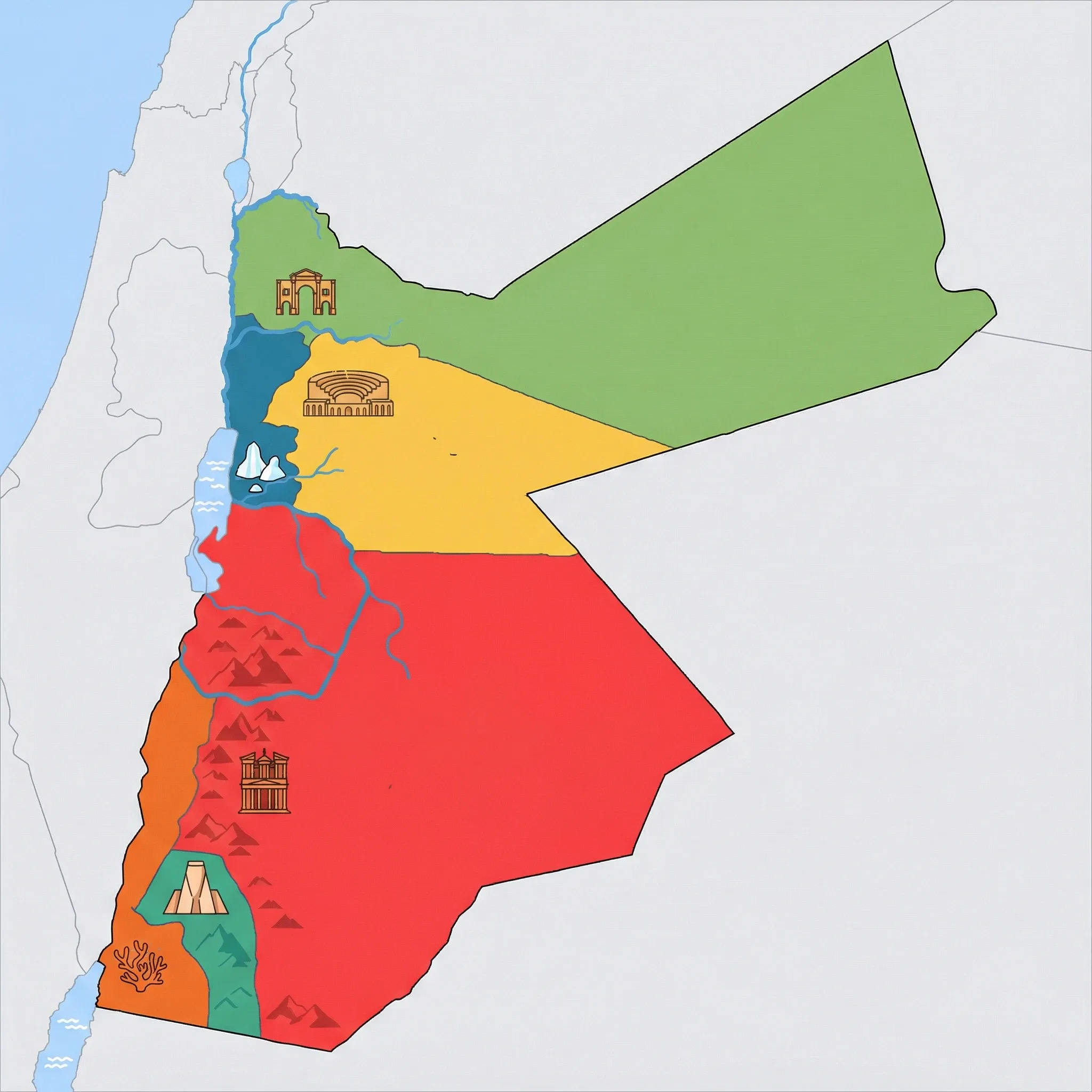
Click a region to explore
Overview
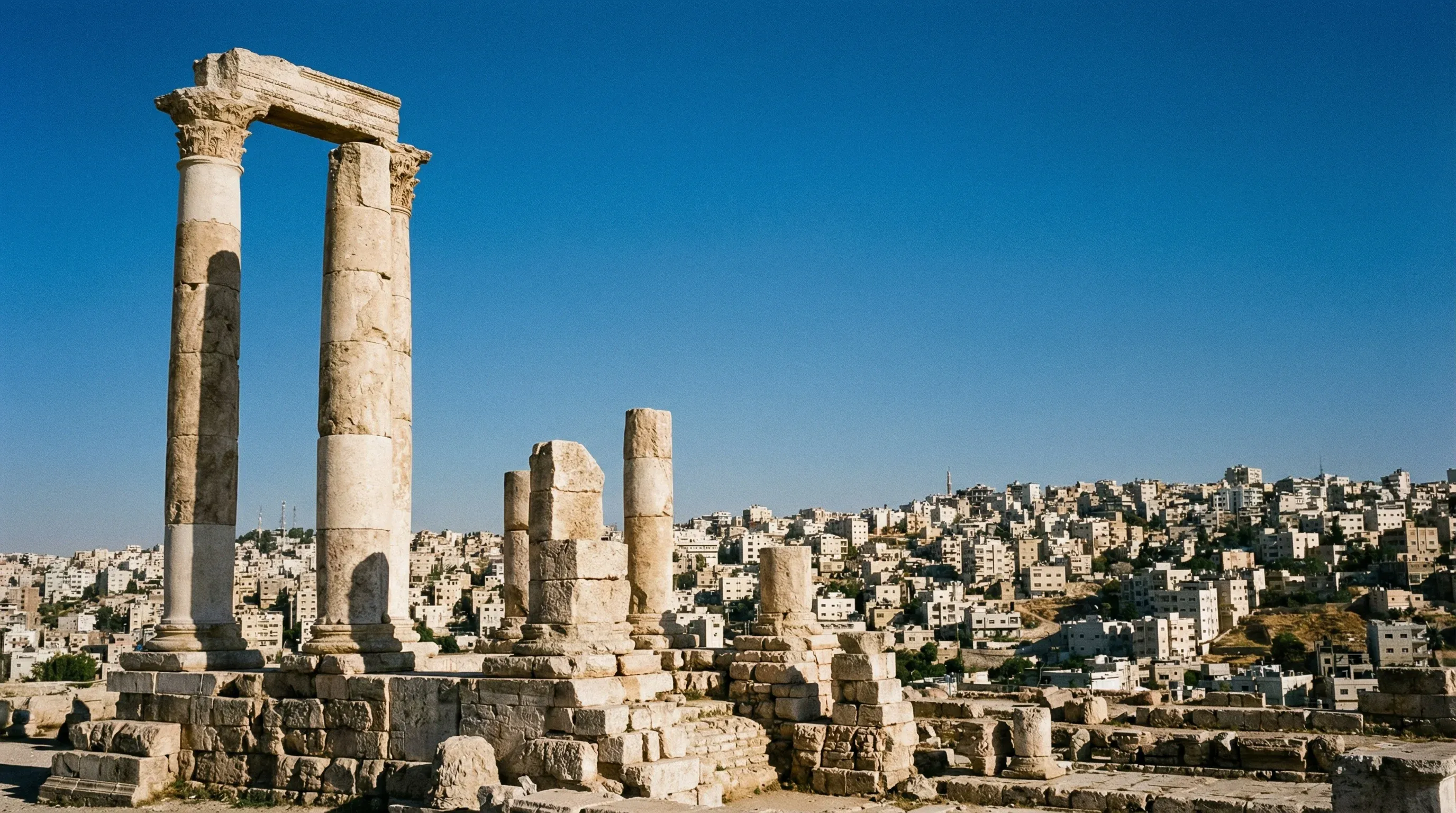
Amman is a city of fascinating contrasts that captivates families from the moment they arrive. Often overlooked as merely a transit hub, the Jordanian capital is a destination in its own right, built on a series of rolling hills (jebels) that offer panoramic views of white limestone houses cascading down the slopes. For families, Amman serves as the perfect introduction to the Middle East; it is safe, welcoming, and boasts a unique blend of ancient history and modern convenience. The climate here is generally temperate due to the elevation, with warm, dry summers and cool, crisp evenings that are perfect for strolling along Rainbow Street. Unlike the intense heat of the desert or the Dead Sea, Amman offers a breezy respite where children can explore comfortably.
The cultural heartbeat of the city lies in its hospitality. Jordanians love children, and families visiting Amman will find themselves welcomed warmly in restaurants, shops, and public spaces. The city is a living museum where you can stand atop a Roman temple one minute and enjoy a modern iced latte in a glitzy mall the next. While the traffic can be chaotic, the chaos is organized, and the energy of the city is infectious. Whether you are navigating the bustling souks (markets) of the downtown area or letting the kids run free in the manicured gardens of the uptown parks, Amman provides a diverse and enriching educational experience that goes far beyond the textbooks.
Key Attractions
No visit to Amman is complete without climbing up to the Amman Citadel (Jabal al-Qala'a). This ancient site sits on the highest hill in the city and offers a history lesson that spans the Bronze Age, Roman, Byzantine, and Umayyad periods. Children will love the freedom to explore the massive stone fragments of the Temple of Hercules and the Hand of Hercules—a giant stone hand that sparks the imagination about the size of the original statue. The site is open-air and spacious, making it ideal for energetic kids, though parents should keep an eye on the steep edges near the viewing platforms.
For a change of pace from history to hands-on learning, The Children's Museum Jordan is world-class. Located within the Al Hussein Public Parks, this museum features over 150 interactive exhibits covering science, human anatomy, and local culture. It is arguably one of the best children's museums in the region, offering both indoor and outdoor play areas, including a water flow station that is a hit with toddlers. Nearby, art-loving families can visit the Jordan National Gallery of Fine Arts, which offers a quieter, contemplative space showcasing contemporary art from the Islamic and Developing worlds, providing a colorful visual education for older children.
Practical Advice
The best time to visit Amman is during spring (March to May) or autumn (September to November) when temperatures are mild, typically ranging from 20°C to 25°C (68°F–77°F). Summers can be hot, but the lack of humidity makes it bearable. Amman is a hilly city, so strollers can be a challenge in older neighborhoods where sidewalks are high or uneven; a baby carrier is often more practical for downtown exploration. Friday is the holy day/weekend, so expect quieter streets in the morning but bustling activity in the evening.
Food & Drink
Typical meal times: Lunch is the main meal, typically served from 1:00 pm to 3:00 pm. Dinner is eaten quite late by Western standards, usually starting from 8:00 pm onwards, though restaurants are open all day.
Typical meal costs: Street food is incredibly cheap, while sit-down restaurants are mid-range. A family meal costs around 25–45 JOD (approx. $35–63 USD / €32–58 EUR).
Dietary requirements: Vegetarian options are abundant as hummus, falafel, and salads are staples. Gluten-free bread is becoming available in modern supermarkets but is rare in traditional restaurants. Nuts (pine nuts, almonds, walnuts) are frequently used as garnishes.
Signature dishes:
- Mansaf – The national dish of Jordan, consisting of lamb cooked in a sauce of fermented dried yogurt (jameed) and served with rice or bulgur. It is traditionally eaten communally.
- Falafel – Deep-fried balls of ground chickpeas and spices. In Amman, they are often stuffed into fresh sesame bread with salad and tahini for a quick, kid-friendly snack.
- Kunafa – A warm, sugary pastry made with spun pastry threads (kataifi) soaked in syrup and layered with gooey white cheese. The most famous place to try this is Habibah Sweets downtown.
Why this score?
Amman is a hilly but largely developed urban environment with modern infrastructure and paved roads. Adventure is limited to navigating the bustling markets and steep staircases of the older districts, making it very accessible for families.
Why this score?
Amman is a regional hub for medical tourism, featuring several high-quality private hospitals with English-speaking staff. Facilities like the Jordan Hospital provide advanced care that caters specifically to international patients and expats.
Why this score?
As the primary gateway to Jordan, Amman receives a steady flow of international visitors who explore the Citadel and Roman Theatre. While many tourists use it as a transit hub, its vibrant culinary scene and historical sites maintain its status as a recognized international destination.

Amman accommodates all budgets. You can eat a filling falafel sandwich for 1–2 JOD (approx. $1.40–2.80 USD / €1.30–2.60 EUR) or dine in luxury for 50 JOD per person. Mid-range family hotels typically cost 60–100 JOD (approx. $85–140 USD / €78–130 EUR) per night. Entry to major sites like the Citadel is included in the Jordan Pass, which saves families significant money.

Getting Here & Around
Getting Here
- Airports – Queen Alia International Airport (AMM) is the main gateway, located about 35 km south of the city. It is a modern, easy-to-navigate airport.
- Driving – Amman is the hub of Jordan's road network. It is approximately a 3-hour drive north from Aqaba and the Red Sea via the Desert Highway.
- Bus – JETT (Jordan Express Tourist Transportation) operates reliable, air-conditioned buses connecting Amman to Petra, Aqaba, and the King Hussein Bridge crossing.
Getting Around
- Taxi & Ride-Hailing – This is the best option for families. Uber and Careem are widely available, safe, and spare you the hassle of negotiating prices. Yellow taxis are everywhere but require using the meter.
- Car – Renting a car gives you freedom, but driving in Amman can be aggressive and chaotic. Navigation apps like Google Maps work well.
- Walking – Great for specific neighborhoods like Rainbow Street or the Amman Citadel, but not practical for crossing the whole city due to the steep hills and lack of continuous sidewalks.
Nearby Airports (1 airport)
Queen Alia International
AMMAmman
View full flight map for Jordan →

Packing List
The call to prayer from nearby mosques begins at dawn and can be quite loud in the hilly acoustics.
Amman is more conservative than beach resorts; covering shoulders and knees is respectful and required for some sites.
The city's limestone pavements become incredibly slippery even with just a few drops of rain or dust.
Budget and mid-range hotel sinks often lack plugs, useful if you need to hand-wash kids' clothes.
The Dead Sea bed is covered in sharp salt crystals that can cut feet; standard flip-flops may get ruined by the brine.
Essential for shielding your face from sand and dust during 4x4 jeep tours in Wadi Rum.
The combination of dry desert air and intense salinity at the Dead Sea dehydrates skin very quickly.
Flies can be surprisingly persistent and annoying in Petra and Wadi Rum, especially near animals.
Many Bedouin camps in Wadi Rum have limited electricity or turn generators off at night.
Desert temperatures drop drastically at night; it can be freezing in Wadi Rum even after a hot day.

Activities & Best Times

Urban tourism, museums, historical sites, architecture
A historic capital blending ancient Roman ruins like the Citadel with a vibrant modern arts scene in galleries like Darat al Funun. The city is best explored in the temperate transition seasons; summer months are avoided by sophisticated travelers due to oppressive heat in the downtown basins.

Hiking, wildlife, outdoor exploration, ecotourism
Amman serves as an access point to the Jordan Trail rather than a primary adventure destination. Rating it 'very_good' alongside Wadi Rum and Petra creates false equivalence. Downgrade to 'good' reflects its role as a gateway with nearby trail access.

Scenic drives, countryside tours, route-based travel
As the starting point for the King's Highway and Dead Sea Highway, Amman is a gateway to some of the Middle East's most iconic scenic drives. Spring offers the best visibility and landscape colors, whereas winter rains can occasionally impact road safety in the surrounding highlands.

Sport tourism, fitness activities, active recreation
Features internationally recognized hiking and biking trails along the Jordan Trail segments, plus modern facilities like Climbat Amman. Active outdoor pursuits are most comfortable during the temperate months; the summer heat makes high-exertion sports dangerous for international visitors.

Learning experiences, scientific sites, historical education
The Children's Museum Jordan is a world-class educational facility for families, providing interactive learning in a regional context. While the facility is indoor, visit cycles follow the general city tourism patterns to avoid extreme seasonal weather during transit.
Amusement parks, family entertainment venues
Local water parks like Amman Waves offer relief for families during the height of summer, though they lack the international prestige of major global theme parks. These facilities are primarily seasonal and become unsuitable during the cooler months when outdoor swimming is unappealing.

Attractions (12 total)



Public Holidays & Calendar Next 12 months
Public holidays, festivals, cultural celebrations, and seasonal natural phenomena coming up in Amman over the next 12 months.
Loading holidays and events...

Travel Advisory
All major agencies have recently elevated their warnings to the second-highest level due to a severe escalation in regional military conflict. Travelers are advised to defer non-essential trips as security conditions are volatile and could worsen without notice. This consensus is driven by risks of military activity, terrorism, and potential airspace closures.
Safety Topics
Traveller Advice (3 groups)

Respect local cultural standards by dressing modestly and avoiding traveling alone after dark, particularly in less tourist-heavy areas.

While private acts are not legally prohibited, public displays of affection are not socially accepted and may lead to harassment or legal scrutiny under public morality laws.

Ensure you have an emergency supply of food, water, and medication. Register your presence with your national embassy to receive urgent updates and be prepared to follow shelter-in-place orders during security incidents.
Agency Summaries
Regional escalation has created significant security risks and potential for travel disruption. Extremist attacks are considered very likely and could be indiscriminate. The government specifically advises against any travel within 3km of the Syrian border.
Heightened potential for neighboring conflicts in Syria and Israel to impact Jordan's safety. New Zealanders should maintain high personal security awareness and avoid large public gatherings which can turn violent quickly.
Citizens are advised to limit travel to essential trips only as the regional security situation is closely monitored. Those currently in the country should monitor local media and be prepared to shelter in place if instructed by authorities.
The risk level was raised due to the volatile regional security environment and the threat of retaliatory strikes. Australians are urged to avoid potential targets like diplomatic missions, military sites, and energy infrastructure.
The Department of State has ordered the departure of non-emergency government personnel and their families due to safety concerns. Travelers should reconsider visits because of terrorism risks and potential armed conflict. Certain areas, including border regions and specific neighborhoods like Baqa'a, are under 'Do Not Travel' warnings.
The security situation has deteriorated due to regional hostilities, resulting in an increased risk of military debris from intercepted projectiles and sudden airspace closures. Highly dangerous conditions exist near the borders with Syria and Iraq.
Information is provided for general guidance only and does not constitute travel, safety, medical, or legal advice. Conditions may change. Users are responsible for independently verifying information before travel.