
Aqaba & Red Sea
Sun, sea, and snorkeling in Jordan's coastal haven 🐠🏖️
Click a region to explore
Overview
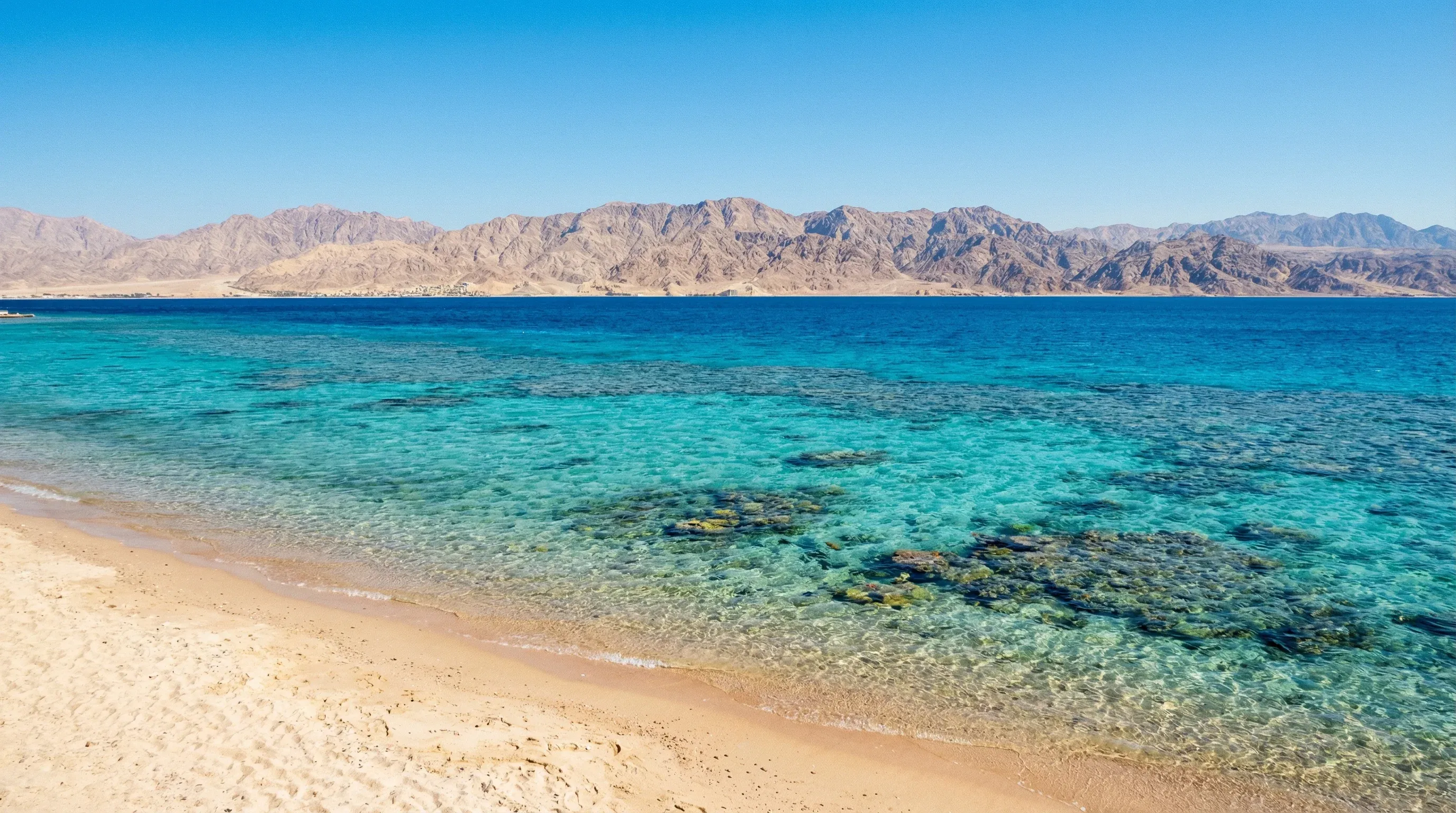
Aqaba is Jordan’s only coastal city, a laid-back port town that feels worlds away from the hustle of Amman or the dusty trails of Petra. Nestled between rugged purple mountains and the deep blue waters of the Red Sea, Aqaba offers a classic seaside holiday experience with a distinctive Jordanian twist. For families, this region is the ultimate relaxation zone. The climate here is warm year-round, making it a perfect winter sun destination. The vibe is slow and friendly, with a palm-lined corniche that comes alive in the evenings as locals walk with their families, enjoying ice cream and the cooling sea breeze.
The Red Sea coastline here is famous for its marine life. Unlike the rougher oceans elsewhere, the Gulf of Aqaba is generally calm, resembling a lake more than an open sea, which is reassuring for parents with young swimmers. The coral reefs are accessible often just meters from the shore. Beyond the water, the city offers a mix of duty-free shopping and historical sites. It serves as an excellent base for families who want to combine morning beach time with afternoon excursions into the nearby Wadi Rum desert, which is less than an hour away.
Key Attractions
The primary attraction here is the Red Sea itself. Families should head to the South Beach area (Marine Park) for the best snorkeling. However, within the city, history comes alive at the Aqaba Fort (Mamluk Castle). While not as massive as other crusader castles, its location on the seafront and its history involving Lawrence of Arabia make it an exciting quick stop for kids. You can walk the ramparts and see the large flagpole of the Great Arab Revolt Plaza nearby.
For a touch of culture that is visually stunning, the Sharif Hussein bin Ali Mosque is a must-see. Its pristine white stone architecture and intricate arches are beautiful against the blue sky. It is particularly magical at night when illuminated. While entry inside is restricted during prayer times, the exterior and the surrounding plaza are welcoming. For families who want to see the underwater world without getting wet, glass-bottom boats at the harbor offer a view of the coral and often a glimpse of a sunken tank or ship, which thrills children.
Practical Advice
Aqaba is a year-round destination, but summers (June–August) are intensely hot, often exceeding 40°C (104°F). The best time for families is October through April. The water temperature rarely drops below 20°C (68°F). Aqaba is a Special Economic Zone, meaning visa rules can be more relaxed upon entry here, and shopping is duty-free.
Food & Drink
Typical meal times: Lunch is usually 1:00 pm to 4:00 pm. Dinner is a late affair, often 8:00 pm to 10:00 pm, as families go out after the heat of the day subsides.
Typical meal costs: Seafood is the specialty but can be pricey. Expect to pay 30–60 JOD (approx. $42–85 USD / €39–78 EUR) for a fresh fish dinner for a family. Fast food options are cheaper, around 5–8 JOD per person.
Dietary requirements: Seafood is dominant, so those with shellfish allergies must be cautious. However, standard Jordanian grilled meats and vegetarian mezzes are available everywhere.
Signature dishes:
- Sayadieh – A fisherman’s dish consisting of fish cooked with rice, caramelized onions, and a mix of spices that give the rice a brown color. It is Aqaba’s signature meal.
- Fresh Red Sea Fish – Usually fried or grilled whole (often Grouper or Emperor fish), served with lemon, garlic sauce, and flatbread.
- Hooh – A lesser-known local Bedouin dish occasionally found in traditional homes or specialized restaurants, involving layers of pastry and chicken.
Why this score?
The region offers moderate adventure through world-class scuba diving and snorkeling in the Red Sea. Most tourism is centered around developed resorts and the city, providing a managed outdoor experience rather than a rugged wilderness one.
Why this score?
As a major city and economic zone, Aqaba has reliable medical facilities including the Prince Hashem Military Hospital. While not as extensive as Amman's healthcare network, it is well-equipped to handle common tourist emergencies and diving-related issues.
Why this score?
Aqaba is a major hub for European charter flights and cruise ships, serving as Jordan's only coastal outlet. It is well-known for its diving and resort culture, though it faces stiff competition from other Red Sea destinations like Egypt.

Aqaba offers a wide range of costs. Luxury beach resorts are expensive (150+ JOD/night), but city hotels are very affordable (40–70 JOD / approx. $55–100 USD / €52–90 EUR). Food is generally good value, though fresh seafood by the kilo commands a premium. Being a duty-free zone, snacks and electronics are slightly cheaper than in Amman.

Getting Here & Around
Getting Here
- Airports – King Hussein International Airport (AQJ) is just north of the city, receiving flights from Amman and low-cost carriers from Europe.
- Driving – Connected to Amman via the Desert Highway (approx. 4 hours) or the scenic Dead Sea Highway. It is a straightforward drive.
- Bus – Regular JETT buses run from Amman and Petra. The bus station is centrally located.
Getting Around
- Taxi – Green and blue taxis are the standard way to get around. They are plentiful and relatively cheap. A ride from the city to South Beach costs about 5–7 JOD.
- Walking – The city center is compact and walkable, especially along the corniche, but you will need transport to reach the best snorkeling beaches in the south.
- Boat – Water taxis and glass-bottom boats can transport you to nearby beach clubs or simply tour the harbor near Aqaba Fort.
Nearby Airports (1 airport)
Aqaba
AQJAqaba
View full flight map for Jordan →
Official Links

Packing List
Hard to find locally; essential to protect the fragile coral reefs while swimming.
Some beaches are rocky and urchins can be present in the shallows.
The sun is intense even in winter, and it provides extra warmth for long snorkeling sessions.
Rental gear often doesn't fit small faces well, leading to leaks and frustration.
The Dead Sea bed is covered in sharp salt crystals that can cut feet; standard flip-flops may get ruined by the brine.
Essential for shielding your face from sand and dust during 4x4 jeep tours in Wadi Rum.
The combination of dry desert air and intense salinity at the Dead Sea dehydrates skin very quickly.
Flies can be surprisingly persistent and annoying in Petra and Wadi Rum, especially near animals.
Many Bedouin camps in Wadi Rum have limited electricity or turn generators off at night.
Desert temperatures drop drastically at night; it can be freezing in Wadi Rum even after a hot day.

Activities & Best Times

Hiking, wildlife, outdoor exploration, ecotourism
Offers a unique desert-to-sea experience via the Jordan Trail and significant marine conservation at the Aqaba Marine Reserve. Summer months are classified as off-season due to dangerous heat levels for desert hiking and outdoor exploration.

Beach resorts, marine activities: diving, snorkelling, kite surfing, wind surfing, sailing
Aqaba offers world-class Red Sea diving at sites like the Japanese Garden and Cedar Pride wreck, comparable to Sharm el-Sheikh or Eilat. The 'marginal' rating severely understates its international reputation as a marine destination. While beach infrastructure is limited compared to Mediterranean resorts, the diving quality justifies 'very_good'.

Urban tourism, museums, historical sites, architecture
While Ayla ruins and the Aqaba Fort are historically significant, they do not compare to Petra, Jerash, or Amman in terms of cultural/archaeological importance. Downgrade to 'good' creates appropriate differentiation within Jordan's cultural hierarchy.

Scenic drives, countryside tours, route-based travel
Acts as the southern gateway for iconic routes like the King's Highway and the Dead Sea Highway. While driving is possible year-round, the peak period offers the best visibility and comfortable temperatures for scenic stops and photography along the South Coast Road.

Sport tourism, fitness activities, active recreation
Boasts specialized infrastructure including the Ayla Wake Park and internationally recognized long-distance cycling routes. The peak season provides optimal conditions for high-intensity activity, avoiding the debilitating summer heat that makes daytime sports impossible.

Learning experiences, scientific sites, historical education
Provides specialized learning opportunities at the Aqaba Aquarium and the Bird Observatory, which is of particular interest during peak migration seasons. These facilities are generally visited as part of a broader cultural itinerary rather than as standalone destinations.

Amusement parks, family entertainment venues
Small-scale entertainment facilities like Rise Adventure Park provide supplementary activities for families but lack the international scale of major theme park destinations. Operational peaks align with school holiday windows and more temperate outdoor weather.




Public Holidays & Calendar Next 12 months
Public holidays, festivals, cultural celebrations, and seasonal natural phenomena coming up in Aqaba & Red Sea over the next 12 months.
Loading holidays and events...

Travel Advisory
All major agencies have recently elevated their warnings to the second-highest level due to a severe escalation in regional military conflict. Travelers are advised to defer non-essential trips as security conditions are volatile and could worsen without notice. This consensus is driven by risks of military activity, terrorism, and potential airspace closures.
Safety Topics
Traveller Advice (3 groups)

Respect local cultural standards by dressing modestly and avoiding traveling alone after dark, particularly in less tourist-heavy areas.

While private acts are not legally prohibited, public displays of affection are not socially accepted and may lead to harassment or legal scrutiny under public morality laws.

Ensure you have an emergency supply of food, water, and medication. Register your presence with your national embassy to receive urgent updates and be prepared to follow shelter-in-place orders during security incidents.
Agency Summaries
Regional escalation has created significant security risks and potential for travel disruption. Extremist attacks are considered very likely and could be indiscriminate. The government specifically advises against any travel within 3km of the Syrian border.
Heightened potential for neighboring conflicts in Syria and Israel to impact Jordan's safety. New Zealanders should maintain high personal security awareness and avoid large public gatherings which can turn violent quickly.
Citizens are advised to limit travel to essential trips only as the regional security situation is closely monitored. Those currently in the country should monitor local media and be prepared to shelter in place if instructed by authorities.
The risk level was raised due to the volatile regional security environment and the threat of retaliatory strikes. Australians are urged to avoid potential targets like diplomatic missions, military sites, and energy infrastructure.
The Department of State has ordered the departure of non-emergency government personnel and their families due to safety concerns. Travelers should reconsider visits because of terrorism risks and potential armed conflict. Certain areas, including border regions and specific neighborhoods like Baqa'a, are under 'Do Not Travel' warnings.
The security situation has deteriorated due to regional hostilities, resulting in an increased risk of military debris from intercepted projectiles and sudden airspace closures. Highly dangerous conditions exist near the borders with Syria and Iraq.
Information is provided for general guidance only and does not constitute travel, safety, medical, or legal advice. Conditions may change. Users are responsible for independently verifying information before travel.