
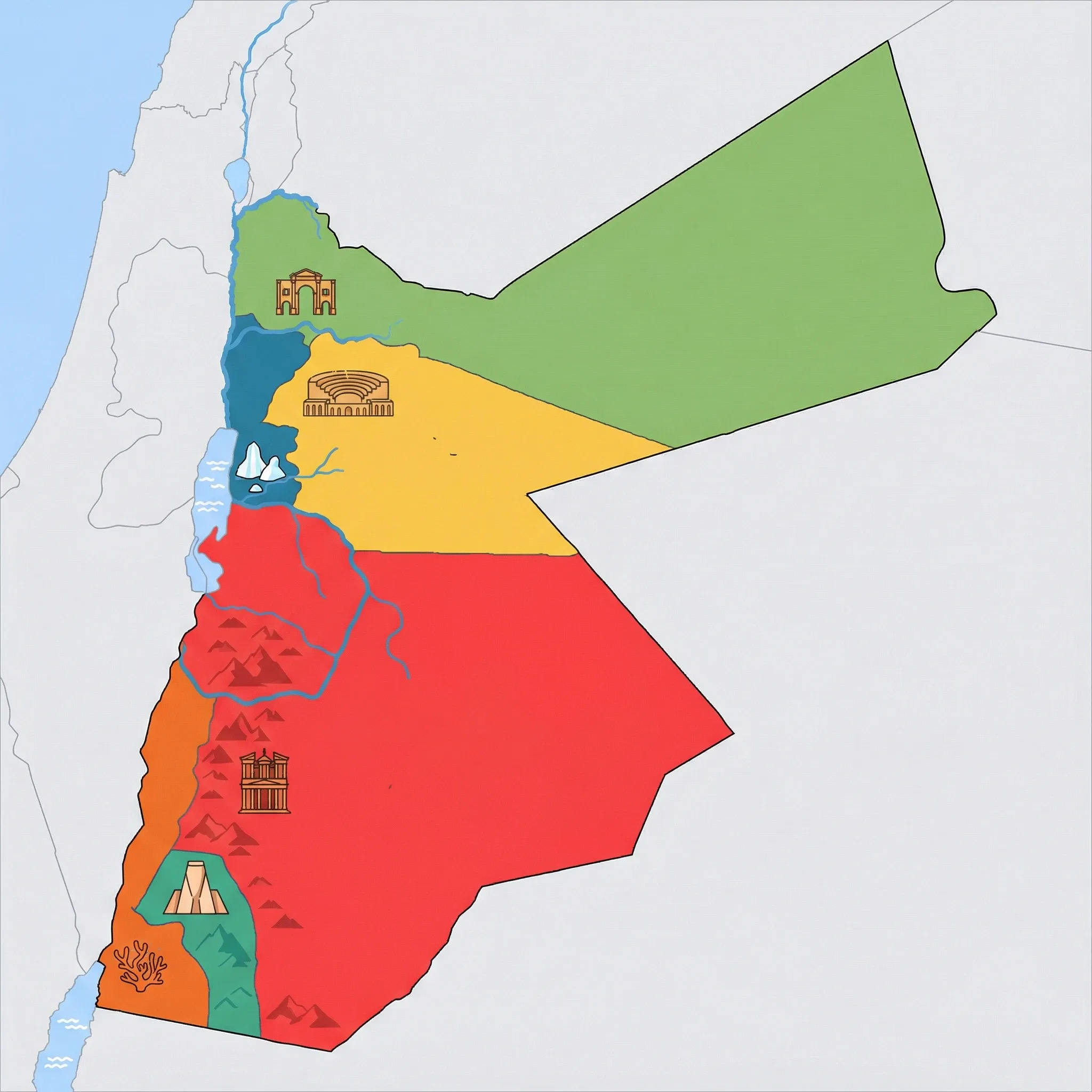
Click a region to explore
Overview
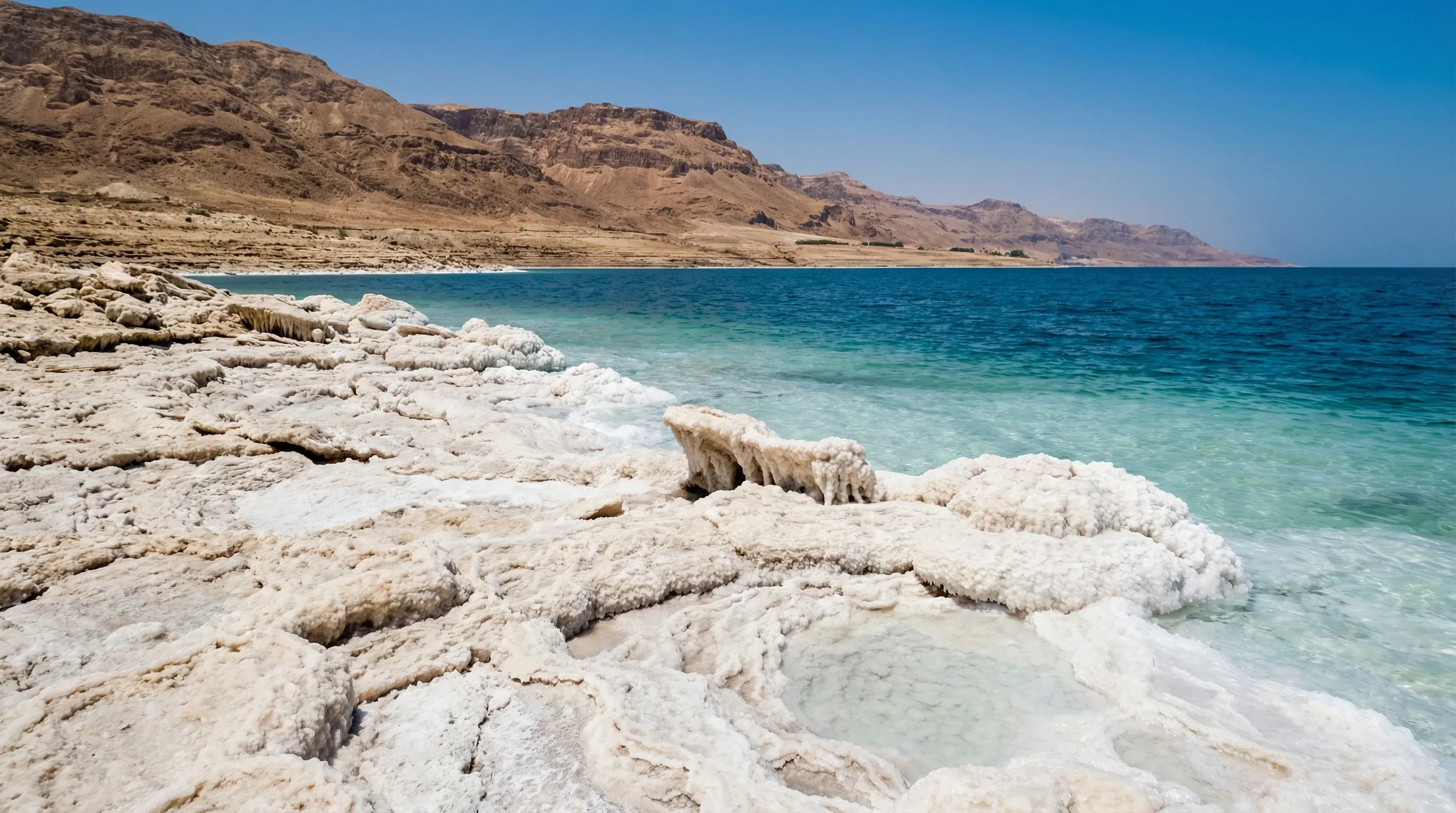
Visiting the Dead Sea is a geological and sensory adventure unlike any other. Sitting at more than 430 meters below sea level, it is the lowest point on dry land on Earth. For families, the primary draw is the water itself—ten times saltier than the ocean, it makes sinking impossible. Children (and adults) will giggle uncontrollably as they lift their feet and bob like corks on the surface. The air here is oxygen-rich, and the sun's harmful UV rays are filtered by the atmospheric haze, making it a therapeutic environment. The landscape is stark and dramatic, with salt crystals forming white crusts along the turquoise shoreline, backed by red and ochre mountains.
While the "floating" experience is the headline act, the region is rich in biblical history and natural wonders. It is not just a beach destination; it is a place of stories. From the spot where Moses viewed the Promised Land to the site where Jesus was baptized, the geography brings ancient tales to life. Families should be aware that the Dead Sea itself is not for "swimming" in the traditional sense—splashing is strictly forbidden due to the intense sting of the salt water in eyes—but the resort pools offer plenty of standard splash-time fun.
Key Attractions
The Dead Sea beaches are the main event. Most families access the water via the hotels or designated tourist beaches, which provide essential freshwater showers to rinse off the salt. After the float, a visit to Mount Nebo offers spectacular panoramic views over the Holy Land. Kids enjoy seeing the intricate ancient mosaics preserved inside the church and looking at the serpentine cross sculpture.
For nature-loving families with older children or teenagers, the Mujib Biosphere Reserve is thrilling. The "Siq Trail" involves wading and climbing through a stunning water-filled gorge (note: generally 18+ for the difficult trails, but dry trails exist for families). For a more relaxing water experience, Hammamat Ma'in (Ma'in Hot Springs Public Park) features natural thermal waterfalls cascading into pools where you can bathe in warm mineral water, nestled in a dramatic canyon oasis.
Practical Advice
The best time to visit is spring (March–May) and late autumn (Oct–Nov). Summer is scorching hot (often 45°C+). Crucial safety tip for kids: Do not shave 24 hours before entering the Dead Sea (it stings!) and bring swimming goggles to protect eyes from accidental splashes, though they should keep heads above water. Water shoes are essential as salt crystals are razor-sharp.
Food & Drink
Typical meal times: Resort dining dominates here, with lunch buffets from 12:30 pm to 3:00 pm and dinner from 7:00 pm to 10:00 pm.
Typical meal costs: Dining is almost exclusively within hotels and is priced at a premium. Buffets cost 20–35 JOD (approx. $28–50 USD / €26–45 EUR) per person. There are very few independent restaurants outside the resorts.
Dietary requirements: Hotel buffets are extensive and cater well to all allergies, including gluten-free and nut-free needs. Chefs are usually available to guide you.
Signature dishes:
- Cold Mezze – Since hotel buffets are the norm, the mezze spread is the highlight, featuring hummus, moutabel (smoked eggplant dip), and tabbouleh.
- Shish Tawook – Marinated chicken skewers grilled to perfection, a safe and delicious bet for children.
- Om Ali – A warm bread pudding dessert with milk, raisins, and nuts, frequently found on the dessert buffets.
Why this score?
While the resort areas are highly manicured, nearby Wadi Mujib offers strenuous canyoning and water-based trekking. The harsh desert climate and the unique physical demands of floating in hypersaline water provide a moderate level of outdoor challenge.
Why this score?
Most luxury hotels have on-site clinics and basic medical services for guests, but specialized care requires a 45-60 minute drive to Amman. The area is focused on wellness and spa treatments rather than emergency or complex medical infrastructure.
Why this score?
The Dead Sea is a global bucket-list destination, drawing significant international crowds to its luxury resort strip and religious sites like the Baptism Site. Its unique geographical status as the lowest point on Earth ensures a consistent flow of world travelers.

The Dead Sea is one of Jordan's most expensive regions because accommodation is limited largely to 5-star resorts. A night in a resort typically costs 120–250 JOD (approx. $170–350 USD / €155–325 EUR). Day passes to use hotel beaches without staying cost 25–50 JOD per person. Budget options are virtually non-existent near the water.

Getting Here & Around
Getting Here
- Driving – The Dead Sea is an easy 45–60 minute drive from Amman. The road descends rapidly below sea level, offering ear-popping views.
- Taxi – Private transfers from Amman or the airport are common and cost approx. 35–50 JOD.
- Bus – JETT buses run daily trips from Amman to the Dead Sea resorts, usually departing in the morning and returning in the evening.
Getting Around
- Car – Essential if you want to move between your hotel, Mount Nebo, and the Bethany Beyond the Jordan baptism site. There is no public transport between these widely spaced attractions.
- Walking – Only feasible within your resort grounds. The highway outside is not pedestrian-friendly.
No airports in this region. See the country flight map for nearby connections.
Official Links

Packing List
The high mineral content and mud can discolor or damage delicate fabrics; bring one you don't mind ruining.
While the water is therapeutic, the salt is intensely drying on the skin once you get out.
Essential prop for the classic 'floating and reading' photo op—hard to find at the beach shops.
If salt water gets in eyes away from a shower, you need immediate fresh water to flush it out.
The Dead Sea bed is covered in sharp salt crystals that can cut feet; standard flip-flops may get ruined by the brine.
Essential for shielding your face from sand and dust during 4x4 jeep tours in Wadi Rum.
The combination of dry desert air and intense salinity at the Dead Sea dehydrates skin very quickly.
Flies can be surprisingly persistent and annoying in Petra and Wadi Rum, especially near animals.
Many Bedouin camps in Wadi Rum have limited electricity or turn generators off at night.
Desert temperatures drop drastically at night; it can be freezing in Wadi Rum even after a hot day.

Activities & Best Times

Hiking, wildlife, outdoor exploration, ecotourism
Home to the world-class Wadi Mujib canyoning trails and dramatic rift valley landscapes. Peak months are restricted by seasonal canyon closures due to winter flash flood risks and extreme summer temperatures.

Spa retreats, wellness centers, peaceful getaways
The Dead Sea is globally famous for therapeutic mineral mud and Ma'in Hot Springs thermal facilities. Rating this 'marginal' is inappropriate for a world-renowned wellness destination. Upgrade to 'very_good' aligns with international reputation.

Urban tourism, museums, historical sites, architecture
The Baptism Site is biblically significant, but the region lacks the archaeological density of Jerash/Petra or the urban cultural infrastructure of Amman. 'Good' better reflects its specialized religious tourism niche.

Scenic drives, countryside tours, route-based travel
The Dead Sea Highway is one of the world's most dramatic coastal drives along the rift valley floor. Spring and autumn offer the best visibility and comfortable conditions for roadside exploration.

Sport tourism, fitness activities, active recreation
Offers specialized infrastructure for canyoning and cycling, including sections of the Jordan Bike Trail. The active season is limited by summer heat and winter flood windows in the wadis.

Beach resorts, marine activities: diving, snorkelling, kite surfing, wind surfing, sailing
Unique hypersaline floating experience at the earth's lowest point, though it lacks traditional marine life and coral reefs. Best visited in spring and autumn to avoid punishing summer heat and winter rains.

Learning experiences, scientific sites, historical education
Specialized museums focus on the unique geology and biblical significance of the Dead Sea basin. Best visited during general peak travel months when facility access and environmental conditions are optimal.




Public Holidays & Calendar Next 12 months
Public holidays, festivals, cultural celebrations, and seasonal natural phenomena coming up in Dead Sea over the next 12 months.
Loading holidays and events...

Travel Advisory
All major agencies have recently elevated their warnings to the second-highest level due to a severe escalation in regional military conflict. Travelers are advised to defer non-essential trips as security conditions are volatile and could worsen without notice. This consensus is driven by risks of military activity, terrorism, and potential airspace closures.
Safety Topics
Traveller Advice (3 groups)

Respect local cultural standards by dressing modestly and avoiding traveling alone after dark, particularly in less tourist-heavy areas.

While private acts are not legally prohibited, public displays of affection are not socially accepted and may lead to harassment or legal scrutiny under public morality laws.

Ensure you have an emergency supply of food, water, and medication. Register your presence with your national embassy to receive urgent updates and be prepared to follow shelter-in-place orders during security incidents.
Agency Summaries
Regional escalation has created significant security risks and potential for travel disruption. Extremist attacks are considered very likely and could be indiscriminate. The government specifically advises against any travel within 3km of the Syrian border.
Heightened potential for neighboring conflicts in Syria and Israel to impact Jordan's safety. New Zealanders should maintain high personal security awareness and avoid large public gatherings which can turn violent quickly.
Citizens are advised to limit travel to essential trips only as the regional security situation is closely monitored. Those currently in the country should monitor local media and be prepared to shelter in place if instructed by authorities.
The risk level was raised due to the volatile regional security environment and the threat of retaliatory strikes. Australians are urged to avoid potential targets like diplomatic missions, military sites, and energy infrastructure.
The Department of State has ordered the departure of non-emergency government personnel and their families due to safety concerns. Travelers should reconsider visits because of terrorism risks and potential armed conflict. Certain areas, including border regions and specific neighborhoods like Baqa'a, are under 'Do Not Travel' warnings.
The security situation has deteriorated due to regional hostilities, resulting in an increased risk of military debris from intercepted projectiles and sudden airspace closures. Highly dangerous conditions exist near the borders with Syria and Iraq.
Information is provided for general guidance only and does not constitute travel, safety, medical, or legal advice. Conditions may change. Users are responsible for independently verifying information before travel.