
Overview
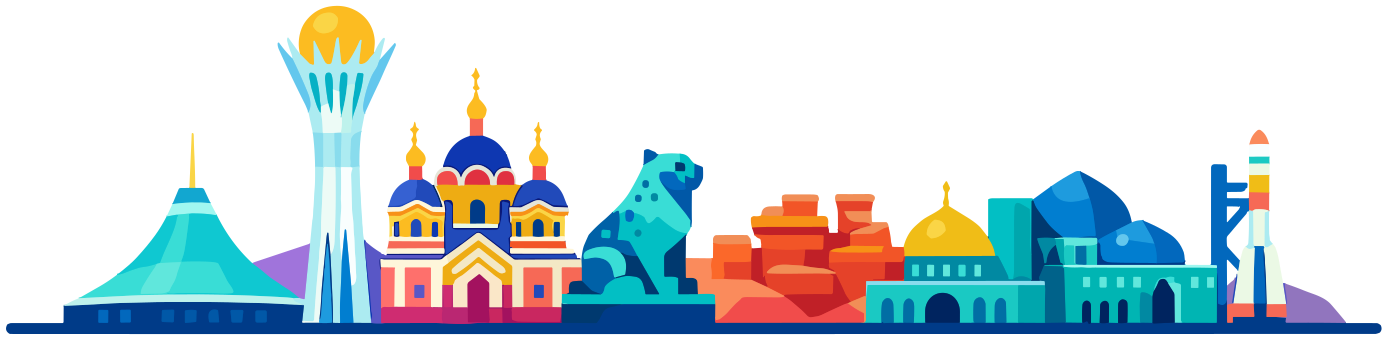
Kazakhstan is a destination of epic proportions, a place where the endless steppe meets soaring mountains and futuristic skylines. For families, it offers a unique blend of education and adventure that is hard to find elsewhere. While it is the world's ninth-largest country, the travel experience is surprisingly accessible, centred around two main hubs: the soulful cultural capital of Almaty & Southeast and the gleaming, modern administrative capital, Nur-Sultan (Astana) & North. The Kazakh people are famous for their hospitality, often treating guests-especially children-with immense warmth and generosity.
The country's geography is its greatest playground. In the southeast, the Trans-Ili Alatau mountains provide a stunning backdrop for hiking, skiing, and picnicking, while the vast central plains offer a glimpse into the nomadic history of the region. Culturally, Kazakhstan is a bridge between East and West. Children will be fascinated by the contrast between ancient traditions, such as eagle hunting and yurt dwelling, and the ultra-modern entertainment centres of the cities. It is a land where you can eat lunch in a traditional felt tent and dinner in a revolving restaurant on the 25th floor of a skyscraper.
Key Attractions
Most family trips begin in Almaty, a leafy, walkable city at the foot of the mountains. A fun first stop is Kok Tobe Hill, accessible by a cable car that glides over the city, offering a small amusement park and a mini-zoo at the summit. Nearby, Panfilov Park and Zenkov Cathedral is essential; the candy-coloured cathedral is built entirely of wood without a single nail, a fact that delights young engineers. For a day of nature without leaving the city limits, the Main Botanical Garden provides peaceful walking paths and squirrel feeding, while the Almaty Zoo remains a popular local favourite for animal lovers.
Venturing outside the city unlocks the country's most spectacular scenery. The Charyn Canyon, often compared to the Grand Canyon, offers the "Valley of Castles," a manageable hike for active kids with rock formations that look like fortresses. For alpine beauty, Big Almaty Lake stuns with its surreal turquoise water, sitting high in the gorge. Families seeking winter sports or cool summer air should head to Shymbulak Mountain Resort, which offers world-class skiing and gondola rides. Further afield, the Kolsai Lakes-often called the "Pearls of Tien Shan"-offer boat rides and horse trekking in a pristine forest setting.
In the north, the capital city offers a completely different vibe. The Baiterek Tower is the unmissable symbol of modern Kazakhstan; families can take a lift to the golden sphere at the top for panoramic views and to see the president's handprint. Just a few hours from the capital lies Burabay (Borovoe) National Park, a "Switzerland of the Steppe" filled with pine forests, strange rock formations, and the serene Lake Borovoe (Auliekol), perfect for a relaxing family weekend by the water.
Safety
Kazakhstan is generally safe for families, but travelers should exercise normal precautions. Violent crime against tourists is rare, but pickpocketing can occur in crowded markets and on public transport. Be cautious when using unlicenced taxis; it is far safer to use ride-hailing apps like Yandex Go. Traffic can be chaotic, and pedestrian crossings are not always respected by drivers, so keep a close hold on children near roads. In remote areas, mobile signal can be patchy, so plan ahead.
Practical Advice
The best time to visit for warm weather and hiking is from May to September. July and August can be hot in the cities but are perfect for the mountains. Winters (November to March) are bitterly cold, especially in the north, but offer great skiing in the south. Citizens of up to 45 countries (including US, UK, EU, Aus) can enter visa-free for up to 30 days. Tap water is generally not safe to drink; stick to bottled or filtered water.
Food & Drink
Typical meal times: Lunch is typically served from 1:00 pm to 2:30 pm, and dinner from 7:00 pm to 9:00 pm. Cafes in major cities often stay open late.
Typical meal costs: 3,000–6,000 KZT (approx. $6–12 USD / €5.50–11 EUR) for a casual meal; 15,000–25,000 KZT (approx. $30–50 USD / €28–46 EUR) for a mid-range dinner for two.
Dietary requirements: Traditional cuisine is heavily meat-based (mutton, beef, horse). Vegetarians will find plenty of options in Almaty and Astana (Italian, Indian, and hipster cafes), but rural areas can be challenging. Always specify "bez myasa" (without meat).
Family-friendly dining: Kazakh culture loves children. Most restaurants are family-friendly, often providing high chairs ("detskiy stul") and colouring pencils. Portions are generous and meant for sharing.
Signature dishes:
- Beshbarmak – The national dish of boiled meat (usually horse or beef) served over large flat noodles. The name means "five fingers" as it was traditionally eaten by hand.
- Baursak – Puffy, fried dough squares that are slightly sweet and incredibly addictive-kids usually love them instead of bread.
- Lagman – Thick, hand-pulled noodles served in a savoury meat and vegetable stew, popular throughout Central Asia.
- Samsa – Flaky pastry parcels filled with minced meat and onions, baked in a tandoor oven; the perfect on-the-go snack.

Kazakhstan offers excellent value for families. A comfortable daily budget for a family of four is around 65,000–90,000 KZT (approx. $130–180 USD / €120–165 EUR), covering mid-range accommodation, meals, and taxi travel. Public transport is very cheap (under $0.20 per ride), and dining out is affordable even in nicer restaurants.
Age Suitability





Did you know? Kazakhstan welcomes approximately 10.4 million international visitors per year. Most visitors come from Europe.
Explore Regions
5 Regions
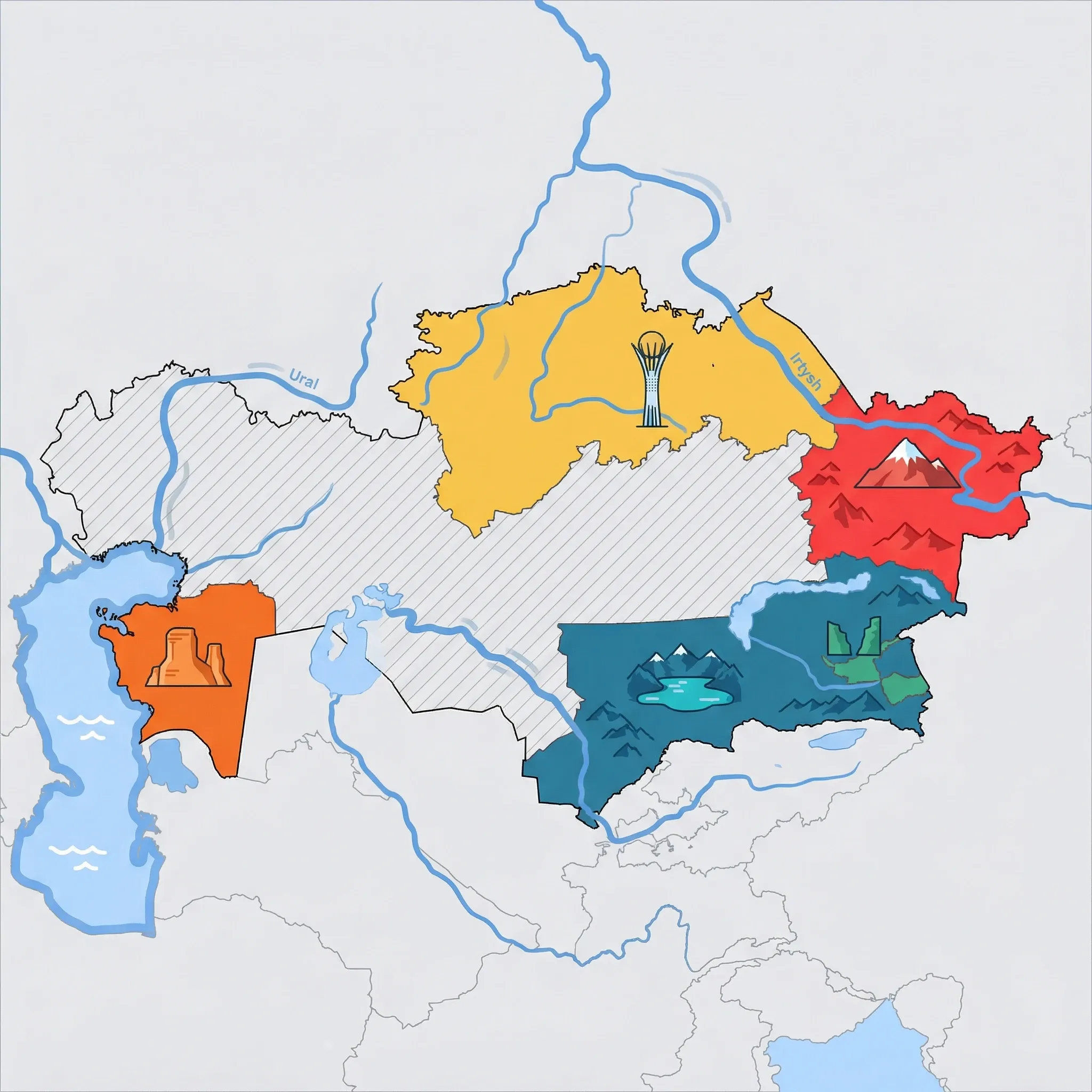
Aktau & Caspian
Where the desert meets the sea 🌊🐪
Almaty & Southeast
Garden city of apples and snowy peaks 🍎🏔️
Altai Mountains
Wild forests and mystical mountains 🌲🦌
Charyn Canyon
The Grand Canyon's little brother 🏜️🦅
Nur-Sultan (Astana) & North
Futuristic cityscapes and ancient pines 🏙️🌲
Click on a region marker to explore details. Use the dropdown to color regions by activity suitability.

Getting There & Around
Getting There
- By Air – The main international gateways are Almaty International Airport (ALA) and Nursultan Nazarbayev International Airport (NQZ). They connect directly to major hubs in Europe, the Middle East, and Asia.
- By Train – Long-distance trains connect Kazakhstan with neighbouring Uzbekistan and Russia, though journeys are very long. The route from Tashkent to Almaty is a popular Silk Road connection.
- Entry Requirements – Citizens of the US, UK, EU, and many other countries can enter visa-free for up to 30 days. Check your government website for the latest visa requirements, or use the IATA Travel Centre entry-requirements checker.
Getting Around
- Taxi Apps – Yandex Go is the essential app for getting around cities safely and cheaply. It works like Uber and avoids the need to negotiate prices.
- Trains – The rail network is the best way to cover vast distances between regions like Almaty & Southeast and the north. Spanish-built "Talgo" trains are fast, modern, and comfortable for families.
- Car Hire – Possible in major cities but recommended only for confident drivers due to aggressive local driving styles and variable road conditions. Essential for visiting remote spots like Altai Mountains independently.

Packing List
Locals are incredibly hospitable; giving a small souvenir from your home country to hosts or guides is a warm, culturally appropriate gesture.
You will frequently remove shoes when entering homes, yurts, and mosques. Laceless shoes make this process much easier for the whole family.
The climate is extremely continental and dry. The steppe wind and harsh sun can chap skin very quickly, even in cooler weather.
Tea is the national obsession. Having a flask for hot tea (or cold water) is essential for long car journeys across the vast, empty steppe.
Public toilets outside major cities can be basic (squat toilets) and often lack running water or soap.

Activities & Best Times

Adventure & Nature
ExcellentHiking, wildlife, outdoor exploration, ecotourism
Spectacular diversity from the Charyn Canyon to the high-altitude Kolsai Lakes and Ile-Alatau mountain trails. Peak summer provides optimal access to high-altitude treks, while shoulder months are ideal for lower-elevation canyon exploration.
Burabay National Park features a unique landscape of granite mountains and pine forests providing a refreshing contrast to the surrounding steppe. Summer offers optimal conditions for family hiking and lake exploration, while extreme winter temperatures make the wilderness largely inaccessible.
Home to the extraordinary Bozejyra Valley and 'Tiramisu Canyons,' this region offers world-class geological wonders for experienced explorers. Peak months avoid the extreme 35C+ summer heat of the Ustyurt Plateau and the freezing winter winds.

City & Cultural
ExcellentUrban tourism, museums, historical sites, architecture
Almaty is a sophisticated 'garden city' with an authentic Central Asian food scene and the UNESCO-listed Tamgaly petroglyphs nearby. Late spring and early autumn offer the most pleasant conditions for walking the city's parks and historic quarters.
Astana is a premier showcase of futuristic architecture and world-class museums like the National Museum of Kazakhstan. The short summer window is the only time the city's outdoor monuments and parks are comfortably navigable for families due to the region's intense continental winters.
The region features culturally unique underground Sufi mosques like Beket-Ata and Shakpak-Ata carved into the limestone cliffs. These sites provide a spiritual and architectural experience unlike any other, best visited during the mild spring and autumn windows.

Sports & Active
Very GoodSport tourism, fitness activities, active recreation
Boasts world-class infrastructure including the Medeu high-altitude skating rink and Oi-Qaragai mountain bike park. The region facilitates sports year-round, from winter ice skating and skiing to summer hiking and mountain biking.
The area around Burabay provides high-quality infrastructure for cycling and active pursuits with well-maintained trails. These facilities are primarily utilized during the warm, dry summer, as snow and extreme cold dominate the landscape for the majority of the year.
Distinctive hiking trails like the Rock Path and Bozjyra treks offer challenging terrain through dramatic canyons. Activity is highly seasonal, as the mid-summer heat in the treeless desert environment can be hazardous for active sports.

Educational & Exploratory
GoodLearning experiences, scientific sites, historical education
The Nur Alem Museum of Future Energy is a world-class scientific landmark from Expo 2017 that serves as a primary draw for inquisitive families. While the facility is indoors, visiting is most practical during the warmer months when the surrounding Expo site and city infrastructure are fully operational.
Offers significant historical and natural history museums, including the Issyk Historical Reserve which showcases the 'Golden Man' discovery. Ideal visiting times coincide with pleasant weather for reaching archaeological sites outside the city.
The Mangystau Regional Museum and specialized aquarium offer insights into the unique Caspian ecosystem and Silk Road history. These serve as quality supplementary activities during the main tourist seasons.

Road Trips & Scenic
GoodScenic drives, countryside tours, route-based travel
The expedition routes to Bozejyra and the Valley of Balls are visually spectacular and highly prized by overlanding enthusiasts. Conditions are optimal when the ground is dry but temperatures remain moderate for remote desert driving.
Features legendary routes like the Old Austrian Road, offering dramatic mountain vistas and remote borderland exploration for experienced drivers. Travel is restricted to the brief window of July-August when high mountain passes are clear of snow; the off-season brings hazardous conditions and frequent road closures.
The 'Golden Triangle' route to Charyn Canyon and Kolsai Lakes is a celebrated scenic drive through diverse landscapes. Travel is best in late spring or autumn to avoid mountain pass snow or extreme summer heat in the canyon floors.

Ski & Snow
GoodWinter sports, ski resorts, snow activities
The region offers specialized winter sports facilities, including the National Ski Center in Shchuchinsk, with reliable snow cover and cold temperatures. The season is strictly confined to the deepest winter months when infrastructure and snow conditions are consistent.
Authentic, off-the-beaten-path ski experiences with reliable powder snow and a long season at established resorts like Altai Alps. Peak season runs December-February for optimal snow quality, while spring and autumn offer transitional conditions; summer months are unsuitable with no snow cover.
Reliable snow and modern infrastructure at resorts like Ak Bulak and Shymbulak, though the total skiable terrain is smaller than major Alpine destinations. The season is consistent from mid-December through March, with spring skiing possible into April.
Theme Park & Entertainment
GoodAmusement parks, family entertainment venues
Features internationally unique climate-controlled attractions like Sky Beach Club and Ailand Oceanarium, providing entertainment regardless of outside weather. Peak visitation aligns with the summer months and the winter holiday seasons when international families are most active.
Features high-quality water parks like Hawaii & Miami and traditional amusement parks that serve families well, though they are not standalone international motivators. Best experienced during the warm summer months or indoor facilities during school holidays.
The presence of Rixos Water World and Tetysblu provides modern family entertainment facilities, though they are primarily regional draws. Their operation and appeal are strictly tied to the warm summer season.

Beach & Sea
GoodBeach resorts, marine activities: diving, snorkelling, kite surfing, wind surfing, sailing
The Caspian coast offers unique desert-meets-sea landscapes with emerging high-end resorts like Rixos. Water temperatures are only consistently warm enough for international leisure standards from June through August.
Limited to the Kapchagay Reservoir which offers basic beach recreation but lacks the marine biodiversity or infrastructure of world-class coastal destinations. Activity is restricted to the peak summer window when water temperatures are sufficient for swimming.

Relaxation & Wellness
GoodSpa retreats, wellness centers, peaceful getaways
Anchored by the world-class Arasan Wellness & Spa, a historic bathhouse of exceptional architectural and cultural quality. Thermal baths are particularly rewarding during the cold winter months, offering an authentic regional wellness experience.
Natural radon and thermal springs provide authentic, rustic wellness experiences popular with local travelers. While not world-class spa destinations, they offer a unique restorative element to a desert expedition.

Public Holidays & Calendar Next 12 months
Public holidays, festivals, cultural celebrations, and seasonal natural phenomena coming up in Kazakhstan over the next 12 months.
Loading holidays and events...
Climate & Weather
Aktau & Caspian
Show Details
| Month | Temp °C | Rain | Humidity |
|---|
Almaty & Southeast
Show Details
| Month | Temp °C | Rain | Humidity |
|---|
Altai Mountains
Show Details
| Month | Temp °C | Rain | Humidity |
|---|
Charyn Canyon
Show Details
| Month | Temp °C | Rain | Humidity |
|---|
Nur-Sultan (Astana) & North
Show Details
| Month | Temp °C | Rain | Humidity |
|---|

Travel Advisory
A majority of major government agencies assess Kazakhstan as a low-risk destination where standard safety practices are sufficient, although a minority of agencies suggest elevated caution due to crime and historical civil unrest.
Safety Topics
Traveller Advice (3 groups)

While same-sex relations are legal, the country remains socially conservative. Public displays of affection may attract negative attention or harassment.

Always carry your original passport or a high-quality copy, as local police frequently conduct identity checks. Registration with migration authorities is usually handled by your hotel, but you should verify this within three days of arrival.

Solo female travellers should exercise extra care when walking alone at night or in poorly lit areas. Using reputable taxi apps rather than hailing cars on the street is highly recommended for safety.
Agency Summaries
Ireland advises a heightened level of vigilance due to specific security risks and potential for civil unrest. Travellers are encouraged to stay well-informed of local news.
A higher level of caution is advised primarily due to the risk of crime, including robbery and assault in urban centers. Public gatherings should be avoided as they can escalate without notice.
No major travel warnings are in place. Visitors are advised to respect local customs and laws, particularly regarding ID carriage and photography of sensitive sites. Medical facilities vary in quality outside major cities.
Travellers should maintain standard safety awareness similar to what they would in Canada. Be alert in public places and secure personal belongings. Cybercrime and online scams are frequently reported issues.
The safety environment is considered stable. However, there is a persistent threat of terrorism across the region, and travellers should avoid large public gatherings or protests.
The country is generally stable, and visitors should follow routine safety procedures. It is recommended to stay informed through local media and have a plan for emergency situations.
Information is provided for general guidance only and does not constitute travel, safety, medical, or legal advice. Conditions may change. Users are responsible for independently verifying information before travel.