
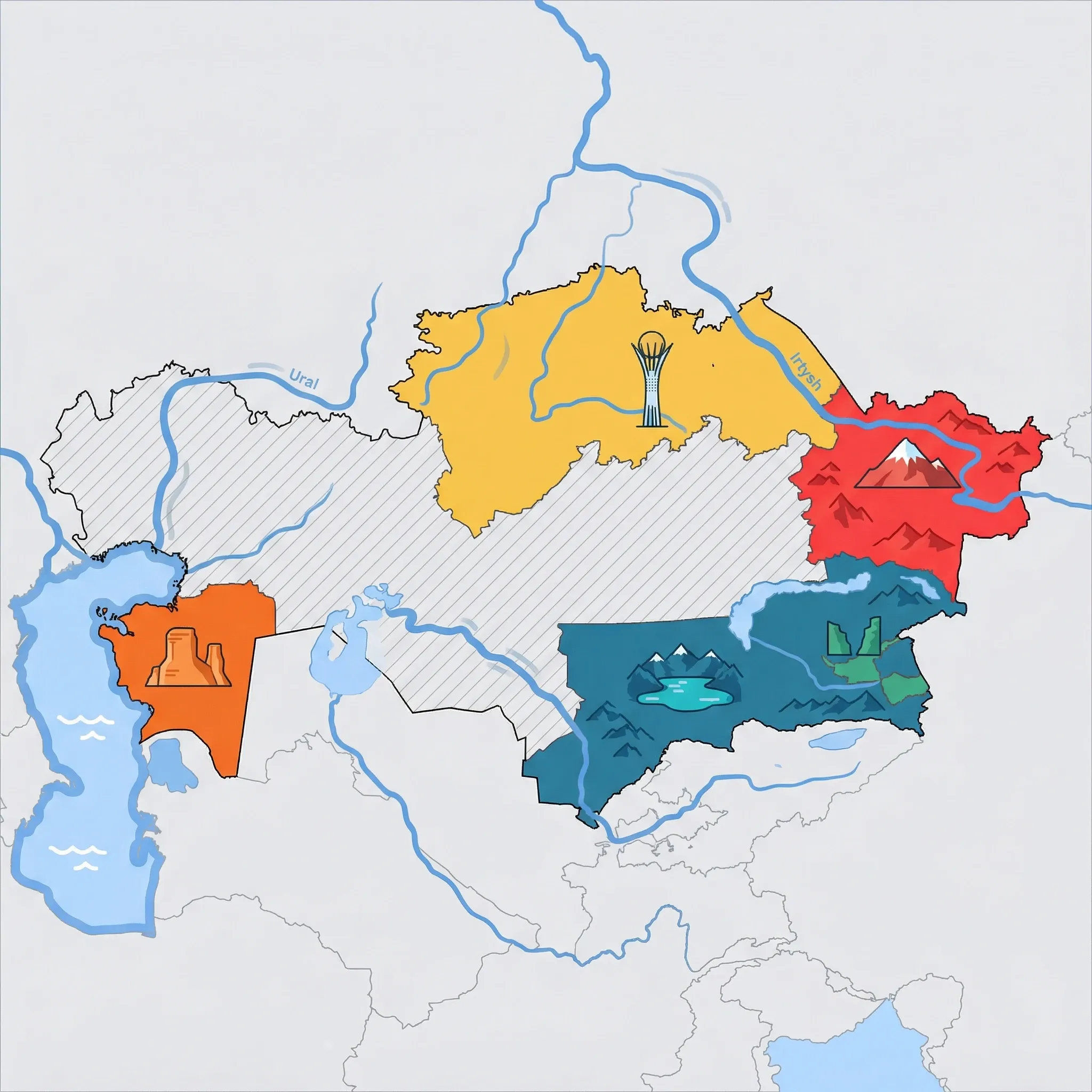
Click a region to explore
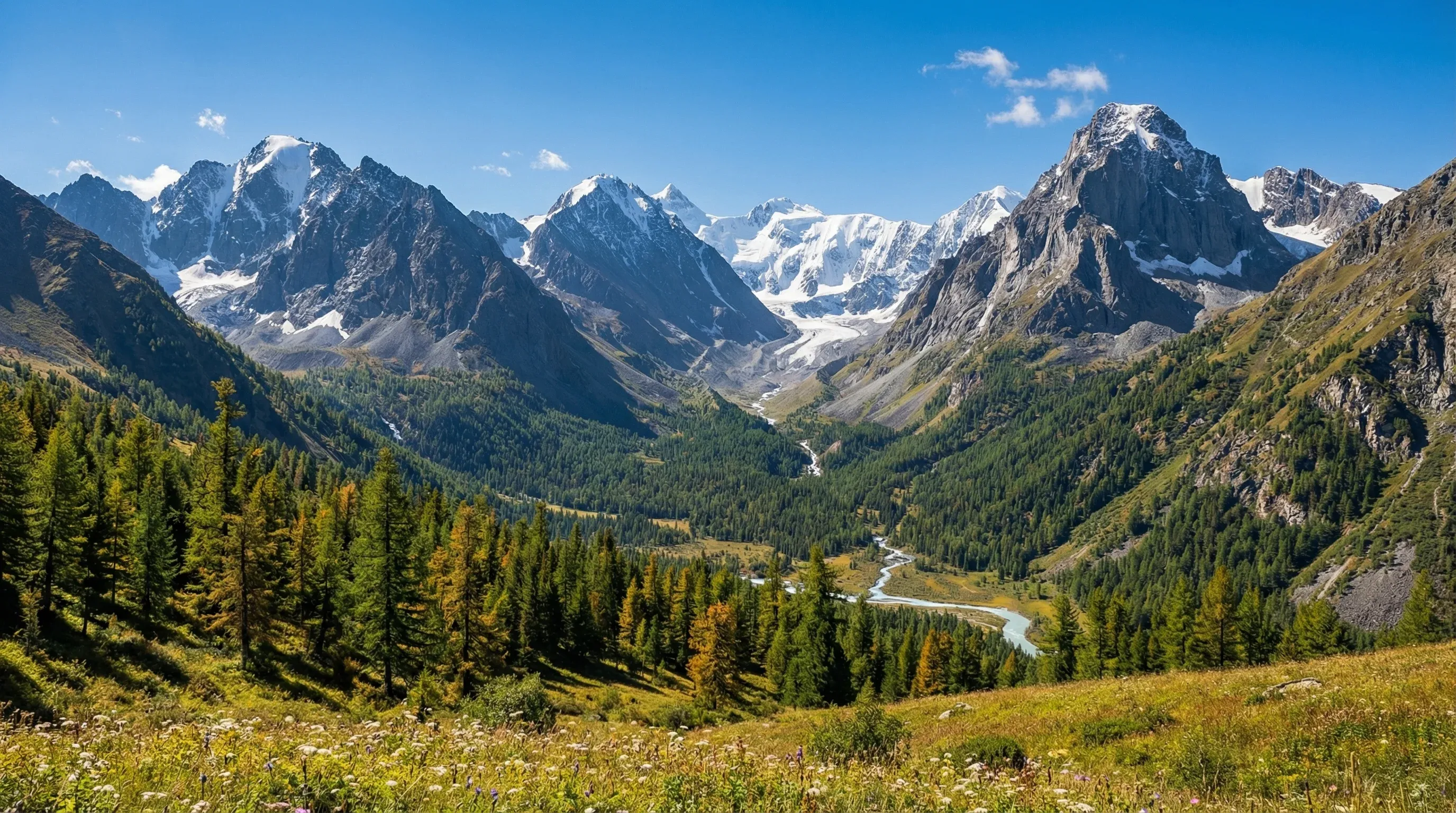
The Altai Mountains region in East Kazakhstan is distinctly different from the rest of the country. Here, the endless yellow steppe gives way to lush green pine forests, roaring rivers, and snow-capped peaks. For families, this is an immersion into true wilderness. The air is thick with the scent of pine and herbs, and the culture is a mix of Kazakh nomadism and Old Believer (Russian) traditions. It is less developed than Almaty, meaning travel here is an adventure—roads can be bumpy, and distances are long—but the payoff is solitude and untouched nature. The region is famous for its honey, its antlers (pantocrine), and its legends of Shambhala connected to the peaks.
The centerpiece for visitors is the Katon-Karagay National Park, the largest national park in Kazakhstan. It is a UNESCO biosphere reserve teeming with wildlife. Children will be fascinated by the Maral deer farms, where the velvet antlers of the deer are harvested for traditional medicine (baths in the broth are a local therapy, though watching the deer is enough for most kids!). The vibe here is slow and disconnected; don't expect 5-star hotels, but rather cozy wooden guesthouses and yurts where the owners cook you dinner from their garden. It’s a place to disconnect from screens and reconnect with the earth.
Key Attractions
The crown jewel is Katon-Karagay National Park, offering accessible hiking trails through meadows of wildflowers that grow taller than a child. Lake Markakol is another must-visit; it is known for its exceptionally clear water and the endemic Uskuch fish. While the summit of Belukha Mountain is for serious mountaineers, the viewing points from the Rakhmanov Springs area are accessible and breathtaking. Families can also enjoy the "City of Baths" at the Rakhmanov Springs Sanatorium, where thermal waters offer relaxation after long drives. History buffs should stop at the Berel Mounds State Historical and Cultural Reserve-Museum to see the "Valley of the Kings," where ancient Scythian burial mounds have preserved gold and artifacts in the permafrost.
Practical Advice
Summer (June to August) is the only viable time for family tourism; winters are brutally cold and roads become impassable. You must arrange border permits in advance (weeks ahead) if you plan to get close to the majestic Belukha Mountain near the Russian border. Bring plenty of cash; ATMs are nonexistent in the villages.
Food & Drink
Typical meal times: Villages wake up early. Breakfast is 7:00 am–8:30 am, lunch 12:30 pm–2:00 pm, dinner 7:00 pm–8:30 pm.
Typical meal costs: Very affordable. A hearty homemade dinner in a guesthouse costs 3,000–5,000 KZT (approx. $6–10 USD / €5–9 EUR) per person.
Dietary requirements: Fresh dairy, honey, and berries are abundant. Vegetarians will fare better here than in the deep steppe due to the garden culture of the Russian villages, with plenty of potatoes, pickles, and slaws.
Signature dishes:
- Altai Honey – Not a meal, but the region's signature food; often served with tea and fresh cream.
- Uskuch Fish – A type of lenok found only in Lake Markakol, usually fried or smoked.
- Pine Cone Jam – A sweet preserve made from young green pine cones, which are soft enough to eat.
Why this score?
This is a premier wilderness destination featuring the high peaks of Mount Belukha and dense taiga forests. Travelers face challenging terrain, limited infrastructure, and a lack of reliable communication, placing it firmly in the category of serious expedition territory.
Why this score?
While Oskemen has regional hospitals, the quality and accessibility for foreigners are limited. In the mountain areas where adventure activities take place, medical facilities are almost non-existent and emergency response times are very long.
Why this score?
The Altai region is very remote and sees few international tourists due to its distance from major hubs and strict border zone permit requirements. It is primarily a destination for dedicated domestic hikers and niche eco-tourists from neighboring Russia.

Once you arrive, costs are low. Guesthouses charge 10,000–20,000 KZT (approx. $20–40 USD / €18–37 EUR) per night, often including meals. The main cost is the private transport to get there; hiring a driver/guide for a multi-day trip can cost 60,000–100,000 KZT (approx. $120–200 USD / €110–185 EUR) per day.

Getting Here & Around
Getting Here
- Airports – Fly into Oskemen (Ust-Kamenogorsk) Airport (UKK) from Almaty or Astana.
- Train – Trains run to Oskemen, but they are slow. From the city, you must drive.
- Driving – The drive from Oskemen to Katon-Karagay National Park takes 6–8 hours on roads of varying quality.
Getting Around
- Car – A high-clearance vehicle (crossover or SUV) is essential. The roads to Lake Markakol can be rough gravel.
- Private Driver – Highly recommended. Local drivers know the potholes and the border zone rules.
Nearby Airports (2 airports)
Semipalatinsk Airport
PLXSemipalatinsk
Ust-Kamenogorsk Airport
UKKUst-Kamenogorsk
View full flight map for Kazakhstan →
Official Links

Packing List
The Altai region has a high concentration of ticks in the grass.
The road to Katon-Karagay is long and winding (the 'Serpentine').
Even in July, nights in the high valleys can drop to near freezing.
Shops in villages like Uryl often cannot break large notes.
Locals are incredibly hospitable; giving a small souvenir from your home country to hosts or guides is a warm, culturally appropriate gesture.
You will frequently remove shoes when entering homes, yurts, and mosques. Laceless shoes make this process much easier for the whole family.
The climate is extremely continental and dry. The steppe wind and harsh sun can chap skin very quickly, even in cooler weather.
Tea is the national obsession. Having a flask for hot tea (or cold water) is essential for long car journeys across the vast, empty steppe.
Public toilets outside major cities can be basic (squat toilets) and often lack running water or soap.

Activities & Best Times

Hiking, wildlife, outdoor exploration, ecotourism
The Altai offers pristine wilderness and significant landmarks like Mount Belukha, providing high-caliber trekking and wildlife viewing for adventurous families. Peak summer months ensure trail accessibility and pleasant temperatures, while extreme winter conditions and spring snowmelt make high-altitude exploration impossible.

Urban tourism, museums, historical sites, architecture
Rich Scythian heritage at Berel Mounds and unique ethnographic museums in Oskemen offer deep historical insights for sophisticated travelers. The sites are best visited in the warmer window from May to September, as bitter winter temperatures and snow significantly limit access to outdoor archaeological sites.

Scenic drives, countryside tours, route-based travel
Features legendary routes like the Old Austrian Road, offering dramatic mountain vistas and remote borderland exploration for experienced drivers. Travel is restricted to the brief window of July-August when high mountain passes are clear of snow; the off-season brings hazardous conditions and frequent road closures.

Winter sports, ski resorts, snow activities
Authentic, off-the-beaten-path ski experiences with reliable powder snow and a long season at established resorts like Altai Alps. Peak season runs December-February for optimal snow quality, while spring and autumn offer transitional conditions; summer months are unsuitable with no snow cover.

Sport tourism, fitness activities, active recreation
Rugged terrain supports high-quality trekking and mountain biking on established routes like the Belukha base camp trail and dedicated activity centers. Activity is concentrated in the warm summer months; the region lacks the specialized indoor infrastructure to support these sports during the harsh Siberian-style winters.




Public Holidays & Calendar Next 12 months
Public holidays, festivals, cultural celebrations, and seasonal natural phenomena coming up in Altai Mountains over the next 12 months.
Loading holidays and events...

Travel Advisory
A majority of major government agencies assess Kazakhstan as a low-risk destination where standard safety practices are sufficient, although a minority of agencies suggest elevated caution due to crime and historical civil unrest.
Safety Topics
Traveller Advice (3 groups)

While same-sex relations are legal, the country remains socially conservative. Public displays of affection may attract negative attention or harassment.

Always carry your original passport or a high-quality copy, as local police frequently conduct identity checks. Registration with migration authorities is usually handled by your hotel, but you should verify this within three days of arrival.

Solo female travellers should exercise extra care when walking alone at night or in poorly lit areas. Using reputable taxi apps rather than hailing cars on the street is highly recommended for safety.
Agency Summaries
Ireland advises a heightened level of vigilance due to specific security risks and potential for civil unrest. Travellers are encouraged to stay well-informed of local news.
A higher level of caution is advised primarily due to the risk of crime, including robbery and assault in urban centers. Public gatherings should be avoided as they can escalate without notice.
No major travel warnings are in place. Visitors are advised to respect local customs and laws, particularly regarding ID carriage and photography of sensitive sites. Medical facilities vary in quality outside major cities.
Travellers should maintain standard safety awareness similar to what they would in Canada. Be alert in public places and secure personal belongings. Cybercrime and online scams are frequently reported issues.
The safety environment is considered stable. However, there is a persistent threat of terrorism across the region, and travellers should avoid large public gatherings or protests.
The country is generally stable, and visitors should follow routine safety procedures. It is recommended to stay informed through local media and have a plan for emergency situations.
Information is provided for general guidance only and does not constitute travel, safety, medical, or legal advice. Conditions may change. Users are responsible for independently verifying information before travel.