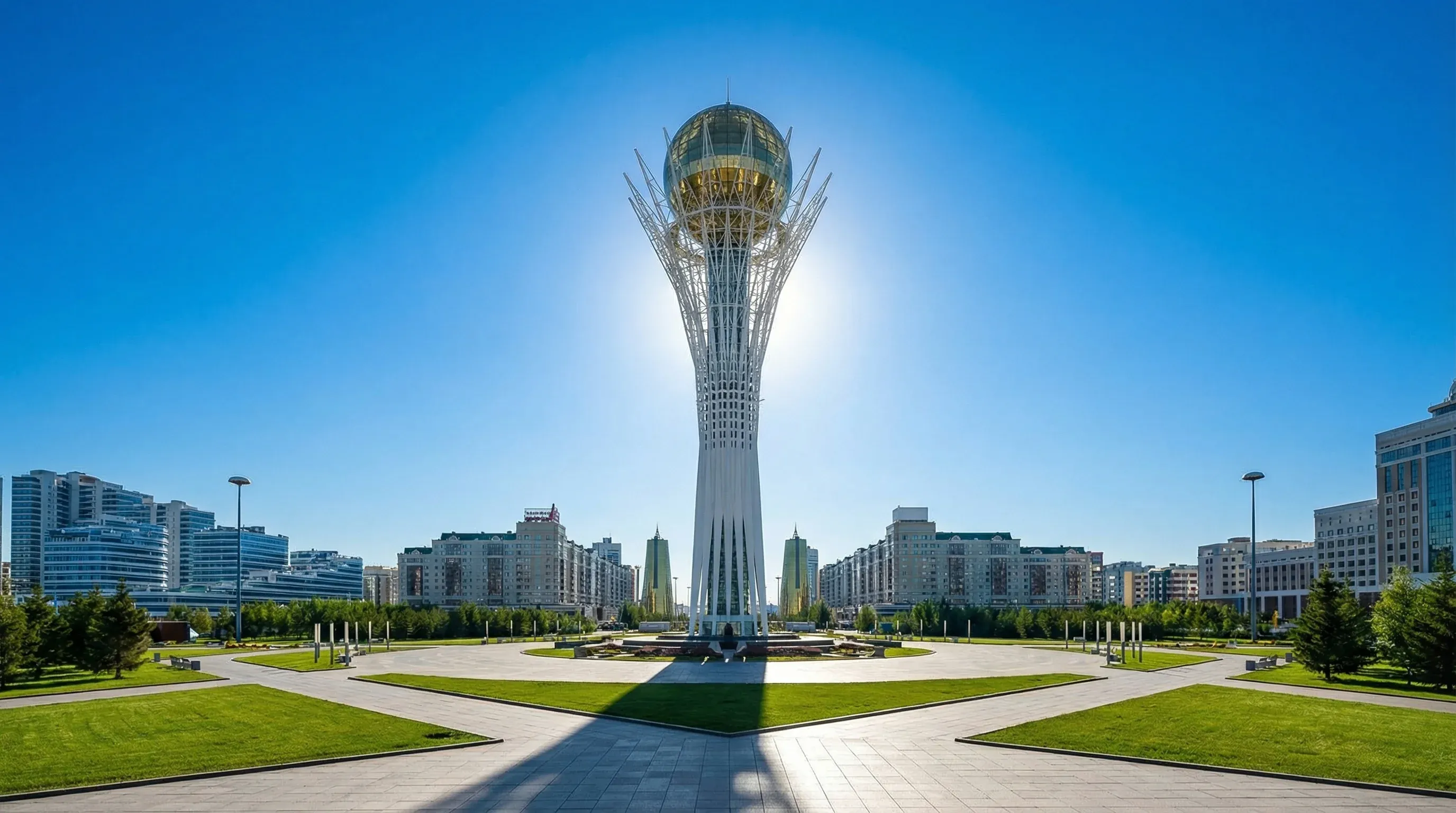

Nur-Sultan (Astana) & North
Futuristic cityscapes and ancient pines 🏙️🌲
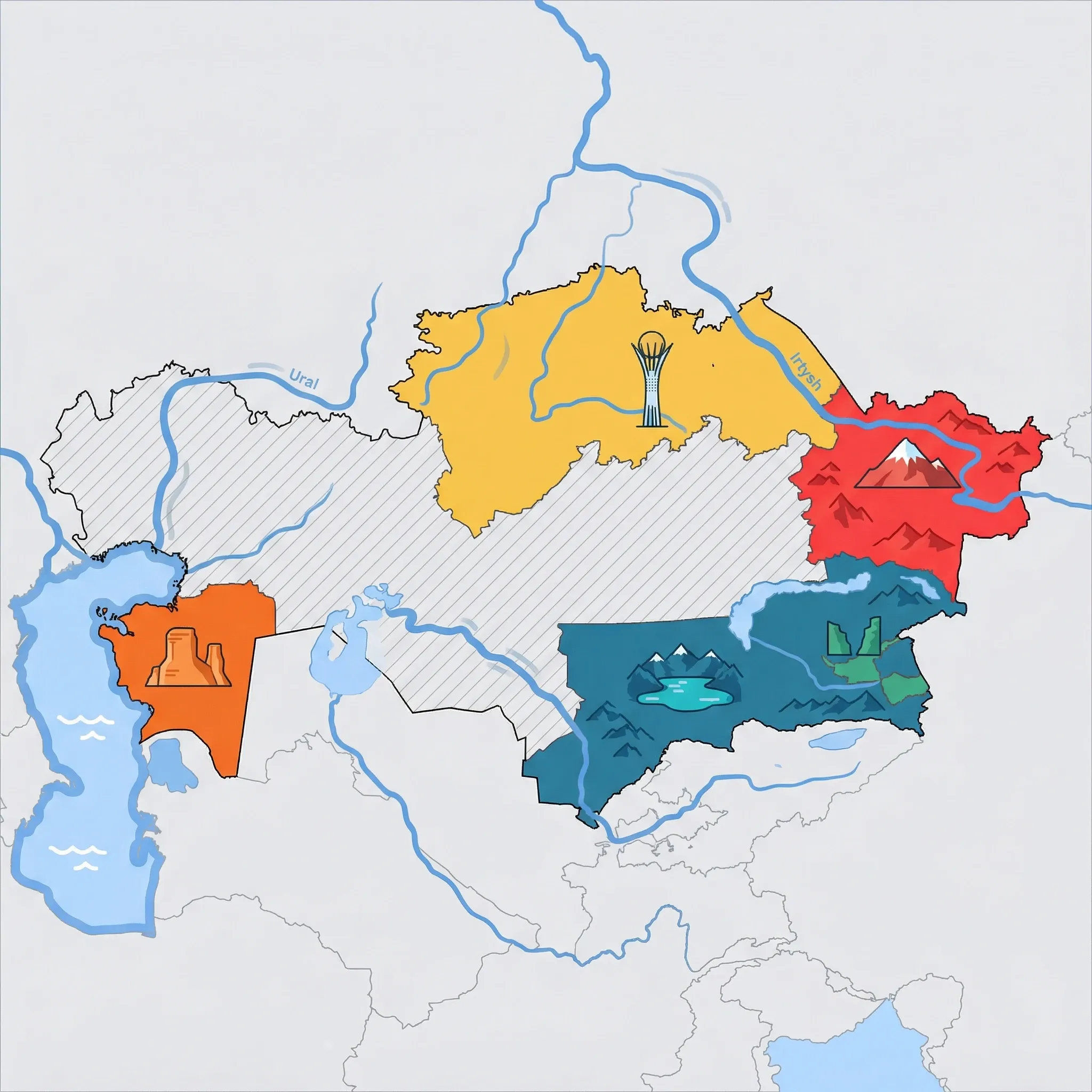
Click a region to explore
Astana is one of the world's strangest and most fascinating capitals. Built rapidly on the windswept northern steppe, it is a showcase of futuristic architecture designed by global heavyweights like Norman Foster. For families, the city feels like a sci-fi movie set. The sheer scale of the buildings, the glowing lights at night, and the immaculate broad avenues are impressive. Because the climate is extreme—the second coldest capital in the world after Ulaanbaatar—the city is designed for indoor living. Massive entertainment centers, indoor beaches, and oceanariums make it a great destination even in bad weather. The left bank is the modern administrative center, while the right bank retains a older, Soviet-era feel.
However, the region isn't just concrete. A few hours north lies Burabay (Borovoe) National Park, often called "The Pearl of Kazakhstan." Here, mountains rise abruptly from the flat plains, covered in pine forests and interspersed with crystal-clear lakes like Lake Borovoe. It is a place of legends; almost every rock formation has a myth attached to it, usually involving warriors or tragic lovers, which can captivate older children. South of the capital, the Korgalzhyn Nature Reserve is a birdwatcher's paradise and the most northern nesting ground of the pink flamingo—a surreal sight in Central Asia.
Key Attractions
In the city, the Baiterek Tower is the icon; visitors place their hand in the golden print of the first President inside the golden sphere at the top. The Khan Shatyr is a massive translucent tent containing a shopping mall, a dino park, and a beach club with sand imported from the Maldives—a hit with kids in winter. Just outside the city, the ALZHIR museum offers a somber look at history (Soviet labor camps), suitable for older teenagers. In nature, Burabay (Borovoe) National Park is the main draw. Families can rent boats on Lake Borovoe, visit the "glade of Ablai Khan," and hike up to lookouts. The sheer contrast between the vertical pines and the horizontal steppe is beautiful.
Practical Advice
Astana is extremely windy. Even in summer, evenings can be cool. In winter (November–March), temperatures drop to -30°C (-22°F), and outdoor sightseeing is limited to minutes. Summer is pleasant but mosquito-heavy near the lakes. Burabay is very popular in July; book accommodation months in advance.
Food & Drink
Typical meal times: Lunch 1:00 pm–2:00 pm. Dinner 7:00 pm–9:00 pm. Malls have food courts open all day.
Typical meal costs: Slightly higher than the rest of the country. A mid-range family dinner costs 15,000–25,000 KZT (approx. $30–50 USD / €28–46 EUR).
Dietary requirements: The capital has excellent international options (Italian, Sushi, Burger joints) catering to all diets. Gluten-free is understood in high-end venues.
Signature dishes:
- Beshbarmak – The national dish of boiled meat (horse or beef) and flat noodle sheets. In the north, it is served on huge platters and is the centerpiece of hospitality.
- Kurt – Hard, salty balls of dried cheese; a polarizing snack that kids either love or hate, but essential to try.
- Kymyz – Fermented mare's milk, slightly sour and fizzy.
Why this score?
Tourism here is largely centered around the developed city center or the manicured pine forests of Burabay. Most activities are low-impact, such as walking through parks or visiting indoor entertainment complexes, offering very little rugged adventure.
Why this score?
The city features world-class medical facilities, including specialized national centers designed to meet international standards. Foreigners have access to high-quality private hospitals with modern technology and many English-speaking professionals.
Why this score?
The capital attracts many international business travelers and diplomatic visitors, alongside domestic tourists visiting the Burabay resort area. While its futuristic architecture is a draw, it lacks the broader international leisure appeal found in the southern Almaty region.

Astana has a wide range of prices. You can find luxury 5-star hotels for $200+ USD, but also very affordable modern apartments for 15,000–20,000 KZT (approx. $30–40 USD / €28–37 EUR) per night. Food in malls is cheap; fine dining is expensive. Burabay in high season (July) sees prices triple for accommodation.

Getting Here & Around
Getting Here
- Airports – Nursultan Nazarbayev International Airport (NQZ) connects to major hubs. It is modern and efficient.
- Train – The new Nurly Jol station is a architectural marvel itself. High-speed Talgo trains connect to Almaty and Shymkent.
- Driving – A six-lane toll highway connects Astana to Burabay (Borovoe) National Park (approx. 2.5 hours).
Getting Around
- Taxi – Yandex Go is essential. Distances between buildings are vast and not walkable for small legs.
- Bus – The city bus system is modern, with dedicated lanes, but can be confusing for non-Russian speakers.
- Walking – Only pleasant on the river promenade (Ishim River) or in parks. The main ceremonial axis is too large and windy for casual walking.
Nearby Airports (5 airports)
Kokshetau Airport
KOVKokshetau
Kostanay Airport
KSNKostanay
Nursultan Nazarbayev
NQZAstana
Petropavlovsk Airport
PPKPetropavlovsk
Pavlodar Airport
PWQPavlodar
View full flight map for Kazakhstan →
Official Links

Packing List
The steppe winds are constant and cut through regular sweaters.
The steppe and lake areas (Burabay) are swarming with midges in June/July.
You will take shoes off frequently entering mosques, yurts, or homes.
The dry, dusty wind can be irritating to children's eyes.
Locals are incredibly hospitable; giving a small souvenir from your home country to hosts or guides is a warm, culturally appropriate gesture.
The climate is extremely continental and dry. The steppe wind and harsh sun can chap skin very quickly, even in cooler weather.
Tea is the national obsession. Having a flask for hot tea (or cold water) is essential for long car journeys across the vast, empty steppe.
Public toilets outside major cities can be basic (squat toilets) and often lack running water or soap.

Activities & Best Times

Hiking, wildlife, outdoor exploration, ecotourism
Burabay National Park features a unique landscape of granite mountains and pine forests providing a refreshing contrast to the surrounding steppe. Summer offers optimal conditions for family hiking and lake exploration, while extreme winter temperatures make the wilderness largely inaccessible.

Urban tourism, museums, historical sites, architecture
Astana is a premier showcase of futuristic architecture and world-class museums like the National Museum of Kazakhstan. The short summer window is the only time the city's outdoor monuments and parks are comfortably navigable for families due to the region's intense continental winters.

Learning experiences, scientific sites, historical education
The Nur Alem Museum of Future Energy is a world-class scientific landmark from Expo 2017 that serves as a primary draw for inquisitive families. While the facility is indoors, visiting is most practical during the warmer months when the surrounding Expo site and city infrastructure are fully operational.

Winter sports, ski resorts, snow activities
The region offers specialized winter sports facilities, including the National Ski Center in Shchuchinsk, with reliable snow cover and cold temperatures. The season is strictly confined to the deepest winter months when infrastructure and snow conditions are consistent.

Sport tourism, fitness activities, active recreation
The area around Burabay provides high-quality infrastructure for cycling and active pursuits with well-maintained trails. These facilities are primarily utilized during the warm, dry summer, as snow and extreme cold dominate the landscape for the majority of the year.
Amusement parks, family entertainment venues
Features internationally unique climate-controlled attractions like Sky Beach Club and Ailand Oceanarium, providing entertainment regardless of outside weather. Peak visitation aligns with the summer months and the winter holiday seasons when international families are most active.

Scenic drives, countryside tours, route-based travel
The high-quality A1 expressway offers a scenic and smooth drive between the capital and the lake regions of the north. Road travel is only recommended during summer to avoid the frequent blizzards and road closures characteristic of northern Kazakhstan's harsh winters.

Attractions (14 total)



Public Holidays & Calendar Next 12 months
Public holidays, festivals, cultural celebrations, and seasonal natural phenomena coming up in Nur-Sultan (Astana) & North over the next 12 months.
Loading holidays and events...

Travel Advisory
A majority of major government agencies assess Kazakhstan as a low-risk destination where standard safety practices are sufficient, although a minority of agencies suggest elevated caution due to crime and historical civil unrest.
Safety Topics
Traveller Advice (3 groups)

While same-sex relations are legal, the country remains socially conservative. Public displays of affection may attract negative attention or harassment.

Always carry your original passport or a high-quality copy, as local police frequently conduct identity checks. Registration with migration authorities is usually handled by your hotel, but you should verify this within three days of arrival.

Solo female travellers should exercise extra care when walking alone at night or in poorly lit areas. Using reputable taxi apps rather than hailing cars on the street is highly recommended for safety.
Agency Summaries
Ireland advises a heightened level of vigilance due to specific security risks and potential for civil unrest. Travellers are encouraged to stay well-informed of local news.
A higher level of caution is advised primarily due to the risk of crime, including robbery and assault in urban centers. Public gatherings should be avoided as they can escalate without notice.
No major travel warnings are in place. Visitors are advised to respect local customs and laws, particularly regarding ID carriage and photography of sensitive sites. Medical facilities vary in quality outside major cities.
Travellers should maintain standard safety awareness similar to what they would in Canada. Be alert in public places and secure personal belongings. Cybercrime and online scams are frequently reported issues.
The safety environment is considered stable. However, there is a persistent threat of terrorism across the region, and travellers should avoid large public gatherings or protests.
The country is generally stable, and visitors should follow routine safety procedures. It is recommended to stay informed through local media and have a plan for emergency situations.
Information is provided for general guidance only and does not constitute travel, safety, medical, or legal advice. Conditions may change. Users are responsible for independently verifying information before travel.