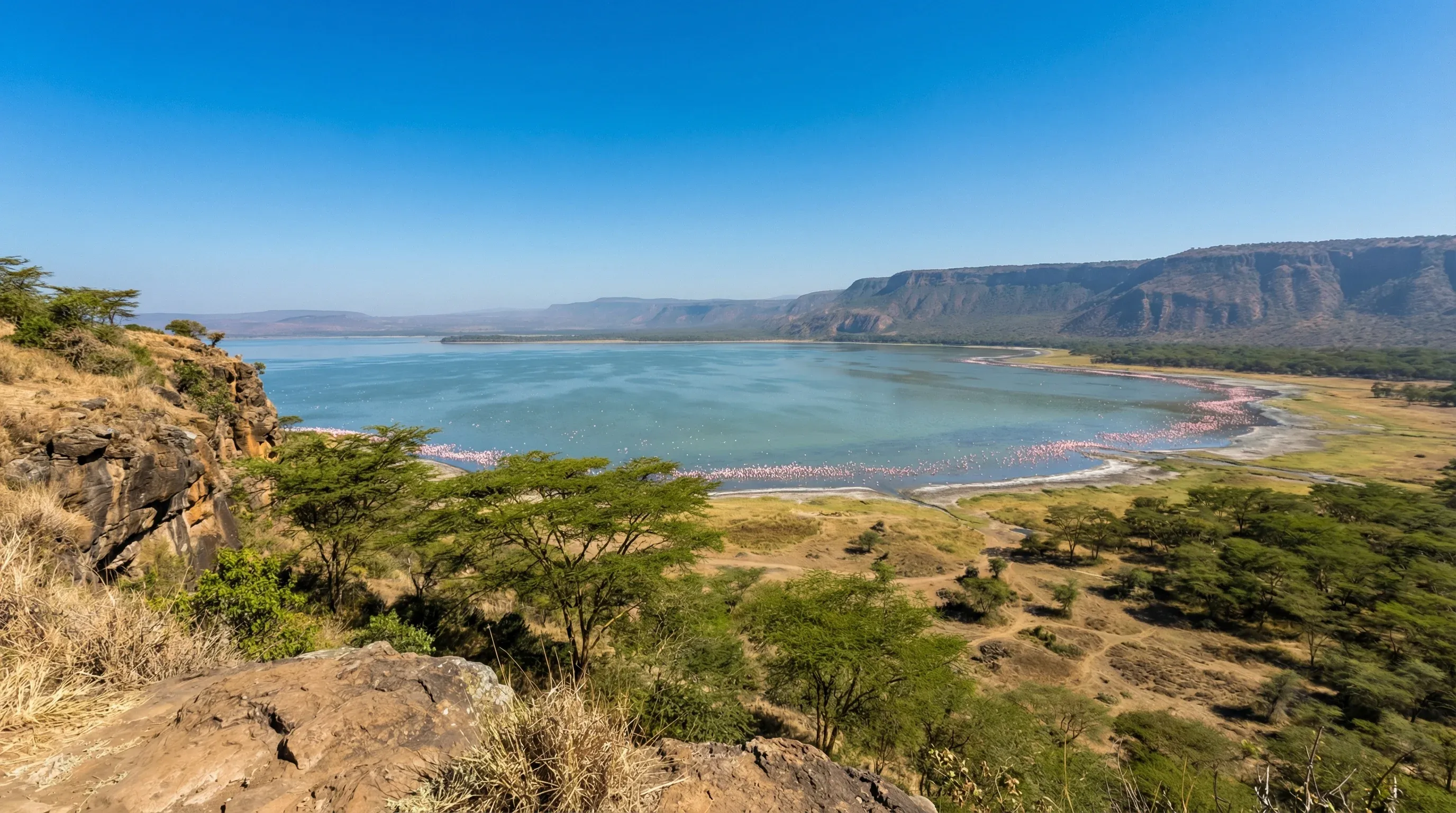

Lake Nakuru & Rift Valley
Lakes, craters, and cycling among the wildlife 🦩🚲
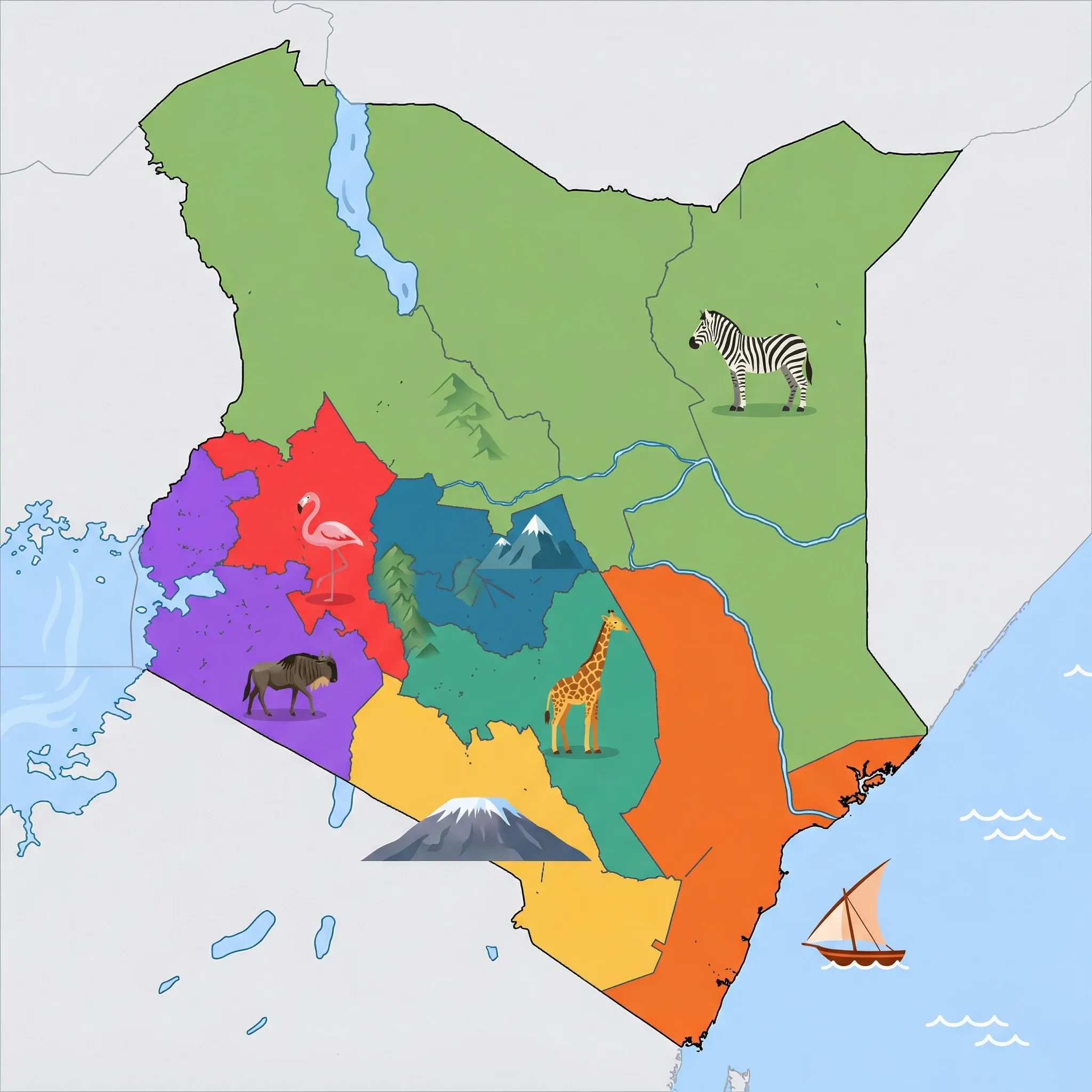
Click a region to explore
The Great Rift Valley offers a visually stunning and geologically fascinating break from the standard savannah safari. This region is defined by its chain of soda and freshwater lakes, towering escarpments, and volcanic craters. For families, the Rift Valley is less about sitting in a car for hours and more about active exploration. It is one of the few places in Kenya where you can safely hike, cycle, and boat within wildlife areas. The drive from Nairobi is scenic, dropping down the escarpment with breathtaking views that provide a great geography lesson for school-aged children.
The vibe here is relaxed and resort-focused, with Lake Naivasha serving as a hub for weekend getaways. The altitude keeps the climate pleasant—warm days and crisp nights. Birdwatching is world-class, but even for those who aren't twitchers, the sight of thousands of pelicans or flamingos painting the shorelines pink is unforgettable. It's an easy, accessible region that works perfectly as a 'soft landing' into Africa for families with younger children or as an active break between harder safari itineraries.
Key Attractions
Lake Nakuru National Park is a compact, fenced park that offers arguably the best chance in Kenya to see rhinos (both black and white) at close range. While the flamingo population fluctuates with water levels, the park also hosts tree-climbing lions and leopards.
For active families, Hell's Gate National Park is a unique thrill. It is one of the few national parks where you can hire bicycles and ride alongside zebras, giraffes, and warthogs. The scenery, with its towering cliffs and geothermal steam vents, inspired the landscapes of The Lion King. Nearby, Lake Naivasha offers boat safaris where you can float safely near pods of hippos and watch fish eagles snatch prey from the water.
Practical Advice
This region is accessible year-round, though rain can make the trails in Hell's Gate muddy (flash floods are a risk in the gorges—always check with rangers). Naivasha is malaria-free or low-risk due to altitude, which is a plus for families.
Food & Drink
Typical meal times: Lunch is usually 1:00 pm to 2:30 pm. Dinner is served from 7:00 pm to 9:00 pm.
Typical meal costs: A fresh fish lunch for a family of four at a lakeside restaurant costs KES 4,000–7,000 (approx. $30–54 USD / €28–50 EUR).
Dietary requirements: Very accommodating. Fresh produce is grown locally in Naivasha, so salads and vegetarian dishes are excellent.
Signature dishes:
- Fried Tilapia – Fresh freshwater fish from the lakes, usually deep-fried whole and served with lime and salt.
- Ugali with Sukuma Wiki – The staple maize meal served with collard greens; a filling, energy-rich meal popular with locals.
- Crayfish – Lake Naivasha is famous for freshwater crayfish, often served in garlic butter or masala sauce.
Why this score?
The region offers moderate adventure through activities like cycling among wildlife in Hell's Gate National Park and hiking the crater of Mount Longonot. These activities are physically engaging but well-regulated and relatively safe for active families. The infrastructure is better developed than the northern or southern parks, reducing the overall sense of ruggedness.
Why this score?
The city of Nakuru and the town of Naivasha have several private hospitals and clinics that can handle minor emergencies and common ailments. While these facilities are superior to those in the deep safari reserves, they still fall short of international standards for complex procedures. Many travelers choose to drive back to Nairobi for anything beyond basic medical care due to the proximity.
Why this score?
As one of the most accessible regions from Nairobi, it sees a high volume of both international day-trippers and domestic weekenders. Lake Nakuru's rhino sanctuary and Lake Naivasha's boat trips are major draws for family travelers seeking wildlife close to the capital. However, it lacks the 'bucket-list' status of the Masai Mara, placing it in the moderate popularity bracket.

Generally cheaper than the Mara or Samburu. Accommodation ranges from budget campsites to high-end colonial farmhouses. Family cottages are common and good value. Expect to pay KES 20,000–45,000 (approx. $155–350 USD / €140–320 EUR) per night for a family room in a decent lodge.

Getting Here & Around
Getting Here
- Driving – The primary way to arrive. It is a scenic 2–3 hour drive (depending on traffic) from Nairobi down the escarpment on the A104 highway.
- Airports – Lake Naivasha and Nakuru have airstrips (Loldia, Naishi) for charter flights, but driving is more common due to proximity to the capital.
Getting Around
- Car – A private vehicle or driver is essential to move between the lakes and parks.
- Bicycle – Uniquely available for hire inside Hell's Gate National Park for a family ride on the wild side.
- Boat – Private boat hires are the standard way to explore the waters of Lake Naivasha.
Nearby Airports (2 airports)
Eldoret International
EDLEldoret
Kitale
KTLKitale
View full flight map for Kenya →

Packing List
The Rift Valley altitude means evenings and early mornings can be surprisingly chilly.
Essential for cycling in Hell's Gate or hiking Mount Longonot to protect against thorns.
Lakeside locations can have mosquitoes and midges in the evenings.
Small safari planes strictly forbid hard-shell suitcases; bags must be squashed into tight holds.
Safari vehicles are open-sided; fine dust covers everything during game drives.
Avoid dark blue and black which attract painful tsetse flies, and bright white which scares animals.
Many eco-lodges run on solar or generators that turn off at night; essential for bathroom trips.
Single-use plastic bottles are strictly banned in all National Parks and forests.
Animals can be distant; having their own pair keeps kids engaged and prevents arguments.

Activities & Best Times

Hiking, wildlife, outdoor exploration, ecotourism
A world-class destination offering unique walking and cycling safaris among herds of plains game in dramatic volcanic landscapes like Hell's Gate and Mount Longonot. Peak visitation occurs during the dry seasons when wildlife congregates at water sources and trails are safest for family exploration.

Urban tourism, museums, historical sites, architecture
Features authentic heritage sites such as Lord Egerton Castle and Hyrax Hill, providing sophisticated families with a deep dive into Kenya's colonial and prehistoric history. These cultural landmarks are accessible most of the year, though the heavy rains of April and May can make rural access roads challenging.

Sport tourism, fitness activities, active recreation
Offers exceptional natural infrastructure for high-altitude hiking and rock climbing, with Fischer's Tower and the Mount Longonot crater rim being regional highlights. Activity is best in the drier months to avoid the slippery volcanic soils and flash flood risks in the gorges during the long rains.

Events, celebrations, seasonal attractions
Safari Rally Kenya is a WRC World Championship event that attracts international competitors and spectators. While not as globally prominent as festivals in some regions, it's a major international motorsport event and deserves 'good' rating rather than 'marginal'.
Scenic drives, countryside tours, route-based travel
The Great Rift Valley Escarpment provides one of the world's most dramatic scenic drives, complemented by accessible lake-side loops. Driving is optimal when visibility is clear and unpaved secondary roads remain firm, avoiding the peak rainy months of April and May.

Spa retreats, wellness centers, peaceful getaways
Natural hot springs and geothermal spa facilities utilize the region's volcanic activity for unique therapeutic experiences. These outdoor-focused wellness spots are most appealing during the dry seasons when cooler air temperatures contrast pleasantly with the warm waters.



Public Holidays & Calendar Next 12 months
Public holidays, festivals, cultural celebrations, and seasonal natural phenomena coming up in Lake Nakuru & Rift Valley over the next 12 months.
Loading holidays and events...

Travel Advisory
All major global agencies maintain that travel to Kenya requires increased vigilance. While the country is open to tourism, there are persistent threats from terrorism and violent crime. Several agencies escalate their warnings to 'Reconsider Travel' or 'Do Not Travel' for specific regions, particularly those bordering Somalia, South Sudan, and Ethiopia, as well as certain high-crime neighborhoods in Nairobi.
Safety Topics
Traveller Advice (4 groups)

Female travellers should be cautious about travelling alone, particularly in the evening. Sexual assault risks exist in crowded city areas and some beach resorts.

Visitors should avoid displaying high-value items, limit road travel after dark, and use only trusted transportation services. It is essential to monitor local news for updates on security alerts and avoid any areas where large crowds or protests are gathering.
Staff from international organizations are advised that they may be specifically targeted for kidnapping by extremist groups in northeastern counties. Strict organizational security protocols and coordination with local authorities are highly recommended.

Sexual acts between same-sex individuals are illegal and can lead to imprisonment. Given conservative social attitudes, discretion is advised to avoid harassment or legal complications.
Agency Summaries
While general travel is possible, the government warns of a heightened terror threat. Strict 'no-travel' zones exist for areas bordering Somalia and parts of the northern coast.
Citizens are encouraged to maintain high awareness of their surroundings due to political instability, potential for demonstrations, and local security concerns.
Heightened safety risks from terrorism and crime exceed what is typical for New Zealanders. Specific urban neighborhoods and border regions are designated as higher risk.
Travellers should be extremely vigilant due to the pervasive threat of terrorism and high rates of violent crime across the nation.
Increased safety precautions are necessary throughout the country due to the danger of extremist violence and street crime. Regional restrictions apply to volatile border zones.
Vigilance is required because of criminal activity, the risk of terrorist attacks, kidnapping, and periodic civil unrest. Specific border regions carry significantly higher danger.
Information is provided for general guidance only and does not constitute travel, safety, medical, or legal advice. Conditions may change. Users are responsible for independently verifying information before travel.