
Northern Kenya (Samburu, Turkana)
The rugged frontier of the Special Five 🦒🏜️
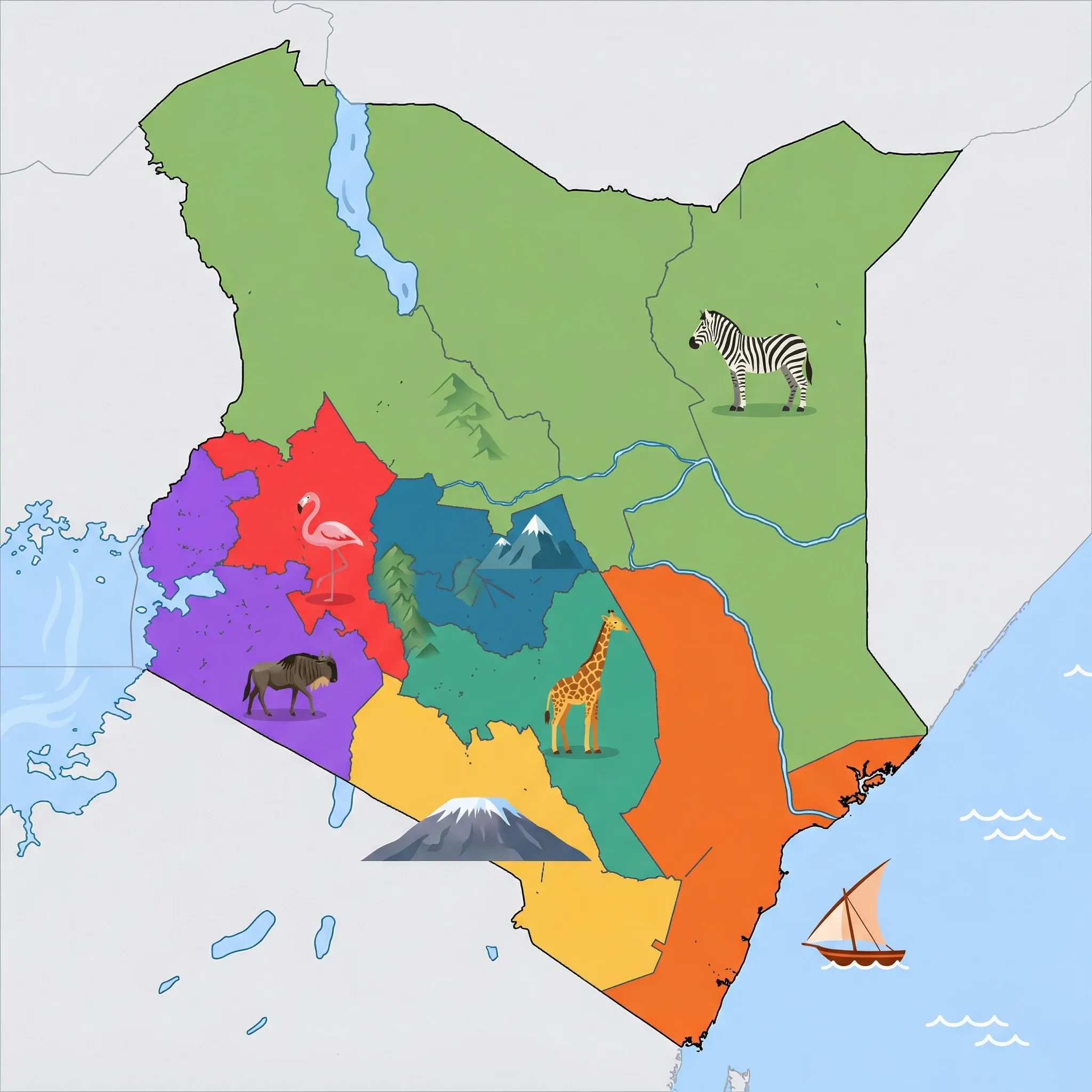
Click a region to explore
⚠️ SAFETY WARNING: Due to high risks of banditry, terrorism, and inter-communal violence, government agencies (including the USA, UK, and Canada) advise travelers to avoid all travel to border areas and much of Turkana. Samburu National Reserve is generally accessible via organized tours, but independent travel is dangerous. Families are strongly urged to consult their own government's official travel advisory before considering a trip, as circumstances and risk assessments vary.
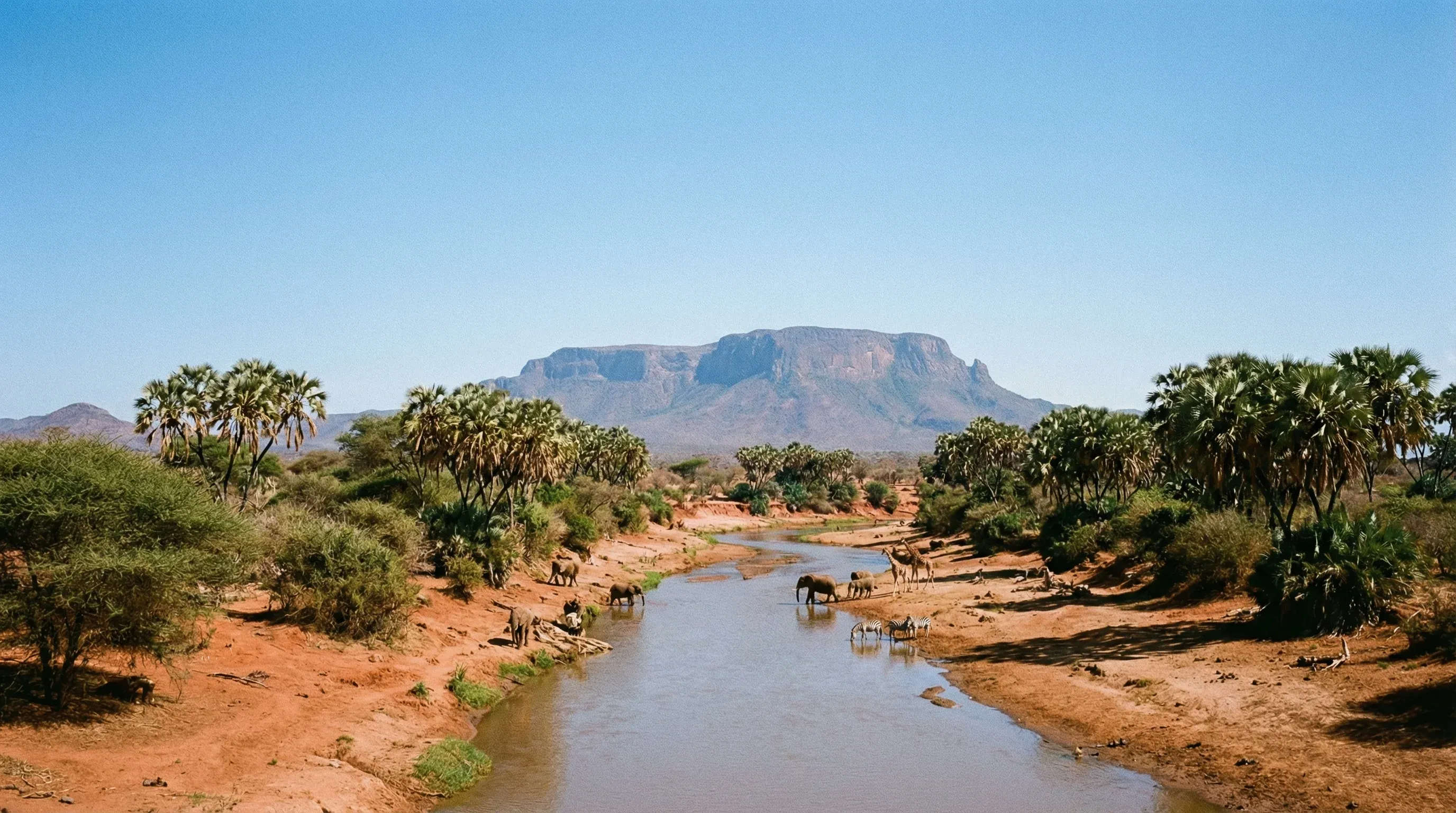
For families who have already done a standard safari, the North offers something distinct. The landscape changes dramatically to red dust, doum palms, and rocky outcrops. This is the home of the Samburu people, cousins of the Maasai, who are incredibly welcoming and vividly adorned in colorful beadwork. The cultural interactions here feel authentic and less commercialized. The heat is drier and more intense, and the wildlife has adapted in fascinating ways.
The primary draw for families is the Samburu National Reserve and the adjacent Buffalo Springs. Here, you search for the "Samburu Special Five"—animals that are rare or absent in the south: the Reticulated Giraffe, Grevy's Zebra, Beisa Oryx, Gerenuk (a long-necked antelope that stands on hind legs to eat), and the Somali Ostrich. Seeing these strange and beautiful creatures provides a fresh checklist for children. Further north lies the Jade Sea, Lake Turkana, a place of stark, lunar beauty, though its remoteness makes it a destination only for families with older teens used to expedition-style travel.
Key Attractions
Samburu National Reserve is the anchor of this region. The Ewaso Ng'iro river cuts through the dust, attracting huge herds of elephants that dig in the dry riverbeds for water—a fascinating behavior to witness. Leopard sightings here are also notoriously good.
Lake Turkana is the world's largest permanent desert lake and a UNESCO World Heritage site. It is famous for its massive Nile crocodile population and the cradle of mankind fossils, but access is difficult and requires careful planning with specialist operators.
Practical Advice
This is a hot region. Midday temperatures can soar. Lodges with swimming pools are practically mandatory for families. The best time to visit is during the dry seasons, though the heat is constant. Samburu is accessible and safe with operators; Turkana requires expedition planning.
Food & Drink
Typical meal times: Similar to other safari regions. Breakfast 6:30 am, Lunch 1:00 pm, Dinner 8:00 pm.
Typical meal costs: Almost entirely lodge-based and all-inclusive. Independent dining options do not exist in the reserves.
Dietary requirements: Lodges cater to international standards. Supply chains are longer, so advise on allergies well in advance.
Signature dishes:
- Camel Milk/Meat – In the far north, camels are livestock. Some adventurous lodges offer camel stews or milk tasting.
- Goat Stew – The staple protein of the pastoralist communities, often served at cultural nights in camps.
- Posho – A maize meal similar to Ugali, providing the energy needed for the harsh environment.
Why this score?
Northern Kenya is true expedition territory, featuring scorched deserts, volcanic landscapes, and remote tribal lands. Travel often requires 4x4 convoys, and infrastructure like paved roads or electricity is scarce once north of Isiolo. The extreme heat and isolation make it one of the most adventurous and physically demanding regions for families in all of Africa.
Why this score?
Medical services are almost non-existent across this massive region, with only the most basic government dispensaries available in small towns. Anyone traveling here must be entirely self-reliant and have comprehensive medical evacuation insurance. In the event of an emergency, the distance to Nairobi is so great that response times can be dangerously slow even with air support.
Why this score?
This vast area is the least visited part of Kenya, appealing primarily to intrepid travelers and repeat visitors seeking a 'frontier' experience. Samburu National Reserve gets a moderate flow of tourists, but the areas further north like Lake Turkana see very few foreigners due to the distance and travel costs. It remains an emerging, niche destination for most global travelers.

Samburu offers a range of lodges from mid-range to high-end luxury. Costs are comparable to the Mara but can be slightly lower in low season. Expect KES 30,000–60,000 (approx. $230–460 USD / €210–420 EUR) per night for a family. Expedition travel to Turkana is expensive due to logistics.

Getting Here & Around
Getting Here
- Airports – Flying is the safest and most comfortable option. Flights run from Nairobi Wilson to Samburu (Oryx, Buffalo Springs airstrips).
- Driving – The road from Nairobi to Isiolo is paved and good (approx. 5 hours). Beyond Isiolo, road conditions vary and security escorts may be required for far northern travel.
Getting Around
- 4x4 Safari Vehicle – Essential. The terrain is rough and sandy. Only travel with reputable tour operators who know the area and security situation.
- Charter Flights – The only viable way to reach Lake Turkana for a short trip.
Nearby Airports (2 airports)
Lodwar
LOKLodwar
Wajir
WJRWajir
View full flight map for Kenya →
Official Links

Packing List
The dry heat is intense and dehydrating; water alone sometimes isn't enough.
The sun is far stronger here than in Nairobi; total coverage is needed.
To cover nose and mouth during game drives; the dust is fine and pervasive.
Small safari planes strictly forbid hard-shell suitcases; bags must be squashed into tight holds.
Safari vehicles are open-sided; fine dust covers everything during game drives.
Avoid dark blue and black which attract painful tsetse flies, and bright white which scares animals.
Many eco-lodges run on solar or generators that turn off at night; essential for bathroom trips.
Single-use plastic bottles are strictly banned in all National Parks and forests.
Animals can be distant; having their own pair keeps kids engaged and prevents arguments.

Activities & Best Times

Hiking, wildlife, outdoor exploration, ecotourism
Offers world-class immersion in arid-land ecosystems with unique 'Special Five' wildlife in Samburu and the dramatic volcanic landscapes of Lake Turkana. Peak visitation occurs during dry seasons when wildlife congregates at water sources and remote park tracks remain navigable.

Urban tourism, museums, historical sites, architecture
Rich in authentic tribal heritage and significant archaeological sites like Koobi Fora, providing deep insight into human origins and pastoralist traditions. Dry months are optimal for accessing remote cultural areas and museums without the disruption of seasonal rains.

Scenic drives, countryside tours, route-based travel
The legendary Jade Sea route and the scenic Marsabit highway offer some of Africa's most iconic and challenging expedition driving. These routes require dry conditions for safety on unpaved sections; heavy rains in April and November can make tracks entirely impassable.

Sport tourism, fitness activities, active recreation
Features premier trekking and rock climbing opportunities at Mount Ololokwe and within the Ndoto Mountains. Peak months provide the necessary dry footing and clear visibility for mountain activities, while wet months pose flash flood risks in sand rivers and slippery trail conditions.

Learning experiences, scientific sites, historical education
Home to the world-renowned 'Cradle of Mankind' research sites, offering profound scientific value for families interested in paleoanthropology. Access to these remote research stations is highly dependent on dry conditions, making the peak seasons essential for a successful visit.

Attractions (6 total)



Public Holidays & Calendar Next 12 months
Public holidays, festivals, cultural celebrations, and seasonal natural phenomena coming up in Northern Kenya (Samburu, Turkana) over the next 12 months.
Loading holidays and events...

Travel Advisory
All major global agencies maintain that travel to Kenya requires increased vigilance. While the country is open to tourism, there are persistent threats from terrorism and violent crime. Several agencies escalate their warnings to 'Reconsider Travel' or 'Do Not Travel' for specific regions, particularly those bordering Somalia, South Sudan, and Ethiopia, as well as certain high-crime neighborhoods in Nairobi.
Safety Topics
Traveller Advice (4 groups)

Female travellers should be cautious about travelling alone, particularly in the evening. Sexual assault risks exist in crowded city areas and some beach resorts.

Visitors should avoid displaying high-value items, limit road travel after dark, and use only trusted transportation services. It is essential to monitor local news for updates on security alerts and avoid any areas where large crowds or protests are gathering.

Staff from international organizations are advised that they may be specifically targeted for kidnapping by extremist groups in northeastern counties. Strict organizational security protocols and coordination with local authorities are highly recommended.

Sexual acts between same-sex individuals are illegal and can lead to imprisonment. Given conservative social attitudes, discretion is advised to avoid harassment or legal complications.
Agency Summaries
While general travel is possible, the government warns of a heightened terror threat. Strict 'no-travel' zones exist for areas bordering Somalia and parts of the northern coast.
Citizens are encouraged to maintain high awareness of their surroundings due to political instability, potential for demonstrations, and local security concerns.
Heightened safety risks from terrorism and crime exceed what is typical for New Zealanders. Specific urban neighborhoods and border regions are designated as higher risk.
Travellers should be extremely vigilant due to the pervasive threat of terrorism and high rates of violent crime across the nation.
Increased safety precautions are necessary throughout the country due to the danger of extremist violence and street crime. Regional restrictions apply to volatile border zones.
Vigilance is required because of criminal activity, the risk of terrorist attacks, kidnapping, and periodic civil unrest. Specific border regions carry significantly higher danger.
Information is provided for general guidance only and does not constitute travel, safety, medical, or legal advice. Conditions may change. Users are responsible for independently verifying information before travel.