

⚠️ SAFETY WARNING: Due to active regional military conflict and the closure of national airspace, government agencies (including CA, UK, AU, IE, and NZ) currently advise travelers to avoid all travel to Kuwait. The US State Department recommends exercising normal precautions but notes specific risks in districts near the Iraq border. The security situation can deteriorate rapidly, potentially leading to shelter-in-place orders. Families are strongly urged to consult their own government's official travel advisory before considering a trip, as circumstances and risk assessments vary.
Overview
Located at the tip of the Persian Gulf, Kuwait is a dynamic blend of ancient Bedouin traditions and oil-rich modernity. For families, it presents a unique landscape where golden desert dunes meet a glittering coastline. The country is small and easy to navigate, with the capital, Kuwait City, serving as the hub for culture, dining, and entertainment. While summer temperatures can be extreme, the cooler winter months (November to March) offer perfect weather for beach picnics and desert camping.
Kuwaiti culture revolves around the family unit, making it an incredibly welcoming destination for children. You will find that kids are treated with warmth and affection everywhere, from luxury hotel lobbies to traditional markets. The country has invested heavily in edutainment; its museums and science centers are world-class, designed to engage young minds. While the skyline is futuristic, the heart of the country remains traditional, offering families a chance to experience the famous Arab hospitality, diwaniya culture, and delicious cuisine in a safe, modern environment.
Key Attractions
No visit is complete without seeing the country's most famous landmark, the Kuwait Towers. These three slender towers rising from the coast offer a rotating viewing sphere with panoramic vistas of the city and sea-a hit with children who love the spaceship-like aesthetic. Just a short drive away, the Sheikh Jaber Al-Ahmad Cultural Centre is an architectural jewel set within spacious public parks. Families can enjoy the dancing fountains, walk through the beautifully manicured gardens, or attend family-friendly performances in the jewel-like opera house buildings.
For a blend of history and art, the Dar al Athar al Islamiyyah (Amricani Cultural Centre) is an accessible and engaging museum housed in a historic hospital building. It showcases exquisite Islamic art and often hosts workshops suitable for older children. To experience modern engineering at its finest, take a drive across the Sheikh Jaber Al-Ahmad Al-Sabah Causeway. This massive bridge connects the city to the northern regions and offers the sensation of driving across the open ocean, a memorable road trip experience for the whole family.
Beyond the architectural giants, families should explore The Scientific Center, which houses one of the largest aquariums in the Middle East and an IMAX theatre. For shopping and indoor play, The Avenues is not just a mall but a destination in itself, featuring air-conditioned districts that mimic European streets and massive play zones like KidZania and TekZone that provide hours of entertainment away from the heat.
Practical Advice
The best time to visit is between November and March, when temperatures are pleasant (15°C–25°C). Summers (May to September) are intensely hot, often exceeding 45°C, confining most activities indoors. Visas are available online (eVisa) or upon arrival for nationals of over 50 countries, but rules change frequently, so checking official sources is vital. Healthcare is excellent, with high-standard private hospitals widely available. Dress modestly in public spaces like malls and souqs-covering shoulders and knees is recommended for both adults and teenagers to respect local customs.
Food & Drink
Typical meal times: Lunch is the main meal of the day, typically served from 1:00 pm to 3:30 pm. Dinner is eaten quite late by Western standards, usually starting from 8:30 pm to 11:00 pm, though restaurants are open all day.
Typical meal costs: 4–12 KWD (approx. $13–39 USD / €12–33 EUR) per person for a mid-range meal. Fine dining can easily exceed 20 KWD ($65 USD) per head.
Dietary requirements: Vegetarian options are widely available (hummus, falafel, salads), though the main cuisine is meat-heavy. Gluten-free awareness is growing in modern cafés but less common in traditional spots. Nuts (pine nuts, almonds, pistachios) are frequent garnishes, so alert staff to allergies.
Family-friendly dining: Kuwait is exceptionally family-friendly. Highchairs are standard, and children are welcome in almost all establishments, even late at night. Portions are often generous and meant for sharing.
Signature dishes:
- Machboos – The national dish consisting of fragrant rice cooked with meat (chicken or lamb) and a blend of spices, served with a red tomato sauce called daqqus.
- Mutabbaq Simach – Spiced fried fish (often Zubaidi, the national fish) served over savory rice, perfect for seafood-loving families.
- Gers Ogaily – A traditional sponge cake flavored with saffron, cardamom, and sesame seeds, often enjoyed with tea.
- Harees – A wholesome, porridge-like dish made of wheat and meat, slow-cooked until smooth and comforting.
Safety
Due to the current L3 advisory, safety is the primary concern for any travel. The regional security environment is unpredictable, with risks of military activity and airspace closures. Travelers should avoid all demonstrations and large political gatherings. Unexploded ordnance from past conflicts remains a risk in off-road desert areas near the Iraq border; families should strictly stick to well-travelled roads and official campsites. Crime rates in Kuwait are generally low, but standard precautions against petty theft should be taken in crowded markets.

Kuwait is an expensive destination due to its strong currency. A family of four can expect to spend around 80–120 KWD (approx. $260–390 USD / €240–360 EUR) per day for mid-range accommodation, meals, and transport. Dining ranges from cheap street shawarmas to very pricey high-end restaurants.
Age Suitability





Did you know? Kuwait welcomes approximately 123,000 international visitors per year.
Why this score?
The region is characterized by flat desert terrain and high levels of urban development, offering very little in terms of rugged or physically challenging adventure for families. Most recreational activities are centered around air-conditioned cultural centers, shopping malls, and well-maintained coastal parks like Al Shaheed Park. While desert excursions are possible, they are typically motorized and highly supported, lacking the wild or off-the-beaten-path feel of high-adventure destinations.
Why this score?
Kuwait features a sophisticated healthcare system with modern facilities and high standards of care that are easily accessible to international visitors. Hospitals are well-equipped with the latest technology, and English is commonly spoken among the highly trained medical staff, facilitating easy communication for foreign families. Although it is not a global hub for medical tourism, the quality of emergency and specialized services is excellent and reliable.
Why this score?
Kuwait is a niche destination that primarily attracts business travelers and regional visitors from neighboring GCC countries rather than a high volume of global leisure tourists. While it offers impressive cultural landmarks like the Kuwait Towers and the Sheikh Abdullah Al-Salem Cultural Centre, its total inbound tourism of approximately 122,500 annually remains low compared to international tourism hubs. The infrastructure is modern and luxurious but caters more to a domestic and business demographic.
Kuwait is an affluent country with a very strong currency (the Kuwaiti Dinar). Accommodation is the biggest expense, with family suites in 4-star hotels costing KWD 50–90 (approx. $160–290 USD / €150–270 EUR) per night. Dining offers a huge range; you can eat excellent street food for under KWD 2 (approx. $6.50 USD / €6 EUR) or spend KWD 30+ (approx. $98 USD / €90 EUR) per person in high-end restaurants.

Getting There & Around
Getting There
- By Air – Kuwait International Airport (KWI) is the primary gateway, served by major international carriers. It is located about 16km from the city center.
- By Land – The Nuwaiseeb border crossing connects Kuwait with Saudi Arabia. This is a common route for regional road trips, though queues can be long during holidays.
- Entry Requirements – Visas are required for most visitors. Many nationalities can obtain an eVisa or visa-on-arrival. Check your government website for the latest visa requirements, or use the IATA Travel Centre entry-requirements checker.
Getting Around
- Car Hire – The most practical way for families to explore. Roads are wide and modern, but local driving styles can be aggressive. An International Driving Permit is often required alongside your license.
- Taxis – Widely available and safe. Ride-hailing apps like Careem are more convenient and reliable for tourists than hailing street taxis (Orange/Beige cabs). Fares should be negotiated or metered.
- Buses – The KPTC and CityBus networks cover most of Kuwait. While cheap, they can be slow and are less commonly used by tourists.

Packing List
Temperatures can soar above 45°C; keeping water cold is essential for safety.
The combination of desert dust and constant strong air conditioning can be very drying.
Useful for women to cover shoulders in souqs and for warmth in freezing indoor AC.
Rapid dehydration is a risk in the summer heat; water alone may not be enough.
Footwear is frequently removed when visiting mosques, homes, or carpeted traditional spaces.

Activities & Best Times

City & Cultural
Very GoodUrban tourism, museums, historical sites, architecture
Home to the world-class Sheikh Abdullah Al Salem Cultural Centre and the authentic Souq Al-Mubarakiya, Kuwait offers a sophisticated blend of modern art and Gulf heritage. The cooler winter months are essential for walking tours and exploring the historic markets comfortably.

Adventure & Nature
GoodHiking, wildlife, outdoor exploration, ecotourism
While Kuwait offers desert experiences (Mutla Ridge trails, Al Jahra Pools), these are not internationally significant compared to global desert adventure destinations like Jordan's Wadi Rum, Namibia's dunes, or Oman's mountains. The rating should reflect regional rather than world-class appeal.

Beach & Sea
GoodBeach resorts, marine activities: diving, snorkelling, kite surfing, wind surfing, sailing
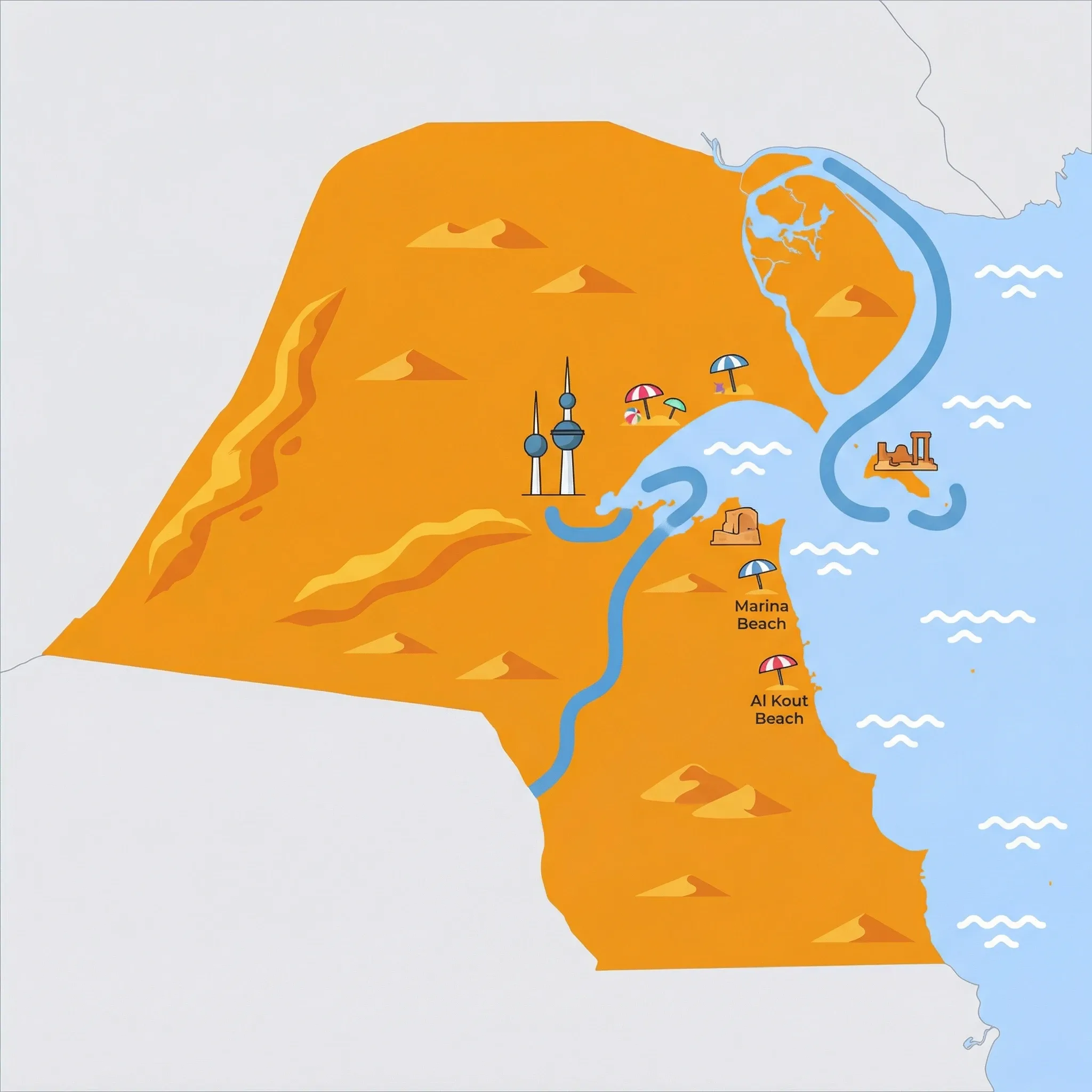
Offers quality coastal recreation at Marina Beach and historical excursions to Failaka Island. Peak months provide the ideal balance of warm seawater and manageable air temperatures for families.

Educational & Exploratory
GoodLearning experiences, scientific sites, historical education
The Sheikh Abdullah Al Salem Cultural Centre is a standout destination-level science and discovery complex. While indoor, it is most accessible during the cooler months when families can enjoy the surrounding park grounds.

Road Trips & Scenic
GoodScenic drives, countryside tours, route-based travel
The iconic Arabian Gulf Street and the Sheikh Jaber Al-Ahmad Al-Sabah Causeway offer spectacular coastal and engineering-focused drives. These routes are best experienced in winter for clear visibility and comfortable stops at viewpoints.

Sports & Active
GoodSport tourism, fitness activities, active recreation
Kuwait Motor Town is a specialized facility but Kuwait lacks the comprehensive sports tourism infrastructure and international sporting event profile of regional peers like Dubai or Qatar. 'Good' better reflects the available facilities without overstating international appeal.

Theme Park & Entertainment
GoodAmusement parks, family entertainment venues
Features internationally recognized indoor venues like KidZania and Tekzone, which provide high-quality family entertainment regardless of heat. Summer remains the off-season due to the difficulty of transit and the closure of outdoor water park sections.

Attractions (15 total)



Public Holidays & Calendar Next 12 months
Public holidays, festivals, cultural celebrations, and seasonal natural phenomena coming up in Kuwait over the next 12 months.
Loading holidays and events...

Travel Advisory
A majority of global agencies currently advise against all travel to Kuwait due to extreme regional volatility, military conflict, and the risk of strikes and terrorism.
Safety Topics
Traveller Advice (3 groups)

Be aware that same-sex relationships are illegal and can lead to prosecution. Public displays of affection are culturally discouraged for all but carry significant legal risk for LGBTQ+ individuals.

Stay indoors if a security alert occurs and monitor local news constantly. Maintain valid travel documents and prepare emergency supplies in case of prolonged sheltering or airspace closures.

Wear modest clothing that covers the shoulders and knees to respect local cultural norms. Avoid walking alone in poorly lit or isolated areas, especially at night.
Agency Summaries
A high-level warning is in place due to regional escalation and the risk of missile attacks. Citizens are urged to avoid all travel, shelter where they are, and register their presence with the embassy.
Travel is strictly discouraged due to ongoing military activities in the region and significant security risks. Airspace closures and travel disruptions are reported, and citizens are advised to shelter in place.
Extreme caution is advised with a recommendation to avoid the country entirely due to regional conflict, potential military strikes, and the ongoing threat of terrorism in public areas.
Travel is advised only if critically necessary due to security risks stemming from regional tensions and the threat of terrorism. Travellers should stay away from military facilities and prepare for potential disruptions.
Re-evaluate plans to visit due to regional armed conflict, the presence of landmines, and crime. Non-essential government personnel have been ordered to depart, and consular services are suspended.
The risk level has been raised to the highest category due to military strikes and the volatile regional security situation. Australians should consider leaving via commercial means if possible or shelter in place.
Information is provided for general guidance only and does not constitute travel, safety, medical, or legal advice. Conditions may change. Users are responsible for independently verifying information before travel.