
Issyk-Kul Lake
A beach holiday at 1,600 meters above sea level 🏖️🏔️
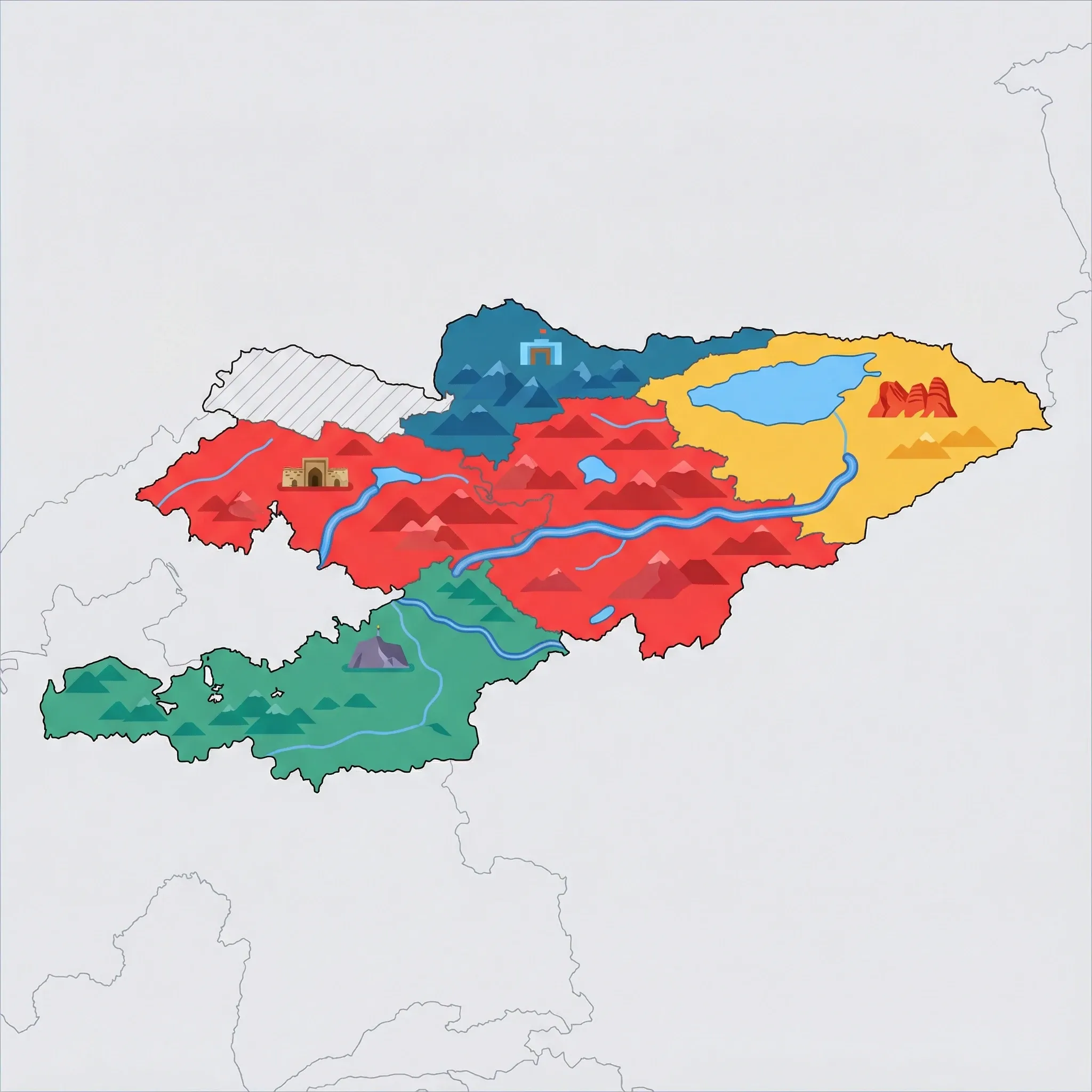
Click a region to explore
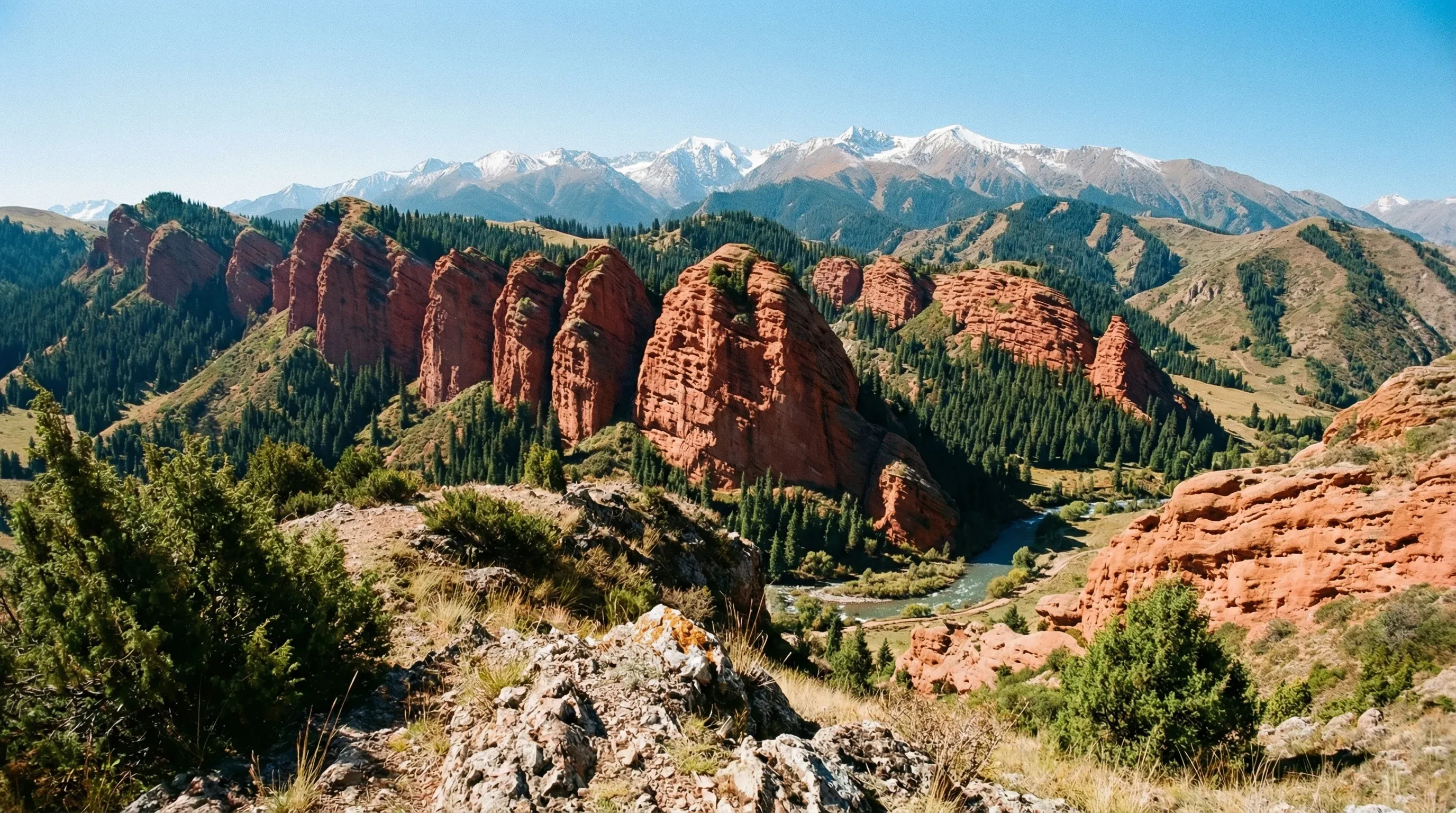
Issyk-Kul is a geological marvel—a saline lake that never freezes, framed by the soaring peaks of the Tian Shan mountains. For families, it offers two distinct experiences: the North Shore is developed, with resorts, sandy beaches, and amusement parks, similar to a traditional seaside holiday but with mountain air. The South Shore is wilder, quieter, and culturally richer, where families can sleep in traditional yurts, watch eagle hunting demonstrations, and hike through canyons that look like they belong on Mars.
The lake's water is slightly salty and incredibly clear, refreshing in the summer heat. While the North Shore town of Cholpon-Ata is the hub of tourism with its ferris wheels and museums, the area around Karakol serves as the gateway to serious trekking. The region is perfect for families who want to mix relaxation with adventure; you can spend the morning swimming and the afternoon hiking in a pine forest or soaking in natural hot springs.
Key Attractions
On the south shore, Skazka (Fairytale) Canyon is a must-visit. The vibrant red, orange, and yellow clay formations are easy to climb and explore, making it a natural playground for children who love scrambling over rocks. Nearby, the Jeti-Oguz Rocks (Seven Bulls) offer iconic red sandstone cliffs and gentle hiking trails along the river that are suitable for younger kids.
For a unique cultural experience, look for events related to the World Nomad Games heritage; while the games themselves are biennial and move locations, the hippodrome in Cholpon-Ata remains, and local demonstrations of Kok-Boru (goat polo) and archery occur frequently. Near Karakol, adventurous families can take a sturdy 4x4 or hike up to the Altyn-Arashan Valley to bathe in natural hot spring pools surrounded by spruce forests.
Practical Advice
The swimming season is short, spanning July and August, when the water temperature reaches 20–23°C. However, the scenery is stunning from May to October. Accommodation ranges from luxury resorts on the north shore to family-run yurt camps on the south shore—staying in a yurt is often the highlight of the trip for children.
Food & Drink
Typical meal times: Lunch is usually 1:00 pm to 2:30 pm. Dinner is served from 7:00 pm onwards. Yurt camps often serve dinner at a fixed communal time around 7:30 pm.
Typical meal costs: Meals in Karakol or Cholpon-Ata cost 350–700 KGS (approx. $4.00–8.00 USD / €3.60–7.30 EUR). Yurt camps often include breakfast and dinner in the lodging price.
Dietary requirements: The region is famous for fruit (apricots, apples) in summer. Vegetarian options are available in tourist hubs like Karakol, but rural yurt camps rely heavily on meat and dairy.
Signature dishes:
- Ashlan-fu – A cold, spicy noodle soup unique to Karakol, made with starch noodles, vinegar, and chili—surprisingly refreshing in summer.
- Fried Trout – Fresh fish from the lake or nearby rivers, usually simply fried and served with chips or bread.
- Kymys – Fermented mare's milk. It has a strong, sour taste that is challenging for many kids (and adults!), but culturally significant.
Why this score?
The region offers a high degree of adventure, from the challenging multi-day trek to Ala-Kul Lake to the unique geological formations of Skazka Canyon. Families can engage in eagle hunting demonstrations and nomadic cultural experiences that are distinct from Western norms. The terrain around Karakol is genuinely rugged, requiring specialized guides and equipment for many activities.
Why this score?
Medical facilities in towns like Karakol and Cholpon-Ata are limited to basic hospitals and local clinics that lack modern diagnostic equipment. Language barriers are significant, and most facilities are not equipped to handle serious trauma or complex illnesses. For anything beyond minor ailments, patients are typically transferred via a lengthy road journey back to Bishkek.
Why this score?
Issyk-Kul is the premier regional destination, drawing significant domestic crowds and travelers from Kazakhstan and Russia to its northern shore resorts. While its international profile is growing among Western trekkers visiting Karakol, it remains a secondary destination compared to global beach or mountain hubs. The southern shore is notably quieter and caters to a more niche eco-tourism market.

Prices vary by shore. The North Shore resorts can charge "European" prices in high season, with rooms from 8,000–18,000 KGS (approx. $90–200 USD / €83–187 EUR). The South Shore and Karakol are cheaper; a night in a yurt with breakfast and dinner usually costs 2,000–3,500 KGS (approx. $22–40 USD / €21–36 EUR) per person.

Getting Here & Around
Getting Here
- Car – The drive from Bishkek takes roughly 4 hours to the nearest shore via the A365 highway through the scenic Boom Gorge.
- Train – In summer (mid-June to end of August), a slow but scenic train runs from Bishkek to Balykchy at the western tip of the lake.
- Bus – Frequent marshrutkas run from Bishkek's Western Bus Station to Cholpon-Ata and Karakol.
Getting Around
- Private Driver – Hiring a driver is the best way to circle the lake and reach canyons like Skazka which are off the main road.
- Marshrutka – Minibuses connect all major towns along the ring road, but they do not go to specific trailheads or remote yurt camps.
- Taxi – Local taxis in Karakol are cheap and can be hired for day trips to Jeti-Oguz.
No airports in this region. See the country flight map for nearby connections.
Official Links

Packing List
Many beaches, especially on the south shore, are pebbly or rocky rather than sandy.
Even in July, night-time temperatures at this altitude (1600m+) drop significantly.
The UV index at high altitude is extreme; sunburn happens much faster than at sea level.
Lakeside areas can get buggy in the evenings.
Hospitality is central; small items like postcards or sweets from home are appreciated by yurt hosts.
You will constantly remove shoes when entering yurts and guesthouses; laces become a hassle.
Yurt camps often lack electricity at night, and toilets are usually separate outhouses.
Running water isn't always available at rural rest stops or remote yurt camps.
Electricity in yurts is limited or non-existent; essential for charging cameras and phones.
Breakfasts can be repetitive; familiar snacks help if kids get tired of bread and jam.

Activities & Best Times

Hiking, wildlife, outdoor exploration, ecotourism
The Tian Shan mountains offer world-class wilderness, with high-altitude lakes like Ala-Kul and unique geological sites like Skazka Canyon providing an authentic and pristine environment for families. Optimal conditions for trekking high-mountain passes are strictly limited to the peak summer months.

Urban tourism, museums, historical sites, architecture
Rich heritage is evidenced by ancient Silk Road petroglyphs and the unique Dungan Mosque and Russian Orthodox Cathedral in Karakol, offering deep cultural authenticity. Most cultural sites are open-air or require rural travel, making the warmer months significantly better for exploration.

Events, celebrations, seasonal attractions
The World Nomad Games is a biennial international sporting event attracting 80+ nations and thousands of participants. This is genuinely world-class and puts Issyk-Kul on the global events calendar.

Winter sports, ski resorts, snow activities
Karakol Ski Resort is Central Asia's premier winter sports destination with 20+ runs, 1,600m vertical drop, reliable natural snow, and international recognition. Rating as 'marginal' severely undervalues this facility.

Sport tourism, fitness activities, active recreation
Infrastructure for organized activity is strong, ranging from the well-established Karakol Ski Resort in winter to the marked high-altitude trekking circuits like the Ak-Suu Traverse in summer. Visitation follows two distinct peaks aligned with mountain sports accessibility and snow conditions.

Spa retreats, wellness centers, peaceful getaways
The region is famous for its authentic geothermal hot springs such as Altyn-Arashan and Ak-Suu, which serve as primary motivators for wellness-focused travelers. These facilities peak in demand during the summer trekking season and as a restorative post-ski activity in mid-winter.

Scenic drives, countryside tours, route-based travel
The Issyk-Kul Ring Road and spectacular drives into the Jeti-Oguz and Barskoon valleys provide dramatic scenery suitable for international road-tripping families. Many of the most iconic mountain roads are high-altitude dirt tracks that are only safely accessible and scenic from late spring through early autumn.

Learning experiences, scientific sites, historical education
The Museum of N.M. Przhevalsky and the Karakol Regional Museum provide legitimate scientific and historical discovery opportunities for families. While significant, these facilities are generally smaller-scale and best included as part of a broader cultural summer itinerary.

Amusement parks, family entertainment venues
The northern shore features regional amusement and water parks like those in Bosteri, though these are modest by international standards and lack the quality expected by well-travelled families. These venues operate exclusively during the brief summer peak when regional tourism is at its height.

Attractions (11 total)



Public Holidays & Calendar Next 12 months
Public holidays, festivals, cultural celebrations, and seasonal natural phenomena coming up in Issyk-Kul Lake over the next 12 months.
Loading holidays and events...

Travel Advisory
Kyrgyzstan is a destination where security assessments vary between standard and elevated caution. While broadly safe, there is a consistent consensus on risks related to violent street crime and potential political instability. Most agencies highlight serious security threats in southern border regions due to territorial disputes.
Safety Topics
Traveller Advice (3 groups)

While not criminalized, same-sex relationships are not broadly accepted in local society. Travellers should exercise discretion and avoid public displays of affection to prevent harassment.

Female travellers may encounter verbal harassment or unwanted attention. Conservative dress is recommended, especially in more traditional rural areas and when visiting religious sites.

Maintain copies of your passport at all times as local police may request proof of identity. Ensure you have comprehensive medical insurance that includes evacuation coverage.
Agency Summaries
Standard travel safety measures are recommended. Visitors should be aware of local legal requirements and the risk of instability in certain border districts.
Travellers are advised to maintain a high level of vigilance primarily due to the threat of violent crime. Particular caution is needed in southern border regions where security conditions are unpredictable.
The country is generally considered safe for visitors, though standard precautions should be followed. Specific regional concerns exist regarding potential unrest near the border with Tajikistan.
Safety concerns, including violent crime and potential civil disturbances, exceed typical baseline levels. Specific regions in the south carry significantly higher risks.
Most visits are trouble-free, but travellers should exercise standard safety awareness and avoid sensitive border areas where conflict can occur.
Heightened vigilance is encouraged due to the combined risks of civil unrest, the underlying threat of terrorism, and street crime.
Information is provided for general guidance only and does not constitute travel, safety, medical, or legal advice. Conditions may change. Users are responsible for independently verifying information before travel.