
Song-Kul & Central Mountains
Sleep in a yurt under the Milky Way ✨🐴
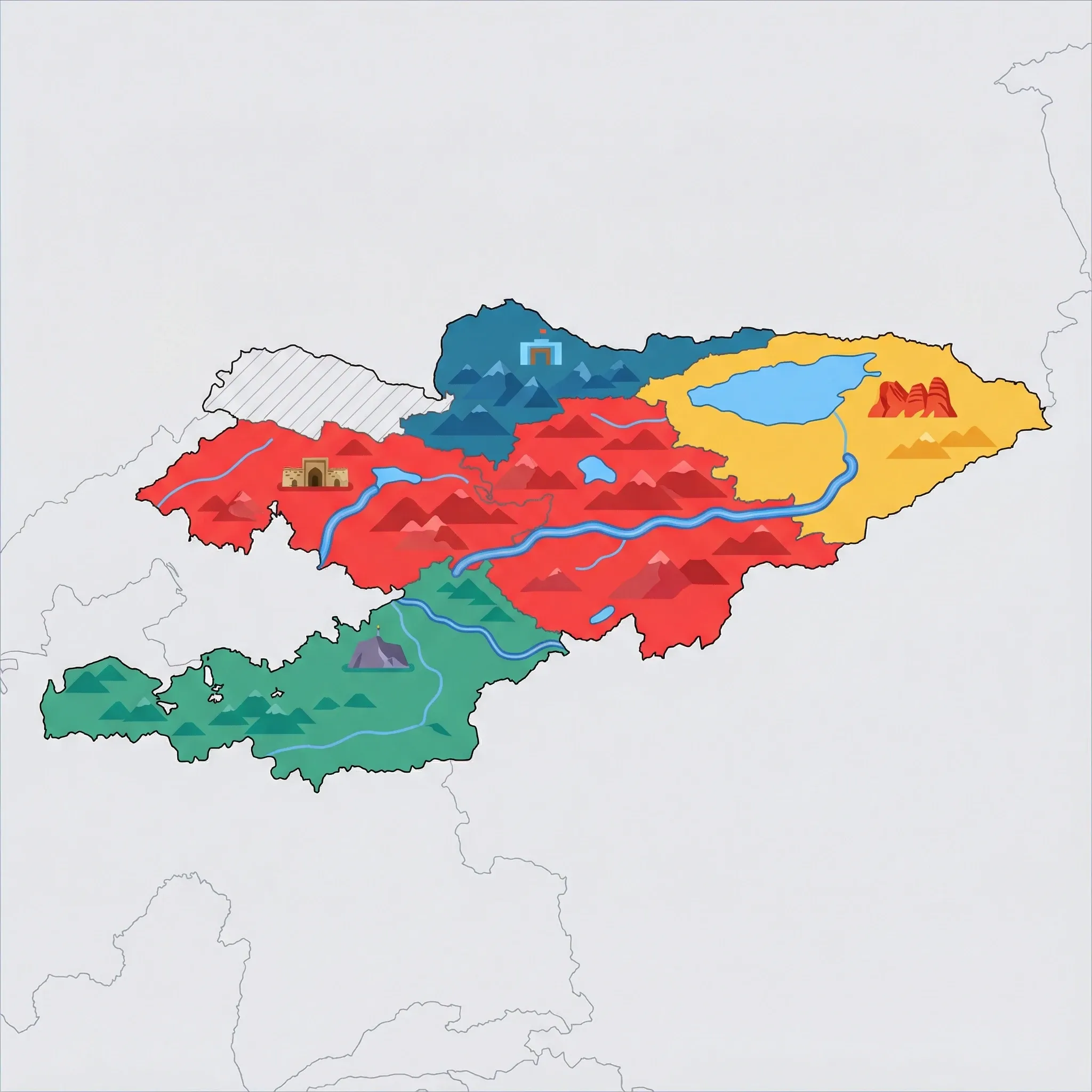
Click a region to explore
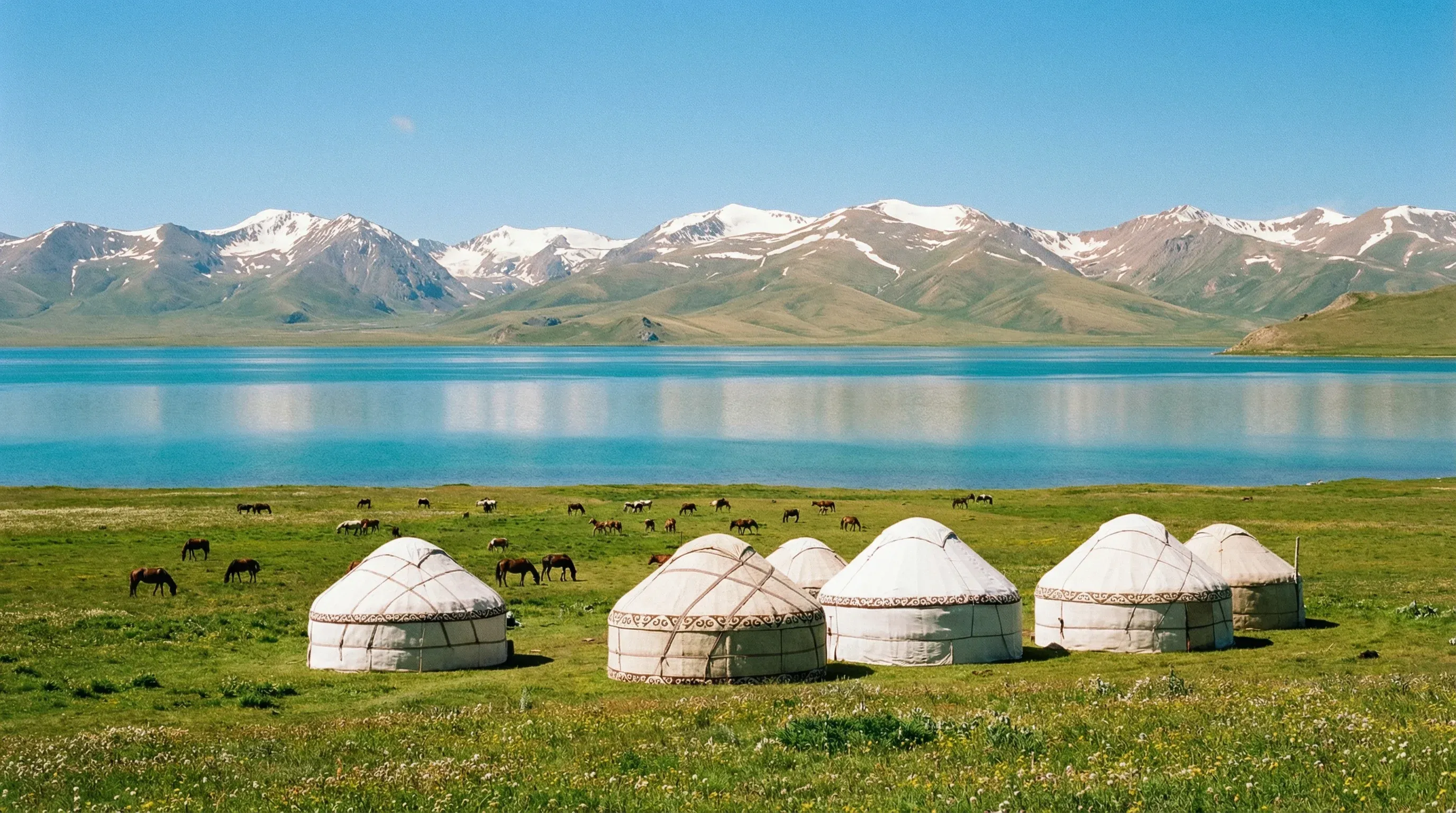
This region is the Kyrgyzstan of postcards: rolling green jailoos (summer pastures), herds of horses, and white felt yurts dotted against the mountains. For families, this is the place to disconnect completely. There is rarely cell phone signal at Song-Kul Lake, allowing for a digital detox where entertainment comes from riding horses, watching the sunset, and playing card games by the warmth of a dung-burning stove.
The central mountains are high—Song-Kul sits at over 3,000 meters—so the air is crisp and the weather unpredictable. The journey itself is a major part of the appeal, driving over dramatic passes and through valleys that seem untouched by time. It creates a sense of expedition for children, a real adventure into the wild, yet with the comfort of warm bedding and hot tea waiting at the camps. The local shepherd families are incredibly welcoming to children, often inviting them to see how cows are milked or how the national bread is baked.
Key Attractions
While the destination is the high pasture, the road there is an attraction in itself. The Bishkek to Osh Highway (M41) cuts right through the central mountains, offering jaw-dropping views at every turn. A major landmark on this route is the Toktogul Reservoir, a massive body of turquoise water surrounded by semi-arid hills, perfect for a photo stop or a picnic break to stretch legs during the long drive.
Once at the pastures (like Song-Kul or near Tash Rabat), the main activity is experiencing the nomadic lifestyle. Horse riding treks are available for all ability levels, with gentle guides leading horses for smaller children. At night, the lack of light pollution makes for some of the best stargazing on the planet—a magical educational experience for kids.
Practical Advice
The season for visiting Song-Kul is short: June to early September. Outside these months, snow blocks the passes. Altitude sickness can be a concern for some; drink plenty of water and take it easy on the first day. Accommodations are almost exclusively in yurts. Facilities are basic—usually outdoor drop toilets and no showers, though some premium camps now offer sauna tents.
Food & Drink
Typical meal times: Breakfast is 8:00 am to 9:00 am. Lunch 1:00 pm. Dinner 7:00 pm. Meals are almost always provided by your yurt host as there are no restaurants.
Typical meal costs: Usually included in the accommodation price. If paying separately, a lunch costs 400–600 KGS (approx. $4.50–6.70 USD / €4.15–6.20 EUR).
Dietary requirements: This is difficult terrain for picky eaters. Meals are simple: meat, potatoes, bread, and jams. You must inform your host/tour operator in advance for vegetarian options, which will likely be pasta or buckwheat.
Signature dishes:
- Kaimak – Fresh, thick clotted cream, usually served at breakfast with hot bread. It tastes incredible at this altitude.
- Kuurdak – Fried chunks of meat (mutton or beef) with onions and potatoes. A staple comfort food in the mountains.
- Boorsok – Little pillows of fried dough, scattered on every table as a snack or side dish.
Why this score?
Located at over 3,000 meters, this region offers a serious wilderness experience where families stay in traditional yurts without running water or electricity. The terrain consists of vast, treeless alpine pastures where horse riding is the primary mode of transport. The altitude and isolation make it one of the most physically demanding yet rewarding regions for adventurous families.
Why this score?
There are no permanent medical facilities at Song-Kul Lake or in the surrounding high mountain passes. The nearest basic medical help is several hours away in Naryn or Kochkor over unpaved, high-altitude mountain roads that can be blocked by weather. Travelers must carry comprehensive first-aid kits and have plans for emergency satellite communication, as mobile coverage is spotty.
Why this score?
Song-Kul is a highly seasonal destination accessible only during the summer months, keeping its annual visitor numbers very low. It is a quintessential 'off-the-beaten-path' location that appears in travel blogs but lacks any permanent hotels or high-volume infrastructure. It primarily serves as a niche spot for those specifically seeking a nomadic yurt experience.

While the accommodation (yurts) is basic, the cost is driven by transport. Hiring a private 4x4 driver is essential and costs 4,500–9,000 KGS (approx. $50–100 USD / €46–93 EUR) per day. Yurt stays with meals typically cost 2,500–4,000 KGS (approx. $28–45 USD / €26–42 EUR) per person per night.

Getting Here & Around
Getting Here
- Driving – Access is almost exclusively by 4x4 vehicle. The route via the Bishkek to Osh Highway (M41) is paved, but the final ascent to Song-Kul via Kalmak-Ashuu or Moldo-Ashuu passes is on gravel mountain roads.
- Private Transfer – Most families hire a driver from Bishkek or Kochkor.
Getting Around
- Horse – Once at the lake or pasture, horses are the traditional and most fun way to explore the area.
- Walking – The open pastures are perfect for free-roaming walks, though distances are deceptive in the vast landscape.
No airports in this region. See the country flight map for nearby connections.

Packing List
Yurts often have no electricity or lights go out early; essential for night-time toilet trips.
It can snow in July at Song-Kul. Nights are freezing inside the yurts once the stove dies down.
There are no charging sockets in traditional yurts.
Showers are rare or non-existent; these will be your main way to wash for a few days.
Hospitality is central; small items like postcards or sweets from home are appreciated by yurt hosts.
You will constantly remove shoes when entering yurts and guesthouses; laces become a hassle.
Yurt camps often lack electricity at night, and toilets are usually separate outhouses.
Running water isn't always available at rural rest stops or remote yurt camps.
Electricity in yurts is limited or non-existent; essential for charging cameras and phones.
Breakfasts can be repetitive; familiar snacks help if kids get tired of bread and jam.

Activities & Best Times

Hiking, wildlife, outdoor exploration, ecotourism
Offers world-class immersion in high-altitude nomadic landscapes and pristine alpine ecosystems like Song-Kul Lake. The season is strictly limited to the summer window when mountain passes are snow-free and traditional yurt camps are fully operational for authentic wilderness stays.

Urban tourism, museums, historical sites, architecture
Features the 15th-century Tash Rabat caravanserai and the living nomadic heritage of the jailoos (summer pastures). Cultural immersion is highest in July and August when families can experience traditional felt-making and horse culture in an authentic, non-commercialized setting.

Scenic drives, countryside tours, route-based travel
Features legendary mountain passes including Moldo-Ashuu (3,330m) and the iconic 33 Parrots serpentine road, plus the high-altitude Song-Kul Lake circuit. These are world-renowned among adventure drivers.

Sport tourism, fitness activities, active recreation
Provides exceptional high-altitude trekking and horse-trekking routes between Kyzart and Song-Kul for active families. Infrastructure is seasonal, with the best trail conditions and support services available only between mid-June and mid-September.




Public Holidays & Calendar Next 12 months
Public holidays, festivals, cultural celebrations, and seasonal natural phenomena coming up in Song-Kul & Central Mountains over the next 12 months.
Loading holidays and events...

Travel Advisory
Kyrgyzstan is a destination where security assessments vary between standard and elevated caution. While broadly safe, there is a consistent consensus on risks related to violent street crime and potential political instability. Most agencies highlight serious security threats in southern border regions due to territorial disputes.
Safety Topics
Traveller Advice (3 groups)

While not criminalized, same-sex relationships are not broadly accepted in local society. Travellers should exercise discretion and avoid public displays of affection to prevent harassment.

Female travellers may encounter verbal harassment or unwanted attention. Conservative dress is recommended, especially in more traditional rural areas and when visiting religious sites.

Maintain copies of your passport at all times as local police may request proof of identity. Ensure you have comprehensive medical insurance that includes evacuation coverage.
Agency Summaries
Standard travel safety measures are recommended. Visitors should be aware of local legal requirements and the risk of instability in certain border districts.
Travellers are advised to maintain a high level of vigilance primarily due to the threat of violent crime. Particular caution is needed in southern border regions where security conditions are unpredictable.
The country is generally considered safe for visitors, though standard precautions should be followed. Specific regional concerns exist regarding potential unrest near the border with Tajikistan.
Safety concerns, including violent crime and potential civil disturbances, exceed typical baseline levels. Specific regions in the south carry significantly higher risks.
Most visits are trouble-free, but travellers should exercise standard safety awareness and avoid sensitive border areas where conflict can occur.
Heightened vigilance is encouraged due to the combined risks of civil unrest, the underlying threat of terrorism, and street crime.
Information is provided for general guidance only and does not constitute travel, safety, medical, or legal advice. Conditions may change. Users are responsible for independently verifying information before travel.