

Overview
Laos is often described as Southeast Asia in slow motion, making it a dream destination for families seeking connection over chaos. Unlike its busier neighbours, this landlocked nation retains a peaceful, village-like atmosphere even in its cities. The geography is defined by the Mekong River, which winds through the entire country, and rugged highlands that shelter distinct ethnic cultures. The climate is tropical, with a dry, pleasant season from November to February that is perfect for outdoor exploration with children. While the roads can be winding, the new Laos-China Railway has revolutionised family travel, turning day-long drives into comfortable one-hour train rides.
Culturally, Laos is deeply Buddhist, and the gentle, respectful nature of the local people creates a welcoming environment for young travellers. Children are adored here, and you will find locals waving and smiling at your little ones wherever you go. The vibe is unhurried-attractions are rarely crowded, and the focus is on nature and simple pleasures. Families can kayak down calm rivers, explore mysterious caves, participate in morning alms-giving ceremonies (respectfully), and learn about elephant conservation. It is a place to unplug, where the biggest decision of the day is often which waterfall to swim in.
Key Attractions
Start your journey in Luang Prabang, the cultural soul of the country. The entire Town of Luang Prabang is a UNESCO World Heritage site, safe and walkable for families with its fusion of French colonial architecture and golden temples like Wat Xieng Thong. Just outside town, the turquoise pools of Kuang Si Waterfalls are essential-perfect for a refreshing family swim, with a bear rescue centre right at the entrance that kids love. For a sunset view, climb Mount Phousi in the centre of town, or take a boat trip up the Mekong to the mysterious Pak Ou Caves, filled with thousands of Buddha statues.
Adventure awaits in Vang Vieng, once a party town but now reinvented as an eco-tourism hub. The dramatic limestone scenery along the Nam Song River offers kayaking and gentle tubing suitable for older children. Further south in Southern Laos, the 4000 Islands region provides a laid-back river island life, while the thundering Khone Phapheng Falls-the widest waterfall in the world-shows nature's raw power. In the capital, Vientiane, quirky stops like the Buddha Park (Wat Xieng Khuan) with its giant concrete sculptures and the golden stupa of Pha That Luang provide fun photo opportunities.
Practical Advice
The best time to visit is November to February (cool and dry). Visas are available on arrival for many nationalities (bring crisp USD bills) or via e-visa. Health-wise, pack mosquito repellent as dengue is a risk, and stick to bottled water. The new high-speed train requires booking in advance (often via your hotel or an agent), so plan your inter-city travel a few days ahead. Cash is king-ATMs exist but can be temperamental, so carry a mix of USD and local currency.
Food & Drink
Typical meal times: Lunch is typically 11:30 am to 2:00 pm, and dinner is served early, from 6:00 pm to 9:00 pm.
Typical meal costs: 50,000–120,000 LAK (approx. $2.30–5.50 USD / €2.10–5.00 EUR). Street food snacks like baguette sandwiches can cost as little as 25,000 LAK (approx. $1.15 USD / €1.05 EUR).
Dietary requirements: Vegetarian options are widely available, especially tofu and vegetable stir-fries. However, fish sauce (nam pa) is ubiquitous; strict vegetarians/vegans must explicitly say "bor sai nam pa". Gluten-free travellers can rely on rice-based dishes but should be wary of soy sauce.
Family-friendly dining: Lao food is communal and fun. Kids love eating khao niew (sticky rice) with their hands. Most dishes are not spicy by default (unlike Thai food), or chili is served on the side. Fresh fruit shakes are everywhere and a hit with children.
Signature dishes:
- Laap – A minced meat salad (chicken, pork, or fish) with lime, mint, and toasted rice powder; a national favourite that can be ordered non-spicy for kids.
- Khao Niew (Sticky Rice) – The staple of every meal, served in bamboo baskets and eaten with fingers.
- Khao Jee – A French-influenced baguette sandwich filled with pâté, pork, cucumber, and cilantro; the perfect cheap travel lunch.
- Mok Pa – Fish steamed in banana leaves with herbs and coconut milk, soft and mild-flavoured.
- Khao Piak Sen – A comforting, chewy rice noodle soup often eaten for breakfast, safe and palatable for picky eaters.
Safety
Laos is generally very safe, but there are two specific risks for families. First, methanol poisoning from counterfeit alcohol has occurred in tourist areas (especially Vang Vieng); stick to bottled beer or wine and avoid cheap "buckets" or generic spirits. Second, UXO (Unexploded Ordnance) remains a danger from the war era; always stay on marked paths and never let children pick up unknown metal objects in rural areas. Basic travel precautions apply regarding petty theft, but violent crime against tourists is extremely rare.

Laos is extremely affordable. A family of four can travel comfortably for 1,500,000–2,500,000 LAK (approx. $70–115 USD / €65–105 EUR) per day. Street meals cost under 40,000 LAK ($1.80 USD), while boutique guesthouses often charge under $50 USD per night. The main expenses will be transport (private minivans or train tickets) and imported goods.
Age Suitability





Did you know? Laos welcomes approximately 812,000 international visitors per year. Most visitors come from East Asia and the Pacific.

Explore Regions
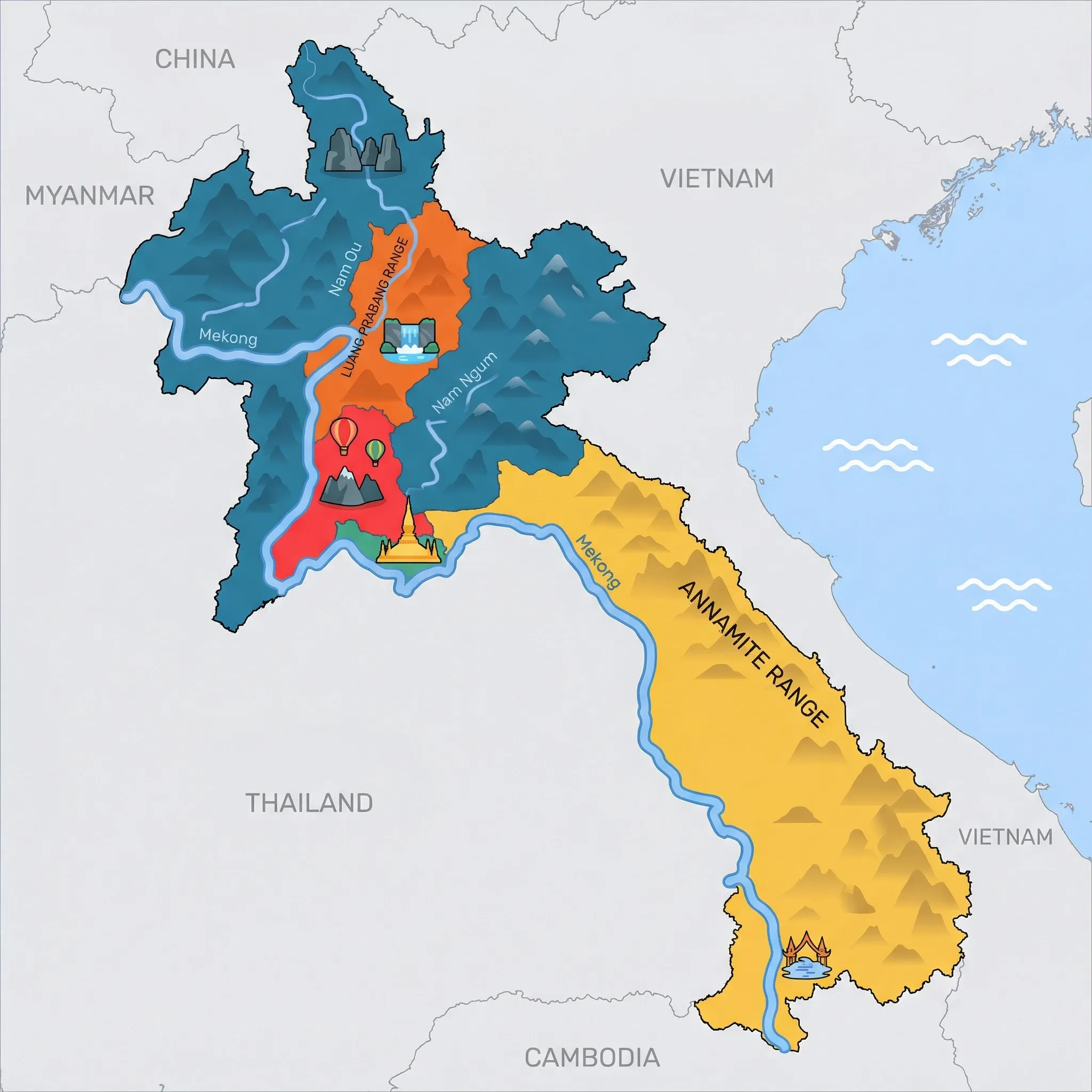
5 Regions
Luang Prabang
Golden temples, turquoise waterfalls, and gentle river rhythms 🐘
Northern Laos (Phongsali, Muang Ngoi)
Remote rivers, misty mountains, and village adventures 🛶
Southern Laos (4000 Islands, Bolaven Plateau)
River islands, thundering falls, and coffee highlands ☕🐬
Vang Vieng
Limestone peaks, blue lagoons, and outdoor thrills 🛶🎈
Vientiane
A relaxed capital of gold stupas and French flair 🏛️🍜
Click on a region marker to explore details. Use the dropdown to color regions by activity suitability.

Getting There & Around
Getting There
- By Air – International flights land at Wattay International Airport (VTE) in Vientiane and Luang Prabang International Airport (LPQ). Major hubs are Bangkok, Hanoi, and Kunming.
- By Train – The Laos-China Railway connects Kunming (China) to Vientiane. It is a modern, comfortable option for entering from Yunnan province.
- By Land – Buses cross from Thailand (Nong Khai via Friendship Bridge), Vietnam, and Cambodia. The Friendship Bridge is the most popular and family-friendly land crossing.
- Entry Requirements – Most nationalities can obtain a 30-day Visa on Arrival (approx. $40 USD, bring crisp bills and photos) or an e-visa. Check your government website for the latest visa requirements, or use the IATA Travel Centre entry-requirements checker.
Getting Around
- High-Speed Train (LCR) – The game-changer for families. Connects Vientiane, Vang Vieng, and Luang Prabang in roughly an hour each leg. Clean, air-conditioned, and fast. Tickets must be booked 2–3 days in advance via an agent or the LCR Ticket app.
- Minivans – The standard way to reach areas not on the train line. They can be cramped and roads are winding; consider buying an extra seat for more space for children.
- Tuk-tuks – Great for short town hops. Negotiate the price before you get in.
- Private Driver – Hiring a car with a driver is surprisingly affordable and offers the most flexibility for stopping at viewpoints or for bathroom breaks.
Official Links

Packing List
Visa-on-arrival fees require immaculate banknotes; torn or old bills are frequently rejected.
You will remove shoes constantly for temples and some guesthouses; laces become frustrating.
Roads between towns are incredibly winding and mountainous if you aren't taking the train.
Public restrooms rarely provide paper; keeping a supply in your day bag is essential.
Essential for keeping phones/cameras dry during boat trips, kayaking, or tubing.
Street lighting can be dim or non-existent in rural areas and cave entrances.

Activities & Best Times

City & Cultural
ExcellentUrban tourism, museums, historical sites, architecture
Luang Prabang is a UNESCO-listed jewel offering an authentic blend of Buddhist spirituality, French colonial architecture, and world-class street life. Peak months provide the cool, dry climate necessary for exploring the numerous historic temples and vibrant night markets on foot.
Home to the UNESCO-listed Wat Phou, a world-class example of Khmer architecture that predates Angkor Wat, alongside fascinating French colonial heritage in the 4000 Islands. The dry, cooler winter months are ideal for exploring these open-air archaeological sites, whereas the intense heat of April and the subsequent heavy rains significantly diminish the experience.
Offers highly authentic experiences in historic villages like Muang Ngoi and Phongsali's Old Quarter, showcasing traditional Tai and hill-tribe cultures. Access to these remote settlements is best in the dry season, as heavy rains can disrupt travel and dampen the vibrant street life.

Adventure & Nature
Very GoodHiking, wildlife, outdoor exploration, ecotourism
Features dramatic karst landscapes and iconic trekking routes like the 100 Waterfalls; peak season offers dry trails and clear vistas. The monsoon season (Jun-Sep) makes mountain paths treacherous and brings heavy rain that obscures scenic viewpoints.
Offers exceptional immersion in the Mekong ecosystem and the lush Bolaven Plateau, featuring some of Southeast Asia's most spectacular waterfalls and rare Irrawaddy dolphin sightings. Peak months provide optimal trail conditions and manageable humidity, while the heavy monsoon from June to September can make jungle paths treacherous and river travel difficult.
Vang Vieng has impressive karst scenery and caves, but 'excellent' should be reserved for globally premier nature destinations. The landscape is regionally significant but not at the level of Halong Bay, Guilin, or Torres del Paine.

Sports & Active
Very GoodSport tourism, fitness activities, active recreation
A major international hub for outdoor sports like rock climbing, kayaking, and rural cycling through spectacular karst valleys. These active pursuits are best enjoyed during the cool, dry season; extreme spring heat and heavy summer rains reduce the safety and quality of most activities.
Includes world-class adventure facilities like Nam Kat Yorla Pa and the Nong Khiaw Jungle Fly, offering structured activities like ziplining and mountain biking. These operations are most active and safe during the dry season, with significant seasonal closures or safety restrictions during the peak monsoon.
Features internationally recognized adventure infrastructure including the Tree Top Explorer zip-lines and established cycling circuits through diverse terrain. Activities are most enjoyable in the cooler dry season, as extreme heat in spring and slippery conditions during the summer monsoon impact safety and comfort.

Road Trips & Scenic
GoodScenic drives, countryside tours, route-based travel
The Nam Ou Valley and the Highland Routes offer spectacular mountain driving with internationally recognized scenic beauty. Road conditions are most reliable from November to February; the monsoon season poses significant risks of landslides and road washouts in this high-altitude terrain.
The Bolaven Plateau Loop is a celebrated scenic driving route offering high-altitude coffee plantations and dramatic valley views via the Southern Corridor. Road conditions are best during the dry season; however, the peak monsoon brings risks of landslides and poor visibility on the plateau's winding roads.
The region features legendary scenic routes, including mountain passes towards Luang Prabang that offer breathtaking vistas of northern Laos. Winter provides the safest driving conditions and highest visibility, while the heavy monsoon season brings substantial risks of mudslides and road closures.

Relaxation & Wellness
MarginalSpa retreats, wellness centers, peaceful getaways

Theme Park & Entertainment
MarginalAmusement parks, family entertainment venues
Vang Vieng Inter Park offers local-scale water-based entertainment primarily for domestic visitors, lacking the world-class infrastructure of global theme parks. Peak visitation occurs during the hottest months of March and April, though heavy monsoon rains make the outdoor facilities unappealing for the rest of the year.
Ocean Park offers basic aquatic entertainment suitable for cooling off during the peak heat of April or school holidays, but it does not meet international standards for destination theme parks. Visitation is heavily discouraged during the height of the rainy season due to the outdoor nature of the facility.

Educational & Exploratory
MarginalLearning experiences, scientific sites, historical education
The Lao National Museum provides an important look at the country's complex history, though it lacks the interactive, world-class scale of major global institutions. It serves as a informative supplement to a cultural visit rather than a primary travel motivator.
The UXO Lao Visitor Centre and the Bear Rescue Centre provide meaningful, destination-specific learning opportunities about history and conservation. While these sites are largely indoor-focused, they are best visited during the primary dry season when regional travel is most comfortable.

Festivals & Seasonal
MarginalEvents, celebrations, seasonal attractions
The Pi Mai (Lao New Year) in April and the That Luang Festival in November are culturally significant events that draw international interest. Outside of these specific lunar-based festival windows, the region offers fewer globally-recognized seasonal celebrations.
Significant cultural events like Pi Mai (Lao New Year) and the Boun Lai Heua Fai light boat festival attract global interest despite occurring in the hottest or wetter months. These festivals offer unique, authentic insights into Lao traditions that are highly appealing to experienced travelers.

Public Holidays & Calendar Next 12 months
Public holidays, festivals, cultural celebrations, and seasonal natural phenomena coming up in Laos over the next 12 months.
Loading holidays and events...

Climate & Weather
Luang Prabang
Show Details
| Month | Temp °C | Rain | Humidity |
|---|
Northern Laos (Phongsali, Muang Ngoi)
Show Details
| Month | Temp °C | Rain | Humidity |
|---|
Southern Laos (4000 Islands, Bolaven Plateau)
Show Details
| Month | Temp °C | Rain | Humidity |
|---|
Vang Vieng
Show Details
| Month | Temp °C | Rain | Humidity |
|---|
Vientiane
Show Details
| Month | Temp °C | Rain | Humidity |
|---|

Travel Advisory
The majority of international agencies suggest standard safety awareness for Laos, though several recommend elevated caution due to specific security incidents and significant health risks like methanol poisoning. Severe regional warnings are in place for Xaisomboun and Bokeo provinces.
Safety Topics
Traveller Advice (2 groups)

Travellers should be extremely cautious when consuming alcohol, particularly spirit-based cocktails or locally distilled drinks. Awareness of methanol poisoning symptoms is essential, and visitors should avoid unlit areas or travelling alone at night.

Female visitors are advised to dress conservatively to respect local customs and remain vigilant against harassment, particularly when using taxis or travelling independently.
Agency Summaries
Visitors are advised to remain alert, particularly regarding personal safety and harassment risks. The government recommends avoiding Xaisomboun Province and provides warnings about methanol poisoning from local spirits.
While the overall advisory is at the lowest level, travellers must be extremely careful with alcoholic beverages following fatal methanol poisoning cases. High caution is required in Bokeo and Xaisomboun provinces.
Standard safety measures are generally sufficient, though specific regional risks exist. Significant concerns include methanol poisoning in tourist drinks and the ongoing threat of unexploded ordnance in rural districts.
Travellers should remain highly vigilant due to risks associated with crime, banditry, and hazardous unexploded munitions. Specific regions like Xaisomboun and border areas in Bokeo are under stricter warnings to avoid non-essential travel.
Standard travel awareness is advised, with a focus on preventing petty theft and bag snatching, which tend to increase during local festivals and in major tourist hubs.
Increased vigilance is recommended nationwide due to civil unrest. Travellers are advised to reconsider visits to Xaisomboun Province because of violence and should be wary of unexploded ordnance in rural areas.
Information is provided for general guidance only and does not constitute travel, safety, medical, or legal advice. Conditions may change. Users are responsible for independently verifying information before travel.