
Luang Prabang
Golden temples, turquoise waterfalls, and gentle river rhythms 🐘
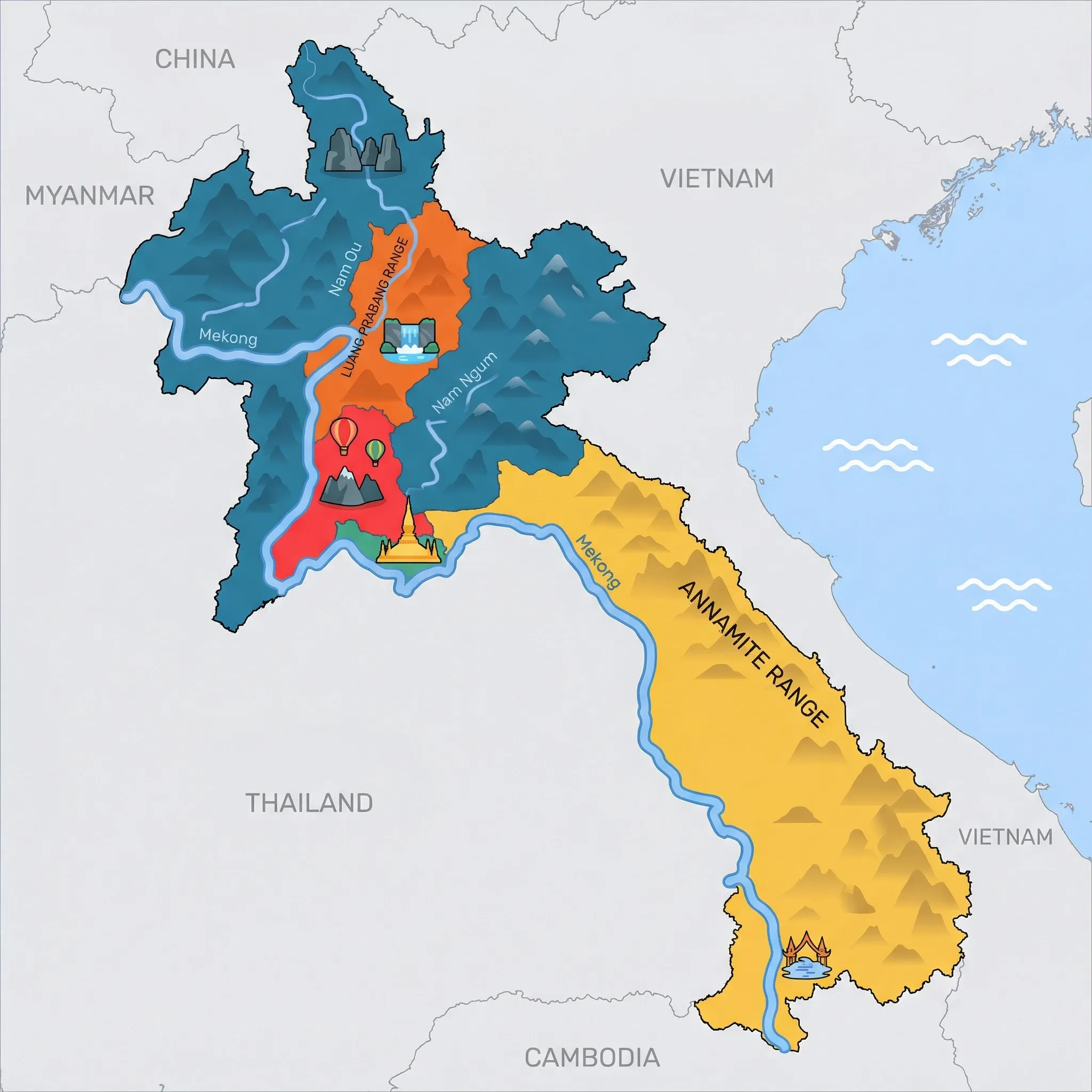
Click a region to explore
Luang Prabang is widely considered one of the most enchanting cities in Southeast Asia, and it is undoubtedly the crown jewel of tourism in Laos. For families, it offers a gentle, safe, and deeply atmospheric introduction to the country. Situated at the confluence of the Mekong and Nam Khan rivers, the town is a designated UNESCO World Heritage site, famous for its well-preserved fusion of traditional Lao architecture and European colonial structures. The pace of life here is slow and relaxed, making it perfect for traveling with children who might otherwise be overwhelmed by the chaotic traffic of other Asian cities. Mornings often begin with the sight of hundreds of saffron-robed monks collecting alms in the mist, a silent ritual that teaches children about respect and local spirituality. The town itself is small enough to navigate on foot or by bicycle, with clean streets lined with frangipani trees, bakeries selling fresh croissants, and noodle shops serving savory local broths.
The region is not just about history; it is an adventure playground surrounded by verdant jungle. Beyond the temple walls, families can visit ethical elephant sanctuaries where riding is forbidden, but feeding and bathing the gentle giants is encouraged—a highlight for any animal-loving child. The natural landscape is dominated by limestone karsts and rushing water, providing ample opportunities for swimming, easy jungle treks, and boat rides. Unlike the party atmosphere found in some backpacker hubs, Luang Prabang retains a dignified, quiet charm that adheres to a midnight curfew, ensuring peaceful nights for sleeping families. Whether you are watching the sunset from a riverboat or learning to weave bamboo in a craft workshop, the region fosters connection and curiosity.
Key Attractions
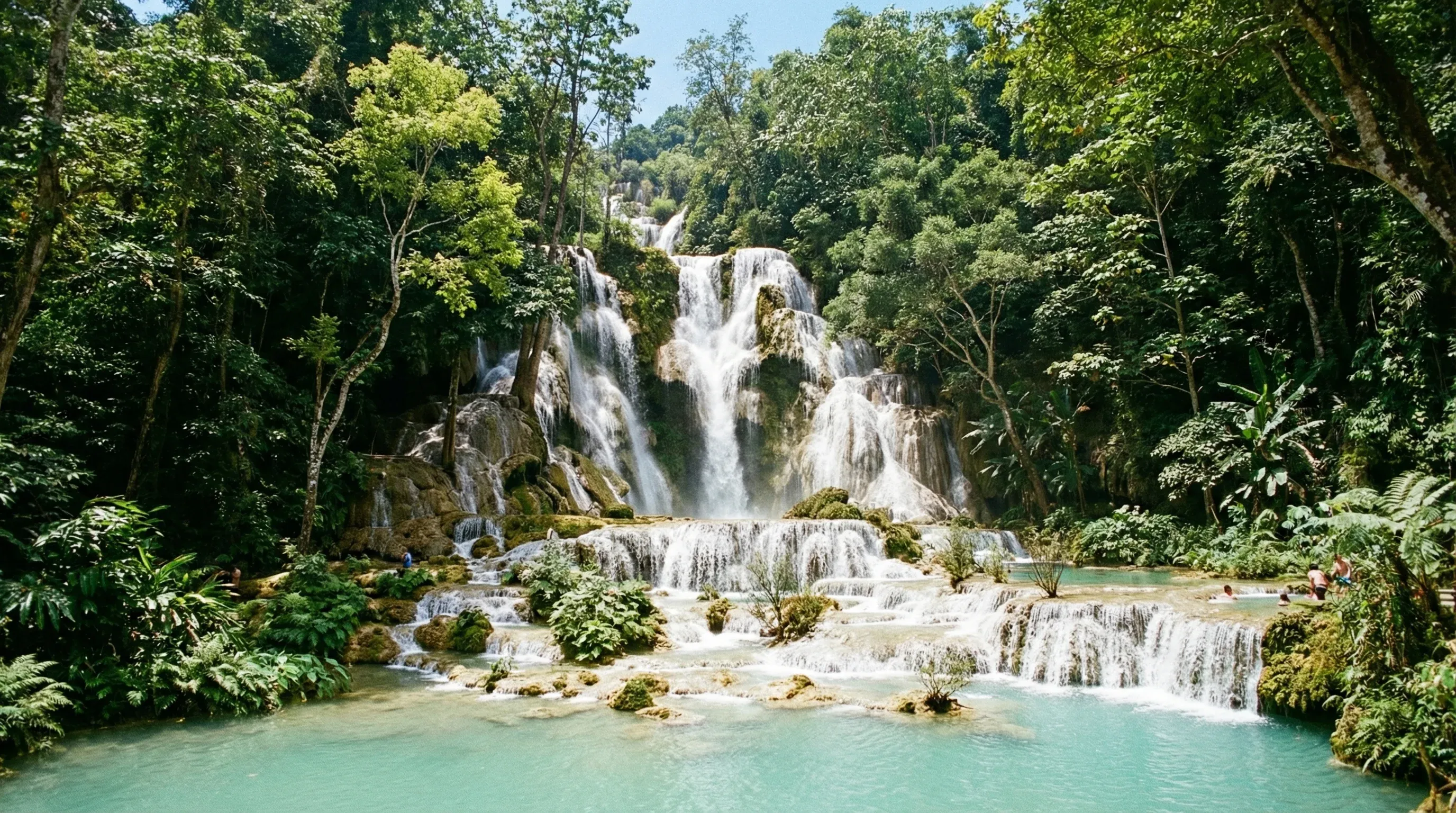
No family trip to Luang Prabang is complete without a visit to the Kuang Si Waterfalls. These three-tiered cascades tumble into pools of stunning turquoise water that are perfect for swimming. Crucially for families, the entrance includes access to the Tat Kuang Si Bear Rescue Centre, where kids can watch rescued Asiatic moon bears play in large enclosures. Back in town, the Town of Luang Prabang itself is the main attraction; spend evenings at the famous Night Market, where the streets are closed to cars and filled with colorful handicrafts—perfect for souvenir shopping without the high pressure found elsewhere.
For a mix of adventure and history, take a long-tail boat up the Mekong River to the Pak Ou Caves. These limestone caves are packed with thousands of Buddha statues left by pilgrims over centuries, creating a mysterious atmosphere that captivates children. In the center of town, active families should climb the 300+ steps of Mount Phousi for a panoramic view, ideally in the late afternoon. Finally, introduce children to temple culture at Wat Xieng Thong, the city's most magnificent temple, featuring intricate 'tree of life' mosaics that sparkle in the light.
Practical Advice
The best time to visit is during the dry, cool season from November to February, when temperatures are comfortable for walking (20°C–25°C). March to May can be intensely hot and smoky due to agricultural burning, which is best avoided with young children. The town is very stroller-friendly compared to the rest of Laos, though carriers are better for temple steps. ATMs are widely available, and laundry services are cheap and quick.
Food & Drink
Typical meal times: Breakfast is early (7:00 am to 9:00 am), lunch runs from 11:30 am to 2:00 pm, and dinner is typically 6:00 pm to 9:00 pm. Restaurants close relatively early here.
Typical meal costs: Street food and market meals cost ₭40,000–80,000 (approx. $1.80–3.60 USD / €1.65–3.30 EUR). A sit-down meal in a nice restaurant ranges from ₭150,000–350,000 (approx. $6.80–15.90 USD / €6.20–14.50 EUR) per person.
Dietary requirements: Luang Prabang is the most diet-friendly place in Laos. Vegetarian and vegan options are standard (tofu is common). Gluten-free travelers should be aware of soy sauce usage, but sticky rice is naturally gluten-free.
Signature dishes:
- Kaipen (River Weed) – Crispy sheets of dried river weed topped with sesame seeds and garlic, often served with jeow bong (chili paste). Kids love it as "Lao seaweed chips."
- Or Lam – A thick, slightly bitter stew made with eggplant, wood ear mushrooms, beans, and meat (often buffalo), flavored with local herbs.
- Khao Soi – Unlike the Thai curry version, Lao Khao Soi is a clear pork broth noodle soup topped with a ragu of minced pork and fermented soy bean paste.
Why this score?
The region offers a balanced mix of accessible nature and rugged terrain, from the multi-tiered Kuang Si Waterfalls to the remote Pak Ou Caves. Families can engage in cycling and trekking, but the well-developed tourism infrastructure in the town center keeps the overall adventure level manageable.
Why this score?
Medical facilities in Luang Prabang are sufficient for minor ailments and basic emergencies, with some clinics catering specifically to tourists. However, for serious conditions or complex procedures, patients are typically transferred to Vientiane or across the border to Thailand.
Why this score?
As a UNESCO World Heritage site, Luang Prabang is the primary cultural draw for Laos, attracting a high proportion of the country's international visitors. While famous globally, its absolute visitor numbers are modest compared to major regional hubs, resulting in a moderate score that reflects its status as a specialized heritage destination.

Luang Prabang is the most expensive destination in Laos due to its popularity, but remains very affordable by international standards. Boutique family hotels cost ₭1,100,000–2,200,000 (approx. $50–100 USD / €45–90 EUR) per night. Entry to <a data-attraction-id="44758">Kuang Si Waterfalls</a> is around ₭25,000 (approx. $1.15 USD / €1.05 EUR).

Getting Here & Around
Getting Here
- Airports – Luang Prabang International Airport (LPQ) is just 4km from the town center. It receives direct flights from Bangkok, Hanoi, Chiang Mai, and Vientiane.
- Train – The Town of Luang Prabang is a major stop on the Laos-China Railway. High-speed trains connect to Vientiane (2 hours) and Vang Vieng (1 hour), significantly cutting travel time compared to roads.
- Boat – The "slow boat" from Huay Xai (Thai border) takes 2 days with an overnight stop, a classic but long journey for young children.
Getting Around
- Tuk-tuks – The primary mode of transport. Jumbo tuk-tuks (shared songthaews) are cheap and fun for kids. Always agree on the price before hopping in.
- Walking – The historic peninsula is compact and best explored on foot. Traffic is generally light and respectful.
- Electric Minibus – Small electric shuttles run routes around the Town of Luang Prabang and are quiet and eco-friendly.
- Bicycles – Many guesthouses offer bike rentals with child seats, perfect for riding along the riverbanks.
Nearby Airports (1 airport)
Luang Prabang
LPQLuang Prabang
View full flight map for Laos →
Official Links

Packing List
You must remove shoes to enter every temple and many shops; laces become very frustrating.
Shoulders and knees must be covered in temples; lightweight harem pants are popular and respectful.
Roads outside the city towards the waterfalls are winding and can induce nausea.
Street lighting is dim in side streets and essential for exploring caves.
Visa-on-arrival fees require immaculate banknotes; torn or old bills are frequently rejected.
Roads between towns are incredibly winding and mountainous if you aren't taking the train.
Public restrooms rarely provide paper; keeping a supply in your day bag is essential.
Essential for keeping phones/cameras dry during boat trips, kayaking, or tubing.
Street lighting can be dim or non-existent in rural areas and cave entrances.

Activities & Best Times

Urban tourism, museums, historical sites, architecture
Luang Prabang is a UNESCO-listed jewel offering an authentic blend of Buddhist spirituality, French colonial architecture, and world-class street life. Peak months provide the cool, dry climate necessary for exploring the numerous historic temples and vibrant night markets on foot.

Hiking, wildlife, outdoor exploration, ecotourism
While Kuang Si Falls and elephant sanctuaries are high quality, 'excellent' should be reserved for world-class nature destinations (Amazon, African safari, Great Barrier Reef level). Luang Prabang offers very good nature experiences but is primarily known for culture.

Scenic drives, countryside tours, route-based travel
The mountainous Northern Laos Scenic Loop and Route 13 offer spectacular vistas and authentic rural village encounters for adventurous families. Driving is best during the dry season (Nov-Feb) when road conditions are safest and the panoramic views are not obscured by monsoon rains or agricultural smoke.

Learning experiences, scientific sites, historical education
The UXO Lao Visitor Centre and the Bear Rescue Centre provide meaningful, destination-specific learning opportunities about history and conservation. While these sites are largely indoor-focused, they are best visited during the primary dry season when regional travel is most comfortable.

Events, celebrations, seasonal attractions
Significant cultural events like Pi Mai (Lao New Year) and the Boun Lai Heua Fai light boat festival attract global interest despite occurring in the hottest or wetter months. These festivals offer unique, authentic insights into Lao traditions that are highly appealing to experienced travelers.

Sport tourism, fitness activities, active recreation
Evidence is too vague ('cycling routes to cultural landmarks'). No specific sports facilities in database. Luang Prabang is not known as an active sports destination.




Public Holidays & Calendar Next 12 months
Public holidays, festivals, cultural celebrations, and seasonal natural phenomena coming up in Luang Prabang over the next 12 months.
Loading holidays and events...

Travel Advisory
The majority of international agencies suggest standard safety awareness for Laos, though several recommend elevated caution due to specific security incidents and significant health risks like methanol poisoning. Severe regional warnings are in place for Xaisomboun and Bokeo provinces.
Safety Topics
Traveller Advice (2 groups)

Travellers should be extremely cautious when consuming alcohol, particularly spirit-based cocktails or locally distilled drinks. Awareness of methanol poisoning symptoms is essential, and visitors should avoid unlit areas or travelling alone at night.

Female visitors are advised to dress conservatively to respect local customs and remain vigilant against harassment, particularly when using taxis or travelling independently.
Agency Summaries
Visitors are advised to remain alert, particularly regarding personal safety and harassment risks. The government recommends avoiding Xaisomboun Province and provides warnings about methanol poisoning from local spirits.
While the overall advisory is at the lowest level, travellers must be extremely careful with alcoholic beverages following fatal methanol poisoning cases. High caution is required in Bokeo and Xaisomboun provinces.
Standard safety measures are generally sufficient, though specific regional risks exist. Significant concerns include methanol poisoning in tourist drinks and the ongoing threat of unexploded ordnance in rural districts.
Travellers should remain highly vigilant due to risks associated with crime, banditry, and hazardous unexploded munitions. Specific regions like Xaisomboun and border areas in Bokeo are under stricter warnings to avoid non-essential travel.
Standard travel awareness is advised, with a focus on preventing petty theft and bag snatching, which tend to increase during local festivals and in major tourist hubs.
Increased vigilance is recommended nationwide due to civil unrest. Travellers are advised to reconsider visits to Xaisomboun Province because of violence and should be wary of unexploded ordnance in rural areas.
Information is provided for general guidance only and does not constitute travel, safety, medical, or legal advice. Conditions may change. Users are responsible for independently verifying information before travel.