
Northern Laos (Phongsali, Muang Ngoi)
Remote rivers, misty mountains, and village adventures 🛶
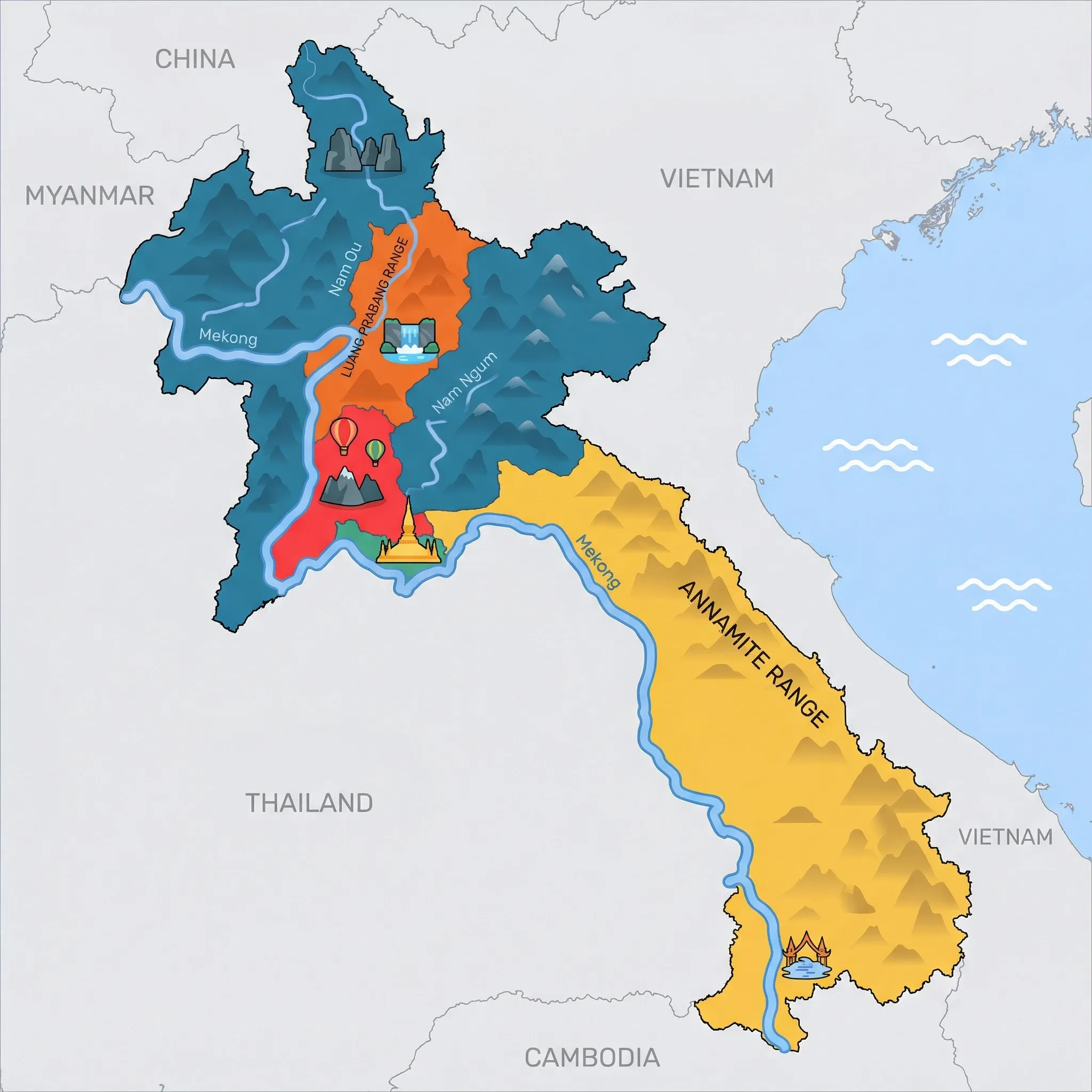
Click a region to explore
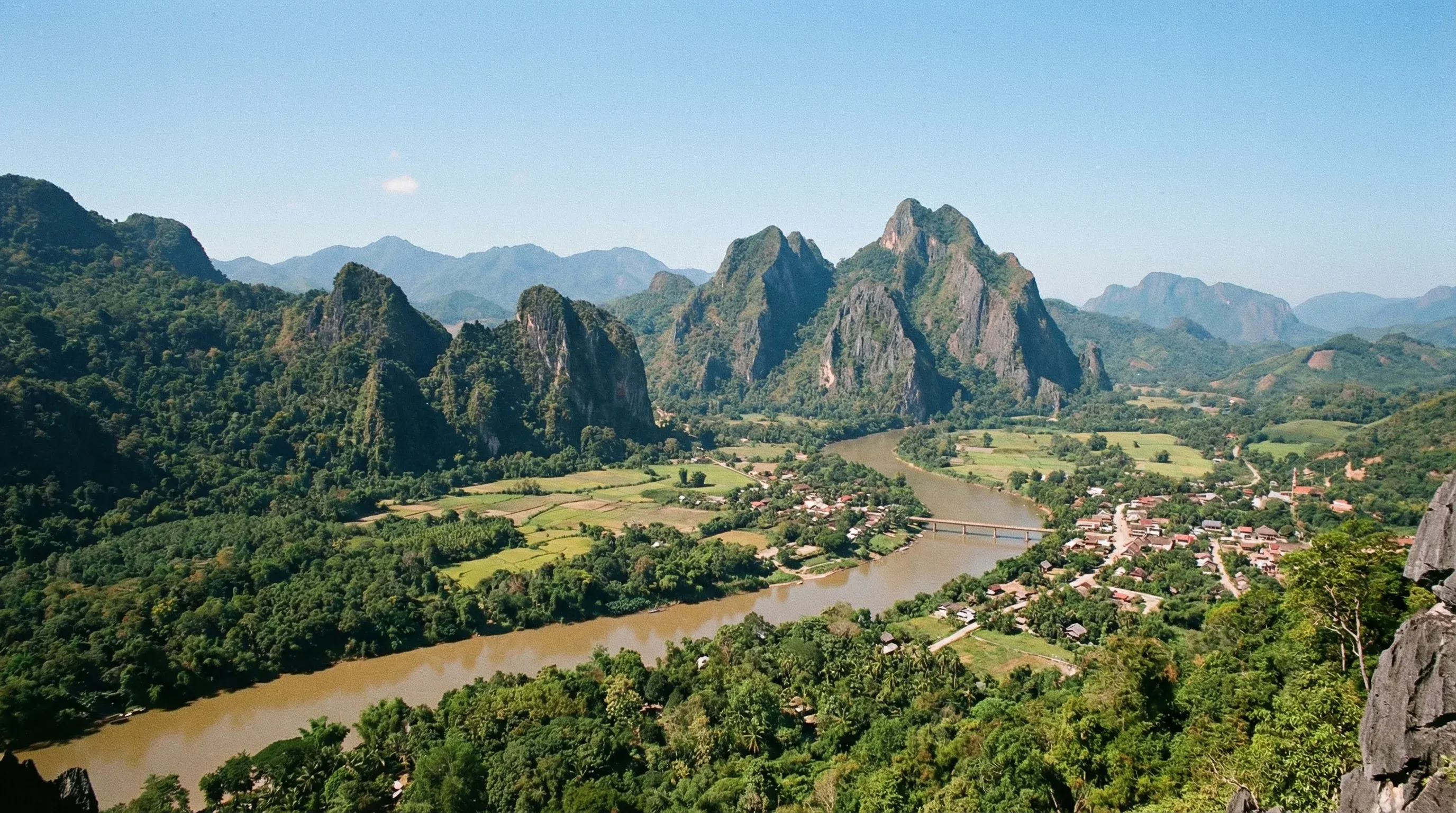
Northern Laos is a region of dramatic beauty and raw adventure, ideal for families with older children or teens who enjoy the outdoors and want to disconnect from the digital world. The landscape is defined by the Nam Ou River, which snakes through towering limestone karst mountains that rival those of Ha Long Bay, but without the crowds. This is a place where travel itself is the activity; the journey often involves longtail boats drifting past water buffalo cooling in the shallows and children waving from riverside bamboo stilt houses. While infrastructure here is simpler than in Luang Prabang, the rewards are immense. The air is fresher, the views are starkly beautiful, and the pace of life is dictated by the sunrise and the river current.
The gateway to this region is usually Nong Khiaw, a charming rustic town nestled between massive cliffs. From here, families can venture further to Muang Ngoi, a village that feels lost in time. Until recently, it had no road access and limited electricity. It remains a pedestrian paradise where the "streets" are dirt paths filled with chickens and playing children, making it incredibly safe for free-roaming kids. Further north, the province of Phongsali offers high-altitude trekking and tea plantations, though the travel times make this best for families with significant patience and stamina. The north is about getting back to basics: swimming in the river, hiking to viewpoints above the clouds, and exploring caves that served as shelters during the Indochina wars.
Key Attractions
The primary experience here is staying in Muang Ngoi Neua. Since it is largely inaccessible to cars, families can enjoy a rare freedom. The village serves as a base for easy hikes to nearby weaving villages like Ban Na, where you can walk through rice paddies and see traditional life up close. The Nam Ou River boat trip to get here is an attraction in itself, offering spectacular scenery that keeps kids engaged. Nearby Nong Khiaw offers the Pha Daeng Peak viewpoint, a steep climb that might be tough for toddlers but is a rewarding challenge for active kids aged 8 and up. Exploring the Pha Tok Caves gives a history lesson on how locals lived during the bombing campaigns of the Secret War.
Practical Advice
The best time to visit is October to March. In the wet season (July–September), trekking becomes slippery and leeches are common. Bring plenty of cash (Kip) as ATMs are unreliable or non-existent in Muang Ngoi. WiFi is spotty, so download entertainment beforehand. Travel involves boats and minivans on winding roads; preparation for motion sickness is essential.
Food & Drink
Typical meal times: Villages wake up early. Breakfast is 7:00 am to 9:00 am. Dinner is often eaten by 7:00 pm, and kitchens may close by 8:30 pm.
Typical meal costs: Very affordable. Simple noodle soups cost ₭30,000–50,000 (approx. $1.35–2.25 USD / €1.25–2.10 EUR). Family-style dinners cost around ₭80,000–120,000 (approx. $3.60–5.45 USD / €3.30–5.00 EUR) per person.
Dietary requirements: Options are more limited than in cities. Vegetarians can rely on vegetable stir-fries and sticky rice. Nut allergies can be tricky to communicate in remote areas; carrying a translated card is vital.
Signature dishes:
- Jeow Bong – A sweet and spicy chili paste made with galangal and buffalo skin, a staple of the north, eaten with sticky rice.
- Laap Pla – Minced river fish salad with herbs, lime, and chili. In the north, it's incredibly fresh given the proximity to the river.
- Sin Savanh – Sun-dried beef jerky, often sprinkled with sesame seeds, a perfect hiking snack for kids.
Why this score?
Characterized by steep limestone karsts and the wild Nam Ou River, this area requires significant effort to navigate. Activities like the Nam Et-Phou Louey night safari and multi-day treks through primary rainforest represent some of the most rugged and authentic adventure opportunities in Southeast Asia.
Why this score?
Medical infrastructure in the far north is extremely limited, consisting mostly of basic village health posts and small provincial hospitals with very few English-speaking staff. Travelers in this region must be self-sufficient and prepared for long transit times to reach even basic professional care.
Why this score?
This region is very remote and sees far fewer international visitors than the southern or central hubs. Its tourism is largely comprised of niche adventure travelers and backpackers seeking 'off-the-beaten-path' experiences in villages like Muang Ngoi and the highland tea plantations of Phongsali.

Northern Laos is very cheap. Basic bungalows with hammocks can be found for ₭150,000–300,000 (approx. $6.80–13.60 USD / €6.25–12.50 EUR). Boat tickets are fixed price, roughly ₭50,000–100,000 (approx. $2.25–4.50 USD / €2.10–4.15 EUR) per person depending on the route.

Getting Here & Around
Getting Here
- Bus/Minivan – From Luang Prabang, it is a 3-4 hour drive to Nong Khiaw. The roads are paved but winding and mountainous.
- Boat – To reach Muang Ngoi Neua, you must take a 1-hour scenic longtail boat ride upstream from Nong Khiaw. This is the only main access route.
- Private Transfer – Hiring a private minivan from Luang Prabang allows for breaks and is recommended for families prone to car sickness.
Getting Around
- Walking – Inside Muang Ngoi Neua and Nong Khiaw, walking is the only way to get around. The distances are short.
- Boat – Private boats can be hired for day trips to secluded beaches or riverside picnic spots.
- Tuk-tuk – Available in Nong Khiaw for short trips to trailheads or caves, but non-existent in the pedestrian villages further upriver.
Nearby Airports (5 airports)
Bokeo International Airport
BORMuang Ton Pheung
Luang Namtha Airport
LXGLuang Namtha
Sam Neua Airport
NEUSam Neua
Oudomxay
ODYMuang Xay
Sayaboury
ZBYSayaboury
View full flight map for Laos →

Packing List
Mountains get surprisingly cold at night and in the early morning, especially on open boats.
Electricity cuts are common and street lighting is non-existent in villages like Muang Ngoi.
Essential for keeping electronics and spare clothes dry during boat transfers and wet landings.
Wastewater often drains directly into nature in these remote areas.
Visa-on-arrival fees require immaculate banknotes; torn or old bills are frequently rejected.
You will remove shoes constantly for temples and some guesthouses; laces become frustrating.
Roads between towns are incredibly winding and mountainous if you aren't taking the train.
Public restrooms rarely provide paper; keeping a supply in your day bag is essential.
Essential for keeping phones/cameras dry during boat trips, kayaking, or tubing.
Street lighting can be dim or non-existent in rural areas and cave entrances.

Activities & Best Times

Hiking, wildlife, outdoor exploration, ecotourism
Features dramatic karst landscapes and iconic trekking routes like the 100 Waterfalls; peak season offers dry trails and clear vistas. The monsoon season (Jun-Sep) makes mountain paths treacherous and brings heavy rain that obscures scenic viewpoints.

Urban tourism, museums, historical sites, architecture
Offers highly authentic experiences in historic villages like Muang Ngoi and Phongsali's Old Quarter, showcasing traditional Tai and hill-tribe cultures. Access to these remote settlements is best in the dry season, as heavy rains can disrupt travel and dampen the vibrant street life.

Scenic drives, countryside tours, route-based travel
The Nam Ou Valley and the Highland Routes offer spectacular mountain driving with internationally recognized scenic beauty. Road conditions are most reliable from November to February; the monsoon season poses significant risks of landslides and road washouts in this high-altitude terrain.

Sport tourism, fitness activities, active recreation
Includes world-class adventure facilities like Nam Kat Yorla Pa and the Nong Khiaw Jungle Fly, offering structured activities like ziplining and mountain biking. These operations are most active and safe during the dry season, with significant seasonal closures or safety restrictions during the peak monsoon.

Spa retreats, wellness centers, peaceful getaways
No wellness retreats or hot springs in attraction database. While facilities may exist, they're not prominent enough to justify 'good' rating without evidence.




Public Holidays & Calendar Next 12 months
Public holidays, festivals, cultural celebrations, and seasonal natural phenomena coming up in Northern Laos (Phongsali, Muang Ngoi) over the next 12 months.
Loading holidays and events...

Travel Advisory
The majority of international agencies suggest standard safety awareness for Laos, though several recommend elevated caution due to specific security incidents and significant health risks like methanol poisoning. Severe regional warnings are in place for Xaisomboun and Bokeo provinces.
Safety Topics
Traveller Advice (2 groups)

Travellers should be extremely cautious when consuming alcohol, particularly spirit-based cocktails or locally distilled drinks. Awareness of methanol poisoning symptoms is essential, and visitors should avoid unlit areas or travelling alone at night.

Female visitors are advised to dress conservatively to respect local customs and remain vigilant against harassment, particularly when using taxis or travelling independently.
Agency Summaries
Visitors are advised to remain alert, particularly regarding personal safety and harassment risks. The government recommends avoiding Xaisomboun Province and provides warnings about methanol poisoning from local spirits.
While the overall advisory is at the lowest level, travellers must be extremely careful with alcoholic beverages following fatal methanol poisoning cases. High caution is required in Bokeo and Xaisomboun provinces.
Standard safety measures are generally sufficient, though specific regional risks exist. Significant concerns include methanol poisoning in tourist drinks and the ongoing threat of unexploded ordnance in rural districts.
Travellers should remain highly vigilant due to risks associated with crime, banditry, and hazardous unexploded munitions. Specific regions like Xaisomboun and border areas in Bokeo are under stricter warnings to avoid non-essential travel.
Standard travel awareness is advised, with a focus on preventing petty theft and bag snatching, which tend to increase during local festivals and in major tourist hubs.
Increased vigilance is recommended nationwide due to civil unrest. Travellers are advised to reconsider visits to Xaisomboun Province because of violence and should be wary of unexploded ordnance in rural areas.
Information is provided for general guidance only and does not constitute travel, safety, medical, or legal advice. Conditions may change. Users are responsible for independently verifying information before travel.