
Southern Laos (4000 Islands, Bolaven Plateau)
River islands, thundering falls, and coffee highlands ☕🐬
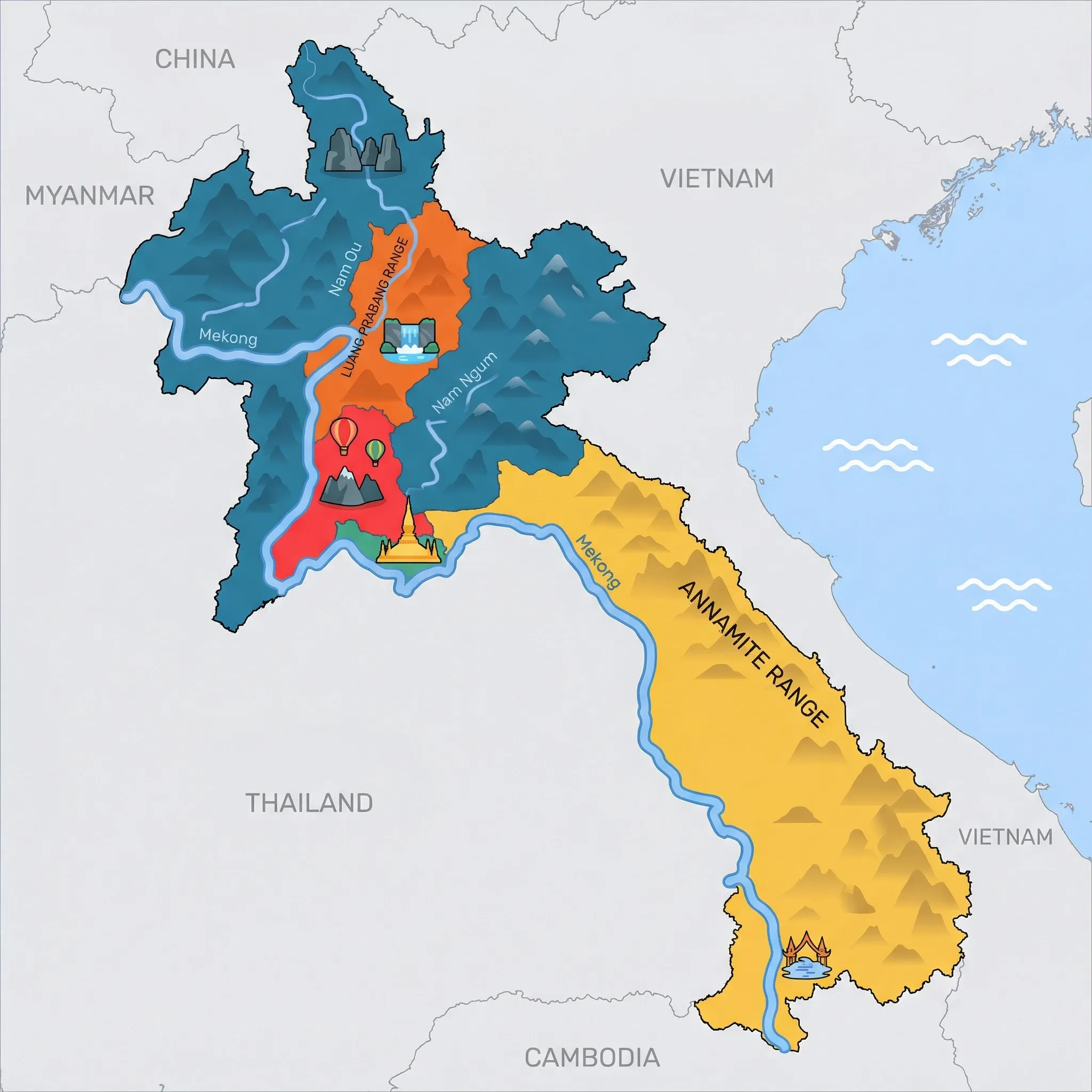
Click a region to explore
The South of Laos moves to an even slower rhythm than the rest of the country, making it a fantastic destination for families looking to unwind. The region is dominated by the Mekong River, which spreads out to over 14 kilometers wide creating the Si Phan Don archipelago, or "4000 Islands." Here, life revolves around the water. There are no high-rise hotels or traffic jams; instead, families stay in wooden bungalows on stilts, waking up to the sound of water lapping against the banks. The islands of Don Det and Don Khon are connected by a historic French railway bridge and are perfect for family cycling trips, with flat paths leading through rice paddies and coconut groves. It is one of the few places in the world where you can spot the rare, critically endangered Irrawaddy dolphins in the wild—a magical experience for children.
Inland from the river lies the Bolaven Plateau, a fertile highland region famous for its cooler climate, coffee plantations, and spectacular waterfalls. It offers a refreshing break from the tropical heat. Families can visit coffee farms to see how beans are roasted (parents will appreciate the fresh brew) and swim in the plunge pools of towering falls like Tad Fane or Tad Yuang. History buffs will appreciate Champasak, home to the UNESCO World Heritage site of Wat Phou. Predating Angkor Wat, these Khmer ruins are evocative and atmospheric but much smaller and less crowded than their Cambodian counterparts, making them manageable and enjoyable for kids to explore without exhaustion.
Key Attractions
The undisputed natural wonder here is the Khone Phapheng Falls. Known as the "Niagara of the East," it is the largest waterfall in Southeast Asia by volume. The raw power of the water is awe-inspiring for children. On the islands, renting bicycles to cross the bridge between Don Det and Don Khon is a rite of passage; stop to look for the old French steam locomotive left on the tracks. Boat trips to see the Irrawaddy Dolphins near the Cambodian border are a must-do, usually best in the dry season when the water is calmer.
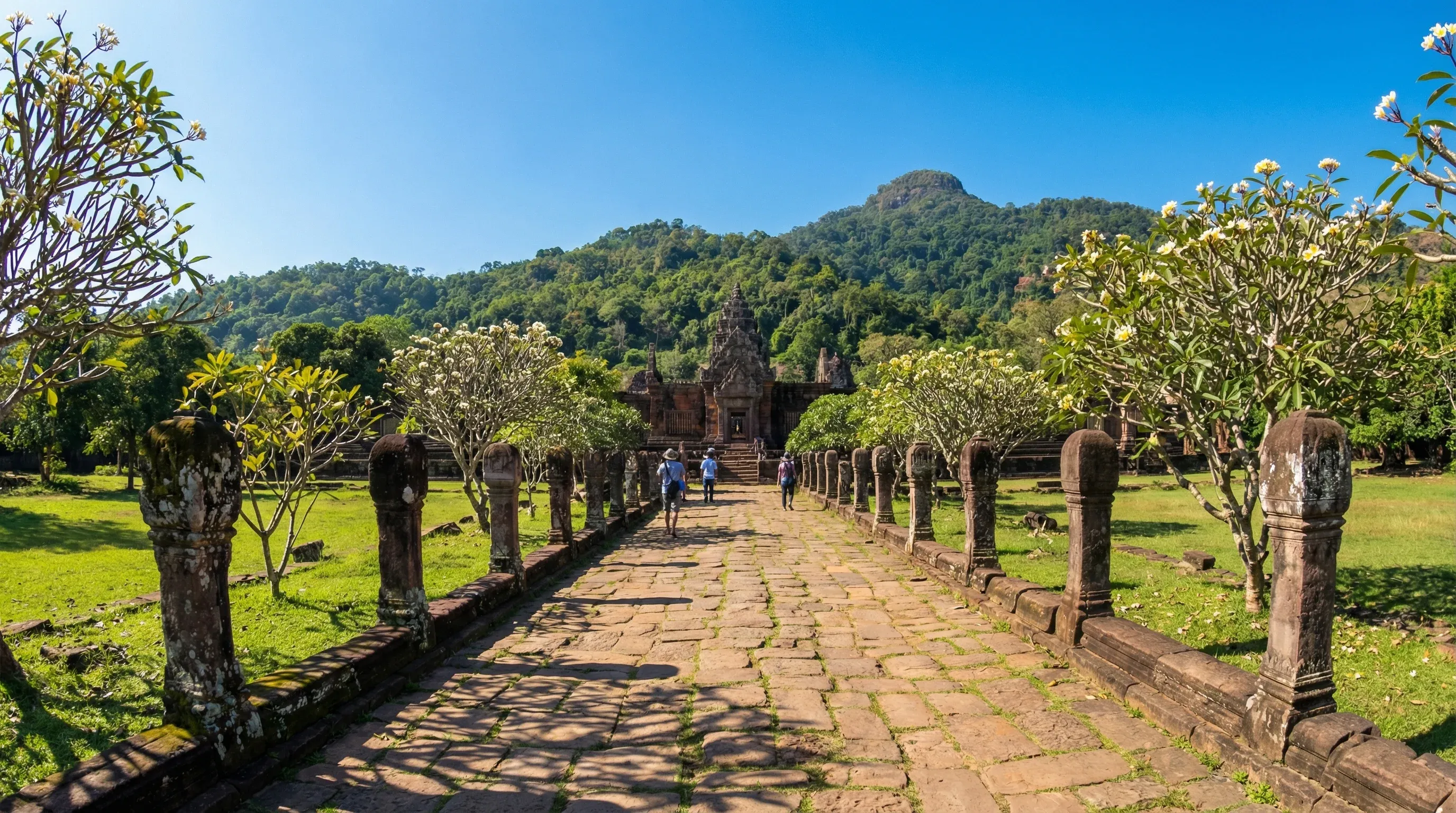
For a cultural excursion, Wat Phou offers a mystical setting at the base of a sacred mountain. The stone staircases lined with frangipani trees lead to ancient sanctuaries that feel like a "Tomb Raider" discovery for kids. On the Bolaven Plateau, the Tad Fane twin waterfalls are spectacular to view, and adventurous families can even try ziplining across the canyon.
Practical Advice
The south is hot. Mid-day heat (12:00 pm – 3:00 pm) can be oppressive, so plan activities for mornings and late afternoons. The coolest months are November to January. When visiting the 4000 Islands, bring enough cash as ATMs are often broken or empty on the islands. Medical facilities are basic; for serious issues, you would need to travel to Ubon Ratchathani in Thailand.
Food & Drink
Typical meal times: Relaxed island time applies. Lunch 12:00 pm to 2:00 pm, Dinner 6:30 pm to 9:00 pm. Service can be very slow—bring distractions for hungry kids.
Typical meal costs: Very budget-friendly. Island meals cost ₭40,000–70,000 (approx. $1.80–3.20 USD / €1.65–2.90 EUR). Fresh fish dishes are slightly more, around ₭90,000–120,000 (approx. $4.10–5.45 USD / €3.75–5.00 EUR).
Dietary requirements: Fish is ubiquitous. Vegetarians will find plenty of vegetable curries and fruit shakes. Coconut milk is widely used.
Signature dishes:
- Laap Pa – Minced fish salad made with fresh catch from the Mekong, packed with mint, cilantro, and lime.
- Mok Pa – Fish steamed in banana leaves with coconut milk and spices—soft, non-spicy, and great for kids.
- Bolaven Coffee – Not a meal, but the world-class local Arabica and Robusta coffee is a signature of the plateau.
Why this score?
The region offers diverse outdoor activities including high-altitude cycling on the Bolaven Plateau and zip-lining over massive waterfalls like Tad Fane. While the terrain is varied, the development of eco-resorts and organized tours makes these adventures relatively accessible to active families.
Why this score?
The city of Pakse serves as the regional medical hub, offering basic hospital services that can handle minor issues. However, facilities are limited in scope and equipment, and anything beyond routine care usually requires evacuation to Ubon Ratchathani in neighboring Thailand.
Why this score?
Southern Laos is an emerging destination known for its relaxed atmosphere and the Wat Phou UNESCO site, but it remains secondary to the Luang Prabang circuit. The 4000 Islands attract a steady flow of international travelers, though the overall volume is low compared to global tourist standards.

Southern Laos is exceptionally cheap. Riverside bungalows can cost as little as ₭150,000 (approx. $6.80 USD / €6.25 EUR) per night, though A/C family rooms are around ₭550,000–800,000 (approx. $25–36 USD / €23–33 EUR). Entry to <a data-attraction-id="44621">Khone Phapheng Falls</a> is roughly ₭55,000 (approx. $2.50 USD / €2.30 EUR).

Getting Here & Around
Getting Here
- Airports – Pakse International Airport (PKZ) is the hub, with flights from Vientiane, Siem Reap, and Ho Chi Minh City.
- Bus/Minivan – From Pakse, minivans run to the ferry terminal for 4000 Islands (approx. 2.5–3 hours).
- Boat – A short longtail boat ride is required to cross from the mainland (Nakasang) to Don Det or Don Khon islands.
Getting Around
- Bicycle – The absolute best way to move around the islands of Don Det and Don Khon. Rental shops have kid-sized bikes.
- Motorbike/Scooter – Popular on the Bolaven Plateau loops, but only recommended for experienced drivers.
- Songthaew – Shared trucks connect towns on the mainland and are the primary public transport.
Nearby Airports (2 airports)
Pakse
PKZPakse
Savannakhet
ZVKSavannakhet
View full flight map for Laos →

Packing List
The islands are on the river; mosquitoes are prevalent, especially at dusk.
Essential for protecting gear on small boats and near misty waterfalls.
Island paths are unlit and dark at night; essential for walking back from dinner.
To keep water and snacks cool during hot day trips on the islands.
Visa-on-arrival fees require immaculate banknotes; torn or old bills are frequently rejected.
You will remove shoes constantly for temples and some guesthouses; laces become frustrating.
Roads between towns are incredibly winding and mountainous if you aren't taking the train.
Public restrooms rarely provide paper; keeping a supply in your day bag is essential.
Street lighting can be dim or non-existent in rural areas and cave entrances.

Activities & Best Times

Hiking, wildlife, outdoor exploration, ecotourism
Offers exceptional immersion in the Mekong ecosystem and the lush Bolaven Plateau, featuring some of Southeast Asia's most spectacular waterfalls and rare Irrawaddy dolphin sightings. Peak months provide optimal trail conditions and manageable humidity, while the heavy monsoon from June to September can make jungle paths treacherous and river travel difficult.

Urban tourism, museums, historical sites, architecture
Home to the UNESCO-listed Wat Phou, a world-class example of Khmer architecture that predates Angkor Wat, alongside fascinating French colonial heritage in the 4000 Islands. The dry, cooler winter months are ideal for exploring these open-air archaeological sites, whereas the intense heat of April and the subsequent heavy rains significantly diminish the experience.

Scenic drives, countryside tours, route-based travel
The Bolaven Plateau Loop is a celebrated scenic driving route offering high-altitude coffee plantations and dramatic valley views via the Southern Corridor. Road conditions are best during the dry season; however, the peak monsoon brings risks of landslides and poor visibility on the plateau's winding roads.

Sport tourism, fitness activities, active recreation
Features internationally recognized adventure infrastructure including the Tree Top Explorer zip-lines and established cycling circuits through diverse terrain. Activities are most enjoyable in the cooler dry season, as extreme heat in spring and slippery conditions during the summer monsoon impact safety and comfort.




Public Holidays & Calendar Next 12 months
Public holidays, festivals, cultural celebrations, and seasonal natural phenomena coming up in Southern Laos (4000 Islands, Bolaven Plateau) over the next 12 months.
Loading holidays and events...

Travel Advisory
The majority of international agencies suggest standard safety awareness for Laos, though several recommend elevated caution due to specific security incidents and significant health risks like methanol poisoning. Severe regional warnings are in place for Xaisomboun and Bokeo provinces.
Safety Topics
Traveller Advice (2 groups)

Travellers should be extremely cautious when consuming alcohol, particularly spirit-based cocktails or locally distilled drinks. Awareness of methanol poisoning symptoms is essential, and visitors should avoid unlit areas or travelling alone at night.

Female visitors are advised to dress conservatively to respect local customs and remain vigilant against harassment, particularly when using taxis or travelling independently.
Agency Summaries
Visitors are advised to remain alert, particularly regarding personal safety and harassment risks. The government recommends avoiding Xaisomboun Province and provides warnings about methanol poisoning from local spirits.
While the overall advisory is at the lowest level, travellers must be extremely careful with alcoholic beverages following fatal methanol poisoning cases. High caution is required in Bokeo and Xaisomboun provinces.
Standard safety measures are generally sufficient, though specific regional risks exist. Significant concerns include methanol poisoning in tourist drinks and the ongoing threat of unexploded ordnance in rural districts.
Travellers should remain highly vigilant due to risks associated with crime, banditry, and hazardous unexploded munitions. Specific regions like Xaisomboun and border areas in Bokeo are under stricter warnings to avoid non-essential travel.
Standard travel awareness is advised, with a focus on preventing petty theft and bag snatching, which tend to increase during local festivals and in major tourist hubs.
Increased vigilance is recommended nationwide due to civil unrest. Travellers are advised to reconsider visits to Xaisomboun Province because of violence and should be wary of unexploded ordnance in rural areas.
Information is provided for general guidance only and does not constitute travel, safety, medical, or legal advice. Conditions may change. Users are responsible for independently verifying information before travel.