

Latvia is a country where fairy tales feel real and nature is never more than a few steps away. Located at the crossroads of Northern and Eastern Europe, this Baltic nation is defined by its pristine forests, wide sandy beaches, and a deep-rooted respect for the natural world. For families, Latvia offers a rare combination: it is safe, compact, and affordable, yet full of high-quality European culture and history. The landscape is mostly flat, making it perfect for little legs to hike or cycle, while the four distinct seasons provide everything from snowy winter wonderlands to endless summer days where the sun barely sets.
Culturally, Latvians are quiet but welcoming, with a strong tradition of song and folklore that children will find enchanting. The capital, Riga, is the cosmopolitan hub, famous for its Art Nouveau architecture and cobblestone Old Town, but the real magic lies in how quickly you can escape the city. Within an hour, you can be walking in a bog on wooden boardwalks, climbing a medieval castle tower, or building sandcastles on a Blue Flag beach. It is a destination that encourages families to slow down, breathe fresh air, and connect with nature without sacrificing modern comforts.
Key Attractions
Start your journey in Riga, where the Riga National Zoo nestles in the pine forests of Mežaparks, offering a lovely setting to see Nordic fauna. Just nearby, the Rīga Motor Museum is a world-class hit with kids, featuring interactive exhibits and vintage cars. For a dive into history, the Latvian Ethnographic Open-Air Museum allows families to wander through centuries-old wooden farmsteads, often with craft demonstrations that bring the past to life.
West of the capital, Jūrmala & Gulf Coast is the summer capital. Here, Līvu Akvaparks provides thrilling water slides indoors and outdoors, while the miles of shallow beach are perfect for toddlers. Heading inland to Sigulda & Gauja National Park, adventurous families can visit the majestic Turaida Museum Reserve with its red-brick castle, or even try the Sigulda Bobsleigh and Luge Track, which offers rides for tourists. Further west in Liepāja & Western Coast, the haunting Karosta Prison offers interactive tours that older children often find fascinatingly spooky, while Cape Kolka marks the dramatic point where the Baltic Sea meets the Gulf of Riga.
Practical Advice
The best time to visit for warm weather is June to August, when temperatures are mild (20–25°C) and days are incredibly long. Winter (December to February) is magical for snow activities but requires heavy clothing. English is widely spoken in tourism, especially by younger generations. Healthcare is of a good standard, and pharmacies are common. Latvia is part of the Schengen Area, making travel easy for EU visitors.
Food & Drink
Typical meal times: Lunch is usually served from 12:00 pm to 3:00 pm, often featuring excellent value "business lunch" specials. Dinner typically runs from 6:00 pm to 9:00 pm.
Typical meal costs: €15–25 (approx. $16–27 USD / £13–21 GBP) for a main course in a mid-range restaurant. Budget lunch deals can be found for €7–10 (approx. $8–11 USD / £6–8 GBP).
Dietary requirements: Vegetarian options are increasingly common in cities, though rural traditional cuisine relies heavily on pork and dairy. Gluten-free products are available in supermarkets but less strictly marked on restaurant menus than in Western Europe.
Family-friendly dining: The Lido leisure centre chain is a national institution perfect for families, offering high-quality cafeteria-style local food in folkloric settings with play areas. Most restaurants welcome children and offer highchairs.
Signature dishes:
- Pelēkie zirņi ar speķi – Grey peas stewed with fried onions and bacon bits, a savory national staple that is surprisingly addictive.
- Aukstā zupa – A vibrant pink cold beet soup made with kefir, cucumbers, and dill, refreshing on summer days.
- Karbonāde – The Latvian take on pork schnitzel, usually topped with creamy mushroom sauce and served with potatoes.
- Rupjmaize – Dark, dense rye bread that is sweet and sour, often used in deserts like Maizes zupa (bread soup with whipped cream).
Family Travel Notice
Parents should be aware of international parental child abduction laws and ensure they have appropriate documentation when travelling with minors.

Latvia is generally more affordable than Western Europe. A family of four can expect to spend around €180–240 (approx. $195–260 USD / £150–200 GBP) per day, covering mid-range accommodation, meals at family-friendly spots like Lido, and entry to major attractions.
Age Suitability




Did you know? Latvia welcomes approximately 478,000 international visitors per year. Most visitors come from Europe.
Explore Regions
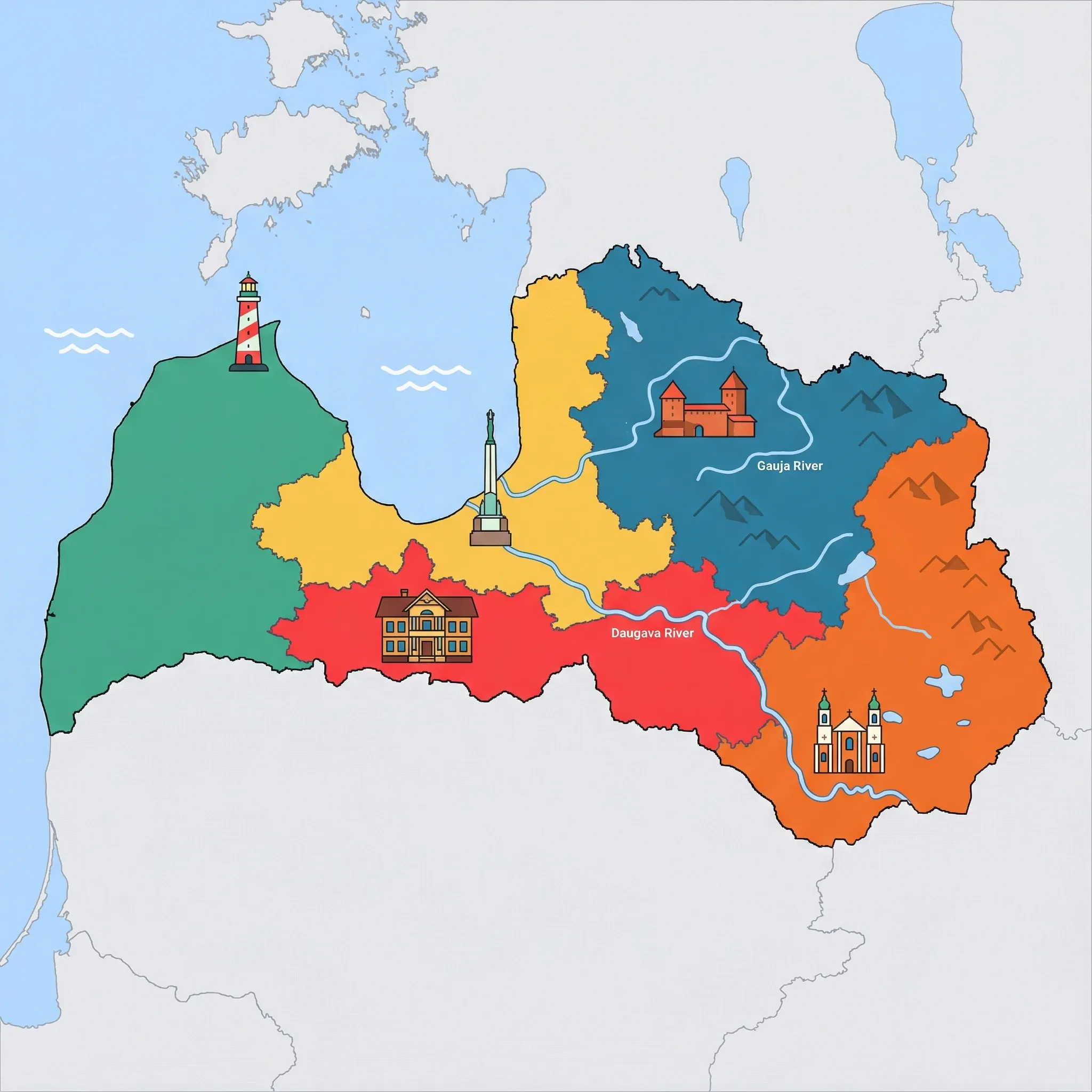
5 Regions
Jūrmala & Gulf Coast
Golden sands, wooden villas, and endless pine forests 🌲🌊
Latgale (eastern lakes)
The land of blue lakes and warm hospitality 🛶🏺
Liepāja & Western Coast
Where the wind is born and two seas meet 🌬️⚓
Riga
A fairytale city of spires, parks, and Art Nouveau gems 🏰🦁
Sigulda & Gauja National Park
Castles, caves, and adventure in the river valley 🏰🍁
Click on a region marker to explore details. Use the dropdown to color regions by activity suitability.

Getting There & Around
Getting There
- By Air – Riga International Airport (RIX) is the largest hub in the Baltics, with direct connections to over 100 cities. It is a short drive from the city centre.
- By Sea – Stena Line ferries connect Nynäshamn (Sweden) to Ventspils, and Travemünde (Germany) to Liepāja. Note that the direct Stockholm–Riga ferry is currently suspended.
- By Bus – Lux Express operates high-quality coaches with seatback screens from Tallinn and Vilnius, making a multi-country Baltic trip easy for families.
- Entry Requirements – Latvia is a Schengen member state. EU citizens need only an ID card. Check your government website for the latest visa requirements, or use the IATA Travel Centre entry-requirements checker.
Getting Around
- Trains – The domestic rail network, operated by Vivi, is modernizing and connects Riga to major towns like Jūrmala, Sigulda, and Daugavpils. It is spacious and stroller-friendly.
- Buses – Regional buses reach almost every corner of the country. They are reliable and inexpensive, though slower than driving.
- Car Hire – Highly recommended for exploring the Sigulda & Gauja National Park or the Liepāja & Western Coast at your own pace. Roads are generally good, but watch for wildlife in rural areas.
- City Transport – Riga has an excellent network of trams, trolleybuses, and buses. Children under 7 travel free.

Packing List
Legally required for pedestrians in unlit areas at night; locals wear them on coats and bags for safety.
Forests and tall grass are common tick habitats; having a removal tool is a smart safety precaution.
Summer days are very long with twilight lasting until midnight, making it hard for children to sleep.
Foraging is a national pastime in summer/autumn; you will want a container to collect wild blueberries.

Activities & Best Times

Adventure & Nature
Very GoodHiking, wildlife, outdoor exploration, ecotourism
Boasts significant wilderness areas like Šlītere National Park and Pape Nature Park, known for wild horse herds and major bird migration paths. Peak season provides the best access to trails and wildlife observation, while autumn offers spectacular birding and forest colors.
Offers a dense network of hiking and cycling trails through the Gauja River valley, including iconic sandstone cliffs and the famous 'Golden Autumn' foliage in October. Summer provides lush greenery and ideal trekking conditions, while the transition months of May and September offer quieter exploration before the damp, dark winter period.
Latgale's 'Land of Blue Lakes' offers authentic immersion in untouched lake ecosystems and the Daugava River arches, providing a serene wilderness experience for discerning families. Peak summer months are optimal for kayaking and exploring the Ezertaka trail, while May and September offer cooler but scenic hiking conditions.

City & Cultural
Very GoodUrban tourism, museums, historical sites, architecture
Liepāja offers a unique atmosphere blending Tsarist military history at Karosta with world-class modern architecture at the Great Amber Concert Hall. The city is most vibrant in summer with street life and festivals, though December provides an authentic Northern European winter atmosphere.
Boasts a high concentration of medieval heritage, including the Turaida Museum Reserve and Cēsis Medieval Castle, which host authentic historical reenactments. Cultural tourism is strongest in the warmer months when outdoor castle grounds and historic paper mill villages are fully accessible, with a secondary peak in December for traditional festive markets.
Home to the unique 19th-century Daugavpils Fortress and the world-renowned Rothko Museum, the region offers high-quality heritage and art experiences. The cultural season peaks from late spring to early autumn when the Aglona Basilica and various manor parks are most vibrant and accessible for families.

Sports & Active
Very GoodSport tourism, fitness activities, active recreation
The region features world-class infrastructure for coastal hiking (Jūrtaka) and long-distance cycling (EuroVelo 13). These activities are best enjoyed in the summer to avoid the intense Baltic winds and frequent autumn precipitation that can impact the exposed coastal trails.
Renowned for unique infrastructure including the Sigulda bobsleigh track, Tarzāns adventure park, and the Aerodium vertical wind tunnel. These world-class facilities are most active and accessible during the summer months, providing high-adrenaline options for active families that exceed typical regional standards.
With the EuroVelo 10 cycle route and Līvu Akvaparks, one of Northern Europe's largest water parks, the region caters well to active families. Peak summer is best for coastal cycling, while the indoor facilities of the water park extend the active season into the shoulder months.

Beach & Sea
GoodBeach resorts, marine activities: diving, snorkelling, kite surfing, wind surfing, sailing
Features pristine Blue Flag beaches in Liepāja and Ventspils with wide, fine-sand coastlines ideal for families. The Baltic Sea is only warm enough for swimming in July and August, while the rest of the year is characterized by cold temperatures and high winds.
Wide, white-sand Baltic beaches such as Vecāķi and Vakarbuļļi offer clean and spacious coastal recreation within easy reach of the city. The swimming season is strictly limited to the height of summer when water temperatures reach acceptable levels for international visitors.
Jūrmala offers a distinctive 33km stretch of white quartz sand backed by pine forests, providing a unique Baltic coastal atmosphere. Peak visitation occurs in July and August when sea temperatures are most tolerable, while shoulder months are ideal for long, scenic coastal walks.

Educational & Exploratory
GoodLearning experiences, scientific sites, historical education
Home to the state-of-the-art VIZIUM Science Centre and the unique Irbene Radio Astronomy Centre, offering high-quality discovery experiences. While the facilities are indoor, they are best visited during the primary travel season to ensure full access to guided tours and regional services.
The Daugavpils Lead Shot Factory is a unique industrial heritage site of European significance, complemented by the modern Daugavpils Innovation Centre. These facilities provide high-quality learning experiences that are best enjoyed during the main travel season to align with broader regional activity.
With high-quality institutions like the Rīga Motor Museum and the Latvian National Museum of Natural History, the city offers substantive learning experiences for families. These indoor facilities are best visited during peak tourism windows or the milder shoulder seasons, avoiding the darkest and coldest winter months.

Road Trips & Scenic
GoodScenic drives, countryside tours, route-based travel
The Baltic Coastal Scenic Route provides a well-maintained and evocative drive through the remote Livonian coast and historic port towns. Summer offers the long daylight hours and clear visibility necessary to appreciate the dramatic coastal bluffs and hidden seaside villages.
The Gauja National Park Scenic Loop and Via Hanseatica provide well-marked routes through rolling hills, river valleys, and historic towns. Peak driving conditions occur during the dry summer or the visually spectacular October foliage, while winter slush and early darkness make off-season touring less appealing.
The 'Land of Blue Lakes' and 'Daugavas Loki' routes provide scenic, well-marked driving experiences through rolling hills and traditional pottery workshops. Summer offers the safest road conditions and best visibility, while September provides stunning autumnal colors across the river valleys.

Theme Park & Entertainment
GoodAmusement parks, family entertainment venues
Ventspils is internationally regarded within the region for its family-centric infrastructure, including high-quality water parks and adventure parks. These are predominantly outdoor venues, limiting the optimal visiting window to the warm summer school holiday period.
The region hosts Līvu Akvaparks, a major Northern European water park, and the Lido Leisure Centre, which offers a unique blend of Latvian culture and family entertainment. Summer provides optimal conditions for outdoor activities, while the festive atmosphere of December maintains appeal for the region's main amusement hubs.
Features regional leisure parks like Rāmkalni and local aquatic centers which provide solid family entertainment but lack the scale of major international theme parks. Operations are highly seasonal, with outdoor summer activities being the primary draw for visiting families.

Ski & Snow
MarginalWinter sports, ski resorts, snow activities
Lemberga Hūte in Ventspils offers a localized, man-made hill for basic winter sports which is suitable for children but not a primary destination for international skiers. Experience is restricted to the coldest months when artificial snow can be maintained.
Latvia's ski infrastructure does not meet international 'good' standards. Žagarkalns and Ozolkalns are small regional facilities with unreliable snow conditions typical of the Baltic climate. 'Good' should be reserved for destinations with reliable seasons, substantial vertical drop, and regional significance beyond the national market. This should be 'marginal' for consistency with Latvia's actual ski product and to match other regions.
Small-scale alpine centers like Egļukalns provide basic winter sport facilities suitable for regional travelers but lack the infrastructure for international-tier ski holidays. Reliability is highest in January and February, though the season is brief and highly variable due to fluctuating temperatures.

Public Holidays & Calendar Next 12 months
Public holidays, festivals, cultural celebrations, and seasonal natural phenomena coming up in Latvia over the next 12 months.
Loading holidays and events...
Climate & Weather
Jūrmala & Gulf Coast
Show Details
| Month | Temp °C | Rain | Humidity |
|---|
Latgale (eastern lakes)
Show Details
| Month | Temp °C | Rain | Humidity |
|---|
Liepāja & Western Coast
Show Details
| Month | Temp °C | Rain | Humidity |
|---|
Riga
Show Details
| Month | Temp °C | Rain | Humidity |
|---|
Sigulda & Gauja National Park
Show Details
| Month | Temp °C | Rain | Humidity |
|---|

Travel Advisory
All major travel agencies maintain the lowest risk rating for Latvia, citing a stable security situation and low crime levels. Standard travel awareness is sufficient for most visitors.
Safety Topics
Traveller Advice (5 groups)

Ensure you carry a valid form of identification at all times. Be aware of the strict laws regarding public alcohol consumption and drug possession. Secure your personal belongings in busy tourist areas like Old Riga and central markets.

Access to public transport and historic buildings, particularly in the cobblestoned areas of Old Riga, may be limited for those with mobility challenges.

Parents should be aware of international parental child abduction laws and ensure they have appropriate documentation when travelling with minors.

While same-sex relations are legal, social attitudes can be conservative outside of major urban centers like Riga. Public displays of affection may attract unwanted attention.

Standard safety precautions for solo female travellers are recommended, particularly when walking in unlit areas or late at night.
Agency Summaries
Latvia is a safe destination with a stable security environment. Visitors are encouraged to secure their belongings and carry identification at all times.
No major security concerns are reported. Travellers should ensure they have comprehensive insurance and remain aware of standard safety risks common to European cities.
Latvia is generally safe for visitors, but standard safety measures are advised. Travellers should remain vigilant in crowded areas and follow local regulations regarding identification and road safety.
Most visits are trouble-free, though tourists should be aware of petty crime in Riga. Significant restrictions apply near the Belarus border, where certain crossings are closed and access is limited.
Travellers should be mindful of petty theft in major transit hubs and avoid leaving drinks unattended. Heightened security measures may be in place near the eastern land borders.
The country is categorized as a low-risk destination. Visitors should follow basic security protocols and maintain awareness of their surroundings in urban tourist centers.
Information is provided for general guidance only and does not constitute travel, safety, medical, or legal advice. Conditions may change. Users are responsible for independently verifying information before travel.