

Overview
Despite its small size, Lebanon packs a diverse array of landscapes and cultural depth that has fascinated travelers for centuries. Geographically, it is a stunning strip of land where the Mediterranean Sea meets the soaring Mount Lebanon range. In a single day, it is theoretically possible to swim in the sea and ski in the mountains. For families, this means a variety of environments to explore, from the humid, energetic coast of Beirut to the cool, fresh air of the Cedars & Mountains. The culture is a rich tapestry of East and West, ancient and modern, where Roman ruins stand alongside Ottoman palaces and French-colonial architecture.
The Lebanese people are famously hospitable and child-friendly, often going out of their way to welcome families. Food is a central pillar of life here, and the shared dining style of mezze is perfect for children, allowing them to sample small bites of hummus, pastries, and grilled meats. While the current situation requires extreme caution, the underlying spirit of the country-its history, its natural beauty, and its warmth-remains a compelling draw for those seeking to understand this pivotal corner of the Middle East.
Key Attractions
Lebanon's history is written in stone, and nowhere is this more impressive than at the Baalbek Temple Complex in the Bekaa Valley. These colossal Roman ruins are among the largest and best-preserved in the world. Children will be awestruck by the sheer scale of the Temple of Jupiter and the intricate details of the Temple of Bacchus. It is a playground of giants that brings history textbooks vividly to life.
On the coast, the ancient city of Byblos offers a more intimate historical experience. Families can explore the Byblos Castle, a Crusader fortress with sweeping views of the harbor, and wander through the old souks. Further north, the Cedars & Mountains region is home to the The Cedars Ski Resort area, where families can see the majestic Cedar of Lebanon trees, the national symbol, some of which are thousands of years old.
In the capital, the MIM Museum is a hidden gem that captivates children and adults alike with one of the world's most significant private collections of minerals. The vibrant colors and geometric shapes of the crystals are mesmerizing. Afterward, a walk along the Beirut Corniche to see the iconic Pigeon Rocks (Raouche) provides a classic Beirut sunset experience.
Practical Advice
If travel becomes safe, the best times to visit are spring (April–May) and autumn (September–October) when temperatures are mild. Summer can be hot and humid on the coast, though mountains remain cool. Be aware that electricity shortages are common; ensure your accommodation has 24/7 generator power. The economy is heavily dollarized, and you should bring "fresh" USD cash (new, crisp bills) as cards are often not accepted or offer poor rates.
Food & Drink
Typical meal times: Lunch is the main meal, typically served late from 1:00 pm to 3:00 pm. Dinner is lighter and often eaten after 8:30 pm.
Typical meal costs: LBP 900,000–2,700,000 (approx. $10–30 USD / €9–28 EUR). Note: Prices are volatile and often quoted in USD.
Dietary requirements: Excellent for vegetarians and vegans. Many traditional dishes (tabbouleh, hummus, fattoush, vine leaves) are naturally plant-based. Gluten-free options are available but cross-contamination with bread is a risk.
Family-friendly dining: Lebanese dining is inherently family-oriented. Restaurants almost always welcome children, and the mezze style (many small shared plates) is ideal for picky eaters.
Signature dishes:
- Manakish – Warm flatbread topped with za'atar (thyme/sesame mix) or cheese, often eaten for breakfast.
- Kibbeh – Fried croquettes made of bulgur wheat, minced onions, and ground meat, loved by kids for their crunchy texture.
- Tabbouleh – A fresh, zesty parsley salad with tomatoes, mint, onion, and bulgur, dressed with lemon and olive oil.
- Batata Harra – Spicy potatoes cubed and fried with coriander, chili, and garlic (ask for non-spicy for young kids).
- Knafeh – A warm, sweet cheese pastry soaked in syrup and topped with crushed pistachios, usually served in a sesame bun (kaak).
Safety
Given the L3/L4 advisory, safety is the primary concern. Conflict zones, particularly in the south and near borders, must be strictly avoided. Unexploded ordnance is a risk in former conflict areas. Driving standards are chaotic, and traffic accidents are common; hire a reputable driver rather than renting a car. Petty crime can occur, but the greater risk involves political instability and sudden road closures. Always carry identification and stay updated on local news.

A family of four can expect to spend around LBP 13,500,000–22,500,000 (approx. $150–250 USD / €140–230 EUR) per day. The economy is dollarized, so prices for hotels and private drivers are comparable to Southern Europe, while street food remains affordable. Bring abundant USD cash in small, crisp bills as ATMs are unreliable.
Age Suitability




Did you know? Lebanon welcomes approximately 1.5 million international visitors per year. Most visitors come from Europe.
Explore Regions
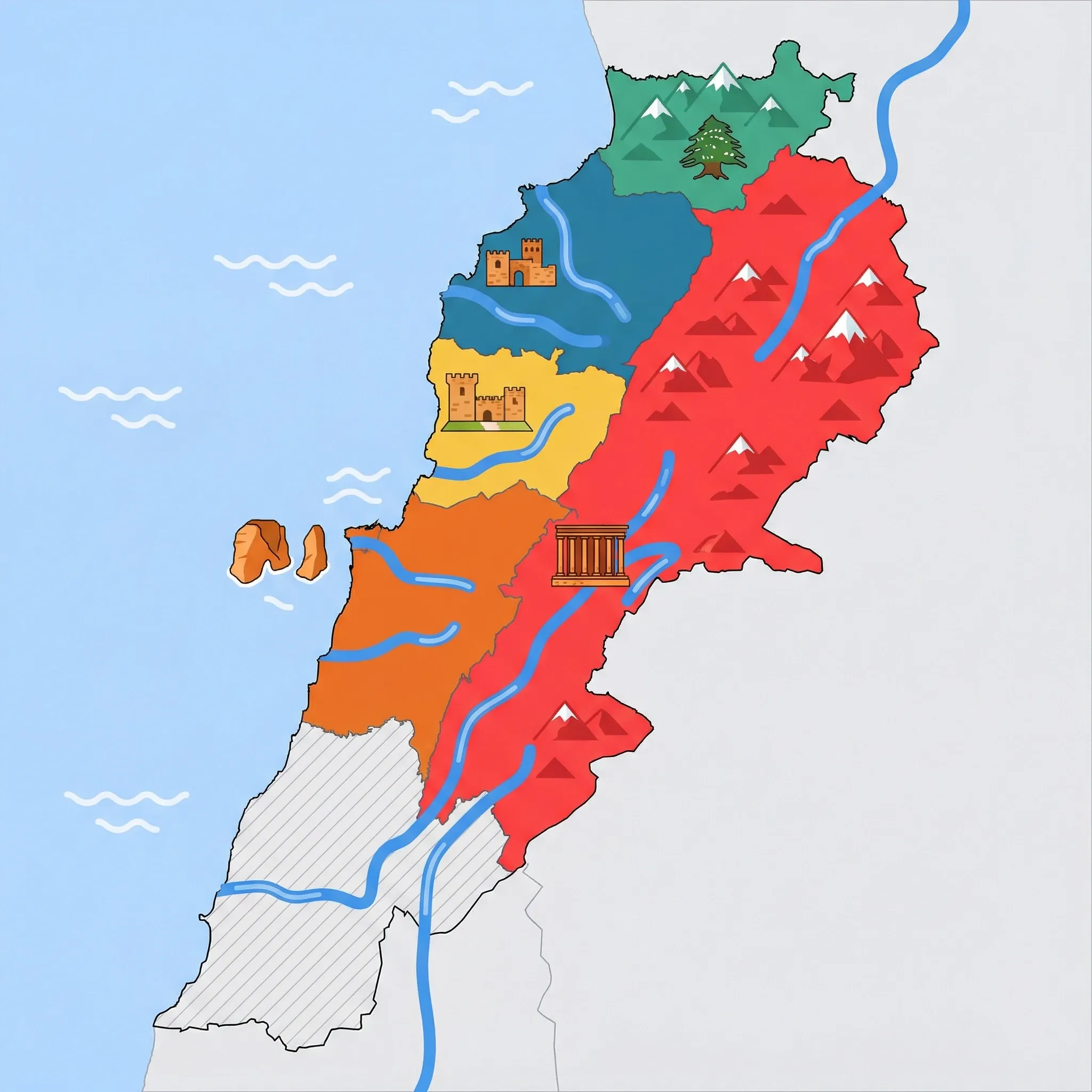
5 Regions
Beirut
A resilient city of culture, history, and Mediterranean soul 🌊🏙️
Bekaa Valley (Baalbek)
monumental ruins and endless vineyards 🍇🏛️
Byblos & North Coast
Ancient harbors, fossil museums, and sunny beaches ⛵🏺
Cedars & Mountains
Ancient trees, holy valleys, and snowy peaks 🌲🏔️
Tripoli
Authentic souks, crusader castles, and the best sweets in the east 🏰🍬
Click on a region marker to explore details. Use the dropdown to color regions by activity suitability.

Getting There & Around
Getting There
- By Air – Beirut-Rafic Hariri International Airport (BEY) is the only operational commercial airport, located just south of Beirut. Middle East Airlines (MEA) is the national carrier. Note that flights may be suspended on short notice due to security issues.
- By Land – Border crossings with Syria and Israel are currently closed to casual tourism or highly dangerous due to the conflict. Entry via land is not a viable option for families.
- Entry Requirements – Citizens of the US, UK, and most EU countries can typically obtain a free 1-month visa on arrival at the airport, though rules can change. Passports MUST NOT contain any Israeli stamps or visas, or entry will be denied. Check your government website for the latest visa requirements, or use the IATA Travel Centre entry-requirements checker.
Getting Around
- Private Taxi / Driver – The safest and most practical option for families. Apps like Uber or Bolt work in Beirut, but for day trips to Bekaa Valley or Byblos & North Coast, hiring a dedicated driver for the day is recommended to navigate chaotic traffic.
- Service Taxis (Servees) – Shared taxis that follow set routes. They are very cheap (around LBP 100,000 / $1 USD) but can be confusing for first-time visitors and are less suitable for families with small children.
- Car Hire – Available but generally discouraged for tourists due to aggressive driving habits, poor road maintenance, and lack of street lighting.

Packing List
Old, torn, or marked bills are often rejected. Bring new, crisp $10 and $20 notes for daily spending.
Daily electricity cuts are common; keep phones and devices charged when the grid goes down.
Streetlights are rare and stairwells in buildings may be dark during power outages.
Specific prescription drugs and some over-the-counter meds can be in short supply.
Essential for coastal evenings in summer, as insect control measures may be limited.

Activities & Best Times

Adventure & Nature
ExcellentHiking, wildlife, outdoor exploration, ecotourism
The Ammiq Wetland (a UNESCO biosphere reserve) and the Lebanon Mountain Trail offer world-class trekking and biodiversity encounters. Peak conditions occur during spring blooms and autumn harvests, while summer heat is manageable in the wetlands.
The UNESCO-listed Qadisha Valley and high-altitude cedar forests offer exceptional hiking and nature reserves like Horsh Ehden. Peak months provide optimal trail conditions, while winter snow makes the deeper valley and higher peaks inaccessible for nature exploration.
With 13 attractions including the Palm Islands Nature Reserve and Ras el Chekka coastal path, the region offers diverse and authentic Mediterranean ecosystems. Peak seasons provide manageable temperatures for hiking and birdwatching, while the humid summer heat and wet winter months are less favorable.

City & Cultural
ExcellentUrban tourism, museums, historical sites, architecture
Byblos is a world-class UNESCO heritage site and one of the oldest continuously inhabited cities globally, offering a sophisticated mix of archaeological ruins, historic souks, and high-end museums like Nabu. The experience is optimal during spring and autumn when the weather is ideal for exploring outdoor historical sites.
Home to the Baalbek Temple Complex and Anjar, the region boasts some of the most authentic and best-preserved Roman and Umayyad architecture globally. Spring and autumn offer comfortable temperatures for exploring the massive, unshaded archaeological sites.
Beirut offers a sophisticated blend of Ottoman, Mandate-era, and modern architecture, anchored by world-class institutions like the Sursock Museum and the National Museum. Peak conditions occur during spring and autumn when the Mediterranean climate is ideal for exploring the vibrant culinary scene and historic districts on foot.

Sports & Active
Very GoodSport tourism, fitness activities, active recreation
Features internationally recognized hiking sections of the Lebanon Mountain Trail and river rafting on the Al-Assi. Peak months coincide with optimal trail conditions and the summer rafting season, while winter rains and snow make activities difficult.
The region features high-quality infrastructure for active families, including the Mseilha Walkway for cycling and organized adventure parks. Conditions are best in the transitional months, avoiding the peak summer humidity and winter storm cycles that limit outdoor sporting activities.
Strong offerings for high-altitude activities including climbing Qornet es-Sawda and summer adventure parks. Infrastructure is most operational and accessible during the dry summer months when the snow pack has fully retreated.

Festivals & Seasonal
GoodEvents, celebrations, seasonal attractions
The Baalbeck International Festival is a genuinely world-renowned cultural event with 70+ years of history hosting international artists. It is a primary seasonal tourism draw for the region and justifies 'good' rather than 'marginal'. The current rating undersells its international significance.
The Cedars International Festival is a prestigious cultural event held in a world-class setting during the peak summer. Outside of this specific window, the region lacks the scale of events required to draw international festival-goers.
The Byblos and Batroun International Festivals are major cultural events that draw global talent to stunning historic venues. These events are strictly seasonal, concentrated in the peak summer months, making the region a specific destination for festival-goers during this brief window.

Road Trips & Scenic
GoodScenic drives, countryside tours, route-based travel
The Lebanon Wine Route and high mountain passes like Aayoun Orghosh provide sophisticated scenic touring through vineyards and rugged peaks. Winter snow and heavy rain often close higher passes or degrade the driving experience.
As the starting point for celebrated routes to Baalbek and the Chouf Mountains, Beirut is an excellent base for scenic driving tours. Peak months offer the best visibility and safe road conditions, avoiding the winter snows in the high mountains and the heavy coastal traffic of mid-summer.
Features spectacular high-mountain routes like the Ainata-Cedars pass, though these are strictly seasonal and closed by snow for half the year. Summer offers clear views and safe passage through some of the Middle East's most dramatic mountain scenery.

Theme Park & Entertainment
GoodAmusement parks, family entertainment venues
Beirut serves as a hub for several major regional water parks like Waves and Watergate, which are primary summer draws for families. These facilities are strictly seasonal, operating during the hot summer months and closing for the cooler, wetter remainder of the year.
Al Shams Aqua Park provides a regional entertainment option for families during the height of summer. It is a local-standard facility that is only relevant to international travelers during the warmest months when school is out.
Local waterparks like Waterland provide family entertainment, though they lack the scale and quality of international destinations. These facilities are primarily summer-only operations, catering to domestic and regional tourists during the hottest months.

Beach & Sea
GoodBeach resorts, marine activities: diving, snorkelling, kite surfing, wind surfing, sailing
The city features iconic coastal landmarks like Pigeon Rocks and luxury marinas like Zaitunay Bay, though it lacks expansive sandy beaches compared to dedicated resorts. The swimming season is most active from June to September when sea temperatures are warm and waters are generally calm.
The coastline features sophisticated beach clubs and unique coastal spots like Tahet el Rih, offering a distinctive 'Little Greece' vibe. International tourists peak during the hot summer months when sea temperatures and visibility are highest, though coastal activities cease during the rainy winter.
The Palm Islands Nature Reserve offers unique offshore marine biodiversity and seasonal swimming away from the urban coast. Activity is restricted to the summer months when sea conditions are calm and water temperatures are suitable for international families.

Educational & Exploratory
MarginalLearning experiences, scientific sites, historical education
The MIM Museum houses a world-class mineral collection of global significance, providing a unique scientific attraction for inquisitive families. While indoor and accessible year-round, it is best visited when city conditions are pleasant for general travel.
The 'Memory of Time' fossil museum offers a unique, internationally significant look at prehistoric marine life. While it is a niche interest, it complements the broader cultural heritage of Byblos, with peak visitation following the general tourist seasons.

Ski & Snow
MarginalWinter sports, ski resorts, snow activities

Relaxation & Wellness
MarginalSpa retreats, wellness centers, peaceful getaways

Public Holidays & Calendar Next 12 months
Public holidays, festivals, cultural celebrations, and seasonal natural phenomena coming up in Lebanon over the next 12 months.
Loading holidays and events...
Climate & Weather
Beirut
Show Details
| Month | Temp °C | Rain | Humidity |
|---|
Bekaa Valley (Baalbek)
Show Details
| Month | Temp °C | Rain | Humidity |
|---|
Byblos & North Coast
Show Details
| Month | Temp °C | Rain | Humidity |
|---|
Cedars & Mountains
Show Details
| Month | Temp °C | Rain | Humidity |
|---|
Tripoli
Show Details
| Month | Temp °C | Rain | Humidity |
|---|

Travel Advisory
All major international agencies have reached a consensus that Lebanon is currently too dangerous for travel. This assessment is driven by active military conflict, high terrorism threats, and a volatile security situation that can worsen instantly. Immediate departure is recommended for all foreign nationals.
Safety Topics
Traveller Advice (4 groups)

Same-sex relationships lack legal protection and may face societal hostility; discretion is advised regarding public behavior and expressions of identity.

Personnel working for non-governmental organizations face an elevated risk of being targeted for kidnapping or caught in cross-border violence near refugee settlements and border zones.

It is recommended to dress conservatively and respect local cultural norms to minimize the risk of harassment or unwanted attention in public areas.

Visitors should maintain a high level of situational awareness, keep a low profile, and ensure they have a stock of essential supplies like food, water, and medicine for sheltering in place if movement becomes impossible.
Agency Summaries
Extreme caution is advised as the nation faces multiple severe threats including active armed conflict, terrorism, and widespread civil unrest. The U.S. government has ordered the departure of non-emergency personnel and has severely limited ability to provide emergency assistance to its citizens on the ground.
Ireland maintains its highest level of travel warning for the entire country. The current political and security environment is highly volatile with a significant risk of escalation. Citizens are advised that consular services are extremely constrained during this crisis.
Safety cannot be guaranteed due to intensified conflict between regional actors involving heavy military strikes. Travel to southern Lebanon and the border with Syria is strictly discouraged, while all non-essential travel to the rest of the country should be canceled. British nationals should prepare personal emergency plans.
The security landscape is extremely hazardous and unstable due to ongoing military actions and cross-border hostilities. Air raids and shelling are frequent, particularly in southern regions and Beirut's suburbs, posing a direct threat to life. Visitors are strongly urged to leave immediately while commercial transportation is still available.
A critical warning has been issued due to a sharp deterioration in regional security. Threats include armed conflict, kidnapping, and the risk of terrorist attacks. Essential services and transport infrastructure, including the main international airport, are at high risk of sudden closure or disruption.
There is an extreme risk to personal safety throughout the country. Explosions, airstrikes, and military operations occur with little to no notice. All travel plans should be abandoned, and individuals currently in the region should prioritize safe departure immediately.
Information is provided for general guidance only and does not constitute travel, safety, medical, or legal advice. Conditions may change. Users are responsible for independently verifying information before travel.