

Overview
For families with a spirit of adventure, Liberia offers a travel experience unlike any other in West Africa. Known as Africa's oldest republic, founded by freed slaves from the United States, it holds a unique place in history that is palpable in the streets of Monrovia. The country is defined by its incredibly lush rainforests, which cover much of the interior, and its golden Atlantic coastline. It is not a destination for an all-inclusive resort holiday; rather, it is a place for cultural immersion, wildlife spotting, and witnessing a nation rebuilding itself with optimism and resilience.
Travelling here requires patience and preparation, but the rewards are genuine. Families can explore the vibrant markets of the capital, relax on the empty beaches of the Coast, or venture into the deep forest to glimpse rare wildlife. The rainy season is intense and transforms the landscape into a verdant waterworld, while the dry season offers excellent days for beach picnics and surfing. For children, the immediate warmth of Liberian hospitality and the chance to see nature in its rawest form-from sea turtles to chimpanzees-creates memories that last a lifetime.
Key Attractions
The crown jewel of Liberia's natural beauty is Lake Piso, located near Robertsport. This vast saltwater lagoon, surrounded by forest-covered hills and traditional fishing villages, is perfect for family boat trips. The water is calm and safe for swimming, unlike the rough Atlantic surf, and the area is a haven for birdwatching. It provides a peaceful escape where children can watch fishermen cast their nets and explore the sandy banks.
For families with older children or teens seeking a true expedition, Sapo National Park in the Sapo NP & Southeast region is a biodiversity hotspot of global importance. It is one of the last strongholds of the West African rainforest and home to the elusive pygmy hippo, forest elephants, and chimpanzees. Access is difficult and requires a 4x4 and a guide, but the experience of trekking through primary rainforest is unparalleled. Closer to the capital, the Libassa Ecolodge in Marshall offers a more accessible family experience with a wildlife sanctuary and lazy river, providing a "soft landing" for visitors.
Practical Advice
The best time to visit is during the dry season, from December to April, when roads are passable and days are sunny. The rainy season (May to October) brings torrential downpours that can wash out roads, making travel outside Monrovia difficult. Malaria is a serious risk year-round; families must bring strong insect repellent, sleep under nets, and take prophylaxis. A valid Yellow Fever vaccination certificate is mandatory for entry. Travelers should carry US Dollars in small, crisp denominations, as credit cards are rarely accepted outside top hotels.
Food & Drink
Typical meal times: Lunch is typically eaten between 12:00 pm and 3:00 pm. Dinner is served late, usually from 7:00 pm to 9:00 pm, though hotels cater to earlier schedules.
Typical meal costs: Street food and local "cook shops" are cheap, but most visitors stick to hotel restaurants or expat-focused venues where hygiene is guaranteed. A meal in a decent restaurant costs L$2,800–4,800 (approx. $15–25 USD / €14–23 EUR). High-end dining can reach L$5,800–9,600 (approx. $30–50 USD / €28–46 EUR).
Dietary requirements: Liberian cuisine relies heavily on meat and fish. Vegetarians may find it challenging as even vegetable dishes (like cassava leaf) are often cooked with meat stock or dried fish. Always ask specifically if a dish contains "meat dust" or fish.
Family-friendly dining: Highchairs are rare outside of international hotels. Liberian culture is very child-friendly, and staff will be welcoming, but child-specific menus are uncommon. Stick to simple grilled chicken and rice for fussy eaters.
Signature dishes:
- Jollof Rice – A West African staple of rice cooked in a rich tomato, onion, and pepper stew, often served with chicken or fish.
- Cassava Leaf – The national dish; a thick, green stew made from ground cassava leaves, palm oil, and meat or fish, usually heavily spiced and eaten with rice.
- Palm Butter – A rich, buttery soup made from palm nut pulp, often served with rice and containing chicken, crab, or beef.
- Fufu and Soup – Dough-like balls made from cassava or plantain, swallowed whole with a spicy light soup (often goat or fish).
- Pepper Kala – A popular street snack of deep-fried dough balls served with a spicy pepper dipping sauce (too spicy for most kids!).
Safety
Crime is a concern in Monrovia, particularly petty theft and pickpocketing in crowded areas like Waterside Market. Avoid walking alone at night and keep car doors locked. The ocean currents are extremely strong; swimming is dangerous at most unprotected beaches. Always swim where locals or hotels indicate it is safe (like Libassa or calm bays). Road safety is a major issue; hire a professional driver rather than driving yourself, and avoid inter-city travel after dark.

While local living is cheap, the cost of a safe, comfortable family trip is high due to the need for private transport, generator-powered accommodation, and imported goods. A family of four should budget L$95,000–135,000 (approx. $500–700 USD / €460–650 EUR) per day for a mid-range experience including car hire with a driver, decent hotels, and meals.
Age Suitability





Explore Regions
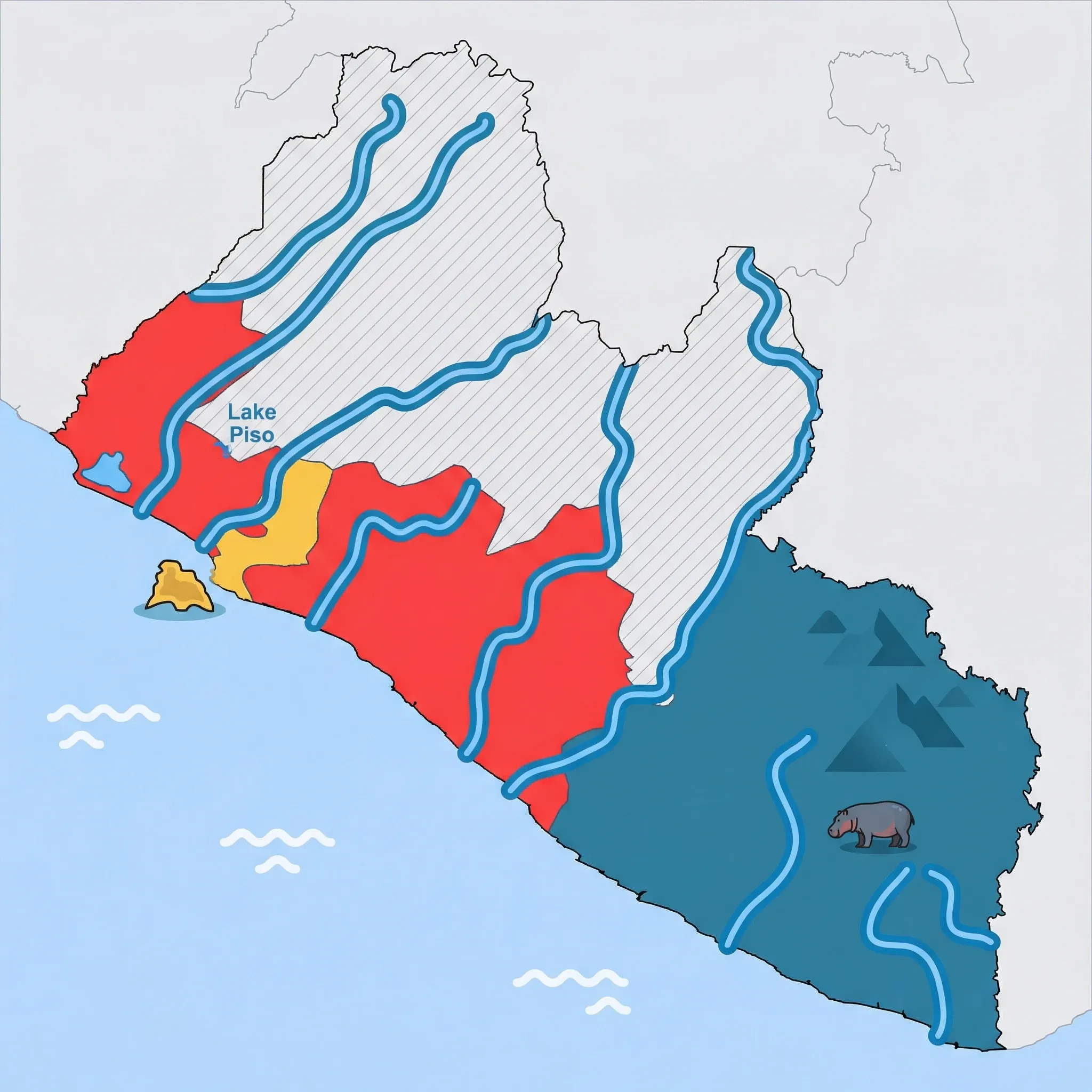
Click on a region marker to explore details. Use the dropdown to color regions by activity suitability.

Getting There & Around
Getting There
- By Air – Roberts International Airport (ROB) is the main gateway, located about 60km from Monrovia. Airlines include Brussels Airlines, Royal Air Maroc, and ASKY.
- By Land – Border crossings exist with Sierra Leone (Bo Waterside), Guinea, and Côte d'Ivoire, but roads can be poor and borders may close unpredictably.
- Entry Requirements – Most visitors require a visa. A new "Visa on Arrival" system is available but requires online pre-approval. A Yellow Fever vaccination certificate is mandatory. Check your government website for the latest visa requirements, or use the IATA Travel Centre entry-requirements checker.
Getting Around
- Car Hire – The only practical option for families. Renting a 4x4 with a professional driver is essential for safety and navigating the rough roads, especially in the Sapo NP & Southeast region.
- Kekehs – Three-wheeled motorized rickshaws are common in Monrovia. They are cheap and fun for short hops but not safe for highway travel.
- Taxis – Shared yellow taxis are the main public transport but are often overcrowded and unsafe for tourists. Private charter taxis are available but expensive.

Packing List
Power outages are frequent and street lighting is rare; essential for navigating hotels at night.
Old, torn, or small-head dollar bills are frequently rejected by local vendors and banks.
Tap water is unsafe and buying plastic bottles constantly is expensive and environmentally unfriendly.
Electricity is often generator-based and may be turned off during the day or late at night.
Essential for boat trips on Lake Piso and protecting electronics during sudden tropical downpours.

Activities & Best Times

Adventure & Nature
Very GoodHiking, wildlife, outdoor exploration, ecotourism
Sapo National Park is West Africa's largest protected primary tropical rainforest and home to rare endemic species including forest elephants, pygmy hippos, and chimpanzees. The classification notes describe 'world-class rainforest immersion' which justifies a very_good rating. Once the missing Sapo NP attraction is added to the database, this upgrade is warranted.
Home to significant wildlife sanctuaries and ecological resorts like Libassa, offering unique chimpanzee rescue encounters and jungle trails. Peak season aligns with the dry months when trails are accessible and wildlife observation is most predictable.
Features interesting geological sites like Blo Degbo and rural farm experiences, providing an authentic look at the Liberian landscape. The dry season is critical for navigating rural areas and ensuring trails and scenic sites are accessible to families.
Beach & Sea
Very GoodBeach resorts, marine activities: diving, snorkelling, kite surfing, wind surfing, sailing
Robertsport is internationally recognized in the global surf community for world-class point breaks. While general beach infrastructure may be limited, for surf tourism this is a nationally and internationally significant destination. The classification notes themselves describe 'world-class waves' which supports a very_good rating.
Pristine and undeveloped beaches like Cape Palmas and Greenville offer raw natural beauty but lack international-standard resort infrastructure. Peak visitation coincides with the short dry window to ensure safe sea conditions and sunny weather, as the Atlantic coast experiences extreme rainfall and rough surf during the monsoon.
Silver and Ce Ce beaches offer Atlantic coastal access, but limited infrastructure and safety standards compared to global benchmarks make this a marginal choice. Peak season aligns with the driest window when sea visibility is better and humidity is more manageable.

City & Cultural
GoodUrban tourism, museums, historical sites, architecture
The historic district of Harper (Cape Palmas) provides a unique, authentic look at Americo-Liberian architecture and history through landmarks like the Tubman Mansion. Travel is best during the dry season when the humid heat is tempered by the Harmattan breeze, as heavy rains from May to October make the remote region difficult to reach.
Robertsport offers a unique window into Afro-American settler history through its historic ruins and Afro-Caribbean vibes. The dry season is essential for comfortably exploring these open-air heritage sites and colonial structures.
Monrovia houses unique historical sites like Providence Island and the National Museum that tell a compelling story of Afro-American settlement and resilience. Visitors should prioritize the dry months to avoid the extreme monsoonal rainfall that makes urban walking and logistics difficult.

Sports & Active
GoodSport tourism, fitness activities, active recreation

Road Trips & Scenic
MarginalScenic drives, countryside tours, route-based travel
Scenic coastal drives between Monrovia, Robertsport, and Buchanan provide rugged, authentic views of the Atlantic. Travel is only recommended in the peak dry season due to road quality and safety concerns during the extreme rainfall of the monsoon.
The scenic route from Monrovia to Robertsport is highly regarded for its coastal views, though it requires a tolerance for variable road conditions. Road trips are only recommended during the dry season to ensure road safety and clear visibility of the Atlantic coastline.
Theme Park & Entertainment
MarginalAmusement parks, family entertainment venues

Public Holidays & Calendar Next 12 months
Public holidays, festivals, cultural celebrations, and seasonal natural phenomena coming up in Liberia over the next 12 months.
Loading holidays and events...
Climate & Weather
Coast
Show Details
| Month | Temp °C | Rain | Humidity |
|---|
Monrovia
Show Details
| Month | Temp °C | Rain | Humidity |
|---|
Sapo NP & Southeast
Show Details
| Month | Temp °C | Rain | Humidity |
|---|

Travel Advisory
The majority of international agencies advise travellers to exercise a high degree of caution or increased vigilance when visiting Liberia. This assessment is primarily driven by high levels of violent crime, potential for civil unrest, and extremely limited medical and emergency services infrastructure.
Safety Topics
Traveller Advice (3 groups)

Check specific guidance on local attitudes and legal risks, as social and legal environments for LGBTQ+ individuals may differ significantly from Western standards.

Female travellers should be aware of high reported rates of sexual assault and aggravated harassment. It is strongly recommended to avoid walking alone, particularly in isolated areas or after sunset.

Limit movement after dark and avoid traveling between cities at night. Do not display signs of wealth such as jewelry or expensive electronics. Ensure you have comprehensive travel insurance that covers emergency medical evacuation by air.
Agency Summaries
High vigilance is necessary due to the threat of violent crime and the risk of civil disturbances. Ongoing health concerns, including Mpox outbreaks and poor medical services, further complicate the safety environment. Consular support is limited for Australian citizens.
Travellers should remain highly vigilant due to the potential for violent incidents and a high rate of crime. Petty theft is prevalent in crowded areas, while more serious crimes like armed robbery and sexual assault are significant risks, especially after dark when lighting is limited.
There is a significant incidence of armed robbery and muggings, particularly after dark. Travellers should avoid public transportation and pre-arrange all travel through reputable organizations, as the local police have limited capacity to respond to emergencies.
Increased caution is advised because of widespread crime, potential civil unrest, and inadequate medical facilities. Violent crimes, including armed robberies, frequently occur in urban centers and on public beaches. U.S. government personnel are restricted from traveling at night outside the capital.
While the political situation is stable, protests can occur with little notice and may turn violent. Visitors are warned of the high risk of crime, poor healthcare infrastructure, and the potential for terrorist activity within the broader West African region.
The security environment remains fragile with high levels of violent crime reported, including sexual assault and armed robbery. Protests are common and carry a risk of localized violence, making careful planning and situational awareness essential.
Information is provided for general guidance only and does not constitute travel, safety, medical, or legal advice. Conditions may change. Users are responsible for independently verifying information before travel.