

⚠️ SAFETY WARNING: Due to political volatility, high rates of violent crime, and the threat of terrorism and kidnapping, government agencies (including CA, USA, UK, AU, IE, and NZ) advise travelers to avoid all travel to Libya. The security situation is unpredictable and can change rapidly. Families are strongly urged to consult their own government's official travel advisory before considering a trip, as circumstances and risk assessments vary.
Overview
Situated on the Mediterranean coast of North Africa, Libya is a land of stark contrasts, where the golden sands of the Sahara meet the turquoise sea. For the rare family visitor, it offers an educational experience unmatched in the region, with ancient cities that rival Rome in grandeur but stand almost entirely empty of crowds. The country is vast, with a culture deeply rooted in Bedouin hospitality and Islamic tradition. While modern tourism infrastructure is limited and travel requires a government-mandated guide, the warmth of the Libyan people toward children is genuine and welcoming.
Traveling here is an expedition rather than a vacation. Families visiting Libya are typically those with a deep connection to the region or seasoned travelers on organized heritage tours. The coastal belt enjoys a Mediterranean climate, while the interior is dominated by the arid beauty of the desert. From the bustling streets of Tripoli to the silent ruins of Cyrenaica, the country is a living museum of Phoenician, Greek, Roman, and Islamic history, offering children a tangible connection to the civilizations that shaped the Mediterranean world.
Key Attractions
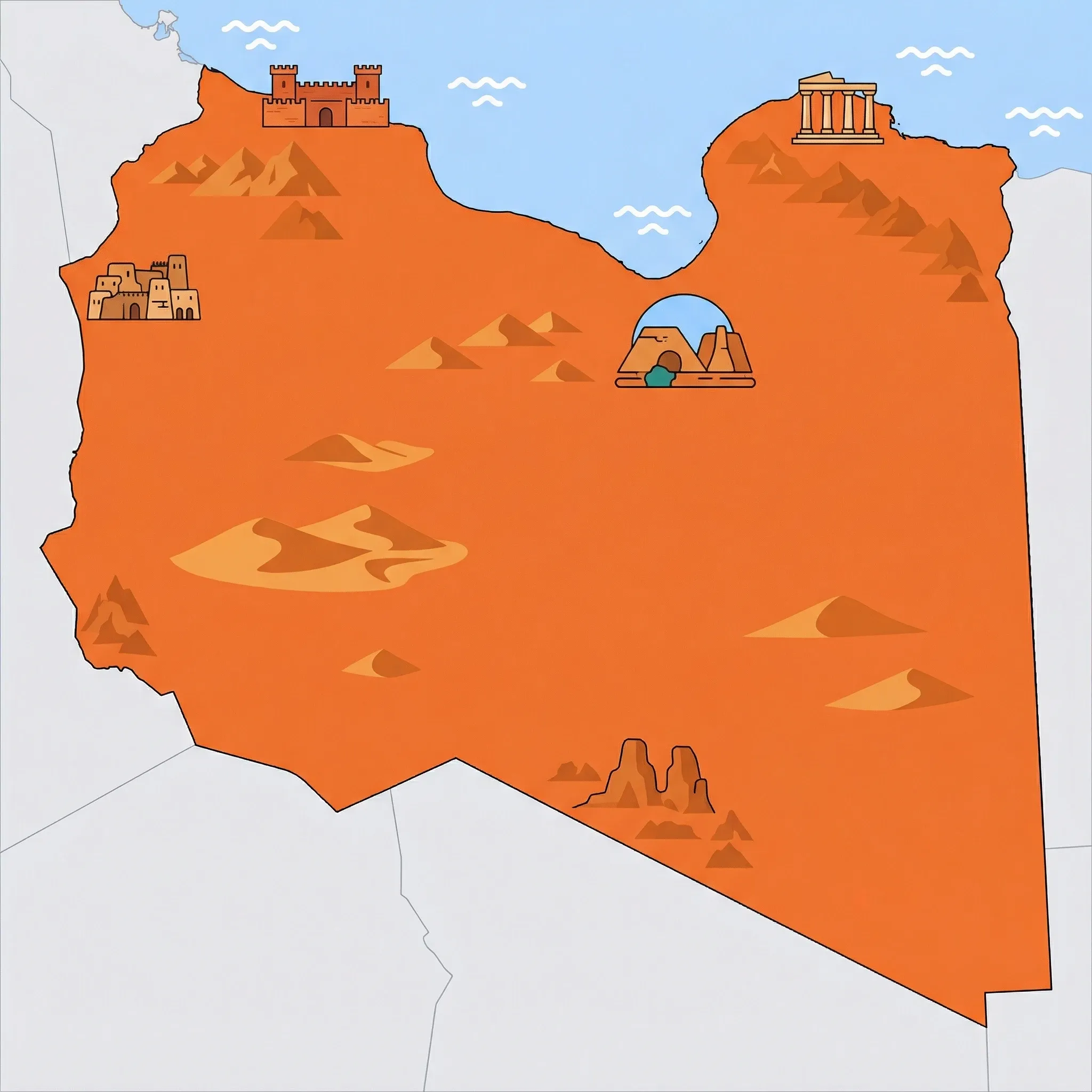
The crown jewel of Libyan tourism is undoubtedly Leptis Magna. Often cited as the best-preserved Roman city in the world, it allows children to walk through monumental arches, explore a vast amphitheatre, and run along original stone streets without the crowds found in Italy. It is a sprawling archaeological playground where history feels immediate and untouched. Nearby, the Archaeological Site of Sabratha offers another stunning Roman theatre set against the backdrop of the sea, perfect for sparking young imaginations about gladiator contests and ancient plays.
In the capital, Tripoli, the massive Red Castle Museum (Assaraya al-Hamra) dominates the skyline. While the interior has faced intermittent closures, its imposing architecture and location overlooking the Martyrs' Square make it an essential stop for understanding the city's layered history. For a completely different experience, a journey to the Old Town of Ghadames-known as the "Pearl of the Desert"-reveals a labyrinth of covered white-washed streets designed to keep out the Sahara heat. It is a UNESCO World Heritage site where families can learn about traditional desert living and water management systems that have sustained life for centuries.
Far to the east lies the Archaeological Site of Cyrene, a massive Greek settlement with temples overlooking the verdant Jebel Akhdar mountains. For those able to venture deep into the southwest (security permitting), the Tadrart Acacus mountain range features prehistoric rock art and dramatic basalt towers emerging from the sand, offering a geography lesson like no other.
Practical Advice
Best time to visit: The cooler months from November to March are ideal, as summer temperatures can be extreme, especially in the desert. Visas: Tourist visas are currently difficult to obtain independently. You must book a tour with a licensed Libyan operator who will arrange the visa and provide the mandatory security clearance and guide.
Food & Drink
Typical meal times: Lunch is the main meal of the day, typically eaten from 1:30 pm to 3:30 pm. Dinner is a lighter, late affair, usually served from 8:30 pm to 10:00 pm.
Typical meal costs: 15–40 LYD (approx. $3–8.50 USD / €2.80–7.50 EUR) for a basic local meal; 60–120 LYD (approx. $12.50–25 USD / €11–22 EUR) for a mid-range dinner for one.
Dietary requirements: Libyan cuisine relies heavily on lamb, wheat (couscous/bread), and dairy. Vegetarians can find options like salads, bean stews, and vegetable couscous, but strict vegan or gluten-free options are rare outside of home cooking.
Family-friendly dining: Children are adored in Libya and warmly welcomed in restaurants. Most places are informal, and sharing large platters is common. Highchairs are not standard, so be prepared to improvise.
Signature dishes:
- Couscous – The national staple, steamed semolina served with a rich stew of lamb, pumpkin, chickpeas, and onions (a mild, comforting favourite for kids).
- Bazeen – A hard barley dough shaped into a dome and served in the centre of a tomato-based stew; traditionally eaten by hand, which adventurous children often enjoy.
- Mbatten – Potato slices stuffed with spiced minced meat and herbs, then fried-essentially a delicious Libyan potato scallop.
- Shakshuka – Eggs poached in a spicy tomato and pepper sauce, widely eaten for breakfast with fresh bread.
- Asida – A soft wheat flour pudding served with butter and honey or date syrup, a sweet treat often served during celebrations.
Safety
Travel to Libya involves significant risk. The country remains politically fragmented, and clashes between armed groups can occur. Kidnapping for ransom is a threat to foreigners. You should not travel independently; a trusted local guide and often a security escort are required by law for tourists. Avoid all protests, large crowds, and border regions. Medical facilities are limited, so comprehensive evacuation insurance is non-negotiable.

While local food is inexpensive—with street meals costing 10–25 LYD (approx. $2–5 USD / €1.80–4.50 EUR)—the mandatory requirement for guided tours makes Libya a high-cost destination. A family must hire a licensed agency for the entire trip, including driver, guide, and permits. Expect all-inclusive daily tour costs to range from $150–300 USD (approx. €140–280 EUR / £120–240 GBP) per person.
Age Suitability




Did you know? Libya welcomes approximately 34,000 international visitors per year. Most visitors come from Europe.
Why this score?
Libya offers extreme adventure through its vast Saharan landscapes, including the remote Acacus Mountains and the sand seas of the Fezzan. The combination of challenging desert logistics, the necessity of specialized local guides, and the overall political volatility creates an expedition-style environment for any visitor.
Why this score?
The national healthcare system has been severely compromised by ongoing civil instability, leading to frequent shortages of essential medical supplies and specialized personnel. Outside of very basic private clinics in Tripoli, medical infrastructure is largely inadequate for foreign travelers, requiring medical evacuation for any serious condition.
Why this score?
With only 34,000 annual international arrivals, Libya is one of the least visited countries in the Mediterranean basin. While it contains world-class UNESCO sites like Leptis Magna and Cyrene, travel is limited to a very small number of niche tour groups due to strict visa policies and the prevailing security climate.
While the local cost of living is low, the logistics of visiting safely make it a mid-to-high cost destination. Basic local meals are cheap, around 15–30 LYD (approx. $3–6 USD / €2.80–5.70 EUR). However, decent hotels in secure areas cost 350–700 LYD (approx. $72–145 USD / €67–135 EUR) per night. The biggest expense is mandatory guides, drivers, and security escorts required for visa approval.

Getting There & Around
Getting There
- By Air – Mitiga International Airport (MJI) in Tripoli and Benina International Airport (BEN) in Benghazi are the main gateways. Flights are limited, mostly connecting via Tunis, Istanbul, or Cairo.
- By Land – Border crossings with Tunisia and Egypt exist but are subject to sudden closures and security risks. Most governments advise against land crossings.
- Entry Requirements – Visas are required for almost all visitors and must be arranged via a Libyan tour operator. Check your government website for the latest visa requirements, or use the IATA Travel Centre entry-requirements checker.
Getting Around
- Private Driver – The only viable option for families. Tourists are generally required to be accompanied by a local guide and driver at all times. Your tour operator will arrange 4x4 vehicles for desert travel or exploring Libya.
- Domestic Flights – Essential for covering the vast distances between Tripoli, Benghazi, and desert hubs like Ghat. Schedules can be unreliable.
- City Transport – Shared taxis and microbuses exist but are not recommended for visitors due to safety and complexity.

Packing List
International cards do not work in Libyan ATMs. You must bring all funds in cash, using new, unblemished notes for exchange.
Checkpoints are frequent. Handing over a paper copy of your passport/visa is safer and faster than handing over the original.
Power cuts can be frequent in cities and lighting is minimal in desert camps or rural areas.
Essential for desert travel where water is scarce, and for cleaning hands before communal meals eaten by hand.
Long travel days and potential electricity outages make backup power for phones essential.
Cultural norms are conservative. Women and girls should wear t-shirts/shorts over swimwear even at beaches.

Activities & Best Times

City & Cultural
ExcellentUrban tourism, museums, historical sites, architecture
Home to world-renowned UNESCO sites like Leptis Magna and Cyrene, which offer some of the most authentic and best-preserved Roman ruins globally. Spring and autumn provide the comfortable temperatures necessary for exploring these expansive outdoor archaeological sites.

Adventure & Nature
Very GoodHiking, wildlife, outdoor exploration, ecotourism
The Tadrart Acacus and Ubari Lakes offer world-class Saharan landscapes and unique prehistoric rock art, appealing to families seeking remote, high-standard wilderness exploration. Visitation is strictly seasonal, peaking in winter when the desert climate is manageable for trekking.

Educational & Exploratory
Very GoodLearning experiences, scientific sites, historical education
Libya offers world-class educational experiences through 3 UNESCO archaeological sites (Leptis Magna, Sabratha, Cyrene) that provide exceptional insights into Roman civilization. The Assaraya Alhamra Museum and Ghadamès Old Town add cultural depth. This is a globally significant educational destination for classical history and archaeology, warranting 'very_good' rather than 'marginal'.

Beach & Sea
GoodBeach resorts, marine activities: diving, snorkelling, kite surfing, wind surfing, sailing
The Mediterranean coast features pristine, undeveloped stretches such as Farwa Island and Ras al-Helal, though infrastructure is more basic than European counterparts. Peak season is summer when the sea is warm, though international travelers must prepare for high coastal temperatures.

Road Trips & Scenic
GoodScenic drives, countryside tours, route-based travel
Routes like the Via Balbia and the Jebel Akhdar scenic road provide dramatic vistas of the Mediterranean and the Green Mountains. These drives are best enjoyed during transition months to ensure safe road conditions and pleasant temperatures for stopping at viewpoints.

Sports & Active
GoodSport tourism, fitness activities, active recreation
Offers specialized desert trekking and hiking routes in the Jebel Nafusa and Wadi al-Kuf mountains that challenge experienced outdoor enthusiasts. These activities require the cool air of winter to be performed safely at an international standard.

Relaxation & Wellness
MarginalSpa retreats, wellness centers, peaceful getaways
Authentic thermal experiences can be found in traditional hammams and natural springs like Ayn al-Faras, providing a cultural approach to wellness. These are most rewarding during the cool winter season when the thermal baths offer a restorative contrast to the outside air.
Theme Park & Entertainment
MarginalAmusement parks, family entertainment venues
Local entertainment centers like Al Sindbad City provide recreation for families, though they lack the scale and polish of global destination parks. Best visited during mild shoulder months when outdoor park facilities are most comfortable.

Attractions (11 total)



Public Holidays & Calendar Next 12 months
Public holidays, festivals, cultural celebrations, and seasonal natural phenomena coming up in Libya over the next 12 months.
Loading holidays and events...

Travel Advisory
All major agencies maintain their highest warning level for Libya due to ongoing armed conflict, civil unrest, and extreme risks of terrorism and kidnapping.
Safety Topics
Traveller Advice (4 groups)

Humanitarian workers are frequently targeted by militant groups for kidnapping and violence. Security protocols should be extreme and often require private security details.
Media professionals face a high risk of arbitrary detention and harassment by various armed groups who do not recognize standard international press credentials.

Female travellers should dress very conservatively and avoid travelling without a male companion. Harassment is common, and local security forces may offer little protection.

Same-sex relations are criminalized in Libya and can lead to severe legal penalties or targeted violence. Discretion is mandatory as public attitudes are extremely conservative.
Agency Summaries
Due to active fighting and the pervasive risk of kidnapping, Irish citizens are advised to avoid Libya entirely. The government warns that providing consular assistance is nearly impossible given the security conditions.
Travel to Libya is strongly discouraged due to widespread crime, terrorism, and ongoing civil unrest. The presence of unexploded landmines and the high risk of kidnapping pose life-threatening dangers to visitors.
The UK government recommends against any travel to Libya. While advice for Benghazi and Misrata is slightly less severe at 'against all but essential travel,' the overall country remains extremely dangerous with a high potential for localized violence and terror attacks.
Australians are advised not to travel to Libya under any circumstances. The security situation is dangerous and unstable, marked by high levels of violent crime and a persistent threat of kidnapping targeting foreigners.
Canadians are urged to bypass all travel to Libya because of the extremely volatile security environment. Risks include unpredictable armed clashes, deep political instability, and a severe threat of kidnapping and terrorist activity.
New Zealanders are warned to stay away from Libya due to internal conflict and extreme threats of terrorism. Those currently in the country are encouraged to leave immediately while commercial options are available.
Information is provided for general guidance only and does not constitute travel, safety, medical, or legal advice. Conditions may change. Users are responsible for independently verifying information before travel.