

Overview
Lithuania is a hidden gem for families, offering a peaceful yet adventurous escape in the geographic center of Europe. Defined by its lush flatlands, over 3,000 lakes, and dense forests, it is a country where nature is the primary playground. The vibe here is relaxed and welcoming; English is widely spoken among younger generations, and the compact size of the country means you are never far from the next adventure. Families will find a safe environment where children are cherished, with well-equipped playgrounds in even the smallest towns.
Culturally, Lithuania is a land of myths and legends, from stories of iron wolves to sunken castles. This folklore comes alive in its unique traditions and historic sites. The landscape transitions from the cobblestoned charm of the Vilnius capital to the windswept dunes of the Baltic coast, providing varied experiences within a short drive. Whether you are hunting for amber on the beach or exploring the treetops in an adventure park, Lithuania offers high-quality family time at a relaxed pace.
Key Attractions
No family trip to Lithuania is complete without visiting the iconic Trakai Island Castle. Located on an island in the middle of a lake, this red-brick fortress looks like it was plucked straight from a storybook. Families can take a pedal boat around the castle, learn about the Grand Dukes, and try local kibinai pastries. For a different kind of history, the Open-Air Museum of Lithuania in Rumšiškės offers a massive outdoor village where kids can run through traditional farmsteads and see how people lived centuries ago.
On the coast, the Curonian Spit is a UNESCO World Heritage site that feels otherworldly. Here, families must hike the Nagliai Nature Reserve, also known as the "Dead Dunes," where shifting sands once buried entire villages. Nearby, the Lithuanian Sea Museum is a highlight, featuring a modernized aquarium and dolphinarium housed in a 19th-century fortress. Further inland, the unique Hill of Crosses offers a visually stunning and poignant experience with thousands of crosses planted on a single hill.
In the capital, Vilnius Old Town is perfect for wandering, with the Gediminas Castle Tower offering a fun funicular ride and panoramic views. For science-loving kids, the Lithuanian Ethnocosmology Museum in Aukštaitija provides a fascinating look at humanity's relationship with the cosmos, including night-time stargazing tours.
Practical Advice
The best time to visit is late May to early September, when the weather is warm and outdoor attractions are fully open. Winters can be harsh and dark, though December offers charming Christmas markets. Lithuania is part of the Schengen Area and uses the Euro. Safety is generally excellent, but be aware of tick-borne encephalitis in forests; stick to paths and use repellent. Public Wi-Fi is among the fastest in the world, making logistics easy.
Food & Drink
Typical meal times: Lunch is usually served from 12:00 pm to 2:00 pm, and dinner from 6:00 pm to 9:00 pm. Restaurants in major cities may serve later, but rural kitchens often close by 9:00 pm.
Typical meal costs: Main dishes in casual restaurants cost €8–15 (approx. $9–16 USD / £7–13 GBP). A three-course meal for two in a mid-range restaurant costs around €45–65 (approx. $48–70 USD / £38–55 GBP).
Dietary requirements: Vegetarian options are common in cities, though traditional rural cuisine relies heavily on meat, dairy, and potatoes. Gluten-free options are available in supermarkets and modern restaurants but may be harder to find in traditional countryside inns.
Family-friendly dining: Lithuanians love children, and most restaurants offer high chairs and coloring pages. It is common to see families dining out together, and kids are welcome almost everywhere.
Signature dishes:
- Cepelinai (Zeppelins) – Huge potato dumplings stuffed with meat or curd, served with sour cream and bacon bits; a heavy, hearty national staple.
- Šaltibarščiai (Cold Beet Soup) – A shocking bright pink cold soup made from beets and kefir, served with hot boiled potatoes; kids often love the vibrant color.
- Kibinai – Crescent-shaped pastries filled with mutton, pork, or vegetables, traditionally associated with the Karaim community in Trakai.
- Varškės sūrelis – A sweet, chocolate-coated curd cheese snack bar found in every supermarket fridge; the ultimate local treat for children.
- Kepta duona – Fried strips of dark rye bread rubbed with garlic and often smothered in cheese sauce; a popular addictive snack.

A family of four can expect to spend around €140–190 (approx. $150–205 USD / £120–160 GBP) per day, including mid-range apartment accommodation, meals, and entry fees. While prices in Vilnius have risen, it remains significantly better value than Western Europe. Public transport and museum tickets are very affordable.
Age Suitability


Did you know? Lithuania welcomes approximately 2.4 million international visitors per year. Most visitors come from Europe.
Explore Regions
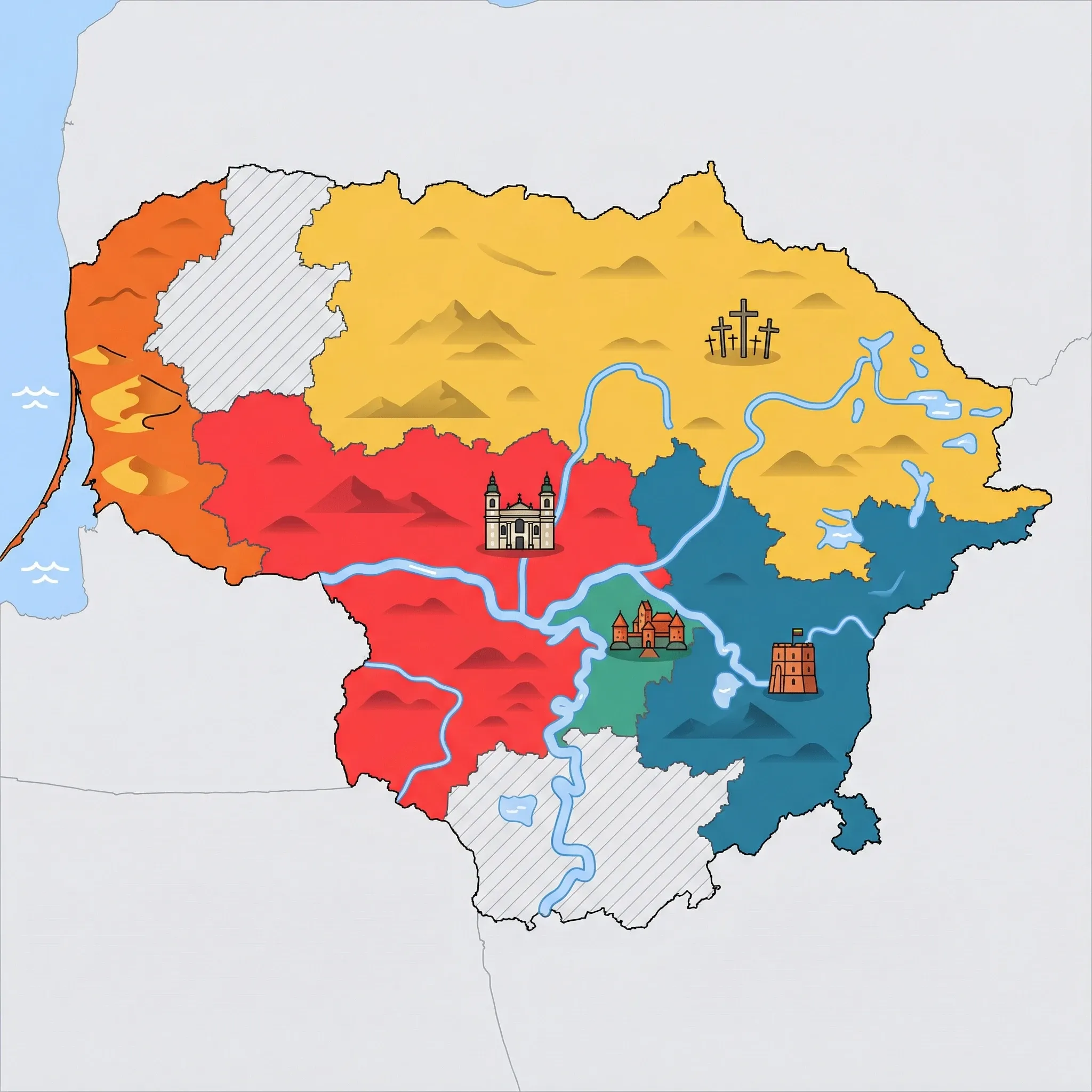
5 Regions
Aukštaitija (Hill of Crosses, lakes)
Where starry skies meet a thousand lakes 🌌🛶
Curonian Spit & Coast (Klaipėda, Nida)
Golden dunes, amber shores, and dancing dolphins 🐬🌊
Kaunas & Central Lithuania
Modernist charm and medieval legends at the river's edge 🏰🦁
Trakai & Surroundings
A fairytale island castle and legendary pastries 🏰🥟
Vilnius (standalone)
Baroque spires, hot air balloons, and secret courtyards 🎈🏰
Click on a region marker to explore details. Use the dropdown to color regions by activity suitability.

Getting There & Around
Getting There
- By Air – Vilnius Airport (VNO) is the main hub, with Kaunas (KUN) and Palanga (PLQ) serving low-cost carriers. VNO is only 15 minutes from the city center by train.
- By Bus – International buses (e.g., Lux Express, FlixBus) connect Vilnius to Riga, Tallinn, and Warsaw. These are high-quality coaches with screens and Wi-Fi, popular with families.
- By Sea – DFDS ferries run from Kiel (Germany) and Karlshamn (Sweden) to Klaipėda, allowing you to bring your own car.
- Entry Requirements – Lithuania is in the Schengen Zone. US, UK, Canada, and Australia citizens do not need a visa for short stays. Check your government website for the latest visa requirements, or use the IATA Travel Centre entry-requirements checker.
Getting Around
- Trains – Operated by LTG Link, trains are modern, comfortable, and stroller-friendly. A massive perk is the Family Card discount: families traveling with children get generous discounts (often 50% for adults). Children under 7 travel free.
- Car Hire – Highly recommended for exploring the lakes of Aukštaitija or the Curonian Spit. Roads are generally good and traffic is light outside cities.
- City Transport – Vilnius and Kaunas have extensive trolleybus and bus networks. Children under 7 travel free. Download the Trafi app for tickets and schedules.

Packing List
Legally mandatory to wear on outer clothing if walking on road shoulders at dusk/dark; fines apply if missing.
High risk of tick-borne encephalitis and Lyme disease in forests and even city parks.
Makes finding natural amber (Lithuanian gold) on the beaches at night much easier and fun for kids.
Lake bottoms and Baltic beaches can sometimes be rocky or have sharp shells.
If visiting late summer/autumn, joining locals in mushroom picking is a national pastime.

Activities & Best Times

Adventure & Nature
Very GoodHiking, wildlife, outdoor exploration, ecotourism
Features 15 attractions including the Pūčkoriai Exposure and extensive green spaces like the Bernardinai Garden, making it one of Europe's greenest capitals. Peak months offer long days and mild temperatures perfect for exploring the Pavilniai Regional Park and the Neris river valley.
Features the unique Treetop Walking Path and the vast Aukštaitija National Park, offering authentic immersion in glacial lake landscapes and wildlife experiences. Summer provides optimal accessibility, while the autumn shoulder season offers striking foliage despite cooler temperatures.
Features the unique Lithuanian Open-Air Museum in Rumšiškės and extensive trail networks like the Camino Lituano, though winter conditions restrict immersion.

City & Cultural
Very GoodUrban tourism, museums, historical sites, architecture
Boasts a UNESCO-listed Baroque Old Town and the Grand Dukes' Palace, offering a sophisticated blend of heritage and a contemporary culinary scene. Peak season includes the vibrant summer outdoor culture and the festive Christmas market period in December.
Kaunas is a UNESCO City of Design with exceptional modernist architecture and globally unique sites like the Devil's Museum, best experienced during summer festivals.
Rich in Prussian-German heritage and maritime history, featuring the world-class Palanga Amber Museum and Klaipėda's historic Old Town. Cultural life is most vibrant in summer, though December offers charming seasonal markets and festive atmosphere.

Sports & Active
Very GoodSport tourism, fitness activities, active recreation
Offers dedicated infrastructure like the 100km Trail Around Vilnius and segments of the Baltic Forest Trail, catering well to active families seeking organized hiking and cycling. Conditions are optimal during the dry, mild summer months when trails are most accessible.
Excellent infrastructure for wakeboarding and organized cycling routes like the Forest Trail appeal to active travelers during the reliable summer months.
Boasts internationally recognized infrastructure including the 313 Cable Park and the EuroVelo 10 coastal cycle path. Activity is heavily weather-dependent, with peak infrastructure availability and comfortable conditions occurring during the warmer summer months.

Road Trips & Scenic
GoodScenic drives, countryside tours, route-based travel
Serves as the central hub for the 'Historic Triangle' route connecting Trakai and Kernavė through scenic Baltic landscapes and well-maintained roads. Summer offers the best visibility and driving conditions for exploring the surrounding historic sites.
The Aukštaitija Lake District Scenic Drive offers a curated route through traditional villages and rolling glacial terrain. Best experienced when visibility is high and roadside services are fully operational during the summer and early autumn.
The Panemunė Castle Road is a celebrated scenic route along the Nemunas river, offering authentic views of Lithuanian history and landscape in pleasant weather.
Theme Park & Entertainment
GoodAmusement parks, family entertainment venues
Home to the high-standard Vichy Water Park and multiple adventure parks like UNO, providing reliable family entertainment. Peak months align with summer outdoor operations and winter holiday demand for indoor aquatic facilities.
Offers creative regional attractions like the Labyrinth Park and Alpine coasters that provide solid family entertainment with a local flavor. These outdoor venues are highly seasonal, operating primarily during the warmer months from May to September.
Offers quality family entertainment like Dino Parkas and modern aquatic facilities in Palanga and Klaipėda. Outdoor attractions are strictly seasonal, operating primarily from May to September, while aquatic centers provide year-round but indoor-focused recreation.

Educational & Exploratory
GoodLearning experiences, scientific sites, historical education
The National Science and Innovation Centre (Mokslo sala) and the Aviation Museum provide high-quality, destination-level educational engagement for sophisticated families.
The Lithuanian Sea Museum and Clock Museum serve as significant regional educational draws with professional curation. Peak visitation occurs in summer when the dolphinarium and outdoor maritime exhibits are fully accessible to international families.
Home to specialized institutions like the Lithuanian Ethnocosmology Museum, providing niche scientific and cultural insights. These facilities are most accessible to international families during the extended summer season when regional travel is easiest.

Ski & Snow
MarginalWinter sports, ski resorts, snow activities
Liepkalnis provides a convenient urban ski experience with modern snowmaking and lighting, though its modest elevation and local scale limit its appeal to serious international skiers. The season is highly dependent on sub-zero temperatures for artificial snow production.
Small-scale winter sports centers provide modest downhill and cross-country opportunities that serve as a decent winter stopover. Peak conditions are limited to the coldest months of January and February when natural snow is most reliable.
Small regional hills in Jonava and Birštonas offer basic skiing for beginners, strictly dependent on mid-winter temperatures and artificial snow.

Beach & Sea
MarginalBeach resorts, marine activities: diving, snorkelling, kite surfing, wind surfing, sailing
Limited to freshwater recreation at Kaunas Reservoir and Lampėdžiai Lake, which provide solid local beach facilities during the brief hot summer window.
Baltic Sea water temperatures (15-17°C summer) and short season do not meet 'good' international beach standards. The region's strength is its UNESCO dune landscape, not traditional beach vacation quality. The classification notes themselves acknowledge 'the Baltic Sea water is notably colder than Mediterranean alternatives.'

Public Holidays & Calendar Next 12 months
Public holidays, festivals, cultural celebrations, and seasonal natural phenomena coming up in Lithuania over the next 12 months.
Loading holidays and events...
Climate & Weather
Aukštaitija (Hill of Crosses, lakes)
Show Details
| Month | Temp °C | Rain | Humidity |
|---|
Curonian Spit & Coast (Klaipėda, Nida)
Show Details
| Month | Temp °C | Rain | Humidity |
|---|
Kaunas & Central Lithuania
Show Details
| Month | Temp °C | Rain | Humidity |
|---|
Trakai & Surroundings
Show Details
| Month | Temp °C | Rain | Humidity |
|---|
Vilnius (standalone)
Show Details
| Month | Temp °C | Rain | Humidity |
|---|

Travel Advisory
Lithuania is broadly recognized as a safe destination with a security environment similar to other stable Western nations. Standard safety awareness and standard travel precautions are sufficient for visitors.
Safety Topics
Traveller Advice (5 groups)

Female visitors can access dedicated safety guidance for independent travel to ensure a secure experience while exploring the country.

Visitors should maintain valid photo identification at all times as required by local law. Passports should typically have at least three months of validity remaining beyond the planned date of departure from the Schengen Area.

Specialized resources are available to help sexual and gender minorities understand local social norms and safety considerations before their trip.

Guidelines for those participating in volunteering projects or adventure-based activities are available to help manage potential risks in remote areas.

Information regarding accessibility and specialized support is provided to assist travelers with physical or cognitive impairments.
Agency Summaries
Lithuania offers a security environment comparable to Ireland. Visitors are advised to research local regulations and ensure their travel documents are valid for the duration of their trip.
Lithuania is assessed as a safe destination where travelers should maintain standard security awareness similar to what they would in Canada. Entry is visa-free for short stays, though travelers should be mindful of evolving climate-related weather patterns.
Travelers can visit Lithuania without major safety warnings. Recent updates focus on the implementation of the new European Entry/Exit System (EES) and general passport validity requirements for the Schengen Area.
The U.S. government recommends following standard safety protocols while visiting Lithuania. The country is considered safe for international visitors, with no significant security threats currently identified.
Lithuania is considered safe for tourists. Notable updates include the introduction of biometric registration for non-EU citizens and occasional temporary border checks at the frontier with Poland.
There is currently no elevated risk level assigned for Lithuania. Travelers are reminded to carry official identification at all times and to prepare for upcoming changes to Schengen border rules.
Information is provided for general guidance only and does not constitute travel, safety, medical, or legal advice. Conditions may change. Users are responsible for independently verifying information before travel.