
Curonian Spit & Coast (Klaipėda, Nida)
Golden dunes, amber shores, and dancing dolphins 🐬🌊
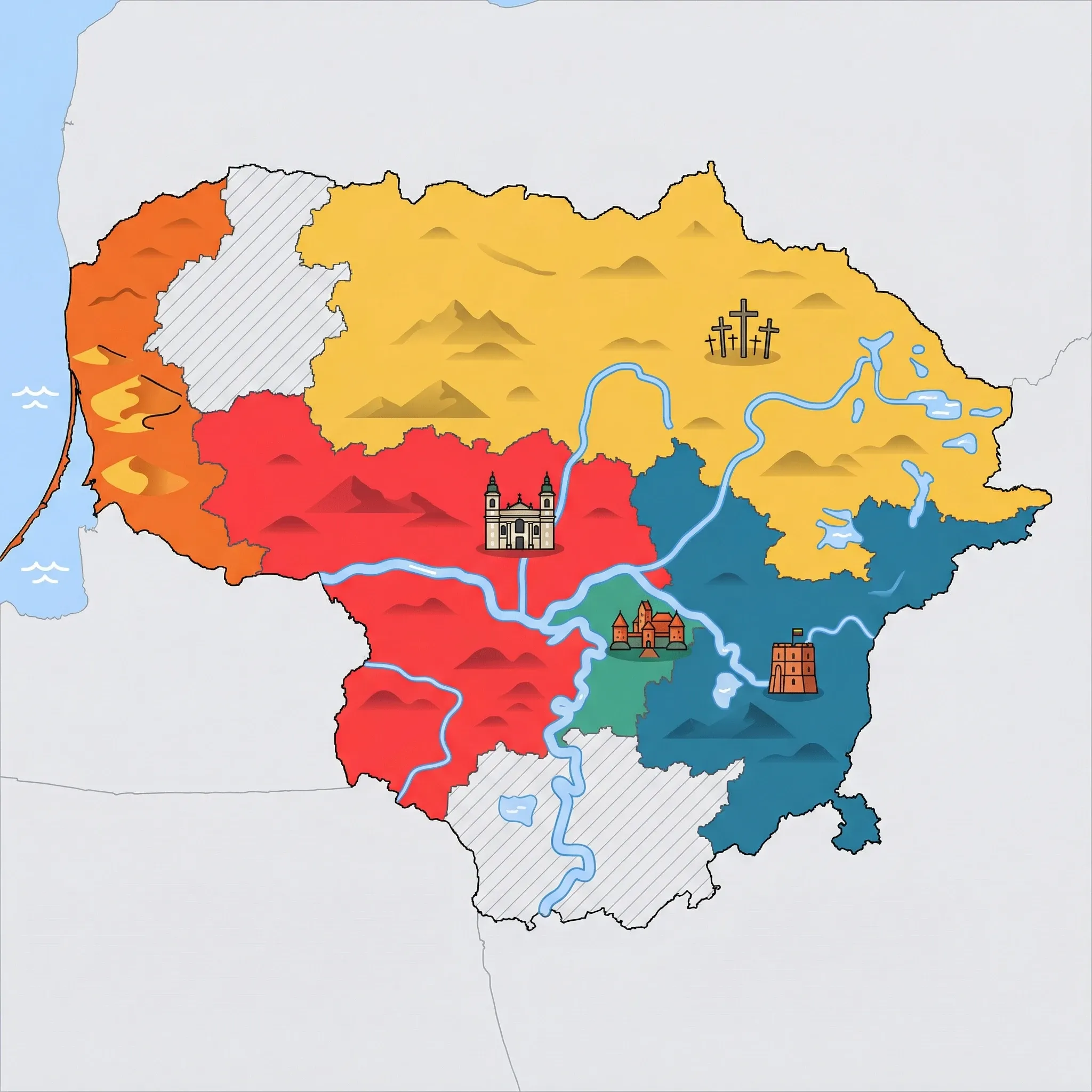
Click a region to explore
Overview
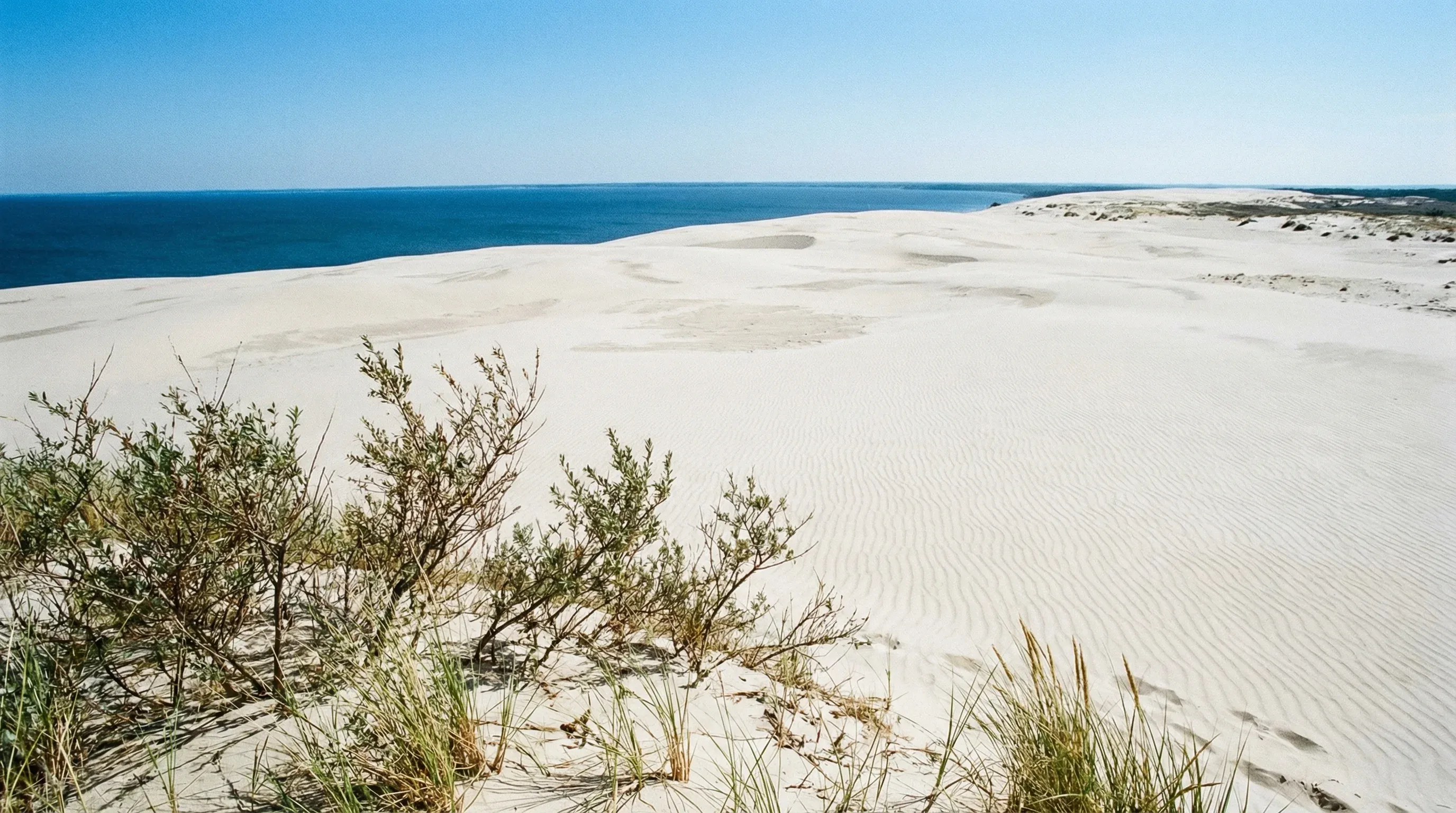
The Lithuanian coast is a world apart from the rest of the country, dominated by the rhythm of the Baltic Sea and the scent of pine and salt. The jewel in the crown is the Curonian Spit (Neringa), a narrow, 98km-long peninsula of sand dunes and forest that feels almost desert-like in places. It is a UNESCO World Heritage site that demands respect and offers tranquility. For families, Neringa is a massive natural playground. The beaches here are some of the finest in Northern Europe—wide, powdery soft, and backed by protective dunes. The water is cool and refreshing, perfect for splashing around on hot summer days. The unique "Dead Dunes" offer a landscape so surreal that children will feel like they are exploring a different planet.
Beyond the spit lies the mainland coast. Klaipėda, the country's oldest city and only port, has a charming German-influenced Old Town filled with whimsical sculptures that children love to hunt for, like the "Magic Mouse" or the "Chimney Sweep." Just north is Palanga, the summer party capital. While the main strip can be loud, the surrounding botanical park and amber museum offer refined beauty. The region is incredibly bike-friendly, with a dedicated coastal cycle path that allows families to ride safely from town to town, breathing in the ionized sea air that has drawn health tourists here for over a century.
Key Attractions
No family trip to the coast is complete without visiting the Lithuanian Sea Museum. Located in a historic fortress at the tip of the spit, it houses an aquarium and a dolphinarium where the dolphin and sea lion performances are world-class. Further down the spit, the Nagliai Nature Reserve (The Dead Dunes) offers a boardwalk hike across massive, shifting sand dunes that buried entire villages centuries ago—a fascinating geography lesson for kids. Near the Russian border, the Nida Fisherman's Village captures the region's history with colourful wooden houses and weather vanes.
On the mainland in Palanga, the Palanga Amber Museum is set within a grand palace surrounded by the beautiful Palanga Botanical Park. The museum explains the history of "Baltic Gold" and includes pieces with trapped insects that fascinate children. Afterward, a walk down the iconic Palanga Bridge at sunset is a rite of passage for visitors.
Practical Advice
When to visit: July and August are peak beach months, but accommodation prices spike. Late June and early September offer a quieter vibe. The water is rarely "warm" by Mediterranean standards—expect 18-20°C in summer.
Logistics: Entering the Curonian Spit (Neringa) by car requires a ferry ticket and an ecological entry fee (approx. €30 in high season). To save money and stress, consider leaving the car in Klaipėda and taking the passenger ferry and local buses or bikes.
Food & Drink
Typical meal times: Lunch is 1:00 pm to 3:00 pm. In resort towns like Palanga and Nida, kitchens stay open late, with dinner often eaten from 7:00 pm to 9:00 pm to catch the sunset.
Typical meal costs: Prices are higher here than inland. A family meal costs €70–100 (approx. $75–110 USD / £60–85 GBP). Nida and Palanga center are the most expensive areas.
Dietary requirements: Smoked fish is ubiquitous. Vegetarians have good options in Nida and Klaipėda's trendy cafes. Gluten-free options are available in higher-end restaurants but ask clearly.
Signature dishes:
- Rūkyta žuvis – Freshly smoked fish (bream, perch, or eel) sold from small wooden shacks. Eating this with rye bread is the quintessential Neringa experience.
- Kepta duona su sūriu – Fried dark bread strips rubbed with garlic and covered in melted cheese—the ultimate Lithuanian beach snack.
- Šaltibarščiai – Cold pink beetroot soup, exceptionally refreshing on a hot beach day.
Why this score?
Adventure here is centered on coastal activities like cycling the EuroVelo routes and exploring massive sand dunes. The environment is well-managed and safe for families, offering a blend of unique geography without the risks of true wilderness or challenging vertical terrain.
Why this score?
Klaipėda serves as a major maritime and urban center with high-quality hospitals that are well-equipped to handle international visitors. The resort areas like Palanga have robust emergency services catering to the high volume of summer tourists, though complex cases are often diverted to the city.
Why this score?
As a UNESCO World Heritage site, the Curonian Spit is a significant draw for Central European tourists, particularly from Germany and the Baltics. It balances high seasonal domestic popularity in Palanga with a more steady stream of international nature enthusiasts in Nida and cruise passengers in Klaipėda.

This is Lithuania's most expensive region, especially Nida and Palanga in July/August. Accommodation can rival Western European prices, with family suites costing €150–250 (approx. $160–270 USD / £130–215 GBP) per night. The ecological tax for driving into Neringa (approx. €30 / $32 USD / £25 GBP) adds to the cost. Budget travelers should stay in Klaipėda and ferry over for day trips.

Getting Here & Around
Getting Here
- Airports – Palanga Airport (PLQ) is right in the region, offering connections to Riga, London, and Scandinavia. Alternatively, drive 3 hours from Kaunas (KUN) or Vilnius (VNO).
- Ferry – International ferries from Germany (Kiel) and Sweden (Karlshamn) dock at Klaipėda Port. To reach the Nagliai Nature Reserve and Nida, you must take the domestic ferry from Klaipėda across the lagoon.
- Train – Comfortable trains run from Vilnius to Klaipėda (approx. 4 hours). From the train station, it's a short bus or taxi ride to the ferry terminal for the Spit.
Getting Around
- Cycling – This is the best way to see the Spit. A dedicated paved bike path runs nearly the entire length of the peninsula, passing through forests and dunes near Parnidis Dune.
- Ferry – The "Smiltynė" ferry connects Klaipėda mainland to the Spit. There is a passenger-only ferry (Old Ferry Terminal) and a car ferry (New Ferry Terminal).
- Car – Useful for Palanga and the mainland coast. Driving on the Spit is easy (one main road), but parking in Nida is expensive and restricted.
Nearby Airports (1 airport)
Palanga Intl
PLQPalanga
View full flight map for Lithuania →
Official Links

Packing List
Coastal winds are constant even on sunny days; essential for dune walking.
Fun for kids; amber glows under UV light, making night hunting on the beach easier.
Pine cones on forest paths and hot sand on dunes can be tough on bare feet.
Legally mandatory to wear on outer clothing if walking on road shoulders at dusk/dark; fines apply if missing.
High risk of tick-borne encephalitis and Lyme disease in forests and even city parks.
Makes finding natural amber (Lithuanian gold) on the beaches at night much easier and fun for kids.
Lake bottoms and Baltic beaches can sometimes be rocky or have sharp shells.
If visiting late summer/autumn, joining locals in mushroom picking is a national pastime.

Activities & Best Times

Hiking, wildlife, outdoor exploration, ecotourism
Home to the UNESCO-listed Curonian Spit, offering unique shifting dunes and extensive pine forests perfect for self-guided exploration. Summer provides ideal hiking conditions, while the shoulder months offer exceptional birdwatching during the Baltic flyway migrations.

Urban tourism, museums, historical sites, architecture
Rich in Prussian-German heritage and maritime history, featuring the world-class Palanga Amber Museum and Klaipėda's historic Old Town. Cultural life is most vibrant in summer, though December offers charming seasonal markets and festive atmosphere.

Sport tourism, fitness activities, active recreation
Boasts internationally recognized infrastructure including the 313 Cable Park and the EuroVelo 10 coastal cycle path. Activity is heavily weather-dependent, with peak infrastructure availability and comfortable conditions occurring during the warmer summer months.

Learning experiences, scientific sites, historical education
The Lithuanian Sea Museum and Clock Museum serve as significant regional educational draws with professional curation. Peak visitation occurs in summer when the dolphinarium and outdoor maritime exhibits are fully accessible to international families.

Scenic drives, countryside tours, route-based travel
The scenic drive along the Curonian Spit (Route 167) is a celebrated European route between the lagoon and the sea. The experience is best in late spring through early autumn, offering clear visibility and lush landscapes before the onset of winter dampness.

Amusement parks, family entertainment venues
Offers quality family entertainment like Dino Parkas and modern aquatic facilities in Palanga and Klaipėda. Outdoor attractions are strictly seasonal, operating primarily from May to September, while aquatic centers provide year-round but indoor-focused recreation.

Beach resorts, marine activities: diving, snorkelling, kite surfing, wind surfing, sailing
Baltic Sea water temperatures (15-17°C summer) and short season do not meet 'good' international beach standards. The region's strength is its UNESCO dune landscape, not traditional beach vacation quality. The classification notes themselves acknowledge 'the Baltic Sea water is notably colder than Mediterranean alternatives.'

Winter sports, ski resorts, snow activities
Limited to small-scale local hills like Utrių kalnas with basic facilities, catering primarily to domestic visitors. Viable only during mid-winter months when consistent sub-zero temperatures allow for natural or artificial snow cover.

Attractions (17 total)



Public Holidays & Calendar Next 12 months
Public holidays, festivals, cultural celebrations, and seasonal natural phenomena coming up in Curonian Spit & Coast (Klaipėda, Nida) over the next 12 months.
Loading holidays and events...

Travel Advisory
Lithuania is broadly recognized as a safe destination with a security environment similar to other stable Western nations. Standard safety awareness and standard travel precautions are sufficient for visitors.
Safety Topics
Traveller Advice (5 groups)

Female visitors can access dedicated safety guidance for independent travel to ensure a secure experience while exploring the country.

Visitors should maintain valid photo identification at all times as required by local law. Passports should typically have at least three months of validity remaining beyond the planned date of departure from the Schengen Area.

Specialized resources are available to help sexual and gender minorities understand local social norms and safety considerations before their trip.

Guidelines for those participating in volunteering projects or adventure-based activities are available to help manage potential risks in remote areas.
Information regarding accessibility and specialized support is provided to assist travelers with physical or cognitive impairments.
Agency Summaries
Lithuania offers a security environment comparable to Ireland. Visitors are advised to research local regulations and ensure their travel documents are valid for the duration of their trip.
Lithuania is assessed as a safe destination where travelers should maintain standard security awareness similar to what they would in Canada. Entry is visa-free for short stays, though travelers should be mindful of evolving climate-related weather patterns.
Travelers can visit Lithuania without major safety warnings. Recent updates focus on the implementation of the new European Entry/Exit System (EES) and general passport validity requirements for the Schengen Area.
The U.S. government recommends following standard safety protocols while visiting Lithuania. The country is considered safe for international visitors, with no significant security threats currently identified.
Lithuania is considered safe for tourists. Notable updates include the introduction of biometric registration for non-EU citizens and occasional temporary border checks at the frontier with Poland.
There is currently no elevated risk level assigned for Lithuania. Travelers are reminded to carry official identification at all times and to prepare for upcoming changes to Schengen border rules.
Information is provided for general guidance only and does not constitute travel, safety, medical, or legal advice. Conditions may change. Users are responsible for independently verifying information before travel.