
Vilnius (standalone)
Baroque spires, hot air balloons, and secret courtyards 🎈🏰
Click a region to explore
Overview
Vilnius is one of Europe's most charming and underrated capitals, offering a fairytale atmosphere that captivates children without the overwhelming crowds of larger cities. The UNESCO-listed Old Town is a maze of cobblestone streets, hidden courtyards, and pastel-colored churches. What makes Vilnius unique is its playfulness; it's a city of low-flying angels (literally—you will see statues of them everywhere) and hot air balloons that drift right over the rooftops in the evening. It is one of the few capitals in the world allowing hot air balloons directly over the center, providing a spectacle that kids adore watching from the ground. The city is incredibly green, with the Vilnia River offering a natural border that feels wild and untamed right next to the historic center.
For families, Vilnius is manageable and safe. You can walk almost everywhere. The independent republic of Užupis—a bohemian district with its own constitution (which states "A dog has the right to be a dog")—is a fun place to explore art installations and riverside swings. From interactive science museums to climbing castle hills, the city balances history with active fun. The cafe culture is welcoming to children, and the numerous parks, like the Bernardine Garden with its musical fountain, offer perfect breaks from sightseeing.
Key Attractions
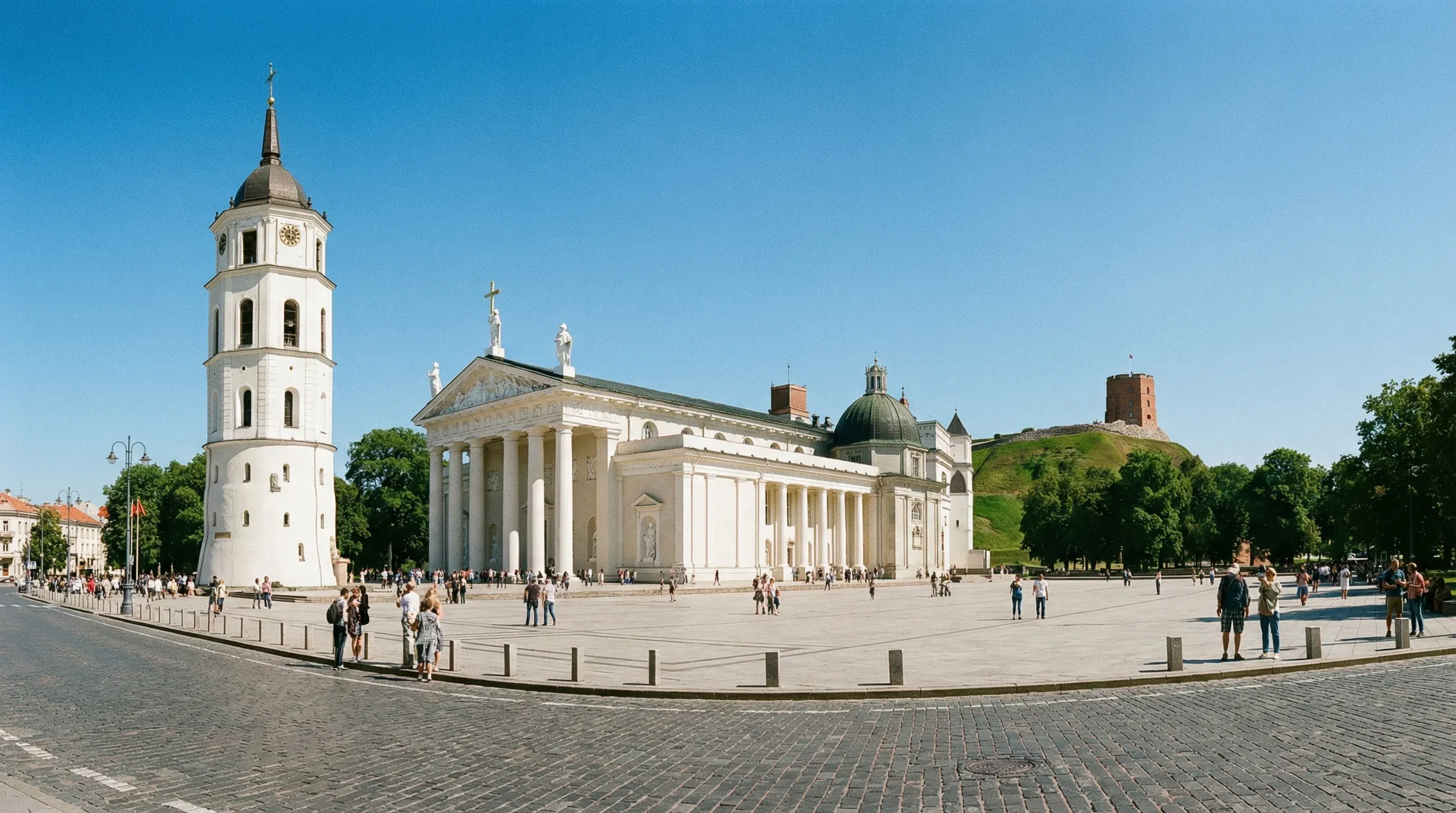
Start your journey at Vilnius Cathedral and Bell Tower; the square is the heart of the city and a great place to run around. Just behind it, take the funicular (or hike the steep path) up to Gediminas Castle Tower. The view from the top is the best in the city, and the tower houses a small museum with armor and models. At the foot of the hill lies the Palace of the Grand Dukes of Lithuania, a reconstructed palace offering guided tours that explain how the Grand Dukes lived, complete with archaeological finds.
For a change of pace, the Energy and Technology Museum, housed in an old power plant, is fantastic for kids. It features an interactive hall where they can experiment with electricity and physics. Art-loving families should check out the MO Museum; it's a modern architectural landmark with family-friendly exhibitions and a great sculpture garden. Finally, relax in Bernardine Garden, which has two playgrounds, a carousel, and a musical fountain.
Practical Advice
When to visit: Late spring to early autumn. Winters are dark and cold, though the Christmas markets (December) are among the best in Europe.
Logistics: The Old Town is best explored on foot, but be warned: the cobblestones are rough on flimsy strollers. A carrier is better for babies. Public transport is excellent (buses/trolleybuses).
Food & Drink
Typical meal times: Lunch 12:00 pm to 2:00 pm. Dinner 6:00 pm to 9:00 pm. Weekend brunches are very popular.
Typical meal costs: Moderate. A nice sit-down dinner for a family of four costs €60–90 (approx. $65–100 USD / £50–75 GBP). Business lunch deals are widespread and cheap (€7–10).
Dietary requirements: Vilnius is very modern. Vegan, vegetarian, and gluten-free options are widely available in the center. Dairy alternatives are standard in cafes.
Signature dishes:
- Šaltibarščiai (Pink Soup) – Cold beet soup with kefir, served with hot potatoes. Its shocking pink color fascinates kids, and it’s delicious on a hot day.
- Cepelinai (Zeppelins) – Giant potato dumplings stuffed with meat or curd. They are heavy and filling—a true comfort food.
- Fried Bread with Cheese – A starter that kids often claim as their favorite meal; salty, garlicky, and cheesy.
Why this score?
Vilnius is a highly developed urban center where the primary activities are cultural, culinary, and historical. While the 100km trail around the city offers some green space, the environment is entirely managed and lacks any significant ruggedness or remote qualities.
Why this score?
The capital offers the highest standard of healthcare in Lithuania, with several large hospitals and private clinics catering specifically to international patients and diplomats. Multilingual staff and modern Western-standard facilities are widely available throughout the city center.
Why this score?
As the national capital and primary international gateway, Vilnius is a recognized European city-break destination with a steady flow of global visitors. Its UNESCO-listed Old Town and vibrant cultural scene attract a diverse international demographic, though it is not yet a global mega-destination like Prague.

Vilnius offers capital-city amenities at a fraction of Western European prices. A 4-star family hotel room costs €80–130 (approx. $85–140 USD / £70–110 GBP). Public transport is cheap (€0.65 for a 30-min ticket). Dining ranges from cheap canteens to high-end gastronomy, but quality is generally high for the price.

Getting Here & Around
Getting Here
- Airports – Vilnius International Airport (VNO) is just 15 minutes from the city center. A train connects the airport to the main station for under €1.
- Train – The central railway station connects Vilnius to Kaunas, Klaipėda, and Trakai. The station is walking distance to the Vilnius Old Town.
- Bus – The main bus station is across the street from the train station, offering international connections to Riga, Warsaw, and Tallinn.
Getting Around
- Walking – The Vilnius Old Town is compact. Walking is the best way to see sights like The Gate of Dawn.
- Public Transport – Buses and trolleybuses cover the whole city. Use the "Trafi" app to buy tickets. Kids under 7 travel free.
- Scooters/Bikes – Electric scooters (Bolt) are everywhere, but riding on cobblestones is bumpy. The bike paths along the Neris river are excellent.
Nearby Airports (1 airport)
Vilnius Airport
VNOVilnius
View full flight map for Lithuania →
Official Links

Packing List
Old Town cobblestones are uneven and notoriously difficult for small-wheeled strollers.
Lithuanian weather is changeable; sudden showers are common even in summer.
High heels are a hazard on the cobblestones; you will walk a lot.
Legally mandatory to wear on outer clothing if walking on road shoulders at dusk/dark; fines apply if missing.
High risk of tick-borne encephalitis and Lyme disease in forests and even city parks.
Makes finding natural amber (Lithuanian gold) on the beaches at night much easier and fun for kids.
Lake bottoms and Baltic beaches can sometimes be rocky or have sharp shells.
If visiting late summer/autumn, joining locals in mushroom picking is a national pastime.

Activities & Best Times

Hiking, wildlife, outdoor exploration, ecotourism
Features 15 attractions including the Pūčkoriai Exposure and extensive green spaces like the Bernardinai Garden, making it one of Europe's greenest capitals. Peak months offer long days and mild temperatures perfect for exploring the Pavilniai Regional Park and the Neris river valley.

Urban tourism, museums, historical sites, architecture
Boasts a UNESCO-listed Baroque Old Town and the Grand Dukes' Palace, offering a sophisticated blend of heritage and a contemporary culinary scene. Peak season includes the vibrant summer outdoor culture and the festive Christmas market period in December.

Sport tourism, fitness activities, active recreation
Offers dedicated infrastructure like the 100km Trail Around Vilnius and segments of the Baltic Forest Trail, catering well to active families seeking organized hiking and cycling. Conditions are optimal during the dry, mild summer months when trails are most accessible.

Scenic drives, countryside tours, route-based travel
Serves as the central hub for the 'Historic Triangle' route connecting Trakai and Kernavė through scenic Baltic landscapes and well-maintained roads. Summer offers the best visibility and driving conditions for exploring the surrounding historic sites.

Amusement parks, family entertainment venues
Home to the high-standard Vichy Water Park and multiple adventure parks like UNO, providing reliable family entertainment. Peak months align with summer outdoor operations and winter holiday demand for indoor aquatic facilities.

Winter sports, ski resorts, snow activities
Liepkalnis provides a convenient urban ski experience with modern snowmaking and lighting, though its modest elevation and local scale limit its appeal to serious international skiers. The season is highly dependent on sub-zero temperatures for artificial snow production.

Attractions (21 total)



Public Holidays & Calendar Next 12 months
Public holidays, festivals, cultural celebrations, and seasonal natural phenomena coming up in Vilnius (standalone) over the next 12 months.
Loading holidays and events...

Travel Advisory
Lithuania is broadly recognized as a safe destination with a security environment similar to other stable Western nations. Standard safety awareness and standard travel precautions are sufficient for visitors.
Safety Topics
Traveller Advice (5 groups)

Female visitors can access dedicated safety guidance for independent travel to ensure a secure experience while exploring the country.

Visitors should maintain valid photo identification at all times as required by local law. Passports should typically have at least three months of validity remaining beyond the planned date of departure from the Schengen Area.

Specialized resources are available to help sexual and gender minorities understand local social norms and safety considerations before their trip.

Guidelines for those participating in volunteering projects or adventure-based activities are available to help manage potential risks in remote areas.

Information regarding accessibility and specialized support is provided to assist travelers with physical or cognitive impairments.
Agency Summaries
Lithuania offers a security environment comparable to Ireland. Visitors are advised to research local regulations and ensure their travel documents are valid for the duration of their trip.
Lithuania is assessed as a safe destination where travelers should maintain standard security awareness similar to what they would in Canada. Entry is visa-free for short stays, though travelers should be mindful of evolving climate-related weather patterns.
Travelers can visit Lithuania without major safety warnings. Recent updates focus on the implementation of the new European Entry/Exit System (EES) and general passport validity requirements for the Schengen Area.
The U.S. government recommends following standard safety protocols while visiting Lithuania. The country is considered safe for international visitors, with no significant security threats currently identified.
Lithuania is considered safe for tourists. Notable updates include the introduction of biometric registration for non-EU citizens and occasional temporary border checks at the frontier with Poland.
There is currently no elevated risk level assigned for Lithuania. Travelers are reminded to carry official identification at all times and to prepare for upcoming changes to Schengen border rules.
Information is provided for general guidance only and does not constitute travel, safety, medical, or legal advice. Conditions may change. Users are responsible for independently verifying information before travel.