

Madagascar is less of a country and more of a universe unto itself. Separated from the African mainland for millions of years, it has evolved a bizarre and beautiful ecosystem where 90% of the wildlife exists nowhere else. For families, this translates to a constant sense of discovery. The landscape shifts dramatically as you travel: from the misty, emerald rainforests of the east to the arid, spiny deserts of the south and the jagged limestone pinnacles of the west. The culture is equally distinct, blending Southeast Asian and African roots into a society that deeply reveres ancestors and values fihavanana (kinship and friendship).
Traveling here requires a spirit of adventure. Infrastructure can be rustic, and travel times are long due to winding, potholed roads. However, the reward is an unfiltered connection with nature that few other destinations can match. Children will be wide-eyed spotting ring-tailed lemurs hopping along the ground or watching geckos disguise themselves against tree bark. It is not a destination for a rush-job; it is a place to slow down, hire a local driver, and let the unique rhythm of island life take over. Whether you are spotting whales off the coast or walking beneath giant trees that look like they've been planted upside down, Madagascar offers families a profound, life-changing adventure.
Key Attractions
No family trip is complete without visiting Andasibe-Mantadia National Park. Located just a few hours from the capital, it is the best place to hear the haunting, whale-like call of the Indri, the largest living lemur. The park is accessible and offers guided walks tailored for children. Nearby, Lemurs' Park provides a sanctuary where rescued lemurs roam freely, offering a guaranteed up-close encounter for younger kids who might not manage a full jungle trek.
For iconic landscapes, the Avenue of the Baobabs in the west is unmissable, especially at sunset when the massive trunks turn into silhouettes against a fiery sky. In the north, Nosy Tanikely Marine National Park offers world-class snorkelling where turtles and colourful fish swim in shallow, crystal-clear waters perfect for beginners. Further south, Isalo National Park resembles a Jurassic sandstone wonderland, with natural swimming pools hidden in canyons that provide a refreshing break after a hike.
Practical Advice
The best time to visit is the dry season from May to October, which is cooler and easier for travel. The wet season (January to March) often brings cyclones and impassable roads. A visa is required for most travellers but can easily be obtained upon arrival at the airport or online. Malaria prophylaxis is essential for the whole family, and you should drink only bottled or filtered water. Because domestic flights can be unreliable, most families hire a private 4WD with a driver-this is affordable, safe, and allows you to stop whenever the kids spot a chameleon crossing the road.
Safety
Madagascar is generally safe for tourists within designated circuits, but crime rates have risen in urban areas. Avoid walking alone at night in major cities like Antananarivo. On the roads, specifically the long national routes, avoid travelling after dark due to the risk of banditry; reputable drivers will always plan to reach a hotel before sunset. Be vigilant with belongings in crowded markets. The political situation can be fragile, so avoid any demonstrations.
Food & Drink
Typical meal times: Lunch is typically served from 12:00 pm to 2:00 pm, and dinner from 6:30 pm to 8:30 pm. In rural areas, service can be slow (

A family of four can expect to spend around 680,000–1,100,000 MGA (approx. $150–240 USD / €140–225 EUR) per day. This budget includes a private vehicle with a driver (the standard way to travel), mid-range hotels, and meals. While food and entry fees are low, vehicle rental and fuel significantly increase daily costs.
Age Suitability





Did you know? Madagascar welcomes approximately 8,000 international visitors per year. Most visitors come from Europe.

Explore Regions
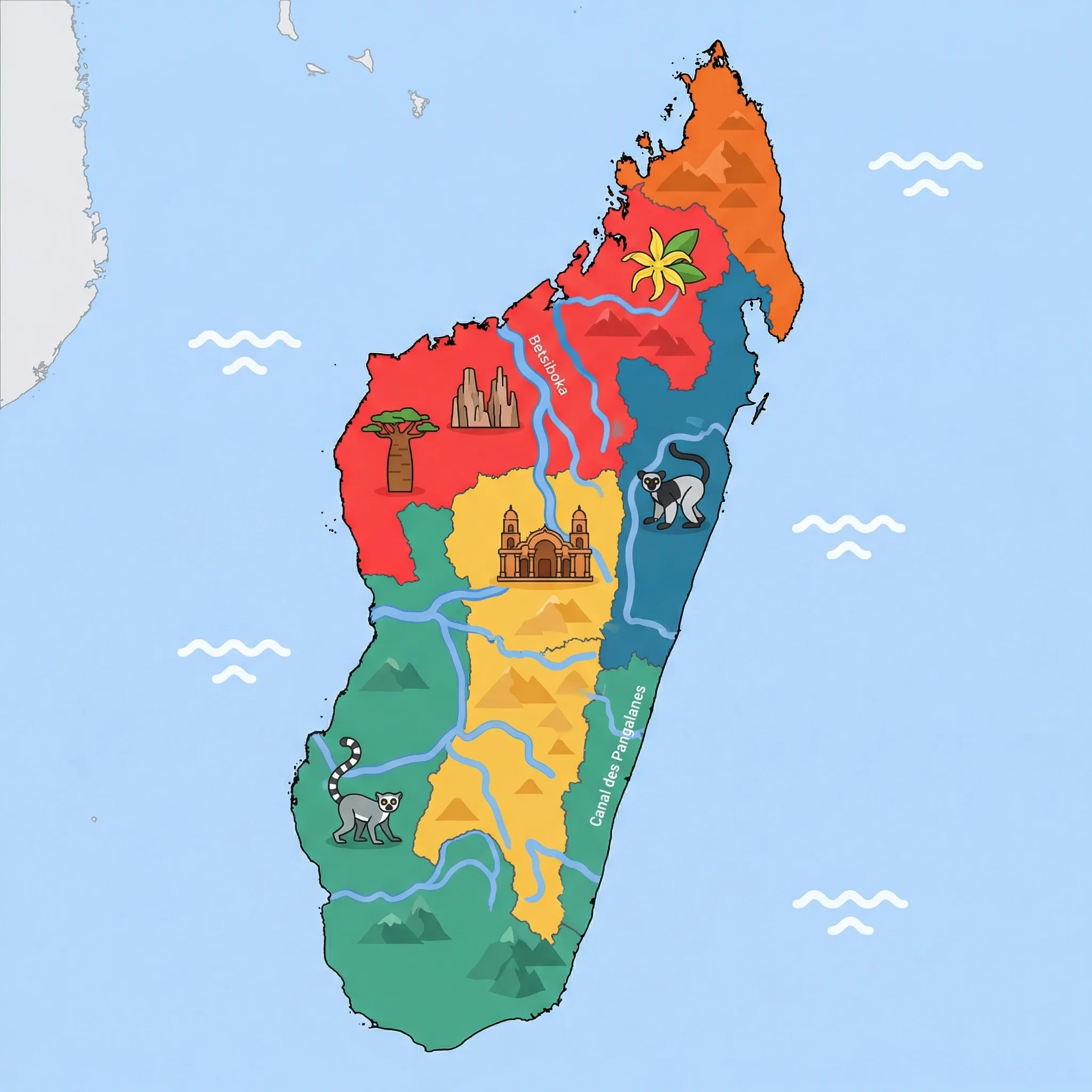
5 Regions
Antananarivo & Highlands
The cultural heart of the island 👑
East Coast (rainforest, Andasibe)
Rainforests, lemurs, and pirates 🏴☠️
North & Nosy Be (beaches)
Turquoise waters and volcanic wonders 🐢
South & Southwest (spiny forest, Isalo)
Canyons, coastlines, and ring-tailed lemurs 🏜️
West (Tsingy, baobabs)
Giants of nature and stone forests 🌳
Click on a region marker to explore details. Use the dropdown to color regions by activity suitability.

Getting There & Around
Getting There
- By Air – Ivato International Airport (TNR) in Antananarivo is the main gateway. Direct flights arrive from Paris, Istanbul, Addis Ababa, and Johannesburg. Nosy Be Fascene (NOS) also receives international charter flights, primarily from Italy.
- Entry Requirements – Most tourists (including US, UK, and EU citizens) need a visa. Tourist visas for stays up to 60 days are readily available on arrival at international airports or via the E-Visa platform. You must pay in cash (EUR or USD) if purchasing on arrival. Check your government website for the latest visa requirements, or use the IATA Travel Centre entry-requirements checker.
Getting Around
- Private Car with Driver – The most popular and practical option for families. Hiring a 4WD with a knowledgeable local driver allows you to navigate the challenging roads safely and at your own pace.
- Domestic Flights – Antananarivo & Highlands are connected to coastal hubs like North & Nosy Be (beaches) by Tsaradia (a subsidiary of Madagascar Airlines). Schedules can be prone to changes, so leave buffer days.
- Tuk-tuks (Bajaj) – Fun and cheap for short hops within towns like Antsirabe or Tamatave. Negotiate the fare before hopping in.

Packing List
Frequent power cuts ('delestage') and limited street lighting make this essential for safety and night walks.
Roads are winding and often in poor condition; even sturdy stomachs may struggle on long drives.
The Highlands (including Antananarivo) get surprisingly cold at night, especially during the dry winter months.
Electricity can be unreliable in rural lodges, so backup power for phones and cameras is crucial.
Essential for keeping electronics safe during pirogue (canoe) trips or sudden rainforest downpours.

Activities & Best Times

Adventure & Nature
ExcellentHiking, wildlife, outdoor exploration, ecotourism
Home to the unique 'Tsingy' formations of Ankarana and the montane rainforests of Amber Mountain, this region offers world-class endemic wildlife encounters. Peak visitation occurs during the dry months (May-Oct) when lemurs are active and trails are accessible; heavy monsoon rains (Jan-Mar) make exploration difficult.
Home to the Indri-Indri and world-renowned rainforest biodiversity, this region offers unparalleled wildlife immersion and primary forest trekking for families. Peak visitation coincides with the dry season and lemur active periods, while the summer months are avoided due to extreme tropical rainfall and cyclone risks.
Home to the world-unique spiny forest and the iconic Isalo National Park, offering unparalleled biodiversity and dramatic sandstone landscapes. Peak months provide dry, cooler conditions ideal for lemur trekking and canyon exploration, while summer rains can make remote trails impassable.

Beach & Sea
Very GoodBeach resorts, marine activities: diving, snorkelling, kite surfing, wind surfing, sailing
Nosy Be is internationally recognized as Madagascar's premier beach destination with iconic islands (Nosy Iranja, Nosy Tanikely). While not Caribbean-class, it's the country's flagship beach region and deserves very_good rating for international calibration.
Remote coastal areas like Belo-sur-Mer offer pristine, non-commercialized beaches and traditional dhow sailing. Seasonal winds and high precipitation during the cyclone season (Jan-Mar) significantly degrade water visibility and safety.
The islands of Sainte-Marie and Nattes offer authentic, low-density coastal escapes with significant marine biodiversity and humpback whale watching. Peak season spans the whale migration and the subsequent dry months, whereas the early year brings heavy seas and significant precipitation.

City & Cultural
Very GoodUrban tourism, museums, historical sites, architecture
Explores a distinctive blend of Sakalava traditions, colonial heritage in Hell-Ville, and unique natural landmarks like the Tsingy Rouge. Tourism peaks in the dry season (May-Oct) when travel to outlying cultural sites is most reliable; Jan-Mar rains significantly impede access to heritage areas.
Features significant UNESCO heritage at Ambohimanga and the historic Rova, providing deep insight into the Merina Kingdom's history. The dry winter months offer comfortable walking temperatures, whereas the wet season brings humidity and frequent urban flooding.
Unique heritage sites like the Pirate Cemetery on Sainte-Marie and Manda Fort provide a distinctive cultural narrative that appeals to sophisticated travelers. The experience is best during the cooler, drier Malagasy winter, avoiding the high-humidity summer season which can impact heritage site accessibility.

Sports & Active
Very GoodSport tourism, fitness activities, active recreation
Offers world-class trekking infrastructure in Isalo and the challenging Pic Boby ascent, the highest accessible peak in Madagascar. Peak months offer the cool, stable weather required for high-exertion hiking in otherwise arid and heat-prone environments.
Offers unique technical hiking through the 'labyrinth' circuits of the Tsingy and multi-day river descents on the Tsiribihina. These activities are limited by park closure dates and river water levels which are only safe during the cooler dry months.
Offers specialized hiking trails and adventure centers like Jungle Park, catering to families seeking active immersion in unique landscapes. Cooler, drier weather (May-Oct) provides the safest and most comfortable conditions for outdoor sports; extreme summer rainfall (Jan-Mar) renders most facilities unusable.

Road Trips & Scenic
GoodScenic drives, countryside tours, route-based travel
The RN8 'Baobab Route' offers one of Africa's most scenic and adventurous drives through iconic landscape. This is strictly a dry-season activity as the dirt tracks require 4WD and become dangerous or submerged during the summer monsoon.
The route from Antsiranana to Ankify (RN6) and coastal circuits on Nosy Be offer rugged, scenic landscapes and authentic rural insights. Driving conditions are optimal during the core dry season (Jun-Sep); the rainy season (Dec-Apr) makes many unpaved sections dangerous or impassable.
The starting point for the legendary Route Nationale 7, offering dramatic scenery and varied cultural stops. Driving conditions are most reliable during the dry months, as heavy summer rains can lead to road damage and difficult travel times.

Educational & Exploratory
GoodLearning experiences, scientific sites, historical education
Highly specialized facilities like the Arboretum d'Antsokay and Maison de l'Isalo provide globally significant insights into island evolution and geology. These sites are best accessed during the dry season when transit via Toliara is most reliable.
Home to specialized museums such as the Museum of Paleontology, which offer unique insights into Madagascar's prehistoric isolation. While educational, these facilities are smaller and less immersive than global benchmarks like the Smithsonian.
The Musée de l'Île Sainte-Marie offers specialized historical and scientific insights into the region's unique pirate past and marine ecology. While not a primary travel driver, it provides significant educational value for families visiting during the main tourism season.

Relaxation & Wellness
MarginalSpa retreats, wellness centers, peaceful getaways

Theme Park & Entertainment
MarginalAmusement parks, family entertainment venues

Festivals & Seasonal
MarginalEvents, celebrations, seasonal attractions

Public Holidays & Calendar Next 12 months
Public holidays, festivals, cultural celebrations, and seasonal natural phenomena coming up in Madagascar over the next 12 months.
Loading holidays and events...
Climate & Weather
Antananarivo & Highlands
Show Details
| Month | Temp °C | Rain | Humidity |
|---|
East Coast (rainforest, Andasibe)
Show Details
| Month | Temp °C | Rain | Humidity |
|---|
North & Nosy Be (beaches)
Show Details
| Month | Temp °C | Rain | Humidity |
|---|
South & Southwest (spiny forest, Isalo)
Show Details
| Month | Temp °C | Rain | Humidity |
|---|
West (Tsingy, baobabs)
Show Details
| Month | Temp °C | Rain | Humidity |
|---|

Travel Advisory
Consensus across all major agencies indicates that travelers should exercise a high degree of caution in Madagascar. Key risks include a high rate of violent crime (including armed robbery and carjacking), potential for sudden civil unrest, and very limited medical facilities. Special care is needed for travel outside of major cities and during the cyclone season.
Safety Topics
Traveller Advice (4 groups)

Travelers should be aware of local social norms and exercise discretion, as public attitudes towards the LGBTQ+ community can be conservative.

Solo female travelers should be particularly cautious in isolated areas and remote beaches where harassment or robbery can occur, even during daylight hours.

Maintain a high level of personal security awareness, avoid traveling alone after dark, and do not display items of wealth such as jewelry or electronics in public.

Accessibility infrastructure is extremely limited throughout Madagascar; individuals with mobility issues should plan extensively for transport and lodging challenges.
Agency Summaries
The security environment is currently stable but remains unpredictable. Travelers are warned about violent robberies on remote beaches and dangerous road conditions, particularly in the south and west.
Vigilance is required because of ongoing concerns regarding crime and the history of political protests. Visitors should avoid large crowds and remain informed of local developments.
Travelers should remain very vigilant due to widespread crime and the potential for political instability following recent governmental transitions.
Heightened vigilance is advised across the country because of significant crime rates, civil unrest risks, and limited medical infrastructure. Some southern and western regions carry higher danger due to banditry.
A high level of caution is necessary due to the combined threats of violent crime, frequent civil unrest, and the annual risk of severe cyclones.
Increased safety precautions are recommended due to the high frequency of violent crimes, including carjackings and robberies, and the possibility of political demonstrations turning violent.
Information is provided for general guidance only and does not constitute travel, safety, medical, or legal advice. Conditions may change. Users are responsible for independently verifying information before travel.