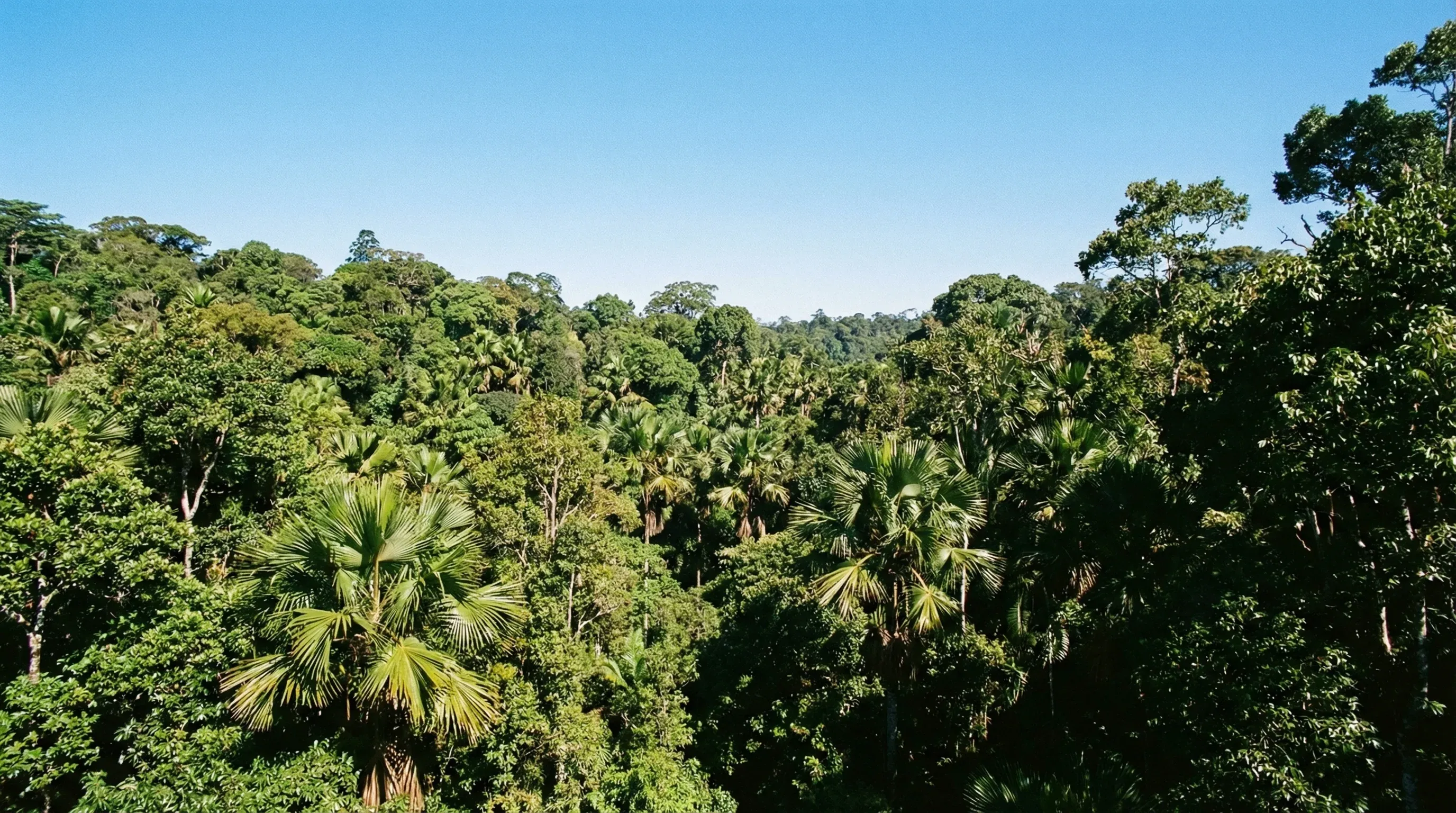

East Coast (rainforest, Andasibe)
Rainforests, lemurs, and pirates 🏴☠️
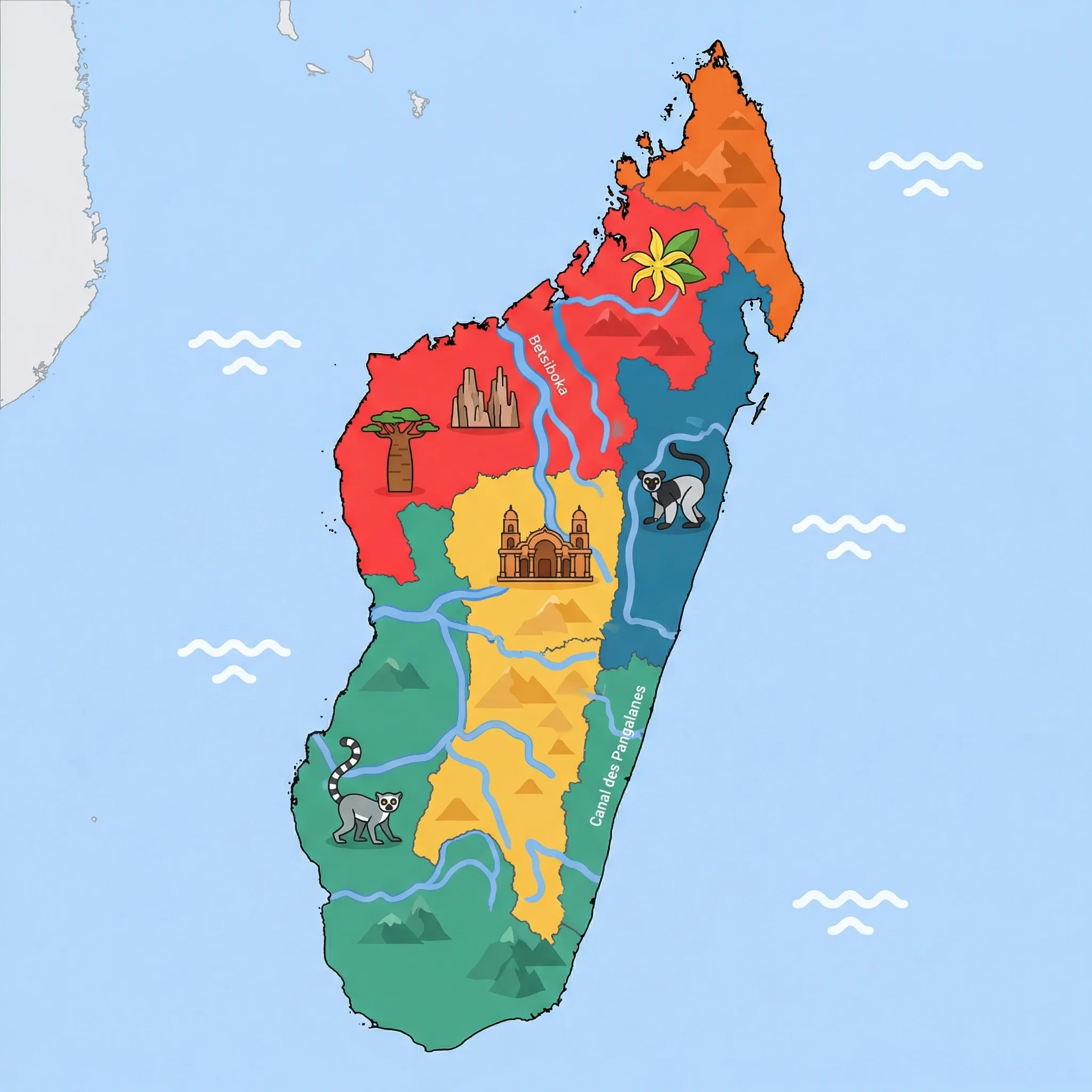
Click a region to explore
Overview
The East Coast is the greenest and most humid part of Madagascar, offering families a true jungle book experience. The landscape is dominated by dense tropical rainforests, cascading waterfalls, and the tranquil waterways of the Pangalanes Canal. This is the best region for wildlife-focused families, as the national parks here are more accessible than in the remote west or north. The air is thick with the scent of cloves and vanilla, grown in abundance in this fertile region.
Culturally, the east is fascinating for its pirate history, particularly on Île Sainte-Marie, which provides a thrilling backstory for imaginative children. The atmosphere is generally laid-back, but the dense vegetation means nature feels powerful and close. Rain is frequent, keeping the forests lush and the rivers full, so families should come prepared for wet weather adventures.
Key Attractions
The undisputed highlight is Andasibe-Mantadia National Park. It is the best place in the world to see the Indri, the largest living lemur. Their eerie, whale-like songs echo through the canopy in the morning—a sound your children will never forget. The park trails are generally well-maintained and manageable for active children.
For a change of pace, Île Sainte-Marie (Nosy Boraha) offers a pirate cemetery and world-class whale watching (July to September). Nearby, Île aux Nattes provides safe, shallow waters for swimming. The Pangalanes Canal is a series of man-made and natural waterways running parallel to the ocean; boat trips here reveal a slower pace of life where local fishermen paddle traditional pirogues.
Practical Advice
This is a high-rainfall area year-round, so waterproof gear is non-negotiable. Leech socks are recommended for rainforest hikes. The whale season on Sainte-Marie runs from July to September and requires booking boat tours in advance.
Food & Drink
Typical meal times: Lunch is usually 12:00 pm to 2:00 pm. Dinner runs from 7:00 pm to 9:00 pm.
Typical meal costs: Beachside seafood meals cost MGA 30,000–60,000 (approx. $6.50–13.00 USD / €6.00–12.00 EUR). Simple local dishes are cheaper.
Dietary requirements: Coconut milk is widely used, which is great for dairy-free travelers. Shellfish is very common; those with allergies must be vigilant as cross-contamination can occur in coastal kitchens.
Signature dishes:
- Ravitoto au Coco – Cassava leaves pounded and cooked with coconut milk and pork (or sometimes beef).
- Sauce Vanille – Fish or chicken served in a rich, savory vanilla cream sauce, a specialty of the vanilla coast.
- Camaron – Large freshwater prawns found in the local rivers, often grilled with garlic.
Why this score?
The dense rainforests and humid climate of the east create a challenging environment for trekking and wildlife spotting. Navigating the Pangalanes Canal via traditional boat and exploring the pirate history of remote islands requires a high degree of flexibility and physical activity. Infrastructure is limited, often involving long drives on the winding RN2 road.
Why this score?
Outside of basic clinics in Toamasina (Tamatave), medical services are extremely limited and often lack essential supplies. Remote rainforest lodges have no immediate access to emergency care, and transportation to the capital is slow due to road conditions. Foreigners are strongly advised to carry comprehensive first-aid kits and travel insurance with evacuation coverage.
Why this score?
Andasibe-Mantadia is a cornerstone of the Malagasy wildlife circuit, attracting nature enthusiasts specifically to see the Indri lemurs. Despite this, the region lacks mass appeal, and the Pangalanes Canal remains an off-the-beaten-path experience for most. Île Sainte-Marie adds a seasonal boost for whale watching, but overall visitor numbers are low on a global scale.

Prices are moderate. Lodges near the national parks charge MGA 150,000–350,000 (approx. $33–77 USD / €30–70 EUR) per night. Island resorts on Sainte-Marie can be pricier, especially during whale season. Park entry fees and guide fees are additional but reasonable.

Getting Here & Around
Getting Here
- Driving – Access is via the RN2: The Route to the East from Antananarivo. It is a busy, winding road with many trucks, taking about 4-5 hours to reach Andasibe.
- Boat – Ferries connect the mainland (Soanierana Ivongo) to Île Sainte-Marie, though the crossing can be rough.
- Air – Domestic flights link Antananarivo to Toamasina and Sainte-Marie.
Getting Around
- Walking – Essential for Andasibe-Mantadia National Park. Hiring a local guide is mandatory and helpful for spotting wildlife.
- Boat – The primary way to explore the Pangalanes Canal and travel between the small islands.
- Tuk-tuk – Common in the port city of Toamasina (Tamatave) for short hops.
Nearby Airports (2 airports)
Toamasina
TMMTamatave
Maroantsetra
WMNMaroantsetra
View full flight map for Madagascar →

Packing List
Rain can be torrential and persistent in the rainforest
Forest floors are damp and leeches are common on hikes
To protect electronics during boat transfers and canal trips
High humidity can affect camera lenses and electronics
Frequent power cuts ('delestage') and limited street lighting make this essential for safety and night walks.
Roads are winding and often in poor condition; even sturdy stomachs may struggle on long drives.
The Highlands (including Antananarivo) get surprisingly cold at night, especially during the dry winter months.
Electricity can be unreliable in rural lodges, so backup power for phones and cameras is crucial.
Essential for keeping electronics safe during pirogue (canoe) trips or sudden rainforest downpours.

Activities & Best Times

Hiking, wildlife, outdoor exploration, ecotourism
Home to the Indri-Indri and world-renowned rainforest biodiversity, this region offers unparalleled wildlife immersion and primary forest trekking for families. Peak visitation coincides with the dry season and lemur active periods, while the summer months are avoided due to extreme tropical rainfall and cyclone risks.

Urban tourism, museums, historical sites, architecture
Unique heritage sites like the Pirate Cemetery on Sainte-Marie and Manda Fort provide a distinctive cultural narrative that appeals to sophisticated travelers. The experience is best during the cooler, drier Malagasy winter, avoiding the high-humidity summer season which can impact heritage site accessibility.

Beach resorts, marine activities: diving, snorkelling, kite surfing, wind surfing, sailing
The islands of Sainte-Marie and Nattes offer authentic, low-density coastal escapes with significant marine biodiversity and humpback whale watching. Peak season spans the whale migration and the subsequent dry months, whereas the early year brings heavy seas and significant precipitation.

Scenic drives, countryside tours, route-based travel
RN5 is described as 'internationally recognized, high-difficulty 4x4 route' - this warrants 'good' not 'marginal'. Marginal implies suboptimal conditions, but this is a deliberate adventure route.

Sport tourism, fitness activities, active recreation
Offers established rainforest trekking routes and adventure centers such as Mitsinjo, providing high-quality hiking infrastructure for active families. Conditions are optimal when the rainforest trails are driest in late spring, as heavy rains in other months can make paths muddy and challenging.

Learning experiences, scientific sites, historical education
The Musée de l'Île Sainte-Marie offers specialized historical and scientific insights into the region's unique pirate past and marine ecology. While not a primary travel driver, it provides significant educational value for families visiting during the main tourism season.

Events, celebrations, seasonal attractions
The Whale Festival (Festival des Baleines) on Sainte-Marie is the region's primary international cultural event, drawing visitors for parades and conservation awareness. July is the core festival month, though whale-related activities continue into the shoulder months of August and September.

Attractions (8 total)



Public Holidays & Calendar Next 12 months
Public holidays, festivals, cultural celebrations, and seasonal natural phenomena coming up in East Coast (rainforest, Andasibe) over the next 12 months.
Loading holidays and events...

Travel Advisory
Consensus across all major agencies indicates that travelers should exercise a high degree of caution in Madagascar. Key risks include a high rate of violent crime (including armed robbery and carjacking), potential for sudden civil unrest, and very limited medical facilities. Special care is needed for travel outside of major cities and during the cyclone season.
Safety Topics
Traveller Advice (4 groups)

Travelers should be aware of local social norms and exercise discretion, as public attitudes towards the LGBTQ+ community can be conservative.

Solo female travelers should be particularly cautious in isolated areas and remote beaches where harassment or robbery can occur, even during daylight hours.

Maintain a high level of personal security awareness, avoid traveling alone after dark, and do not display items of wealth such as jewelry or electronics in public.

Accessibility infrastructure is extremely limited throughout Madagascar; individuals with mobility issues should plan extensively for transport and lodging challenges.
Agency Summaries
The security environment is currently stable but remains unpredictable. Travelers are warned about violent robberies on remote beaches and dangerous road conditions, particularly in the south and west.
Vigilance is required because of ongoing concerns regarding crime and the history of political protests. Visitors should avoid large crowds and remain informed of local developments.
Travelers should remain very vigilant due to widespread crime and the potential for political instability following recent governmental transitions.
Heightened vigilance is advised across the country because of significant crime rates, civil unrest risks, and limited medical infrastructure. Some southern and western regions carry higher danger due to banditry.
A high level of caution is necessary due to the combined threats of violent crime, frequent civil unrest, and the annual risk of severe cyclones.
Increased safety precautions are recommended due to the high frequency of violent crimes, including carjackings and robberies, and the possibility of political demonstrations turning violent.
Information is provided for general guidance only and does not constitute travel, safety, medical, or legal advice. Conditions may change. Users are responsible for independently verifying information before travel.