
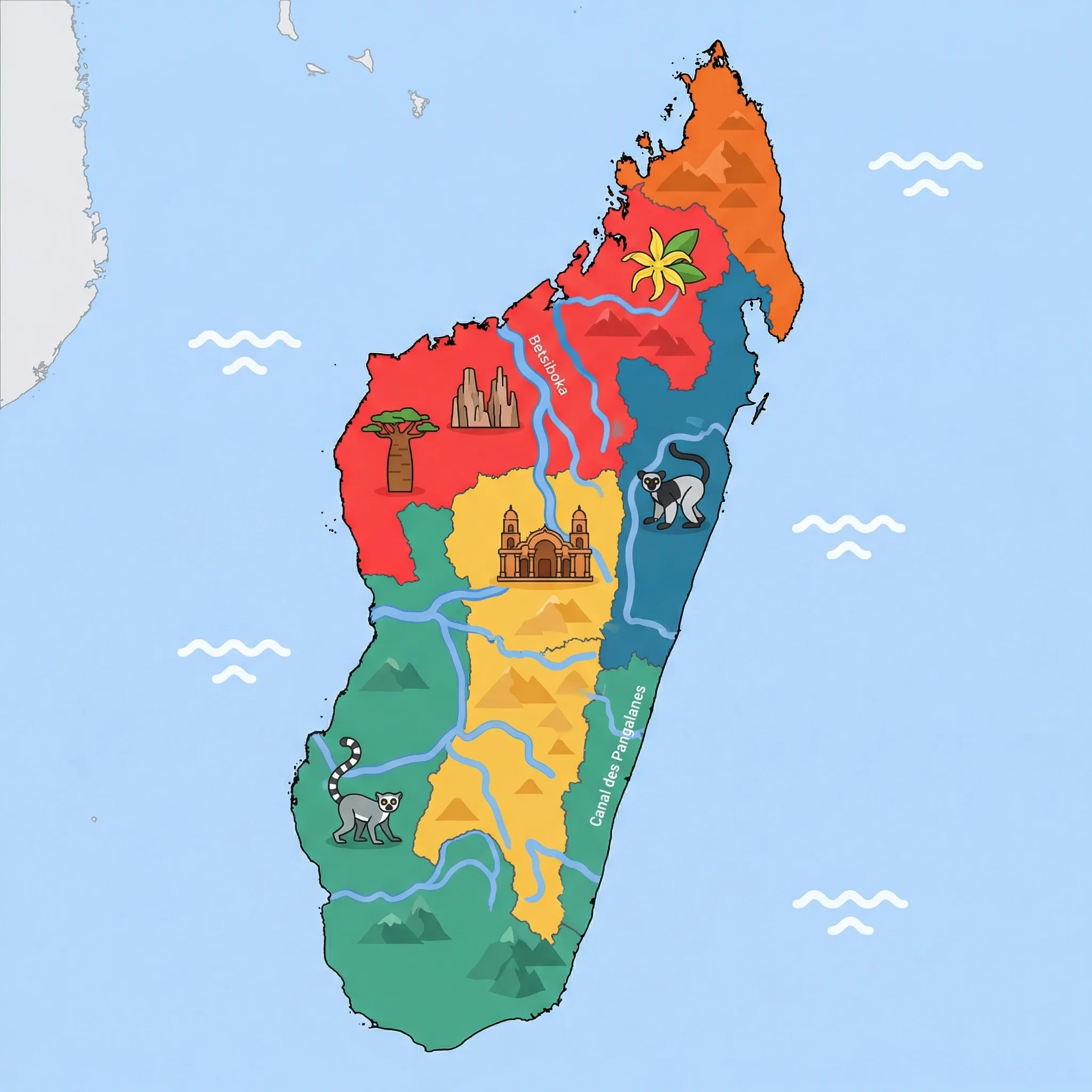
Click a region to explore
Overview
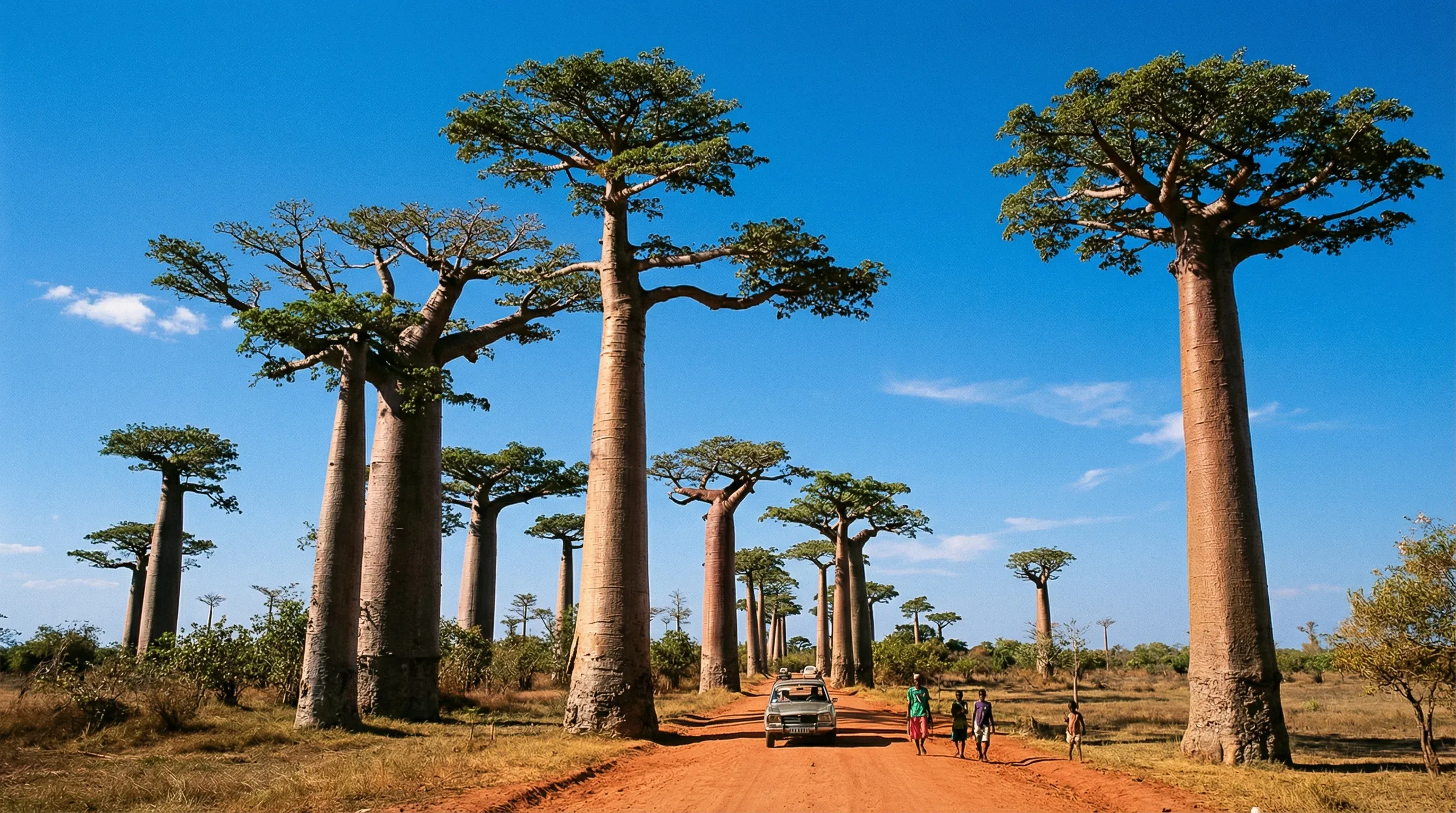
The West is the land of giants. It is here that you find the world-famous Avenue of the Baobabs, where massive, centuries-old trees line the dirt road like ancient pillars. For families, seeing these trees at sunset is a magical, almost spiritual experience. The region is hot, dry, and sparsely populated, giving it a true feeling of being off the grid.
This region is also home to the Tsingy de Bemaraha, a UNESCO World Heritage site of razor-sharp limestone pinnacles. While breathtaking, this area is challenging to access and requires a sense of adventure. It is not suitable for toddlers, but for active teenagers, climbing the suspension bridges and exploring the caves of the Tsingy is the ultimate Indiana Jones experience. The region is highly seasonal; during the rainy season (roughly December to March), the roads become impassable mud baths, so timing is everything.
Key Attractions
The Avenue of the Baobabs is the must-see landmark. It is accessible and free to visit, though best experienced at dawn or dusk when the light is golden. It is a fantastic photo opportunity that defines Madagascar.
For the brave, Tsingy de Bemaraha National Park offers circuits of varying difficulty. The 'Petit Tsingy' is generally accessible for children aged 8+, involving some scrambling but no major climbing. The 'Grand Tsingy' involves harnesses and suspension bridges—thrilling for teens but requires a good head for heights. Between these sites lies the Kirindy Forest, the best place to spot the Fossa, Madagascar's largest predator (resembling a cross between a cat and a dog).
Practical Advice
This region is only accessible during the dry season (usually April/May to November). The journey involves long days on bumpy dirt roads and river crossings on barges. It is physically demanding. Families should ensure children are comfortable with heat and long car rides.
Food & Drink
Typical meal times: Lunch 12:00 pm to 2:00 pm. Dinner 7:00 pm to 9:00 pm.
Typical meal costs: Basic but fresh. Meals cost MGA 20,000–50,000 (approx. $4.50–11.00 USD / €4.00–10.00 EUR).
Dietary requirements: River fish and crab are staples. Options are limited in remote camps, so bring snacks for children with specific needs.
Signature dishes:
- Crabe au Coco – Mangrove crabs are huge here, served in rich coconut sauce.
- Tilapia – Fresh freshwater fish from the local rivers, usually grilled or fried.
- Minsao – A stir-fried noodle dish with vegetables and meat, influenced by Asian cuisine and popular in the west.
Why this score?
This is one of the most adventurous regions in the country, characterized by the extremely difficult seasonal road to the Tsingy which involves river crossings and deep sand. The 'Grand Tsingy' hike itself is physically demanding, requiring harnesses and via ferrata equipment to navigate razor-sharp limestone pinnacles. It is a remote, wild region where infrastructure is minimal and self-sufficiency is often required.
Why this score?
The western region is isolated, with very few medical resources available in Morondava and essentially none in the vicinity of the Tsingy. Given the high risk of injury during technical hikes or road accidents, the lack of nearby trauma care is a significant concern for visitors. Any serious medical event in this region would necessitate a complex and expensive aerial evacuation.
Why this score?
The Avenue of the Baobabs is one of the world's most photographed landmarks, yet the difficulty of reaching it keeps visitor numbers relatively low. Most travelers arrive via charter flights or grueling multi-day 4x4 journeys, limiting the region to dedicated adventure tourists. The Tsingy de Bemaraha is a major draw but is only accessible for part of the year, further restricting its popularity.

While local costs are low, the logistics make it expensive. Hiring a high-clearance 4x4 and driver is costly, and fuel consumption is high. Park fees for the Tsingy are also higher than average. Expect total daily costs similar to European mid-range travel due to transport.

Getting Here & Around
Getting Here
- Air – Morondava (MOQ) has flights from Antananarivo, saving days of driving.
- Road – A long, arduous drive from Tana. Reaching the Tsingy de Bemaraha National Park from Morondava takes a full day of 4x4 driving on dirt tracks.
Getting Around
- 4x4 Vehicle – Mandatory. There are no paved roads beyond Morondava. You will need a reliable vehicle and experienced driver.
- Ferry – Crossing the Tsiribihina and Manambolo rivers involves small vehicular ferries (barges), which is part of the adventure.
Nearby Airports (1 airport)
Mahajanga Philibert Tsiranana
MJNMajunga
View full flight map for Madagascar →

Packing List
Electricity is limited in Tsingy camps and caves are dark
Sharp rocks in the Tsingy will destroy sandals and cut feet
Mosquitoes are fierce in the mangroves and forests
Charging opportunities are rare in remote eco-lodges
Frequent power cuts ('delestage') and limited street lighting make this essential for safety and night walks.
Roads are winding and often in poor condition; even sturdy stomachs may struggle on long drives.
The Highlands (including Antananarivo) get surprisingly cold at night, especially during the dry winter months.
Electricity can be unreliable in rural lodges, so backup power for phones and cameras is crucial.
Essential for keeping electronics safe during pirogue (canoe) trips or sudden rainforest downpours.

Activities & Best Times

Hiking, wildlife, outdoor exploration, ecotourism
Home to the world-unique Tsingy de Bemaraha limestone formations and rare fossa sightings in Kirindy Forest. Access is strictly seasonal as heavy rains from December to April make the unpaved roads and the national parks completely impassable.

Beach resorts, marine activities: diving, snorkelling, kite surfing, wind surfing, sailing
Remote coastal areas like Belo-sur-Mer offer pristine, non-commercialized beaches and traditional dhow sailing. Seasonal winds and high precipitation during the cyclone season (Jan-Mar) significantly degrade water visibility and safety.

Urban tourism, museums, historical sites, architecture
Features the globally iconic Avenue of the Baobabs and authentic Sakalava fishing cultures in villages like Belo-sur-Mer. While landmarks are permanent, the cultural experience is best when dry season road access allows travel between these remote sites.

Scenic drives, countryside tours, route-based travel
The RN8 'Baobab Route' offers one of Africa's most scenic and adventurous drives through iconic landscape. This is strictly a dry-season activity as the dirt tracks require 4WD and become dangerous or submerged during the summer monsoon.

Sport tourism, fitness activities, active recreation
Offers unique technical hiking through the 'labyrinth' circuits of the Tsingy and multi-day river descents on the Tsiribihina. These activities are limited by park closure dates and river water levels which are only safe during the cooler dry months.




Public Holidays & Calendar Next 12 months
Public holidays, festivals, cultural celebrations, and seasonal natural phenomena coming up in West (Tsingy, baobabs) over the next 12 months.
Loading holidays and events...

Travel Advisory
Consensus across all major agencies indicates that travelers should exercise a high degree of caution in Madagascar. Key risks include a high rate of violent crime (including armed robbery and carjacking), potential for sudden civil unrest, and very limited medical facilities. Special care is needed for travel outside of major cities and during the cyclone season.
Safety Topics
Traveller Advice (4 groups)

Travelers should be aware of local social norms and exercise discretion, as public attitudes towards the LGBTQ+ community can be conservative.

Solo female travelers should be particularly cautious in isolated areas and remote beaches where harassment or robbery can occur, even during daylight hours.

Maintain a high level of personal security awareness, avoid traveling alone after dark, and do not display items of wealth such as jewelry or electronics in public.

Accessibility infrastructure is extremely limited throughout Madagascar; individuals with mobility issues should plan extensively for transport and lodging challenges.
Agency Summaries
The security environment is currently stable but remains unpredictable. Travelers are warned about violent robberies on remote beaches and dangerous road conditions, particularly in the south and west.
Vigilance is required because of ongoing concerns regarding crime and the history of political protests. Visitors should avoid large crowds and remain informed of local developments.
Travelers should remain very vigilant due to widespread crime and the potential for political instability following recent governmental transitions.
Heightened vigilance is advised across the country because of significant crime rates, civil unrest risks, and limited medical infrastructure. Some southern and western regions carry higher danger due to banditry.
A high level of caution is necessary due to the combined threats of violent crime, frequent civil unrest, and the annual risk of severe cyclones.
Increased safety precautions are recommended due to the high frequency of violent crimes, including carjackings and robberies, and the possibility of political demonstrations turning violent.
Information is provided for general guidance only and does not constitute travel, safety, medical, or legal advice. Conditions may change. Users are responsible for independently verifying information before travel.