

Overview
Malawi is often overshadowed by its larger safari neighbours, but for families, this is its greatest strength. Known as the "Warm Heart of Africa", it offers a safe, compact, and incredibly diverse African experience without the overwhelming crowds or vast distances of other destinations. The geography is defined by the Great Rift Valley, with the magnificent Lake Malawi stretching across nearly a fifth of the country. This vast inland sea, with its golden sands and calm, fresh water, allows families to combine a classic beach holiday with wildlife adventures in a way few other places can match.
Culturally, Malawi is gentle and welcoming. Children are often greeted with smiles and waves in villages, offering a genuine connection to local life that feels less commercialised than in mass-tourism hubs. The vibe here is relaxed and unhurried-"Malawi time" is a real concept. From the misty highlands of the Nyika Plateau to the elephant-filled marshes of the Shire River, the landscapes are lush and varied. It is an ideal introduction to Africa for younger travellers, offering high-quality wildlife viewing in parks that feel intimate and exclusive.
Key Attractions
No family trip is complete without visiting Lake Malawi National Park. Located at the southern end of the lake, this UNESCO World Heritage site is a playground for water babies. The calm, bilharzia-free waters around Cape Maclear are perfect for snorkelling with "mbuna" (colourful cichlid fish) that swim right up to your mask. Families can kayak to nearby islands, watch fish eagles feed, or spot otters playing in the rocks. For a classic safari experience, Liwonde National Park in the Liwonde NP region is the country's premier wildlife destination. Boat safaris on the Shire River here are legendary-you can safely watch hundreds of hippos and elephants from the water, which is often much more engaging for children than long hours in a car.
For a complete change of scenery, head north to Nyika National Park on the Nyika Plateau. Its rolling montane grasslands resemble the Scottish Highlands but are dotted with zebras, antelopes, and leopards. It offers unique activities like mountain biking safaris that are suitable for older children. Closer to the capital in Lilongwe & Central, the Lilongwe Wildlife Centre is an excellent first stop. This sanctuary rescues and rehabilitates wild animals and offers an educational playground and forest trails that help kids understand conservation before they head into the wild.
Practical Advice
The best time to visit is the dry season (May to October), when wildlife viewing is easiest and the malaria risk is lower, though prophylactics are still essential for all family members. As of January 2026, visa rules have tightened, and most international visitors now require a visa; the e-visa system is the most convenient way to apply. Cash is king in Malawi-ATMs can be unreliable outside major cities, so carry US dollars (post-2013 notes) to exchange. Pack a universal travel adapter and a power bank, as power cuts can occur.
Food & Drink
Typical meal times: Lunch is typically served from 12:00 pm to 2:00 pm, and dinner from 6:30 pm to 9:00 pm. Lodges often serve afternoon tea around 3:30 pm before afternoon activities.
Typical meal costs: 15,000–35,000 MWK (approx. $8–20 USD / €7–18 EUR) for a main dish in a mid-range restaurant. Local street food is much cheaper, but lodge dining is priced internationally.
Dietary requirements: Vegetarian options are widely available, especially in tourist lodges which are used to international guests. Peanuts are a common ingredient in local stews, so inform kitchens of nut allergies immediately. Gluten-free bread is rare outside luxury lodges.
Family-friendly dining: Malawians adore children, and restaurant staff will often go out of their way to accommodate them. Most lodges offer flexible meal times and simple "kids' menu" favourites like pasta or chicken alongside local fare.
Signature dishes:
- Chambo – The most famous fish from Lake Malawi, usually grilled or fried and served with chips or nsima. It has a firm texture that kids often enjoy.
- Nsima – The national staple, a thick porridge made from maize flour, eaten with hands and used to scoop up relishes (ndiwo).
- Kondowole – A sticky cassava meal popular in the north, often eaten with fish curry.
- Mbatata Biscuits – Sweet cookies made from sweet potatoes, a popular and healthy-ish snack for children.

While local produce is inexpensive, a family trip involving safaris, car hire, and Western-standard lodges falls into the mid-range bracket. A family of four can expect to spend around 350,000–600,000 MWK (approx. $200–345 USD / €185–320 EUR) per day for comfortable accommodation, vehicle rental, park fees, and meals.
Age Suitability





Did you know? Malawi welcomes approximately 432,000 international visitors per year. Most visitors come from Africa.
Explore Regions
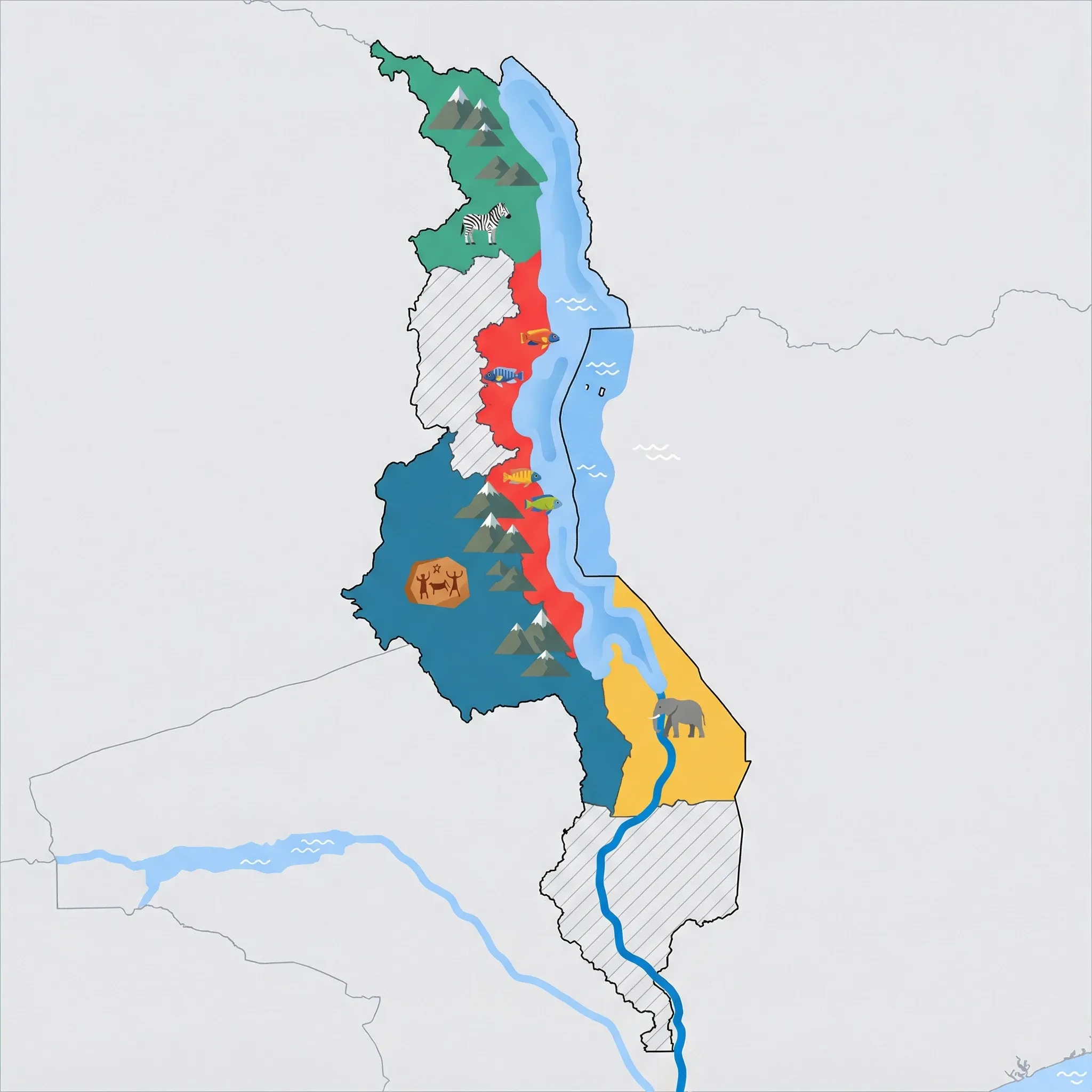
4 Regions
Lake Malawi (south, central, north shores)
The warm, crystal-clear Calendar Lake where beach life meets freshwater fun 🐠
Lilongwe & Central
The green heart of the country mixing culture, wildlife, and history 🌳
Liwonde NP
River safaris, diverse wildlife, and a conservation triumph 🐘
Nyika Plateau
The Scotland of Africa: Mist, mountains, and magic 🦓
Click on a region marker to explore details. Use the dropdown to color regions by activity suitability.

Getting There & Around
Getting There
- By Air – Kamuzu International Airport (LLW) in Lilongwe & Central is the main gateway, with connections via Johannesburg, Nairobi, or Addis Ababa.
- By Land – Border crossings are available from Zambia (Mchinji) and Mozambique, though the process can be slow.
- Entry Requirements – As of 2026, most international visitors (including UK, US, and EU citizens) require a visa. E-visas should be arranged in advance. Check your government website for the latest visa requirements, or use the IATA Travel Centre entry-requirements checker.
Getting Around
- Car Hire – A 4x4 is essential for self-driving, especially in parks like Liwonde NP and on the road to Nyika Plateau. Rental agencies are available in Lilongwe and Blantyre.
- Domestic Flights – Small aircraft charters connect major hubs with tourist destinations like Likoma Island and national parks, saving hours of driving time.
- Lodge Transfers – Most families prefer arranging transfers directly through their lodges, which often include a driver-guide who can spot wildlife along the way.

Packing List
Effective at deterring tsetse flies in the bush, which are often attracted to moving vehicles and not repelled by standard DEET.
Power cuts and load shedding are common; a hands-free light is essential for navigating lodges or reading bedtime stories in the dark.
Cash is vital for visas and tips. Notes must be in pristine condition and printed after 2013, or banks and merchants will reject them.
Roads in national parks and rural areas can be extremely corrugated and bumpy; extra support is highly recommended for comfort.
Multi-purpose: use as a dust cover in vehicles, a modest skirt for village visits, or a beach towel at the lake.
The heat in the Shire Valley can be intense; these are hard to find in remote areas and vital for keeping kids hydrated.

Activities & Best Times

Adventure & Nature
ExcellentHiking, wildlife, outdoor exploration, ecotourism
A UNESCO World Heritage site renowned for its unique freshwater biodiversity (cichlids) and world-class island eco-lodges like Mumbo Island. Peak dry season offers optimal water visibility for snorkeling and prime wildlife viewing in the adjacent Liwonde and Nkhotakota reserves.
Features major wildlife reserves like Nkhotakota and Kasungu which offer authentic, uncrowded safari experiences alongside the unique Dedza Mountain landscapes. Peak visitation occurs during the dry season when wildlife congregates at water sources; the rainy season (Dec-Apr) makes many tracks impassable.
A unique Afro-montane wilderness offering high-altitude wildlife viewing including large herds of eland and zebra in a landscape unlike anywhere else in Africa. Peak months offer the best wildlife visibility and blooming wildflowers, while the rainy season from December to April makes tracks difficult to navigate.

City & Cultural
Very GoodUrban tourism, museums, historical sites, architecture
Features authentic missionary heritage at Livingstonia and internationally recognized traditional art at the Kungoni Centre. These highland and rural sites are most accessible during the dry months, as summer rains can make access roads challenging for families.
Home to the UNESCO-listed Chongoni Rock Art Area and the Kungoni Centre, providing high-quality insight into Chewa culture. The dry, cooler months are ideal for exploring these outdoor heritage sites and the botanical gardens, while heavy summer rains can hinder access to rural cultural sites.
The historic Livingstonia Mission offers a fascinating glimpse into colonial history and Scottish missionary architecture with spectacular views over Lake Malawi. Access is highly dependent on dry weather as the steep escarpment roads are prone to washouts during the heavy summer rains.

Road Trips & Scenic
GoodScenic drives, countryside tours, route-based travel
The Golomoti Escarpment and M5 Lakeshore road offer spectacular scenic driving with significant elevation changes and views. Best traveled in the dry season for maximum visibility and road safety, as heavy rains can create hazardous conditions on steep escarpment routes.
The legendary Gorodi Road with its 22 hairpins and the scenic circular drives across the plateau provide world-class technical driving and spectacular vistas. These routes require dry conditions for safety and accessibility, with the late dry season offering the clearest views and safest road surfaces.
As a central pillar of the Southern Malawi Safari Circuit, the region offers scenic driving routes connecting the highlands to Lake Malawi. The dry season provides the safest and most visually clear conditions, whereas summer rains can impact road accessibility and visibility.

Sports & Active
GoodSport tourism, fitness activities, active recreation
Renowned for high-altitude mountain biking and multi-day trekking along the Livingstonia Trail, providing a physically demanding but rewarding experience. The cooler, dry months are essential for these activities to avoid heavy mist, thunderstorms, and slippery terrain on the plateau.
Offers unique active opportunities including kayaking between islands, freshwater snorkeling, and trekking the Livingstonia Trail. Conditions are optimal in the cooler, drier months when the lake surface is calmer and hiking temperatures are manageable.
Offers rugged hiking trails in Dedza and Dzalanyama, though infrastructure is more suited to adventurous self-guided travelers than luxury sports enthusiasts. The cool mid-year months are peak for physical exertion, while the humid rainy season makes trails slippery and difficult.

Festivals & Seasonal
MarginalEvents, celebrations, seasonal attractions
Host to the internationally recognized Lake of Stars and Tumaini festivals, which draw global audiences for music and arts. These events are strictly seasonal, typically occurring in the late dry season (Sept-Nov) to ensure optimal outdoor conditions.
The 'Lake of Stars' is a major international arts festival that draws global visitors to the lake's shores, typically in late September. Outside of this specific event window, the region lacks high-profile seasonal festivals for international travelers.

Educational & Exploratory
MarginalLearning experiences, scientific sites, historical education
Features limited but informative facilities like the Nyika National Park Information Centre and the Livingstonia Museum. While historically significant, these sites are secondary attractions rather than primary destination-level educational motivators for international families.
Specialized conservation learning is available through the park's information center, focusing on rhino reintroduction and elephant management. These educational aspects are best experienced when the park is fully accessible during the dry winter months.
The Lake Malawi National Park Visitor Centre and local museums provide specialized insight into rift valley evolution and endemic speciation. These are notable supplementary activities for families during the primary dry season visit.

Relaxation & Wellness
MarginalSpa retreats, wellness centers, peaceful getaways

Public Holidays & Calendar Next 12 months
Public holidays, festivals, cultural celebrations, and seasonal natural phenomena coming up in Malawi over the next 12 months.
Loading holidays and events...
Climate & Weather
Lake Malawi (south, central, north shores)
Show Details
| Month | Temp °C | Rain | Humidity |
|---|
Lilongwe & Central
Show Details
| Month | Temp °C | Rain | Humidity |
|---|
Liwonde NP
Show Details
| Month | Temp °C | Rain | Humidity |
|---|
Nyika Plateau
Show Details
| Month | Temp °C | Rain | Humidity |
|---|

Travel Advisory
Travellers should exercise increased vigilance due to high rates of crime and potential civil unrest. While the country is generally safe for tourism, specific precautions against violent crime (including carjackings and robberies) and during political demonstrations are recommended. Health risks such as waterborne diseases and limited medical infrastructure also require preparation.
Safety Topics
Traveller Advice (4 groups)

Female travellers, particularly those moving alone, may encounter verbal harassment or unwanted attention. It is advisable to avoid walking alone at night and to dress modestly in rural or conservative areas.

When planning to climb Mount Mulanje, it is strongly recommended to coordinate with the Mountain Club of Malawi for updated security and safety information. Trails can be poorly marked and weather conditions change rapidly.

Ensure all visas are arranged before travel as rules for Irish and other citizens have recently changed. Maintain copies of travel documents and be prepared for limited police assistance in rural areas.

Same-sex relationships are illegal and can lead to imprisonment. Public displays of affection are generally discouraged for all travellers but may carry higher risks for LGBTQ+ individuals due to local laws and social conservative norms.
Agency Summaries
Travellers should be more alert due to significant crime rates. Safety concerns include violent incidents such as carjackings and robberies, particularly in larger cities. Public transport is often overcrowded and road conditions can be hazardous, necessitating extra care when driving.
Vigilance is advised because of frequent violent crime, including muggings and residential break-ins. Periodic civil unrest and political protests may lead to road closures or the use of crowd control measures. Police resources are often limited in their ability to respond to emergencies.
While travel is generally safe, visitors should be mindful of petty theft and stay informed about the potential for demonstrations. There is a general global threat of terrorism. Medical facilities are limited, and health precautions for waterborne diseases are essential.
No specific elevated security warnings are in place, but travellers should maintain typical safety habits. Significant focus should be placed on health risks, including rabies and bilharzia, and ensuring comprehensive insurance for medical evacuations.
A high level of vigilance is required due to the risk of violent crime. Avoid walking after dark and be cautious at transit hubs. Travellers should be aware of risks such as drink spiking and ensure all entry permits are secured prior to arrival.
Standard safety measures are recommended. New entry regulations require many visitors to obtain a visa in advance via the official government portal. Maintain awareness of local news and follow the instructions of local authorities during your stay.
Information is provided for general guidance only and does not constitute travel, safety, medical, or legal advice. Conditions may change. Users are responsible for independently verifying information before travel.