
Kuala Lumpur
A jungle city of skyscrapers, street food, and vibrant culture 🏙️🐒
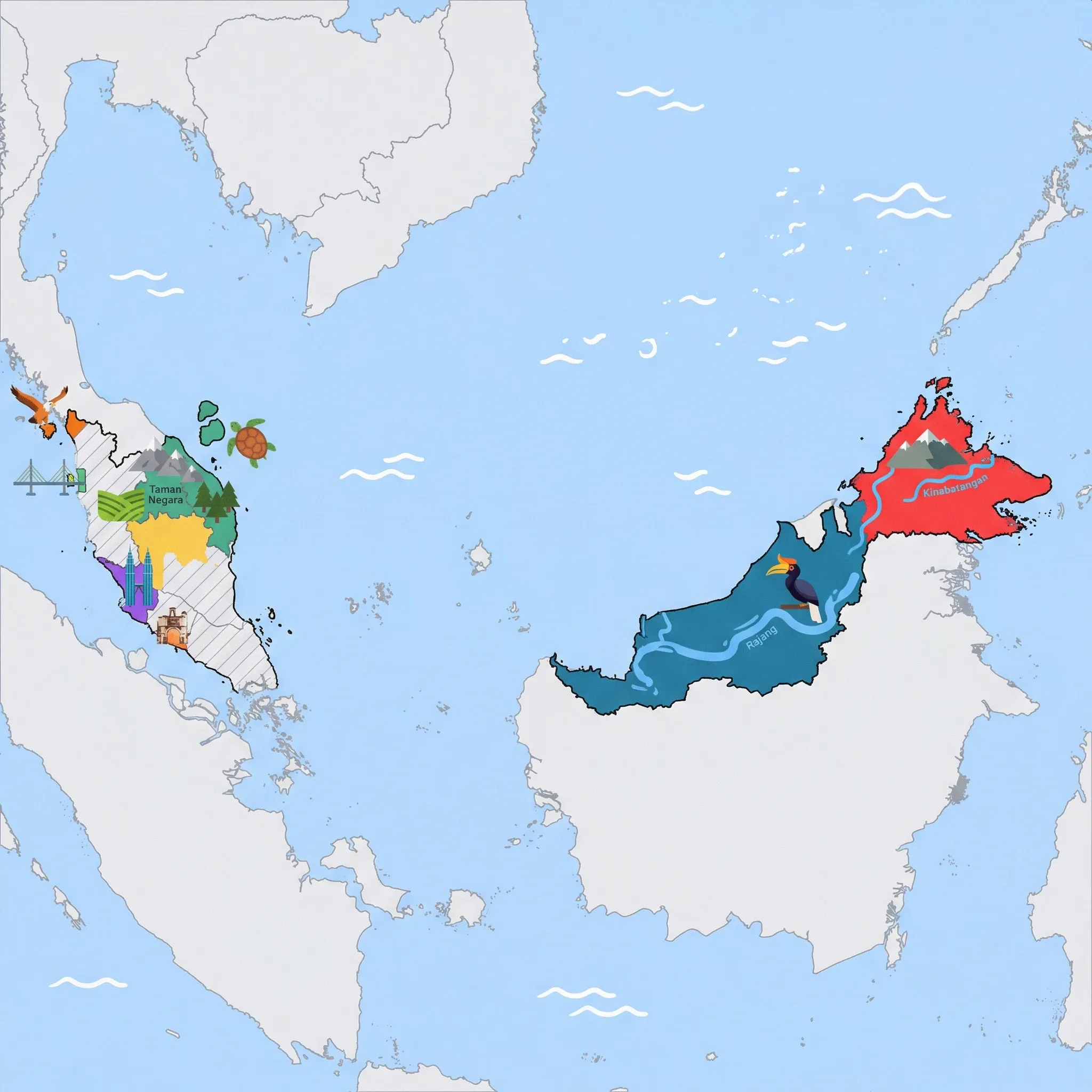
Click a region to explore
Overview
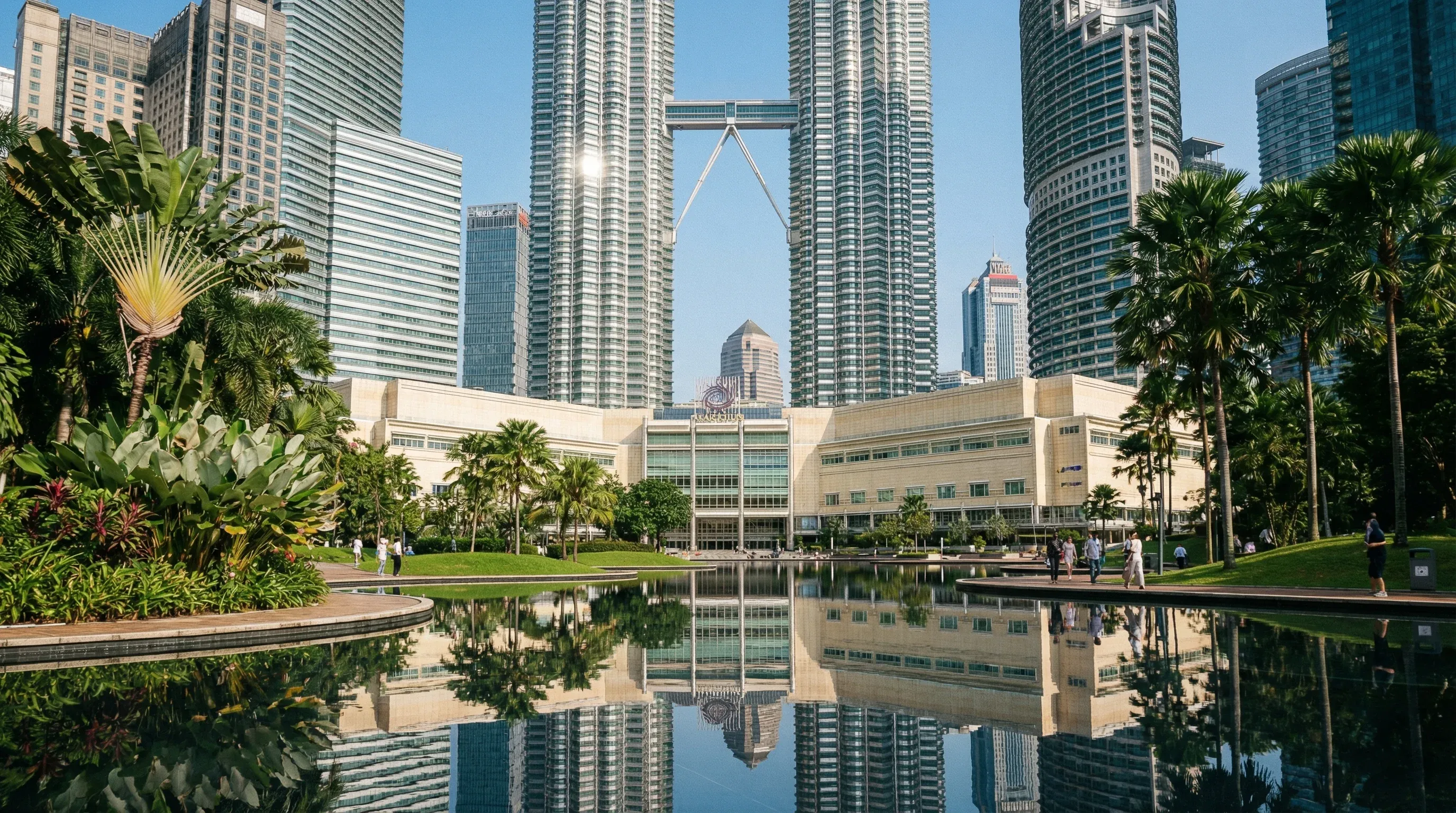
Kuala Lumpur (KL) is a bustling metropolis that manages to be both overwhelmingly modern and charmingly traditional. For families, it is one of the easiest Asian capitals to navigate, with excellent English proficiency, stroller-friendly malls, and widely available grab-and-go food. The city center is dominated by the Golden Triangle, where gleaming towers overlook lush green parks, while the historic quarters offer a glimpse into the city's colonial and multicultural past.
What sets KL apart is its "city within a garden" concept. You can spend the morning shopping in air-conditioned comfort and the afternoon walking through a tropical rainforest canopy without leaving the city limits. The cultural diversity here is palpable; children will be fascinated by the colourful temples, the call to prayer from mosques, and the sensory explosion of Chinatown and Little India, all coexisting harmoniously.
Key Attractions
No visit is complete without seeing the Petronas Twin Towers; the surrounding park features a massive free water playground and wading pool perfect for cooling off. Just beneath the convention center lies Aquaria KLCC, an impressive oceanarium with a moving walkway tunnel. For a cultural excursion, the rainbow steps of Batu Caves are a must-do, though watch out for the cheeky monkeys.
Nature lovers should head to the Lake Gardens area, home to the KL Bird Park, a massive walk-in aviary where peacocks and hornbills fly free. Nearby, the Islamic Arts Museum Malaysia offers a quieter, air-conditioned experience with beautiful architecture and kid-friendly workshops. For hands-on learning, Petrosains, The Discovery Centre inside Suria KLCC is an interactive science museum designed specifically for children.
Practical Advice
Visit outdoor attractions early (before 10:00 am) to beat the heat. The monorail and MRT are excellent, but avoid rush hour (5:00 pm to 7:00 pm) when trains are packed. Malls often have excellent diaper-changing and feeding rooms.
Food & Drink
Typical meal times: Lunch is 12:00 pm to 2:00 pm. Dinner is often late, from 7:30 pm onwards, with night markets open until midnight.
Typical meal costs: A meal in a mall food court costs MYR 15–25 (approx. $3–5 USD / €3–5 EUR). Mid-range restaurants cost MYR 50–90 (approx. $10–19 USD / €10–19 EUR) per person.
Dietary requirements: Halal food is the norm. Vegetarian food is easily found in Indian restaurants and Chinese vegetarian stalls. Nut allergies require caution (satay sauce).
Signature dishes:
- Nasi Lemak – Coconut milk rice served with sambal, anchovies, peanuts, and egg; the national dish available everywhere.
- Satay – Skewers of marinated meat grilled over charcoal, served with a sweet peanut dipping sauce.
- Roti Canai – A crispy, flaky flatbread usually eaten for breakfast with dhal (lentil curry).
Why this score?
The environment is almost entirely urban, focused on shopping malls, skyscrapers, and paved heritage sites. While nearby Batu Caves involve a steep climb, the city is highly developed with extensive public transport and climate-controlled environments.
Why this score?
Kuala Lumpur is a premier global medical tourism destination with world-class private hospitals like Gleneagles and Prince Court. Staff are highly fluent in English, and the facilities offer specialist care that rivals major Western capitals.
Why this score?
As a major Southeast Asian aviation hub and capital city, it attracts millions of international visitors to landmarks like the Petronas Towers and Batu Caves. It ranks just below global mega-destinations like Bangkok, serving as a primary entry point for the country.

KL offers incredible value for a major capital. Luxury 5-star hotels often cost under MYR 600 (approx. $125 USD / €118 EUR) per night. Street food at <a data-attraction-id="51844">Petaling Street</a> can cost as little as MYR 10 (approx. $2 USD / €2 EUR). Alcohol is heavily taxed and expensive compared to food.

Getting Here & Around
Getting Here
- Airports – Kuala Lumpur International Airport (KUL) is the main hub, located 45 minutes south of the city. The KLIA Ekspres train connects to the city in 28 minutes.
- Train – The ETS electric train service connects KL Sentral to Penang, Ipoh, and the Thai border.
- Bus – Long-distance buses arrive at Terminal Bersepadu Selatan (TBS), a massive modern hub connected to the city via rail.
Getting Around
- Public Transport – The LRT, MRT, and Monorail systems are clean, cheap, and air-conditioned. They connect major spots like Petronas Twin Towers and Central Market efficiently.
- Ride-hailing – Grab is widely used, safe, and affordable. Essential for reaching places like KL Bird Park which aren't near train stations.
- Walking – Doable in short bursts, but the heat and humidity can be exhausting for young children.
Nearby Airports (2 airports)
Kuala Lumpur
KULKuala Lumpur
Sultan Abdul Aziz Shah Intl
SZBKuala Lumpur
View full flight map for Malaysia →
Official Links

Packing List
Required for visiting mosques and temples; handy for intense air-conditioning in malls.
Sudden tropical downpours occur almost daily in the afternoon.
The humidity is high even when walking short distances between buildings.
Footwear must be removed before entering homes and places of worship.
Essential for kids to prevent dengue; easier to apply than sticky sprays.
Many public toilets only provide a water hose; carry your own paper.
Protects electronics during sudden tropical downpours or island boat trips.
Useful for modesty at mosques and as a light cover-up against powerful A/C.

Activities & Best Times

Hiking, wildlife, outdoor exploration, ecotourism
Offers unique urban-accessible rainforest experiences like the KL Forest Eco Park and world-class nature-integrated attractions such as Farm In The City. Peak visitation coincides with the northern summer holidays and the slightly drier mid-year months, while heavy monsoonal rains in April and late-year peak months can hamper trail conditions.

Urban tourism, museums, historical sites, architecture
A world-class destination for discerning families to explore a unique blend of Malay, Chinese, and Indian heritage through architecture, the Islamic Arts Museum, and an authentic global food scene. Best experienced during the drier mid-year period; the intense tropical downpours in the monsoon months can interrupt walking tours and outdoor heritage exploration.

Learning experiences, scientific sites, historical education
Features highly-regarded institutions like Petrosains and Aquaria KLCC that provide destination-level learning experiences for sophisticated families. These are excellent year-round indoor options, though tourist infrastructure and peak travel services are most robust during the primary international vacation windows.

Sport tourism, fitness activities, active recreation
Boasts significant urban forest trail networks for hiking and purpose-built active centers that cater to adventurous families. Optimal conditions for these activities are found during the mid-year drier season when trails are safest and outdoor activity is not curtailed by daily afternoon monsoonal storms.

Amusement parks, family entertainment venues
Home to internationally recognized family venues like KidZania and Sunway Lagoon, providing high-quality entertainment standards. While indoor parks remain viable, the outdoor water and theme parks are best visited during the mid-year school holiday windows to avoid the disruption of the heavy inter-monsoon thunderstorms.

Events, celebrations, seasonal attractions
Specifically notable for the globally significant Thaipusam festival at Batu Caves in Jan/Feb, alongside vibrant Lunar New Year celebrations that appeal to international culture seekers. Outside of these specific major cultural windows, the region follows a more standard urban tourism calendar.

Spa retreats, wellness centers, peaceful getaways
The region possesses several natural hot springs, though these are largely rustic local facilities that may lack the luxury standards expected by high-end international wellness travelers. Peak months align with the city's general tourism peak when humidity is slightly lower and conditions more comfortable for outdoor relaxation.

Scenic drives, countryside tours, route-based travel
KL is a hub for drives to nearby highlands, but being a 'hub' doesn't make it a road trip destination itself. The actual scenic routes are in neighboring regions (Genting, Fraser's Hill).

Attractions (23 total)



Public Holidays & Calendar Next 12 months
Public holidays, festivals, cultural celebrations, and seasonal natural phenomena coming up in Kuala Lumpur over the next 12 months.
Loading holidays and events...

Travel Advisory
All major agencies maintain a baseline advisory level of 'Normal Precautions' for Malaysia as a whole. While the country is generally safe, all agencies highlight a specific and significant security risk (including kidnapping and terrorism) in the eastern coastal regions of Sabah, particularly on offshore islands.
Safety Topics
Traveller Advice (3 groups)

To respect local cultural and religious sensitivities, particularly in rural or conservative areas and at places of worship, it is recommended to dress modestly and behave discreetly.

Ensure you submit the mandatory Digital Arrival Card (MDAC) online before your trip. Use reputable ride-hailing services rather than hailing taxis on the street, especially at night.

Same-sex relationships are illegal under both federal and Sharia law, which can apply to tourists. Public displays of affection may lead to police intervention, fines, or imprisonment. Exercise extreme discretion.
Agency Summaries
Irish citizens can visit for up to 90 days without a visa. Visitors are encouraged to follow standard safety routines and ensure they have comprehensive travel insurance.
Travelers should follow standard safety procedures in most of the country. Increased vigilance is required in eastern Sabah due to the threat of kidnapping by criminal and extremist groups.
Malaysia is considered generally safe, though visitors are advised to maintain standard safety awareness. A higher degree of caution is recommended specifically for the eastern coastal regions of Sabah due to security threats.
The overall advice level is at its lowest, but travelers are warned about kidnapping risks in the coastal areas of eastern Sabah and advised to monitor local weather due to seasonal flooding.
General travel to Malaysia is safe, but the government advises against all but essential travel to the islands and dive sites off the coast of eastern Sabah. Petty crime and a general threat of terrorism exist.
The general security situation is stable. However, regional escalations exist for the islands and coastal areas of eastern Sabah, where the threat of kidnapping for ransom is significant.
Information is provided for general guidance only and does not constitute travel, safety, medical, or legal advice. Conditions may change. Users are responsible for independently verifying information before travel.