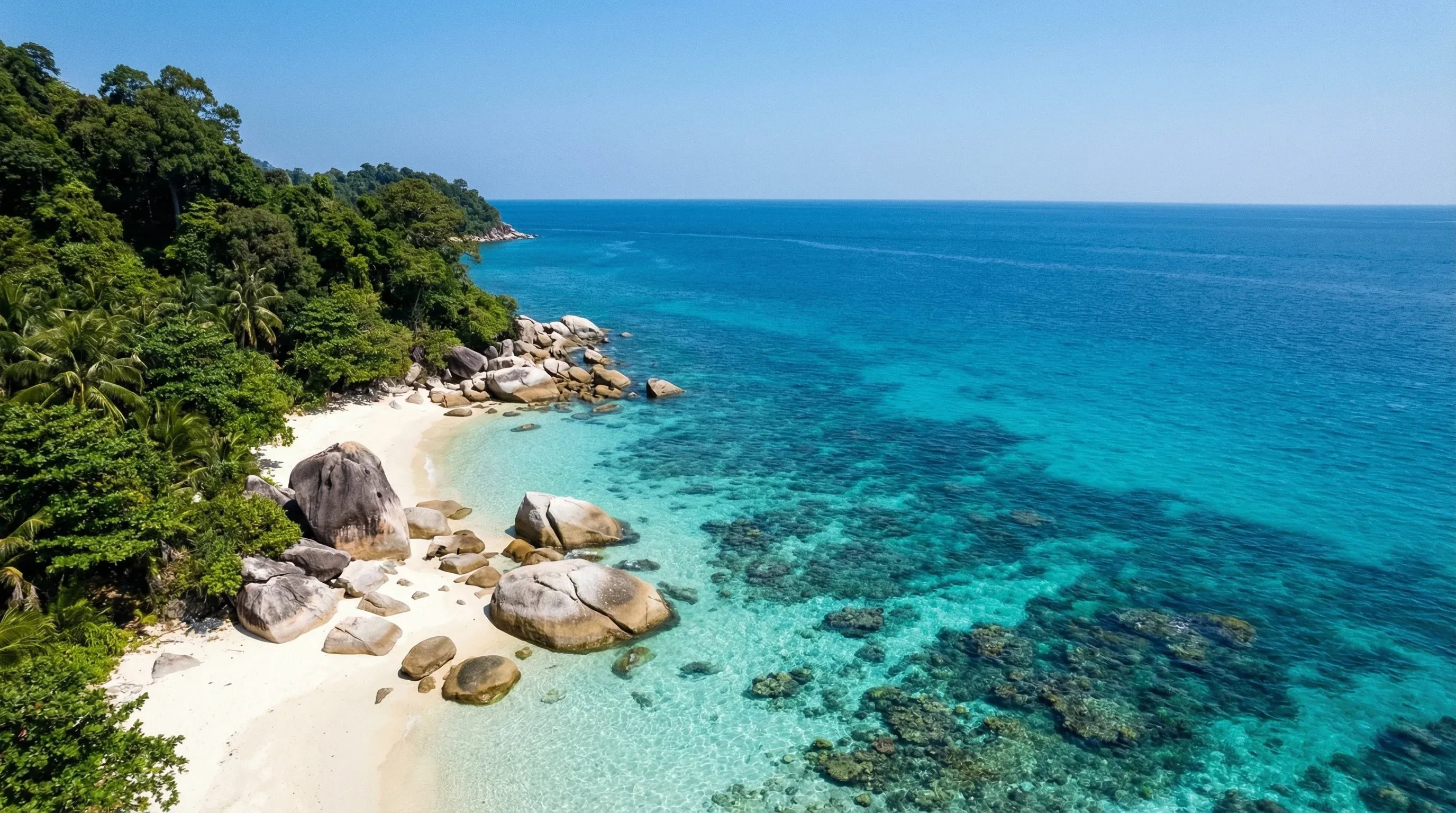

Perhentian & East Coast Islands
Crystal clear water, sea turtles, and barefoot island life 🐢🏝️
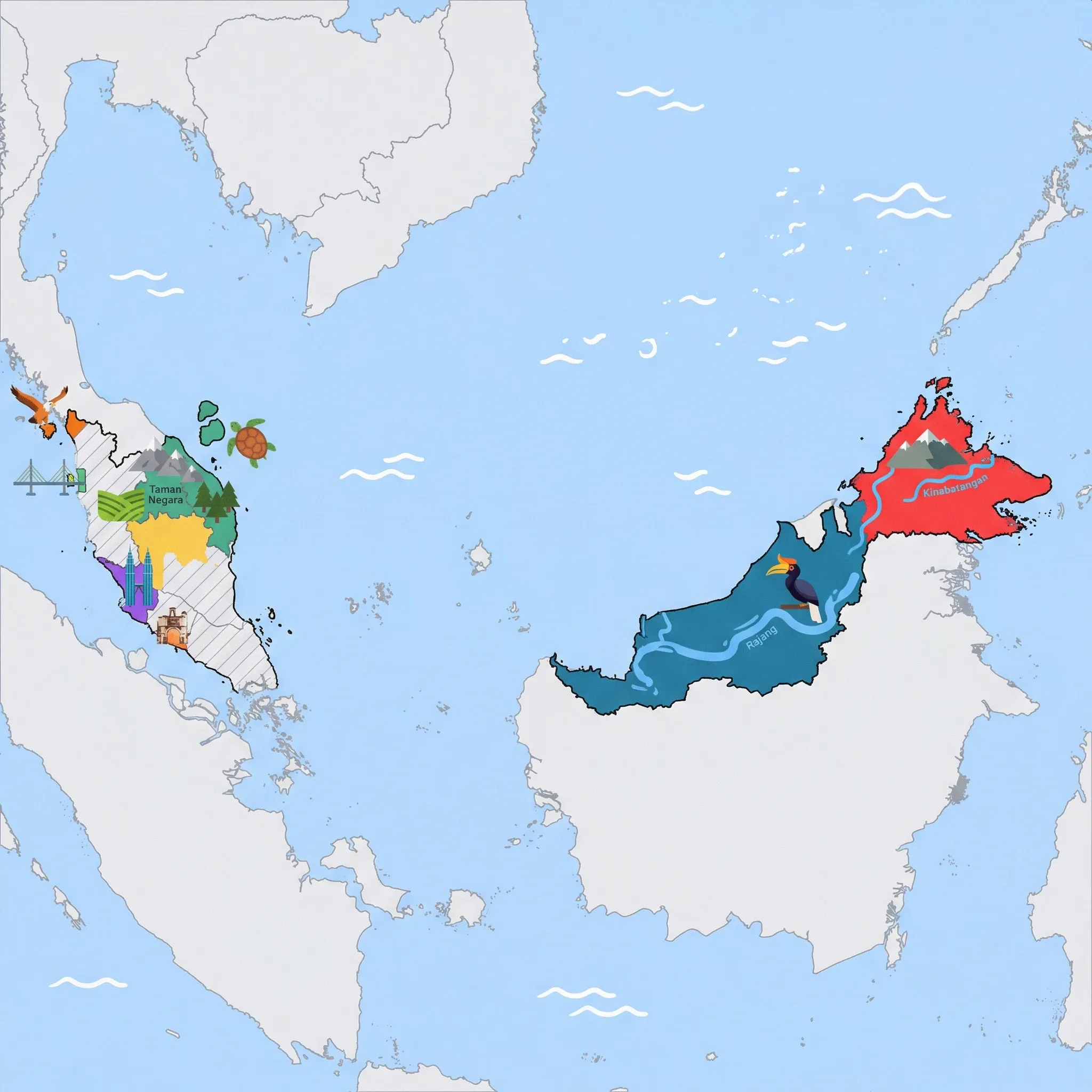
Click a region to explore
Overview
The East Coast islands (Perhentian, Redang, Kapas) are the definition of a tropical paradise. Unlike the developed west coast, these islands retain a rustic, laid-back charm. There are no roads or high-rise hotels on the Perhentian islands; transport is by water taxi and walking paths. For families, Perhentian Besar (Big Island) is the preferred choice, offering quieter chalets and calm waters compared to the backpacker-focused Perhentian Kecil (Small Island).
The main draw here is the underwater world. The water clarity is exceptional, and the marine life is abundant. Children can often spot clownfish (Nemo) and sea turtles just a few meters from the shore without needing a boat. It is a place to disconnect from screens—WiFi is often spotty—and reconnect with nature. Do note that these islands "close" during the monsoon season (roughly November to February) when seas are rough and transport stops.
Key Attractions
The primary attraction is the ocean itself. Turtle Point on Perhentian Besar is famous for the resident sea turtles that graze on the seagrass; they are accustomed to humans, allowing for magical swimming experiences. Shark Point offers the chance to see harmless blacktip reef sharks. For families who prefer dry land, the jungle trails connecting the beaches offer sightings of monitor lizards and dusky leaf monkeys.
Redang Island, nearby, offers a slightly more upscale experience with larger resorts and the Marine Park Centre, where fish swarm in the thousands to be fed. Kapas Island is a hidden gem further south, known for being extremely quiet and perfect for families with young toddlers who need calm, shallow waters.
Practical Advice
Important: The islands are effectively closed from November to February due to the monsoon. Best time to visit is March to October. Bring enough cash; ATMs are scarce or unreliable on the smaller islands.
Food & Drink
Typical meal times: Island time applies. Lunch 12:30 pm to 2:30 pm. BBQ dinners start at sunset (7:00 pm).
Typical meal costs: Slightly higher than the mainland due to transport costs. Basic fried rice MYR 15–20 (approx. $3–4 USD / €3–4 EUR). BBQ seafood dinner MYR 40–70 (approx. $9–15 USD / €8–14 EUR).
Dietary requirements: Halal is the standard. Western options (pizza, burgers) are common at resorts. Fresh fruit shakes are a staple.
Signature dishes:
- BBQ Seafood – The nightly ritual on the beach; fresh fish, squid, and prawns grilled over charcoal.
- Keropok Lekor – A chewy fish sausage snack from the Terengganu region, often sold at the jetty before you board the boat.
- Nasi Dagang – Rice steamed with coconut milk and fenugreek seeds, served with fish curry; a classic East Coast breakfast.
Why this score?
The adventure here is centered on the water, involving snorkeling, diving, and boat-only transportation between beaches. While the islands are relatively small and accessible, the lack of paved roads and the focus on marine exploration provide a moderate level of ruggedness.
Why this score?
Medical facilities on the islands are limited to small clinics for basic first aid. Serious conditions or diving-related emergencies require an expensive and time-consuming boat transfer to the mainland, followed by a drive to Kota Bharu or Kuala Terengganu.
Why this score?
These islands are highly popular with international backpackers and divers but remain a secondary destination due to their seasonal closure during the monsoon. They lack the mass-market volume and year-round accessibility of Langkawi or Penang.

Accommodation quality varies wildly. Basic chalets can be MYR 100 ($21 USD), while decent family resorts on Perhentian Besar or Redang cost MYR 350–600 (approx. $75–125 USD / €70–115 EUR) per night. Boat transfers add to the cost.

Getting Here & Around
Getting Here
- Boat – Speedboats depart from Kuala Besut Jetty (for Perhentian) or Merang Jetty (for Redang). The ride takes 30–45 minutes and can be bumpy.
- Airports – Fly into Kota Bharu (KBR) or Kuala Terengganu (TGG), then take a taxi (1 hour) to the respective jetty.
Getting Around
- Water Taxi – The main mode of transport. Small boats ferry you from beach to beach for a fixed fee (usually MYR 10–20 per person).
- Walking – Jungle paths connect different beaches, but can be steep and humid. Not suitable for strollers.
- Kayak – A fun way for families to explore nearby coves independently.
Nearby Airports (2 airports)
Sultan Ismail Petra
KBRKota Bharu
Sultan Mahmud
TGGKuala Terengganu
View full flight map for Malaysia →
Official Links

Packing List
Crucial for protecting the coral; regular sunscreen chemicals can bleach the reefs.
Dead coral on the beach and in the shallows can be sharp for little feet.
ATMs are non-existent or frequently broken on Perhentian and Kapas islands.
Everything gets wet on the speedboat transfer; protect your passports and phone.
Rental gear is often poor quality or too large for small children.
You will remove shoes constantly at temples, homes, and even some shops/hostels.
Essential for kids to prevent dengue; easier to apply than sticky sprays.
Many public toilets only provide a water hose; carry your own paper.
Protects electronics during sudden tropical downpours or island boat trips.
Useful for modesty at mosques and as a light cover-up against powerful A/C.

Activities & Best Times

Hiking, wildlife, outdoor exploration, ecotourism
Features authentic jungle-to-coast trekking and world-class marine park environments. Peak season offers stable conditions for wildlife spotting and safe navigation of trails like the Windmill Viewpoint.

Beach resorts, marine activities: diving, snorkelling, kite surfing, wind surfing, sailing
Exceptional marine biodiversity and shore-accessible reefs warrant 'very_good'. This is one of Southeast Asia's best diving/snorkeling destinations - better than 'good' but not 'excellent' (not Maldives/Caribbean standard).

Urban tourism, museums, historical sites, architecture
The historic Pulau Bidong refugee site provides a somber and authentic cultural experience unique to the region. Visitation is restricted to the calmer months when the islands are accessible to tourism.

Learning experiences, scientific sites, historical education
Active turtle conservation programs and marine research stations offer hands-on learning for families. These facilities align their public programs with the island's primary tourism window.

Sport tourism, fitness activities, active recreation
Strong focus on diving and trekking infrastructure within the marine parks. Activity is concentrated in the dry season when underwater visibility is at its peak and forest trails are dry.

Scenic drives, countryside tours, route-based travel
The Terengganu coastal road offers scenic vistas of the South China Sea and traditional villages. Heavy monsoon rainfall makes driving conditions hazardous and less scenic during the winter months.




Public Holidays & Calendar Next 12 months
Public holidays, festivals, cultural celebrations, and seasonal natural phenomena coming up in Perhentian & East Coast Islands over the next 12 months.
Loading holidays and events...

Travel Advisory
All major agencies maintain a baseline advisory level of 'Normal Precautions' for Malaysia as a whole. While the country is generally safe, all agencies highlight a specific and significant security risk (including kidnapping and terrorism) in the eastern coastal regions of Sabah, particularly on offshore islands.
Safety Topics
Traveller Advice (3 groups)

To respect local cultural and religious sensitivities, particularly in rural or conservative areas and at places of worship, it is recommended to dress modestly and behave discreetly.

Ensure you submit the mandatory Digital Arrival Card (MDAC) online before your trip. Use reputable ride-hailing services rather than hailing taxis on the street, especially at night.

Same-sex relationships are illegal under both federal and Sharia law, which can apply to tourists. Public displays of affection may lead to police intervention, fines, or imprisonment. Exercise extreme discretion.
Agency Summaries
Irish citizens can visit for up to 90 days without a visa. Visitors are encouraged to follow standard safety routines and ensure they have comprehensive travel insurance.
Travelers should follow standard safety procedures in most of the country. Increased vigilance is required in eastern Sabah due to the threat of kidnapping by criminal and extremist groups.
Malaysia is considered generally safe, though visitors are advised to maintain standard safety awareness. A higher degree of caution is recommended specifically for the eastern coastal regions of Sabah due to security threats.
The overall advice level is at its lowest, but travelers are warned about kidnapping risks in the coastal areas of eastern Sabah and advised to monitor local weather due to seasonal flooding.
General travel to Malaysia is safe, but the government advises against all but essential travel to the islands and dive sites off the coast of eastern Sabah. Petty crime and a general threat of terrorism exist.
The general security situation is stable. However, regional escalations exist for the islands and coastal areas of eastern Sabah, where the threat of kidnapping for ransom is significant.
Information is provided for general guidance only and does not constitute travel, safety, medical, or legal advice. Conditions may change. Users are responsible for independently verifying information before travel.