

⚠️ SAFETY WARNING: Due to political volatility, high rates of violent crime, and the presence of armed terrorist groups, government agencies (including CA, USA, UK, AU, IE, and NZ) advise travelers to avoid all travel to Mali. The security situation is unpredictable, with high risks of kidnapping and attacks, particularly in northern and central regions. Families are strongly urged to consult their own government's official travel advisory before considering a trip, as circumstances and risk assessments vary.
Mali is a country defined by the meeting of the Sahara Desert and the fertile Niger River basin. It is the cradle of powerful ancient empires and a repository of West African history that captivates the imagination of adults and children alike. The landscape ranges from the arid, golden sands of the north to the verdant river valleys of the south, where life revolves around the water. Culturally, Mali is a powerhouse, famous worldwide for its hauntingly beautiful music, intricate textiles, and the oral traditions of the griots (storytellers) who keep centuries of history alive.
For adventurous families, the theoretical appeal of Mali lies in its living history. This is a place where architecture is grown from the earth itself and where camels still carry salt slabs across the desert. The bustling markets of Bamako & South offer a sensory explosion of spices, fabrics, and crafts. However, the current security climate means that exploring these wonders requires extreme caution or deferral. The warmth of the Malian people-known for their hospitality, or diatiguiya-remains the country's greatest asset, even in difficult times.
Key Attractions
The crown jewel of Malian heritage is the Old Towns of Djenné. Here, families can witness the magnificent Great Mosque of Djenné, the largest mud-brick structure in the world. It looks like a giant sandcastle brought to life and is maintained by the entire community during an annual plastering festival. Further north lies the legendary city of Timbuktu, home to the Sankore Mosque and ancient libraries that once held the world's knowledge. While currently difficult to reach, its name alone evokes the magic of exploration.
In the center of the country, the Cliffs of Bandiagara in Dogon Country offer one of Africa's most spectacular landscapes. The Dogon people built their villages directly into the sheer cliff faces, creating a stunning visual of houses blending into the rock. Exploring these escarpments feels like stepping into a lost world. Down on the water, the Niger River serves as the country's highway. Watching the wooden pinnace boats glide along the river at sunset is a peaceful and iconic Malian experience.
Practical Advice
The best time to visit Mali is during the cooler dry season from November to January, when temperatures are manageable for children. The hot season (March to May) can be punishingly hot, often exceeding 40°C (104°F). Malaria is a serious risk throughout the country, so families must take prophylaxis and use mosquito nets. Cash is king in Mali; credit cards are rarely accepted outside unparalleled hotels in Bamako. French is the official language, so a phrasebook is essential for getting around.
Food & Drink
Typical meal times: Lunch is the main meal, typically eaten from 12:00 pm to 2:00 pm. Dinner is lighter and served later, usually from 7:00 pm to 9:00 pm.
Typical meal costs: Street food and simple local eateries cost around 500–2,000 XOF (approx. $0.80–3.30 USD / €0.75–3.00 EUR). A sit-down meal in a mid-range restaurant in Bamako runs 5,000–12,000 XOF (approx. $8–20 USD / €7.50–18 EUR).
Dietary requirements: Vegetarian options are generally available as many sauces are vegetable-based, but meat stock is often used. Vegan travelers should be specific about ingredients. Peanuts are ubiquitous, posing a high risk for allergy sufferers. Gluten-free travelers can rely on rice and millet dishes but should avoid bread.
Family-friendly dining: Malian dining is communal and welcoming to children. It is common to eat with clean right hands from a shared bowl, which kids often find fun. Restaurants in Bamako will have tables and chairs, but more traditional settings involve floor mats.
Signature dishes:
- Tigadèguèna – The national dish, a rich and hearty meat stew (usually lamb or chicken) cooked in a savory peanut butter sauce, served over rice.
- Capitaine à la Braise – Fresh Nile perch from the Niger River, grilled to perfection and often served with aloko (fried plantains) or salad.
- To – A stiff porridge made from millet or corn flour, the staple carb of the country, dipped into various okra or baobab leaf sauces.
- Fakoye – A dark, earthy sauce made from leaves found in the north, typically served with rice and mutton; a unique flavor from the Timbuktu & North region.
Safety
Mali is currently a high-risk destination. Kidnapping for ransom is a significant threat to Westerners, especially outside the capital. Terrorist groups operate across the northern and central regions, and their reach has occasionally extended to the south. Road travel outside Bamako is extremely dangerous due to checkpoints and landmines. If travel is absolutely necessary, families should hire professional security, avoid all road travel between cities (use flights), and stay strictly within secured zones in Bamako. Always register with your embassy upon arrival.

Local living costs are very low, but secure logistics for families increase the price significantly. A typical day for a family of four might cost 40,000–80,000 XOF (approx. $65–130 USD / €60–120 EUR) for basic accommodation and food, but secure Western-standard hotels and transport will push this much higher.
Age Suitability





Did you know? Mali welcomes approximately 168,000 international visitors per year. Most visitors come from Africa.
Explore Regions
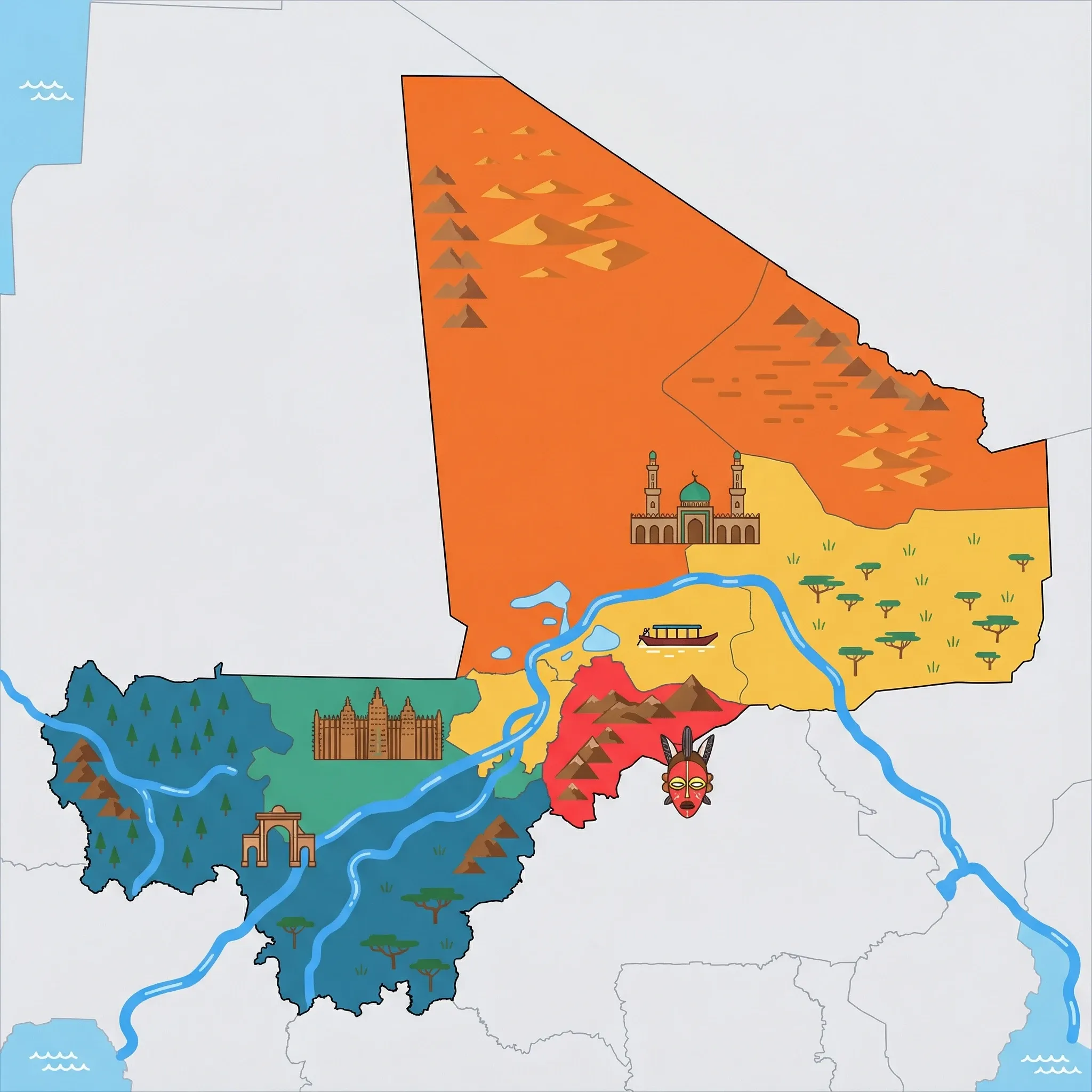
5 Regions
Bamako & South
The rhythmic heart of Mali where the Niger River flows 🥁🌊
Djenné
The city of mud and history rising from the delta 🕌🧱
Dogon Country
Where villages cling to cliffs and stars tell stories 🧗🏿♂️✨
Mopti & Niger Inland Delta
The bustling river crossroads of West Africa 🛶🦅
Timbuktu & North
The mysterious city of 333 saints at the desert's edge 🏜️📜
Click on a region marker to explore details. Use the dropdown to color regions by activity suitability.

Getting There & Around
Getting There
- By Air – Modibo Keïta International Airport (BKO) in Bamako is the main gateway. It is served by carriers including Air France, Turkish Airlines, and Royal Air Maroc.
- By Land – Borders with neighboring countries (Niger, Burkina Faso, Algeria) are porous and extremely dangerous. Overland entry is strongly discouraged by all major safety agencies.
- Entry Requirements – A visa is required for most travelers (including US, UK, and EU citizens) and must be obtained in advance. A Yellow Fever vaccination certificate is mandatory for entry. Check your government website for the latest visa requirements, or use the IATA Travel Centre entry-requirements checker.
Getting Around
- Domestic Flights – The only recommended way to travel between regions. Sky Mali operates flights from Bamako to key cities like Kayes, Gao, and Timbuktu, bypassing dangerous roads.
- Taxis – In Bamako, yellow taxis are plentiful. They are not metered, so you must negotiate the fare before getting in. Short hops cost 1,000–2,000 XOF ($1.65–3.30 USD / €1.50–3.00 EUR).
- Road Travel – ⚠️ WARNING: Inter-city road travel is currently highly dangerous due to banditry and militant activity. Checkpoints are common and the risk of ambush is real. Avoid driving outside the capital.

Packing List
Power outages are frequent in Bamako and almost guaranteed elsewhere; street lighting is minimal.
Credit cards are virtually useless outside top hotels; ATMs are unreliable. Euros exchange easily.
Tap water is unsafe. Bottled water is available but a backup purification method is essential for emergencies.
Physical proof of vaccination is strictly checked at the airport border control upon arrival.
Extreme heat and potential stomach bugs make dehydration a rapid risk for children.
Mali is conservatively Muslim; covering shoulders and knees is respectful and avoids unwanted attention.

Activities & Best Times

City & Cultural
ExcellentUrban tourism, museums, historical sites, architecture
A UNESCO World Heritage site of unparalleled cultural depth, featuring the living heritage, unique mud-brick architecture, and sacred sites of the Dogon people. The cooler dry season is the premier window for exploring these historic villages; the pre-monsoon heat (March-May) and mid-summer rains create challenging conditions for cultural tours.
Djenné is a UNESCO World Heritage site with the iconic Great Mosque - one of Africa's most significant cultural monuments. The current 'good' rating is too conservative given the international significance of the site.
Home to legendary UNESCO World Heritage sites like the Djinguereber Mosque, offering deep historical immersion into Saharan trade and Islamic scholarship. Tourism is concentrated in the cooler months; the intense heat from April to September makes urban exploration physically exhausting.

Adventure & Nature
Very GoodHiking, wildlife, outdoor exploration, ecotourism
The Bandiagara Escarpment provides a globally unique landscape for immersive trekking between remote cliffside villages and the Sénou Gondo plain. Peak months offer the most comfortable temperatures for physical exploration, while the extreme heat of the Sahelian spring and the peak monsoon rains in August degrade the experience.
Features unique West African landscapes including the Manding Mountains and the Niger River valley. Peak visitation occurs during the cooler dry season to allow for comfortable trekking and wildlife observation at the national zoo and parks.
Home to the UNESCO-listed Bandiagara Escarpment and the Inner Niger Delta, this region offers unparalleled trekking and birdwatching opportunities. Peak travel occurs during the cooler dry season (Nov-Feb), as extreme heat in spring and seasonal flooding from July to September restrict access.

Festivals & Seasonal
Very GoodEvents, celebrations, seasonal attractions
Festival au Désert is internationally renowned and attracts global audiences. This is one of Africa's most famous cultural festivals. The 'marginal' rating is severely undervalued for an event of this international significance.
Festival on the Niger is internationally recognized. While not as globally famous as Festival au Désert, it still attracts international visitors and deserves better than 'marginal'.
The annual Crépissage (plastering of the Great Mosque) is an internationally significant cultural event of immense authenticity. It typically occurs in April, which is otherwise a period of extreme heat, making the festival the primary but very specific motivator for visiting at this time.

Road Trips & Scenic
GoodScenic drives, countryside tours, route-based travel
Iconic routes like the Niger River Cultural Road offer sophisticated travelers authentic glimpses into rural Malian life. Peak months offer the best road conditions and visibility before the dust of the Harmattan or the heavy monsoon rains.
Routes between Mopti, Djenné, and the Dogon villages offer spectacular views of the Sahelian landscape and the unique architecture of the Inner Delta. Driving conditions are optimal during the dry season, whereas summer rains can make rural dirt tracks difficult or impassable.
The Route des Dogons and escarpment drives offer dramatic vistas, though limited infrastructure makes this more of a transit experience than a world-class touring route. Travel is best in the dry season to avoid impassable unpaved roads during the heavy rains of July and August.

Sports & Active
GoodSport tourism, fitness activities, active recreation
Recognized for established long-distance trekking routes that navigate the challenging vertical terrain of the Bandiagara cliffs. These routes are only viable during the cooler winter months; the extreme heat of the spring and the slippery conditions of the rainy season make strenuous activity unsuitable.
The Manding Mountains provide distinctive trekking and cycling trails for active families. Extreme heat in the spring and heavy rains in the summer create significant barriers to physical activity during the off-season.
Theme Park & Entertainment
MarginalAmusement parks, family entertainment venues

Public Holidays & Calendar Next 12 months
Public holidays, festivals, cultural celebrations, and seasonal natural phenomena coming up in Mali over the next 12 months.
Loading holidays and events...

Climate & Weather
Bamako & South
Show Details
| Month | Temp °C | Rain | Humidity |
|---|
Djenné
Show Details
| Month | Temp °C | Rain | Humidity |
|---|
Dogon Country
Show Details
| Month | Temp °C | Rain | Humidity |
|---|
Mopti & Niger Inland Delta
Show Details
| Month | Temp °C | Rain | Humidity |
|---|
Timbuktu & North
Show Details
| Month | Temp °C | Rain | Humidity |
|---|

Travel Advisory
All major international travel agencies maintain their highest risk rating for Mali, advising against all travel due to extreme security threats including terrorism, kidnapping, and civil instability.
Safety Topics
Traveller Advice (2 groups)

Anyone currently in the country should leave immediately via commercial air travel while it remains available. If you must stay, maintain a personal emergency plan and consider hiring professional security services.

Aid workers face a critical risk of kidnapping for ransom by extremist groups. Operations outside of Bamako are extremely dangerous and lack government protection or support.
Agency Summaries
U.S. authorities recommend against any travel due to extreme levels of violent crime, terrorism, and kidnapping. While embassy operations have been normalized, government personnel are strictly limited to the capital, and help outside Bamako is unavailable.
The Irish Department of Foreign Affairs strongly advises against all travel. With no local embassy presence, the ability to provide emergency consular assistance is severely limited, and citizens are urged to leave via commercial air routes.
Australia urges citizens to avoid Mali entirely. There is a very high danger of terrorist activity and kidnapping throughout the country. Australians already present should consider departing while commercial flights are still operational.
The Canadian government warns against all travel to Mali because of persistent threats from terrorist organizations, high kidnapping risks, and widespread banditry. Recent fuel shortages have further complicated domestic transportation and essential services.
New Zealand classifies Mali as a no-travel zone due to extreme insecurity, violent banditry, and the threat of terrorism. The withdrawal of international peacekeeping forces has increased regional instability and risks for foreigners.
The FCDO advises against all travel to Mali citing highly unpredictable security and a significant threat of kidnapping. Militant blockades on major roads and fuel supply routes have increased risks for those attempting to travel by land.
Information is provided for general guidance only and does not constitute travel, safety, medical, or legal advice. Conditions may change. Users are responsible for independently verifying information before travel.