

Overview
Situated in the heart of the Mediterranean Sea, Malta is a tiny but mighty destination packed with 7,000 years of history and endless seaside fun. The archipelago consists of three main inhabited islands: the bustling main island of Malta, the greener and quieter Gozo & Comino. For families, this is an incredibly easy destination to navigate; the islands are small enough that you are never far from the sea, and the legacy of 150 years of British rule means English is an official language and driving is on the left.
Culturally, Malta is a fascinating open-air museum where children can walk the same ramparts as the Knights of St. John and explore World War II shelters. Beyond the history, the vibe is distinctly relaxed and family-oriented. The summers are long and hot, perfect for boat trips and beach days, while the mild winters are ideal for hiking and exploring ancient temples without the crowds. Whether you are wandering the honey-coloured streets of a medieval citadel or snorkelling in turquoise bays, Malta offers a safe and welcoming environment for travellers of all ages.
Key Attractions
No family trip is complete without visiting Popeye Village in Anchor Bay. Originally built as the film set for the 1980 musical, it has been preserved as a fun park with boat rides, water trampolines, and animation shows that delight younger children. For a dive into history, head to the capital, Valletta City Center. Kids will love the daily cannon firing at noon from the Upper Barrakka Gardens, which offers panoramic views over the Grand Harbour, and the interactive exhibits at Fort St. Elmo - National War Museum.
In the centre of the island lies Mdina (The Silent City), a fortified medieval town where cars are largely banned. Families can explore its narrow, winding streets by horse-drawn carriage or visit the National Museum of Natural History located just inside the Mdina Main Gate. For beach lovers, Mellieħa Bay and Golden Bay offer wide stretches of soft sand and shallow waters safe for toddlers. If you are adventurous, take a boat trip to the Blue Lagoon on Comino, famous for its intense turquoise water, though it is best visited early to avoid crowds.
On the island of Gozo, history gets even older at the Ġgantija Archaeological Park, a UNESCO World Heritage site with temples older than the Pyramids of Egypt. Afterwards, relax at the unique red sands of Ramla Bay or explore the fortified The Citadel (Cittadella) in Victoria, which offers 360-degree views of the island's countryside.
Practical Advice
Best time to visit: The shoulder seasons (April–June and September–October) offer the best balance of warm weather and fewer crowds. July and August can be intensely hot (often 35°C+) and busy. Winter is mild but can be windy and wet.
Logistics: Malta is part of the Schengen Zone and uses the Euro. Public transport is affordable and extensive, but buses can be crowded in summer. Renting a car gives you more freedom but remember to drive on the left. Tap water is safe to drink but is desalinated and has a distinct brackish taste, so most locals and tourists opt for bottled water.
Food & Drink
Typical meal times: Lunch is typically served from 12:30 pm to 2:30 pm, and dinner from 7:00 pm to 9:30 pm, though many tourist areas serve food all day.
Typical meal costs: Mains in casual restaurants range from €12–25 (approx. $13–27 USD / £10–21 GBP). A quick snack like pastizzi costs less than €1 (approx. $1.10 USD / £0.85 GBP).
Dietary requirements: Vegetarian and gluten-free options are widely available, thanks to the strong Italian culinary influence. Vegan options are becoming common in major towns like Sliema and Valletta.
Family-friendly dining: Maltese culture loves children, and kids are welcome almost everywhere. Most restaurants offer high chairs and children’s menus (usually pasta, pizza, or nuggets).
Signature dishes:
- Pastizzi – Flaky phyllo pastry parcels filled with ricotta cheese or mushy peas. The ultimate cheap, savoury snack found in every village.
- Fenek (Rabbit Stew) – The national dish, slow-cooked in wine, garlic, and tomato sauce. It is tender and mild, often served with fries or roast potatoes.
- Ftira – A ring-shaped, crusty Maltese bread, often served as a sandwich filled with tuna, capers, olives, and tomato paste.
- Aljotta – A hearty fish soup rich in garlic and herbs, often containing rice, making it a filling lunch for seafood lovers.
- Imqaret – Deep-fried diamond-shaped pastries filled with date paste and spices, usually served warm with ice cream.

A family of four can expect to spend around €180–250 (approx. $195–270 USD / £150–210 GBP) per day including mid-range accommodation, meals, and activities. Public transport is very cheap with a family card, but renting a car adds to the cost. Dining ranges from budget street snacks to expensive seafood restaurants.
Age Suitability





Did you know? Malta welcomes approximately 3.6 million international visitors per year. Most visitors come from Europe.

Explore Regions
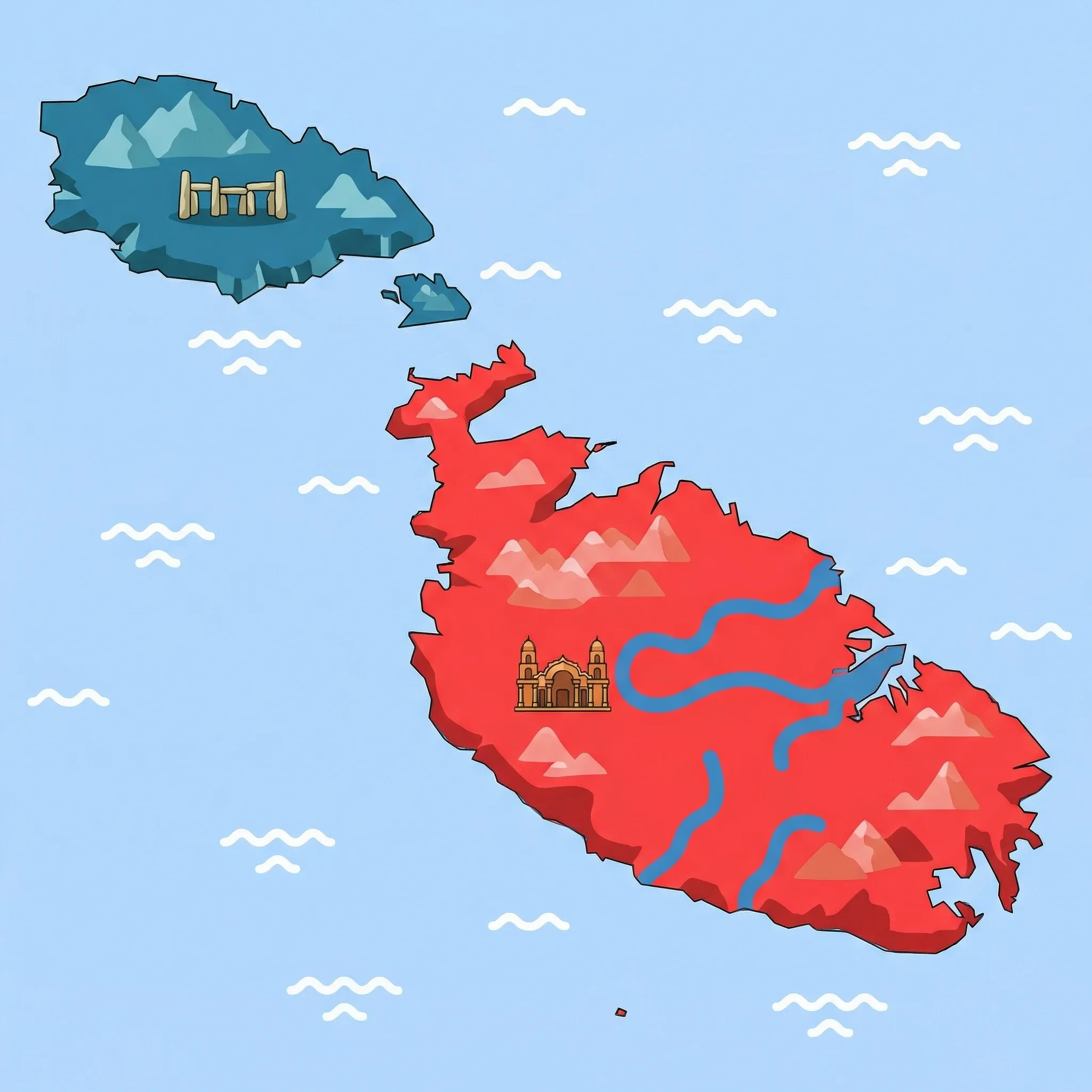
Click on a region marker to explore details. Use the dropdown to color regions by activity suitability.

Getting There & Around
Getting There
- By Air – Malta International Airport (MLA) is the only airport, located in Luqa. It is well-connected to major European cities by both legacy and low-cost carriers.
- By Sea – A high-speed catamaran service runs between Valletta and Pozzallo (Sicily), taking about 90 minutes. This is a popular option for families combining Italy and Malta.
- Entry Requirements – Malta is a Schengen Area member. EU citizens can enter with a valid ID card. US, UK, Canadian, and Australian citizens do not need a visa for stays up to 90 days. Check your government website for the latest visa requirements, or use the IATA Travel Centre entry-requirements checker.
Getting Around
- Buses – The Tallinja bus network covers both Malta and Gozo & Comino extensively. A 7-Day Explore Card offers unlimited travel for adults (€25) and children (€7), making it excellent value.
- Car Hire – Renting a car allows you to reach secluded beaches and remote sites like Dingli Cliffs easily. Driving is on the left-hand side, similar to the UK.
- Ferries – Regular ferries connect Valletta City Center to Sliema and the Three Cities. The Gozo Channel Ferry runs 24/7 between Cirkewwa (Malta) and Mgarr (Gozo), while smaller boats run trips to the Blue Lagoon.

Packing List
Many of the best swimming spots, including the Blue Lagoon, have rocky entries and sea urchins.
Churches like St. John's Co-Cathedral strictly enforce dress codes; shoulders and knees must be covered.
Malta uses the British 3-pin rectangular plug system, which surprises many European travellers.
Valletta and Mdina have many steep steps and cobblestones where pushchairs struggle.
Sandflies and mosquitoes can be active on summer evenings, especially near the coast.

Activities & Best Times

City & Cultural
ExcellentUrban tourism, museums, historical sites, architecture
Home to the UNESCO-listed Valletta and the 'Silent City' of Mdina, the island offers dense, world-class Baroque architecture and authentic Mediterranean heritage. Spring and autumn provide the best climate for urban exploration; summer heat can be intense for walking tours.
Home to the world-class Cittadella and Ggantija Temples, offering an authentic, slow-paced Mediterranean heritage experience. Peak visits occur during the temperate spring and autumn, while mid-summer heat can make urban exploration uncomfortable.

Adventure & Nature
Very GoodHiking, wildlife, outdoor exploration, ecotourism
The island features dramatic limestone cliffs and coastal trails like the Dingli Cliffs, alongside several wildlife and activity centers suitable for families. Optimal for trekking and nature exploration during the blooming spring or mild autumn, avoiding the arid summer heat.
Features dramatic limestone geology like Dwejra Bay and the crystal-clear waters of the Blue Lagoon. Best explored via coastal walks in spring when the islands are lush and green; July and August are often too hot for active nature exploration.

Sports & Active
Very GoodSport tourism, fitness activities, active recreation
Features internationally recognized infrastructure for sailing and well-established hiking routes like the Victoria Lines. Activity is best in transitional seasons when the weather supports strenuous land sports; mid-summer is too hot for most activities outside of water sports.
Gozo is a premier destination for diving, featuring the Blue Hole and inland sea tunnel, alongside established cycling routes. Optimal conditions for both land and sea sports occur in the transitional seasons to avoid the peak summer heat and winter storms.

Beach & Sea
GoodBeach resorts, marine activities: diving, snorkelling, kite surfing, wind surfing, sailing
Offers high-quality sandy beaches at Mellieħa and unique geological swimming spots like the Blue Grotto with excellent water clarity. Peak visitation aligns with the hottest months for swimming and boat excursions, while winter sea conditions are unsuitable for beach activities.
Renowned for the Blue Lagoon's exceptional sea visibility and the unique red sands of Ramla Bay. High summer is peak for swimming and boat excursions, though sea temperatures remain acceptable for hardy travelers in late spring and early autumn.

Educational & Exploratory
GoodLearning experiences, scientific sites, historical education
Features significant purpose-built facilities like Esplora Interactive Science Centre and the National Aquarium that provide world-class family learning experiences. Most facilities are indoor, but peak periods align with the general tourist season for integrated family travel.
Small-scale but authentic scientific engagement is available at the Gozo Nature Museum within the historic Citadel. While not a primary travel motivator, it serves as an excellent educational supplement for families visiting the islands' natural sites during the main tourism season.

Road Trips & Scenic
GoodScenic drives, countryside tours, route-based travel
The island hosts several designated scenic routes, including the South Coast and Victoria Lines drives, offering dramatic Mediterranean vistas. Best experienced when visibility is high and daylight is long; winter months can be prone to heavy rainfall that obscures views.
The North Coast Salt Pan drive and Dwejra loop offer incredibly scenic, compact driving experiences through rural landscapes. While the island is small, the high density of viewpoints and coastal vistas provides a high-quality touring environment during clear-sky months.

Festivals & Seasonal
MarginalEvents, celebrations, seasonal attractions
Theme Park & Entertainment
MarginalAmusement parks, family entertainment venues

Public Holidays & Calendar Next 12 months
Public holidays, festivals, cultural celebrations, and seasonal natural phenomena coming up in Malta over the next 12 months.
Loading holidays and events...
Climate & Weather
Gozo & Comino
Show Details
| Month | Temp °C | Rain | Humidity |
|---|
Malta (main island - Valletta, Mdina)
Show Details
| Month | Temp °C | Rain | Humidity |
|---|

Travel Advisory
Malta is assessed as a low-risk destination by all major international agencies. Standard personal safety awareness and common sense are sufficient for most travellers. No major security or safety threats are present beyond typical urban petty crime.
Safety Topics
Traveller Advice (3 groups)

Malta is highly progressive and consistently ranks as one of the most LGBT-friendly countries in the world. Legal protections are strong and social acceptance is very high across the islands.

While the country is generally safe, physical and sexual assaults have been reported in nightlife districts like Paceville. Travellers should remain vigilant in these areas, especially where alcohol consumption is high, and never leave drinks unattended.

Dual nationals are recognized by the Maltese government; however, unlike some countries, dual citizens are not subject to mandatory military service requirements.
Agency Summaries
The U.S. Department of State classifies Malta as a Level 1 destination, indicating a low risk to safety and security. Travellers should follow standard safety protocols and remain aware of their surroundings. Passport validity should be checked to ensure compliance with Schengen Area requirements.
Malta is a safe destination for British nationals with no specific travel restrictions in place. Travellers should stay informed about the global risk of terrorism and ensure their travel documents meet Schengen requirements, including passport issue dates and validity periods.
The Irish government advises normal safety measures for visitors to Malta. Irish citizens do not require a visa for entry but are encouraged to register with authorities if staying for more than 90 days. Standard vigilance regarding personal belongings is recommended.
There is currently no specific travel advisory for Malta, meaning New Zealanders should follow baseline safety protocols. Comprehensive travel insurance is highly recommended, especially to cover potential medical evacuations given the island's geography.
Australia advises travellers to use common sense and maintain standard precautions. While generally safe, petty crime and nightlife-related rowdiness are present in tourist hubs. Australia maintains a reciprocal healthcare agreement with Malta providing access to public medical facilities for short stays.
Malta is considered a low-risk destination where travellers should maintain standard safety awareness. Petty crimes such as pickpocketing and bag snatching occur in crowded areas and nightlife districts. Travellers are advised to be cautious in the Paceville area where large crowds and alcohol consumption can lead to incidents.
Information is provided for general guidance only and does not constitute travel, safety, medical, or legal advice. Conditions may change. Users are responsible for independently verifying information before travel.