

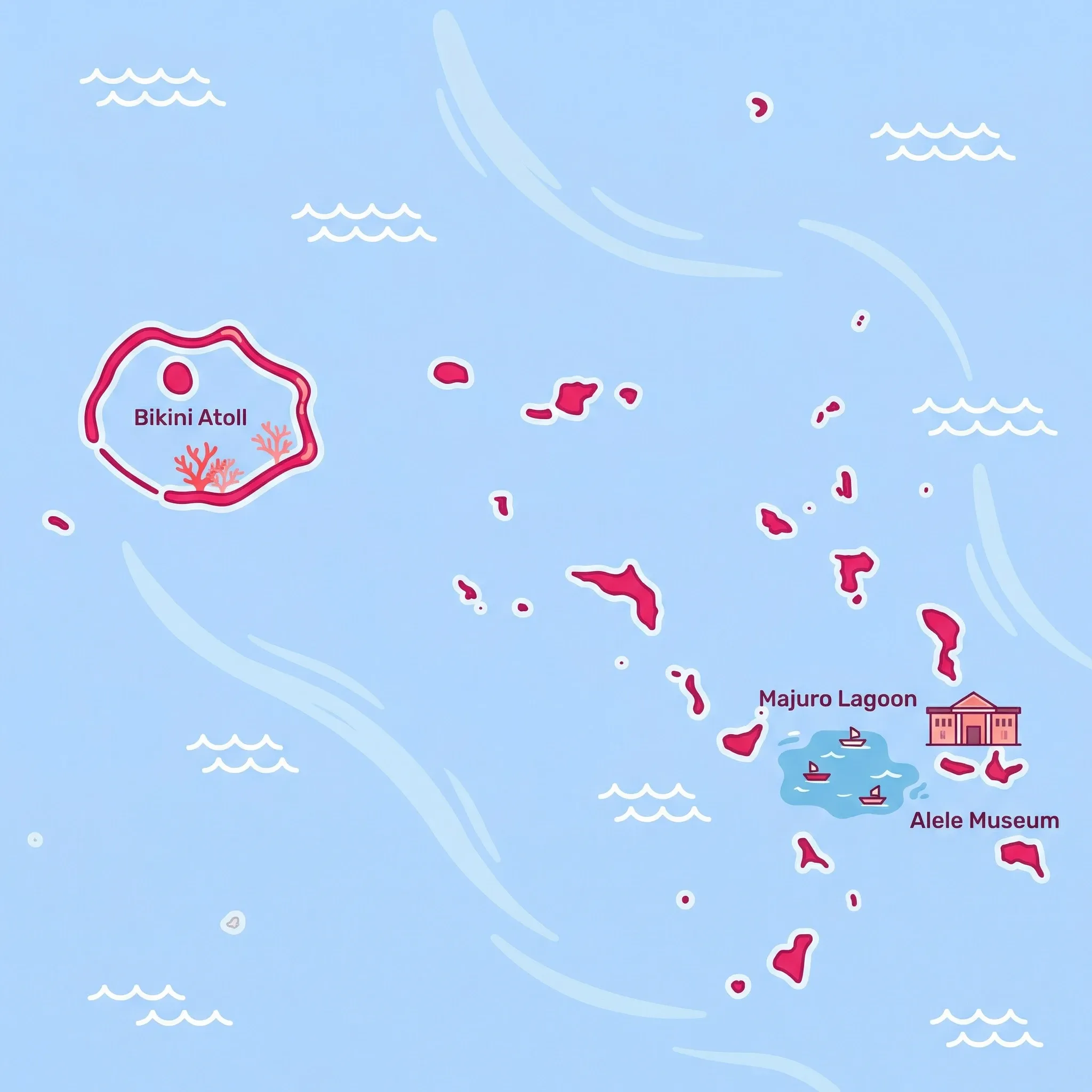
Traveling to the Marshall Islands feels like stepping off the map into a world where the ocean is everything. This remote nation consists of 29 coral atolls and five single islands spread across a vast expanse of the central Pacific. For families, it is a destination defined by its stunning natural simplicity-ribbons of white sand separating the deep blue ocean from calm, turquoise lagoons. The atmosphere is incredibly laid-back, safe, and welcoming, with a culture that cherishes children and community. While it lacks the polished resorts of Fiji or Hawaii, it offers an authentic island experience where "rush hour" usually means a few crabs crossing the road.
The climate is tropical and humid year-round, with the water always warm enough for swimming. Families will find themselves embracing a slower pace of life, spending days snorkelling in pristine reefs, picnicking on uninhabited islets, or exploring the unique geography of atoll living. The Marshallese concept of Yokwe-which means hello, goodbye, and love-permeates every interaction, making families feel instantly at home despite the remoteness. It is a place to unplug, reconnect with nature, and show children a way of life completely dictated by the tides and the trade winds.
Key Attractions
The cultural heart of the nation is the Alele Museum, Library and National Archives in the capital, Majuro. It is an essential stop for families to understand the deep seafaring history of the Marshallese people. Here, children can see traditional stick charts-ingenious navigation tools made of wood and shells that allowed ancestors to read ocean swells-as well as historic photos and woven handicrafts. It provides crucial context for the unique environment you are visiting.
Beyond the museum, the primary allure lies in the natural splendour of the Marshall Islands themselves. The Majuro Atoll, where most visitors arrive, offers easy access to the "bridge to nowhere" and the tranquil Laura Beach at the far end of the island, a popular spot for family picnics and swimming. For a true castaway experience, families often take short boat trips to nearby islets (motus) like Eneko, where the lagoons are shallow, safe, and teeming with marine life, perfect for young snorkellers.
For adventurous families with older children, the outer atolls such as Arno offer a glimpse into traditional village life that has changed little over decades. The underwater landscape here is world-class, with coral gardens visible right from the surface. While the famous Bikini Atoll is largely restricted to specialist divers due to its nuclear testing history, the accessible atolls provide ample history from World War II, with relics often visible in the jungle or shallow water, sparking fascination in young historians.
Practical Advice
The best time to visit is during the dry season from December to April, although tropical showers can occur anytime. The US Dollar is the official currency, which simplifies travel for American families. English is widely spoken, especially on Majuro and Kwajalein. Medical facilities are limited, so comprehensive travel insurance that covers medical evacuation is absolutely essential. Be aware that resources like fresh water and electricity can be precious; teaching children to conserve them is a valuable lesson during your stay.
Food & Drink
Typical meal times: Breakfast is typically 7:00 am to 9:00 am, lunch from 12:00 pm to 1:30 pm, and dinner from 6:30 pm to 8:00 pm. Restaurants may close early, so plan evening meals accordingly.
Typical meal costs: $15–25 USD (approx. €14–23 EUR / £12–20 GBP) for a main dish in a restaurant. Imported groceries can be expensive due to shipping costs.
Dietary requirements: Fresh vegetables can be scarce and expensive as most produce is imported. Vegetarians may find options limited to sides of rice, breadfruit, and coleslaw. Gluten-free travelers should bring their own snacks, as soy sauce and wheat products are common.
Family-friendly dining: Marshallese culture loves children, and they are welcome everywhere. Highchairs are rare outside major hotels. Fish and rice are safe staples for picky eaters, and Western favourites like burgers and pizza are widely available in Majuro.
Signature dishes:
- Barramundi Cod – A popular local fish, often steam-baked in banana leaves or grilled fresh from the lagoon.
- Bwiro – Fermented breadfruit paste, a traditional staple that is sweet, tart, and often served as a dense, energy-rich snack or side.
- Chukuchuk – Simple rice balls rolled in shredded coconut, a perfect finger food for children.
- Coconut Crab – A rich local delicacy; these massive land crabs have sweet meat, though they are seasonal and increasingly protected.
- Macadamia Nut Pie – A sweet dessert reflecting the American influence, often found in local bakeries.
Safety
The Marshall Islands are generally very safe with a low crime rate. The biggest risks are environmental. Strong currents can occur in lagoon passes, so always ask locals before swimming in new spots. Coral cuts can easily become infected in the tropical heat; treat any scratch immediately. Stray dogs are common in Majuro and can be aggressive, so advise children not to pet animals on the street. Drink bottled or boiled water only.

While local life is simple, travel costs are mid-to-high due to the remote location. Most food and goods are imported, pushing prices up. A family can expect to spend $250–400 USD (approx. €230–370 EUR / £195–310 GBP) per day for mid-range hotel accommodation, meals, and car hire. Inter-island flights or boat charters will significantly increase the budget.
Age Suitability





Why this score?
The adventure level stems from the extreme isolation and the logistics of navigating remote coral atolls rather than physical terrain, as the islands are entirely flat. While the lagoons offer world-class diving and a sense of 'off-the-grid' discovery, the lack of developed trails or rugged mountains keeps the physical challenge lower than continental wilderness regions.
Why this score?
Medical services are very limited, with the main hospitals in Majuro and Ebeye providing only basic care and frequently experiencing shortages of specialized equipment and medicine. For any serious health issues or complex emergencies, expensive medical evacuation to Hawaii or Guam is typically required, as local facilities are not equipped for advanced procedures.
Why this score?
With approximately 6,000 annual arrivals and fewer than 400 hotel beds across the entire country, the Marshall Islands is one of the world's least visited nations. Tourism infrastructure is extremely limited and primarily localized in Majuro, catering mostly to business travelers or niche divers rather than a general international audience.
While not a luxury destination, costs in the Marshall Islands are higher than in Southeast Asia due to its remote location and reliance on imported goods. A mid-range hotel room typically costs $120–175 (approx. €110–160 EUR / £95–140 GBP) per night. Taxis are very cheap, but grocery items (milk, cereal) can be double US prices. Eating local fish is the most economical way to dine.

Getting There & Around
Getting There
- By Air – The "Island Hopper" service by United Airlines is the lifeline of the Marshall Islands, connecting Honolulu and Guam to Majuro (MAJ) and Kwajalein (KWA). It is a unique experience, stopping at multiple atolls en route.
- Entry Requirements – US citizens, as well as citizens of the EU, UK, and several Pacific nations, typically receive a visa waiver or visa-on-arrival. A departure tax of $20 USD is often payable in cash. Check your government website for the latest visa requirements, or use the IATA Travel Centre entry-requirements checker.
Getting Around
- Taxis – The most common transport in Majuro. They operate as a shared service; you simply flag one down and pay a flat rate of around $1–2 USD (approx. €0.90–1.85 EUR / £0.80–1.55 GBP) to go anywhere in the town centre.
- Car Hire – Available in Majuro and useful for driving to Laura Beach at the atoll's end. Driving is on the right.
- Boats – Essential for visiting the beautiful small islets around the Marshall Islands lagoons. Hotels can arrange day transfers to places like Eneko Island.

Packing List
Essential for protecting feet from sharp coral and stonefish when wading in lagoons.
Locals dress conservatively; women should cover thighs and shoulders when not at a resort beach.
Crucial for keeping electronics and clothes dry during frequent small boat transfers between islets.
Vital to protect the delicate coral ecosystems while shielding your family from the intense equatorial sun.
Imported snacks are expensive and selection is limited; bring kids' favourites from home.

Activities & Best Times

Adventure & Nature
Very GoodHiking, wildlife, outdoor exploration, ecotourism
The unique coral atoll ecosystems, world-class wreck diving, and remote lagoon exploration represent internationally significant nature-based adventure opportunities. While infrastructure is limited, the natural experiences available are exceptional.

Beach & Sea
Very GoodBeach resorts, marine activities: diving, snorkelling, kite surfing, wind surfing, sailing
Marshall Islands offers world-class diving at Bikini Atoll (UNESCO World Heritage wreck diving site), pristine coral reefs, and exceptional lagoon environments. This is internationally significant for marine tourism. The 'marginal' rating severely underrates the destination's primary strength.

Educational & Exploratory
GoodLearning experiences, scientific sites, historical education
The WWII history (Bikini Atoll nuclear testing site), traditional canoe-building programs, and Micronesian cultural preservation efforts offer significant educational value that justifies upgrading from marginal to good.

City & Cultural
MarginalUrban tourism, museums, historical sites, architecture
Majuro is a small atoll capital with minimal urban cultural infrastructure. While WWII history and Micronesian culture are present, this is not a 'city' destination. The 'good' rating misrepresents the destination type. Cultural experiences exist but are not urban/city-based.

Road Trips & Scenic
MarginalScenic drives, countryside tours, route-based travel
The drive from Majuro to Laura Village provides a striking perspective on atoll geography, with the road squeezed between the lagoon and the open ocean. Clearer skies and drier roads from December to March offer the best conditions for this scenic drive.



Public Holidays & Calendar Next 12 months
Public holidays, festivals, cultural celebrations, and seasonal natural phenomena coming up in Marshall Islands over the next 12 months.
Loading holidays and events...

Travel Advisory
The Marshall Islands are considered stable with no significant safety or security warnings. Standard travel safety awareness is sufficient for visitors.
Safety Topics
Traveller Advice (4 groups)

When exploring outer islands or diving, remain cautious of unexploded ordnance from World War II and observe all restrictions regarding historical nuclear test sites.

Be mindful of local cultural sensitivities regarding public displays of affection, although no specific major legal threats were identified for private conduct.

Ensure you have comprehensive travel insurance that covers emergency medical evacuation by air, as local medical facilities are limited. Carry sufficient cash in US dollars, as ATMs are not available at the airport and some services do not accept cards.

Exercise standard vigilance, particularly when walking alone at night or in isolated areas.
Agency Summaries
Irish visitors are advised to follow standard safety measures. Resort areas are generally secure, and visa-free entry is available for stays up to 90 days.
The security environment is stable, though hazards exist regarding inter-island boat travel and seasonal typhoons. Visitors must have physical proof of return travel to avoid fines.
No specific warning is issued. Travellers are encouraged to secure medical insurance that includes air evacuation and to stay current on routine vaccinations.
No major travel restrictions are in place. UK citizens can enter for up to 90 days without a visa but must ensure their passport is valid for six months beyond arrival.
Travellers should maintain standard safety awareness. Entry requires proof of measles vaccination for most visitors, and tourist infrastructure remains limited outside of major hubs.
Standard precautions are advised. Visitors should be aware of historical unexploded ordnance and exercise caution when using local maritime transportation between atolls.
Information is provided for general guidance only and does not constitute travel, safety, medical, or legal advice. Conditions may change. Users are responsible for independently verifying information before travel.