

Overview
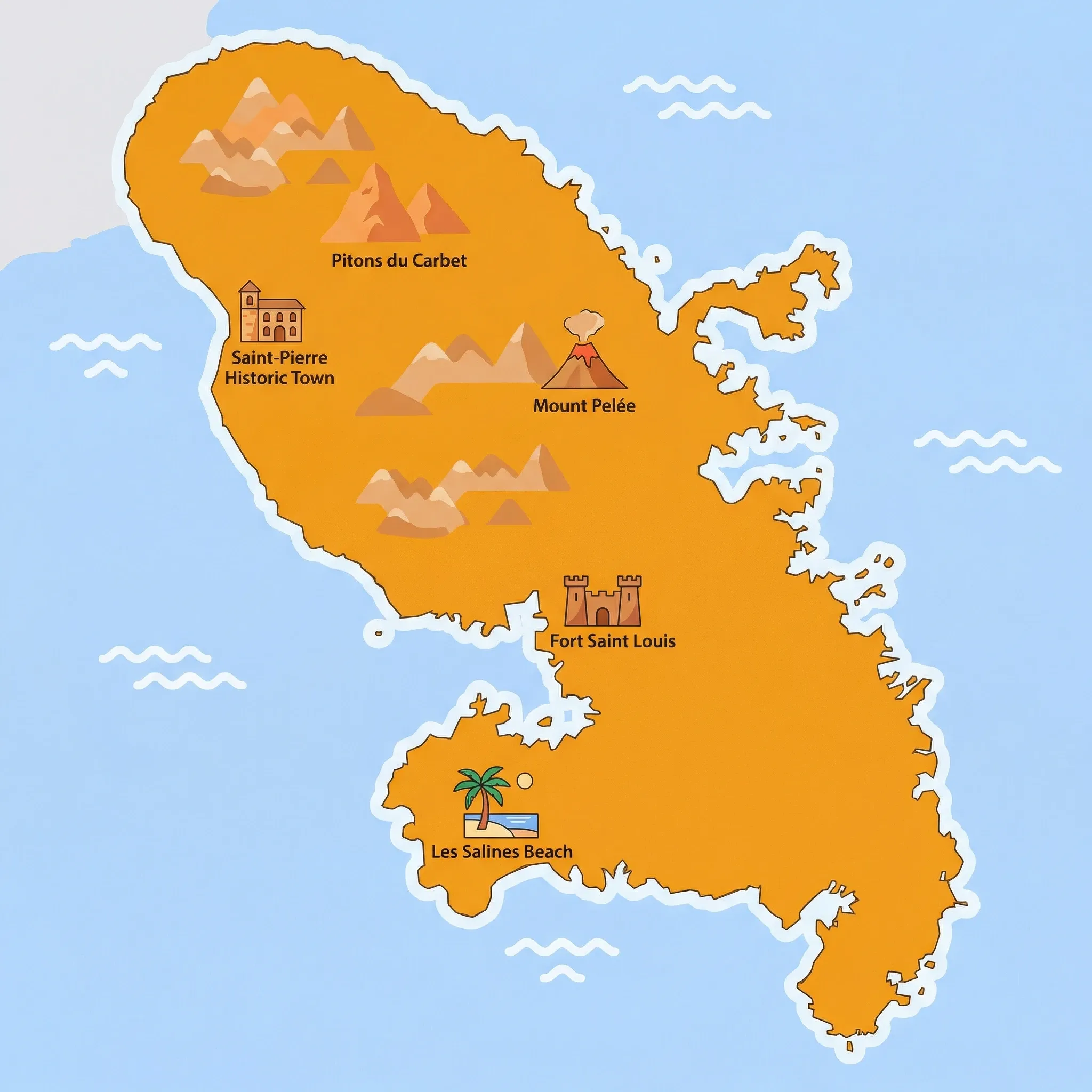
Martinique is a vibrant slice of France in the Caribbean, offering families the perfect mix of tropical adventure and European comfort. The island is defined by its dramatic geography: the towering Martinique volcano, Mount Pelée, dominates the lush, rainforest-covered north, while the south boasts rolling hills and calm, white-sand beaches. For families, this contrast means you can spend the morning hiking through giant ferns and the afternoon building sandcastles by the turquoise sea. As an overseas region of France, the island has excellent roads, modern healthcare, and high safety standards, making it an ideal introduction to the Caribbean for parents travelling with young children.
Culturally, the island is a fascinating fusion. You will find bakeries selling fresh croissants next to market stalls piled high with exotic fruits and spices. The "Isle of Flowers" lives up to its name with botanical richness that captivates children, from hummingbirds darting through gardens to wild iguanas roaming historic ruins. The atmosphere is laid-back but orderly, allowing families to explore at their own pace. whether you are navigating the colorful streets of Fort-de-France or swimming in the shallow, protected bays of the south.
Key Attractions
For a guaranteed hit with children, start at the Zoo de Martinique. Built into the ruins of the historic Latouche habitation, this is not a typical zoo; jaguars and monkeys move among 17th-century stone walls and lush botanical gardens, creating an "Indiana Jones" vibe that kids love. Just as enchanting is the Jardin de Balata, a spectacular botanical garden where a suspension bridge canopy walk allows families to explore the rainforest from the treetops-a thrilling but safe experience for adventurous little ones.
History comes alive in the north at the Saint-Pierre Historic Town. Once known as the "Paris of the Caribbean," it was destroyed by a volcanic eruption in 1902. Families can walk through the evocative stone ruins and visit the Mémorial de la catastrophe de 1902 - Musée Franck A. Perret, which tells the gripping story of the disaster in a way that is accessible and fascinating for older children. For a day in nature, head to the Presqu'île de la Caravelle Nature Reserve. The hiking trails here range from easy to moderate, leading past mangrove swamps and the ruins of the Château Dubuc, offering sweeping Atlantic views that make the walk worth the effort.
Practical Advice
The best time to visit is during the dry season from December to May, though the "shoulder" months of May and June offer lower prices and fewer crowds. Renting a car is practically essential for families, as public transport is limited outside the capital. Be aware that traffic can be heavy around Fort-de-France. French is the official language; while many people in tourism speak English, learning a few basic phrases will go a long way. Tap water is generally safe to drink, and pharmacies are well-stocked with French brands.
Food & Drink
Typical meal times: Lunch is strictly from 12:00 pm to 2:30 pm; many restaurants close the kitchen promptly. Dinner is typically served from 7:00 pm to 9:30 pm.
Typical meal costs: Street food/snacks €5–10 (approx. $5.50–11 USD / £4–8.50 GBP); Casual restaurant meal €15–25 (approx. $16–27 USD / £13–21 GBP); Nice dinner €30–50 (approx. $33–55 USD / £25–42 GBP).
Dietary requirements: Vegetarian options are becoming more common but can be limited in traditional rural eateries. Gluten-free is not widely understood in local "lolos" (roadside stands), so carry translation cards. Dairy is common in French desserts but less so in Creole savory dishes.
Family-friendly dining: Look for "Lolos"-casual roadside or beachside stands selling grilled meats and fritters. They are quick, affordable, and outdoors, making them perfect for active kids. Most restaurants welcome children, though highchairs may not be available in smaller establishments.
Signature dishes:
- Accras de Morue – Crispy, deep-fried salt cod fritters. They are the ultimate kid-friendly finger food, soft on the inside and crunchy on the outside.
- Poulet Boucané – Smoked chicken marinated in sugarcane and spices, often sold from roadside smokers. It is tender, flavorful, and usually served with fries or rice.
- Colombo de Poulet – A mild, thick chicken curry stewed with vegetables like potato and pumpkin, distinct from Indian curries and generally not too spicy for children.
- Blancmanger Coco – A creamy, gelatin-based coconut dessert flavored with vanilla and lime zest, popular with children.

Martinique operates on European prices. A family of four should budget €250–350 (approx. $270–380 USD / £210–300 GBP) per day for car rental, mid-range accommodation, and meals. You can save significantly by shopping at supermarkets and eating street food (poulet boucané), but restaurant dining and activities match mainland France prices.
Age Suitability





Did you know? Martinique welcomes approximately 556,000 international visitors per year. Most visitors come from Europe.
Why this score?
The island offers a diverse mix of accessible outdoor activities, from hiking the volcanic terrain of Mount Pelée to exploring the rainforests of the north. However, the highly developed French infrastructure and well-marked trails make these adventures more manageable and less rugged than remote wilderness destinations.
Why this score?
As an overseas department of France, Martinique provides a high standard of healthcare through the CHU de Martinique and a network of modern clinics. While medical services are superior to most neighboring islands and follow European standards, travelers may encounter language barriers if they do not speak French.
Why this score?
Martinique receives over 550,000 annual visitors, positioning it as a moderate destination that relies heavily on the French market and regional cruise traffic. While it boasts iconic attractions like the Jardin de Balata and Les Salines, it lacks the massive global volume of top-tier Caribbean hubs like the Dominican Republic or Cancun.
Martinique is priced similarly to regional France. Accommodation and car rentals are the biggest expenses. Budget families can save by shopping at supermarkets like Carrefour and eating street food. A mid-range family apartment costs €100–180 (approx. $110–195 USD / £85–155 GBP) per night. Sit-down dinners are pricey, but a filling <i>Bokit</i> sandwich is great value at €6–9 (approx. $6.50–10 USD / £5–8 GBP).

Getting There & Around
Getting There
- By Air – Flights land at Martinique Aimé Césaire International Airport (FDF), the main gateway to Martinique. Direct flights arrive daily from Paris, with seasonal connections from the US (Miami) and Canada (Montreal).
- By Sea – L'Express des Iles operates ferries connecting Martinique with St. Lucia, Dominica, and Guadeloupe. It is a reliable option for island-hopping families.
- Entry Requirements – As a French Overseas Department, Martinique follows EU rules. US, Canadian, and UK citizens do not need a visa for short stays (up to 90 days). Check your government website for the latest visa requirements, or use the IATA Travel Centre entry-requirements checker.
Getting Around
- Car Hire – Essential for families to reach beaches and attractions like the Zoo de Martinique. Book weeks in advance for automatic transmissions. Child seats are standard but should be requested early.
- Ferries (Vedettes) – The "Vedettes Tropicales" (Blue Lines) are a fun, traffic-free way to cross the bay between Fort-de-France and the resort areas of Trois-Îlets. Kids enjoy the breezy boat ride.
- Taxis – Available but expensive and often unmetered; agree on the fare before getting in. Not recommended for daily travel.

Packing List
Strictly enforced to protect coral; widely sold but much more expensive locally.
Martinique uses standard European round-pin plugs (220V), not US/Caribbean flat pins.
Plastic bags are banned; supermarkets charge for bags, so locals always carry their own.
Roads in the north are steep and winding; essential for kids on the drive to Balata or the volcano.
Dengue fever is a risk; standard "woods" repellent isn't enough for tropical mosquitoes.
Popular in French territories and easier for kids than traditional gear; rentals can be pricey.

Activities & Best Times

Adventure & Nature
Very GoodHiking, wildlife, outdoor exploration, ecotourism
Features diverse tropical ecosystems including Mount Pelée and the Caravelle Nature Reserve which offer exceptional hiking for active families. Drier months provide the best trail accessibility and visibility before the peak rain and cyclone period in late summer.

Beach & Sea
Very GoodBeach resorts, marine activities: diving, snorkelling, kite surfing, wind surfing, sailing
Caribbean beach destinations with clear waters and diverse beach types (white and black sand) typically warrant 'very_good' ratings by international standards. Les Salines is considered one of the best beaches in the Caribbean. Current 'good' rating is conservative for Caribbean beach quality.

City & Cultural
Very GoodUrban tourism, museums, historical sites, architecture
Boasts a sophisticated blend of French and Caribbean heritage, exemplified by the Fondation Clément and the historic ruins of Saint-Pierre. Peak visitation aligns with cultural festivals and comfortable walking temperatures during the winter and spring.

Educational & Exploratory
GoodLearning experiences, scientific sites, historical education
Home to significant scientific and historical sites such as the Musée Franck A. Perret, documenting the 1902 volcanic eruption. Facilities are best visited when weather is stable, as heavy late-year rains can disrupt access to certain rural museum sites.

Festivals & Seasonal
GoodEvents, celebrations, seasonal attractions
Martinique Carnival is described as 'vibrant, culturally authentic' and is one of the major Caribbean carnival events (5-day celebration with elaborate costumes and parades). Major Caribbean carnivals typically warrant 'good' ratings by international standards. The current 'marginal' rating understates its regional cultural significance.

Road Trips & Scenic
GoodScenic drives, countryside tours, route-based travel
Scenic drives such as the Route de la Trace offer breathtaking rainforest vistas on well-maintained infrastructure. Travel is most rewarding and safest in the dry season when visibility is high and mountain roads are less prone to heavy runoff.

Sports & Active
GoodSport tourism, fitness activities, active recreation
Provides excellent infrastructure for canyoning and trail running, with adventure parks like Mangofil catering to families. The first half of the year offers the most reliable conditions for intensive physical activities before the humidity and rainfall peak.

Relaxation & Wellness
MarginalSpa retreats, wellness centers, peaceful getaways
Natural thermal sites like Dlo Ferré offer unique restorative experiences, though the region lacks a high concentration of dedicated international wellness retreats. Best enjoyed during the drier high season when outdoor springs are most accessible.

Theme Park & Entertainment
MarginalAmusement parks, family entertainment venues
Features regional aquatic centers like Aqua Park Martinique that serve local families and visiting tourists during school holiday periods. These are not international-scale destination parks but offer decent entertainment during the peak and summer break months.

Attractions (15 total)



Public Holidays & Calendar Next 12 months
Public holidays, festivals, cultural celebrations, and seasonal natural phenomena coming up in Martinique over the next 12 months.
Loading holidays and events...

Travel Advisory
All major international agencies currently classify Martinique at their lowest risk level, advising travellers to take standard safety precautions similar to those in their home countries.
Safety Topics
Traveller Advice (3 groups)

Maintain awareness of local news regarding potential protests and curfews. Secure valuables in hotel safes and avoid walking alone in isolated areas after dark. Ensure you have travel insurance that covers medical evacuation.

As an overseas department of France, Martinique follows French laws regarding LGBTQ+ rights, which are generally progressive. However, travellers should be mindful of local social attitudes in more rural areas.

Standard safety precautions for solo female travellers apply. Avoid deserted beaches and poorly lit areas at night.
Agency Summaries
Martinique is an overseas department of France where standard safety rules apply. Significant social unrest regarding the cost of living has led to protests, roadblocks, and temporary curfews in major cities like Fort-de-France.
Advice for Martinique is provided under the general guidance for France. Travellers should follow local laws and be aware of potential disruptions from industrial action or demonstrations.
Travellers should maintain standard safety awareness. Petty crime occurs, so valuables should not be left unattended in vehicles or public spaces. Security alerts were previously issued for civil unrest and curfews in late 2024.
Irish citizens can enter without a visa but should note that there is no resident Irish embassy on the island; consular assistance is managed from Paris. Standard vigilance for personal safety is advised.
No specific travel advisory is in effect for Martinique. Travellers are encouraged to maintain comprehensive insurance and be mindful of Caribbean-wide health risks like mosquito-borne illnesses.
Martinique is generally safe with a low crime rate, though visitors should remain alert for petty theft, particularly on beaches and in secluded areas. The island also experiences occasional water shortages and rationing.
Information is provided for general guidance only and does not constitute travel, safety, medical, or legal advice. Conditions may change. Users are responsible for independently verifying information before travel.