

Safety
⚠️ SAFETY WARNING: Exercise increased caution in Mauritius due to potential petty crime. While the island is generally safe for tourists, incidents such as purse snatching and pickpocketing can occur, particularly in crowded areas, bus stations, and popular beaches. Avoid leaving valuables unattended on the sand or visible in rental cars. Stay alert when using ATMs and avoid poorly lit areas at night. Monitor local media for any weather-related advisories during cyclone season (November to April).
Overview
Rising from the Indian Ocean like an emerald gem, Mauritius is a volcanic island nation that feels custom-made for family adventures. Unlike many tropical destinations that offer only sun and sand, this island boasts a rich cultural tapestry and a diverse landscape of sugar cane fields, jagged mountains, and calm, reef-protected lagoons. The barrier reefs encircling much of the island create vast, shallow swimming pools perfect for toddlers and young swimmers, while the interior offers jungle treks and wildlife encounters that will thrill older children.
Culturally, the island is a warm and harmonious melting pot. Your family will encounter Hindu temples by crater lakes, bustling markets selling French pastries alongside Indian curries, and a relaxed Creole rhythm of life. The locals are exceptionally family-oriented and welcoming to children. Whether you are exploring the wild south coast or relaxing in the sheltered bays of the north, the island offers a safe, accessible, and exotic escape without the logistical headaches often associated with tropical travel.
Key Attractions
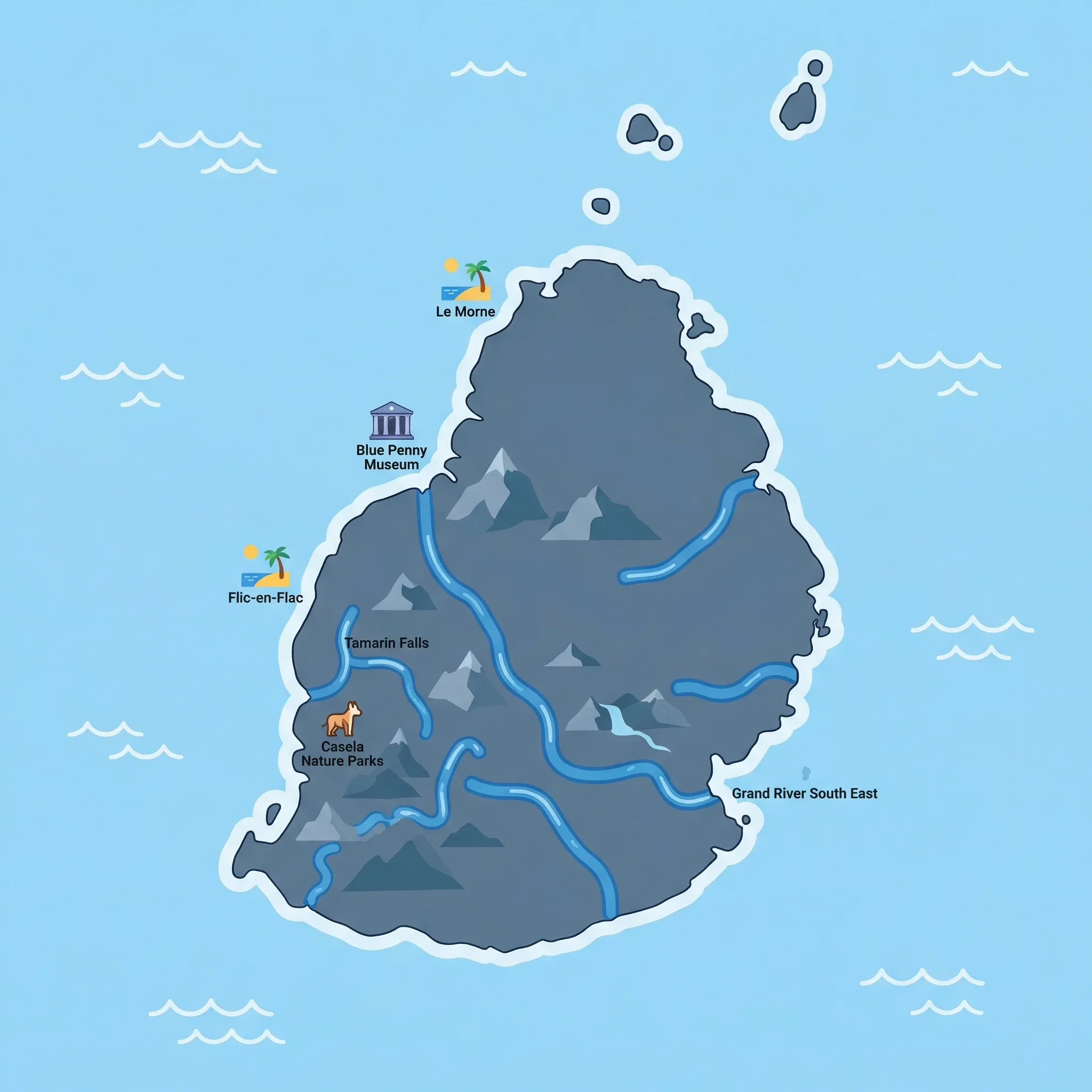
For a day of wildlife adventure, Casela Nature Parks is an absolute must-do. This sprawling outdoor park allows children to feed giraffes, spot rhinos on a safari truck, and even slide on dry toboggans. It is easily the most popular family day out on the island. Just a short drive away, the Chamarel Seven Coloured Earth Geopark offers a geological wonder where sand dunes naturally separate into seven distinct colours-a surreal sight that captivates kids, especially when combined with the park's resident giant Aldabra tortoises.
Water babies should head straight for Blue Bay Marine Park in the southeast. The coral garden here is shallow and teeming with fish, making it accessible even for beginners on glass-bottom boats or with a snorkel. For a full-day island castaway experience, take a catamaran cruise to Ile aux Cerfs, famous for its blindingly white sandbars and shallow turquoise waters. On the mainland, the Sir Seewoosagur Ramgoolam Botanic Garden in Pamplemousses is a peaceful stop where children can marvel at the famous giant water lilies, which look strong enough to support a baby (though touching is forbidden!).
For a dose of culture and history, visit Ganga Talao (Grand Bassin), a sacred crater lake adorned with massive statues of Hindu deities that will leave children in awe. Meanwhile, the UNESCO-listed Le Morne Brabant offers a dramatic backdrop for beach days, teaching older children about the island's history as a refuge for escaped slaves.
Practical Advice
The best time to visit is during the cooler, drier winter months from May to December, when temperatures are pleasant (around 24°C/75°F) and mosquitoes are fewer. The summer (January to March) can be hot, humid, and prone to cyclones. Driving is on the left, which suits UK/Commonwealth travellers, and hiring a car is the most efficient way to explore. Tap water is generally safe but can upset sensitive tummies; stick to bottled or filtered water. No malaria pills are needed, but strong insect repellent is essential for dengue protection.
Food & Drink
Typical meal times: Lunch is typically served from 12:00 pm to 2:30 pm, while dinner is usually enjoyed between 7:00 pm and 10:00 pm. Street food stalls often close by late afternoon.
Typical meal costs: 300–800 MUR (approx. $6.50–17.50 USD / €6–16 EUR) for a casual restaurant meal. Street food is much cheaper at 50–150 MUR (approx. $1.10–3.25 USD / €1–3 EUR). High-end resort dining can exceed 2,500 MUR (approx. $55 USD / €50 EUR) per person.
Dietary requirements: Mauritius is a paradise for vegetarians due to its large Hindu population; meat-free options are available everywhere. Halal food is also standard. Gluten-free is understood in resorts but can be tricky with street food (many flour-based wrappers and fried snacks).
Family-friendly dining: Mauritian cuisine is generally mild to moderately spicy, but you can always ask for "pas piment" (no chilli). Kids love the noodle dishes and fresh tropical fruit. Most restaurants welcome children and provide highchairs.
Signature dishes:
- Dholl Puri – The national street food; soft flatbreads stuffed with yellow split peas and served with bean curry and tomato sauce (perfect for a cheap family lunch).
- Bol Renversé – Literally "upside-down bowl," this Sino-Mauritian dish features a dome of rice topped with chop suey-style chicken and vegetables, crowned with a fried egg.
- Mine Frite – Fried noodles with soy sauce, vegetables, and chicken or prawns, widely available and very child-friendly.
- Gateaux Piment – Deep-fried chilli cakes made from split peas (caution: can be spicy, but milder versions exist).
- Rougaille – A rich, Creole tomato-based sauce cooked with sausages, fish, or chicken, often served with rice.

A family of four can expect to spend around 8,000–12,000 MUR (approx. $175–260 USD / €160–240 EUR) per day including mid-range car hire, restaurant meals, and entry fees. Street food keeps costs low, while resorts and guided catamaran tours will significantly increase the budget.
Age Suitability




Did you know? Mauritius welcomes approximately 1.4 million international visitors per year. Most visitors come from Europe.
Why this score?
The island offers a diverse range of moderate outdoor activities including hiking in the Black River Gorges National Park and trekking up the UNESCO-listed Le Morne Brabant. While the interior is lush and mountainous, the adventure experience is generally well-managed and supported by professional guides and accessible trails. It provides a good balance of nature-based exploration without requiring the survival skills associated with more rugged wilderness destinations.
Why this score?
Mauritius provides decent healthcare services with several high-quality private clinics, such as Wellkin and Fortis, which are accustomed to treating foreign tourists and expats. English and French are widely spoken by medical staff, and emergency services are relatively efficient compared to other Indian Ocean islands. However, for highly specialized or complex procedures, patients may still require medical evacuation to larger regional hubs like South Africa or Reunion Island.
Why this score?
Mauritius is a well-established international destination receiving over 1.3 million visitors annually, primarily from Europe and South Africa. While it lacks the mass-market volume of top-tier hubs like Bali or Phuket, it maintains a strong global reputation for luxury resort tourism and honeymoon travel. The island features high-density infrastructure around areas like Grand Baie and Flic-en-Flac to support its consistent tourist flow.
Mauritius caters to a wide range of budgets. While 5-star resorts are expensive, staying in self-catering apartments in Flic en Flac or Grand Baie significantly lowers costs. A family meal at a local 'snack' (eatery) costs around MUR 800–1,500 (approx. $17–33 USD / €16–30 EUR). Entry to major attractions like <a data-attraction-id="16126">Casela Nature Parks</a> is pricey, costing around MUR 1,000–1,500 (approx. $22–33 USD / €20–30 EUR) per person.

Getting There & Around
Getting There
- By Air – Sir Seewoosagur Ramgoolam International Airport (MRU) is the main gateway, located in the southeast. It receives direct flights from major hubs in Europe, Africa, and Asia.
- By Sea – Cruise ships occasionally dock at the Christian Decotter Cruise Terminal in Port Louis.
- Entry Requirements – Most visitors (including US, UK, and EU citizens) do not need a visa for stays up to 60 days. You must complete the Mauritius All-in-One Travel Digital Form prior to arrival to generate a QR code for health and immigration. Check your government website for the latest visa requirements, or use the IATA Travel Centre entry-requirements checker.
Getting Around
- Car Hire – The best way for families to explore. Driving is on the left-hand side. Roads are generally good, though signage can be sporadic in rural areas.
- Taxis – Widely available at hotels and tourist sites. Always negotiate the fare before getting in as meters are rarely used. Many drivers act as knowledgeable guides for day trips.
- Metro Express – A modern light rail system connecting Port Louis to Curepipe. It is clean, air-conditioned, and efficient, though it only serves the central corridor and does not reach coastal resorts.
- Buses – An inexpensive and colorful way to travel, but often slow and loud. Fun for a short hop to a nearby town, but less practical for long-distance family travel with luggage.

Packing List
Essential for protecting feet from sharp coral and stonefish in the shallow lagoons.
Roads into the mountains and coastal catamaran trips can be winding and choppy.
Local brands are effective; plug-ins are useful for keeping hotel rooms bug-free at night.
You will likely spend days on boats or in the water; protects devices from sand and salt.
The tropical sun is intense even on cloudy days; essential for kids spending hours in the water.

Activities & Best Times

Adventure & Nature
ExcellentHiking, wildlife, outdoor exploration, ecotourism
Boasts exceptional biodiversity and unique volcanic landscapes including Black River Gorges and UNESCO-listed Le Morne. The cooler, drier months provide optimal conditions for trekking and wildlife observation while avoiding summer humidity and cyclone risks.

City & Cultural
Very GoodUrban tourism, museums, historical sites, architecture
Home to significant heritage sites like Aapravasi Ghat and colonial-era architecture that reflect a rich multicultural history. Peak travel aligns with milder temperatures, making exploration of Port Louis and historic estates comfortable for families.

Sports & Active
Very GoodSport tourism, fitness activities, active recreation
Excellent infrastructure for active families, ranging from the challenging Seven Cascades hike to dedicated adventure parks like Domaine de l'Etoile. The temperate 'winter' months offer the best physical comfort for high-energy outdoor activities.

Beach & Sea
GoodBeach resorts, marine activities: diving, snorkelling, kite surfing, wind surfing, sailing
Offers world-class resort infrastructure and crystal-clear lagoons like Blue Bay, though the attraction count limits the formal rating to good. Peak months avoid the intense cyclone season (Jan-Mar) and the heavy trade winds of the Mauritian winter (Jul-Aug).

Educational & Exploratory
GoodLearning experiences, scientific sites, historical education
With UNESCO sites (Aapravasi Ghat), botanical gardens, and Odysseo Oceanarium, Mauritius offers solid educational experiences. Current 'marginal' rating undersells the country's cultural heritage and modern educational facilities.

Road Trips & Scenic
GoodScenic drives, countryside tours, route-based travel
Features stunning scenic drives such as the B9 coastal road and the winding mountain passes of Chamarel. Driving is most enjoyable during the dry season when visibility is high and the risk of heavy tropical downpours is minimized.

Attractions (18 total)



Public Holidays & Calendar Next 12 months
Public holidays, festivals, cultural celebrations, and seasonal natural phenomena coming up in Mauritius over the next 12 months.
Loading holidays and events...

Travel Advisory
Mauritius is widely regarded as a safe destination by the majority of international agencies. Five out of six major tracking agencies maintain their lowest risk rating, though the United States has recently increased its caution level due to rising petty and opportunistic crime.
Safety Topics
Traveller Advice (3 groups)

Solo female travelers should be aware of reports concerning verbal harassment and occasional sexual assault. It is strongly advised to avoid walking alone on beaches or in poorly lit urban areas after dark.

While same-sex sexual activity was officially decriminalized by the Supreme Court in October 2023, the local society remains relatively conservative. Discretion is advised in public as attitudes toward the community can vary.

All visitors must complete the official 'All-in-One Travel Digital Form' prior to their arrival. It is also recommended to stay only in licensed accommodations registered with the national tourism authority to ensure adequate security standards.
Agency Summaries
Travelers are advised to maintain standard safety awareness. Petty crime is the primary concern in busy areas. The FCDO notes the decriminalization of same-sex acts in late 2023 and provides guidance on the annual cyclone risk.
The U.S. government has elevated the risk level to 2 due to a rise in criminal activity. While most incidents are crimes of opportunity such as bag snatching and theft at beaches or ATMs, more serious offenses including residential break-ins and violent assaults have been reported.
Australia maintains its lowest risk rating for Mauritius. Advice focuses on preventing insect-borne diseases, avoiding rare political gatherings, and ensuring accommodation is registered with official tourism authorities to avoid security lapses.
Mauritius is generally safe, with a recommendation for visitors to apply the same safety standards they would in Canada. Travelers should remain vigilant against petty crimes like theft and pickpocketing, especially in popular tourist zones, and prepare for the cyclone season.
Ireland advises standard vigilance. The country emphasizes the importance of completing the mandatory digital travel form and notes that most visitors can enter without a pre-arranged visa for short stays.
New Zealand provides a baseline safety assessment, identifying Mauritius as a low-risk destination. Guidance focuses on health preparedness for the region and the necessity of comprehensive travel insurance.
Information is provided for general guidance only and does not constitute travel, safety, medical, or legal advice. Conditions may change. Users are responsible for independently verifying information before travel.