
Baja California & Pacific Peninsula
Where the desert meets the deep blue sea 🐋🌵
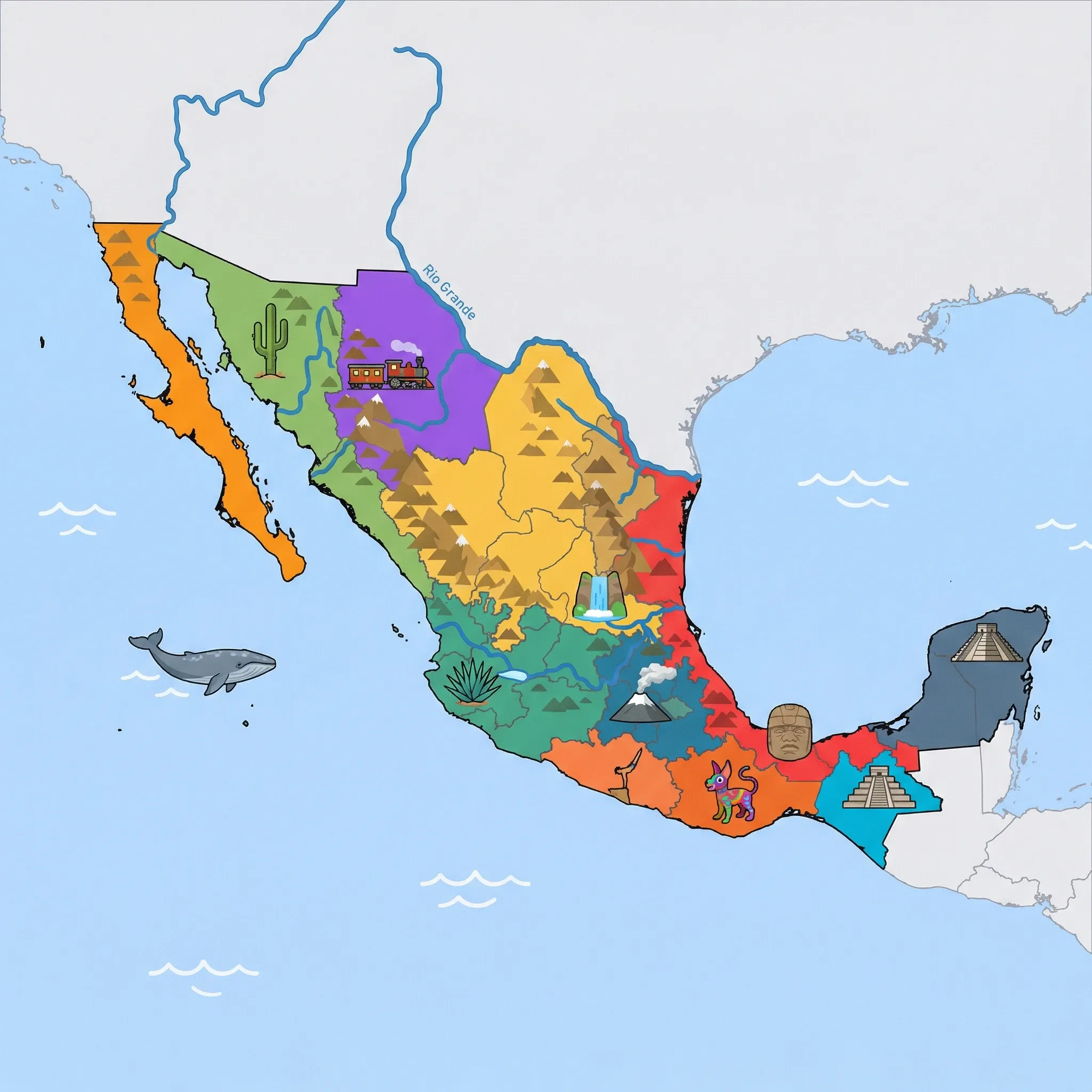
Click a region to explore
Baja California is a land of dramatic contrasts, where cactus-studded deserts crash into the deep blue waters of the Pacific and the Sea of Cortez. For families, this region offers a sense of wild freedom that is hard to find elsewhere. It is distinct from mainland Mexico, feeling almost like an island nation with its own pace and culture. The peninsula is famous for its natural beauty, from the chaotic energy of the border to the serene, turquoise bays of the south. It is a world-class destination for marine wildlife encounters; depending on the season, you might spot grey whales, whale sharks, or mobula rays just offshore.
The climate is generally dry and sunny, making it an excellent year-round destination, though summers in the south can be intensely hot. The culture here is defined by the ranchero lifestyle of the interior and the fishermen of the coast. For children, the peninsula is a giant outdoor playground. They can run down sand dunes, peer into tide pools teeming with life, and experience the thrill of seeing massive marine mammals in their natural habitat. While the luxury corridors of Los Cabos offer all-inclusive ease, the real magic lies in the quieter towns like La Paz and Loreto, where the water is calm and the welcome is warm.
Key Attractions
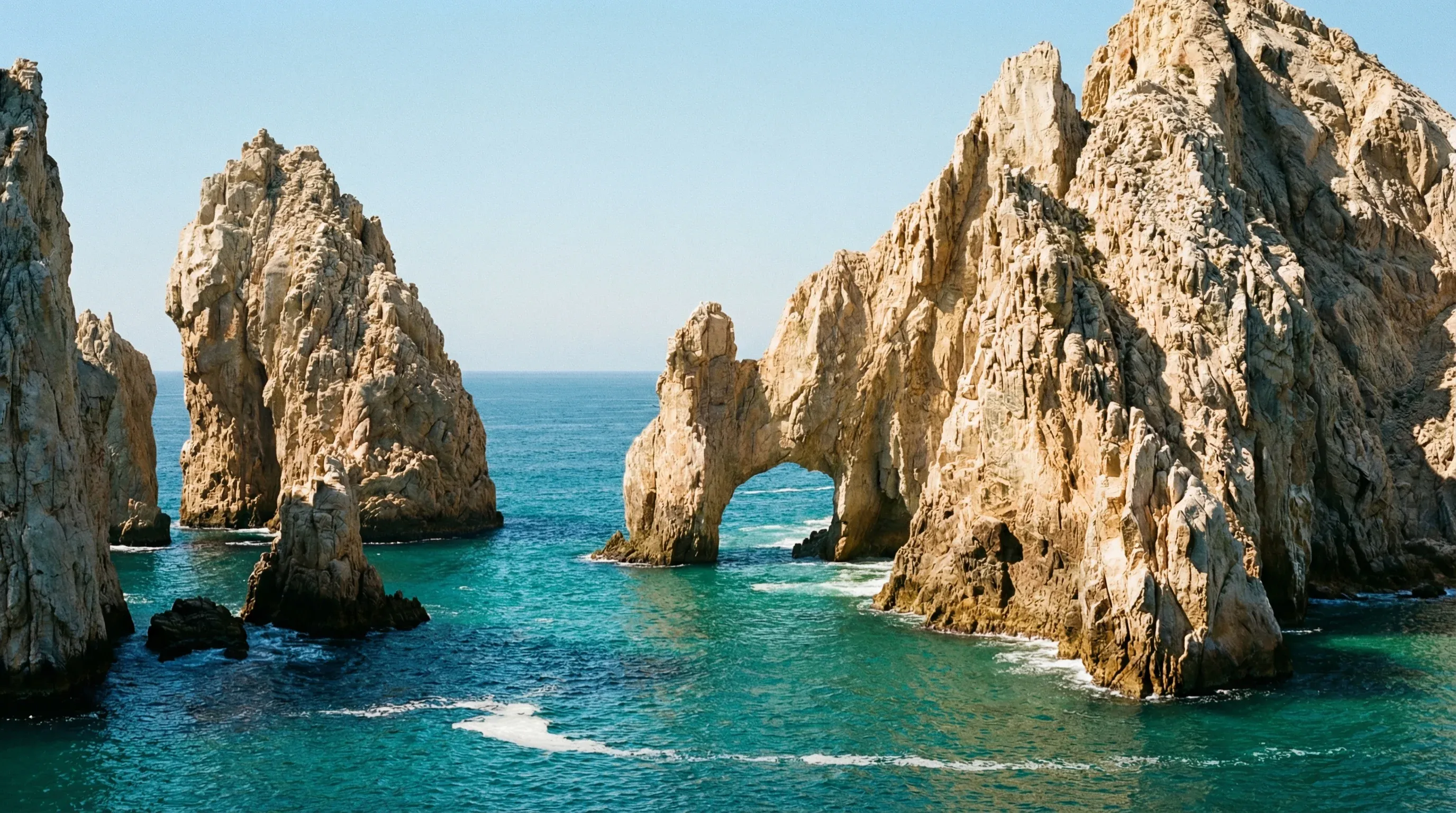
The peninsula's crown jewel for nature lovers is Isla Espiritu Santo. A boat trip here is unforgettable; families can snorkel with playful sea lion pups, picnic on pristine beaches, and marvel at red rock formations. Further south, the iconic El Arco (The Arch) in Cabo San Lucas marks the meeting point of the Pacific Ocean and the Sea of Cortez, a must-see landmark accessible by glass-bottom boat. For a quieter beach day, Playa Balandra near La Paz is often cited as Mexico's most beautiful beach, with shallow, calm waters that are safe for toddlers to wade in.
History buffs should visit the Misión de Nuestra Señora de Loreto Conchó, the first mission in the Californias, which offers a glimpse into the region's colonial past in a charming, walkable town. Nature enthusiasts willing to venture further can explore the El Vizcaíno Biosphere Reserve (Laguna Ojo de Liebre), one of the world's premier spots for whale watching during the winter migration. Nearby, the Cabo Pulmo National Park offers some of the best snorkeling in North America within a protected living coral reef.
Practical Advice
The best time to visit is from November to May when the weather is pleasant and whale watching is at its peak. Summer (July-September) is very hot and brings a risk of hurricanes. Renting a car is the most effective way to see the region, as public transport between towns can be sparse. Roads are generally good, but avoid driving at night due to livestock on the highways.
Food & Drink
Typical meal times: Breakfast is served 8:00 am to 11:00 am. Lunch is the main meal, typically 1:00 pm to 3:00 pm, though tourist areas serve all day.
Typical meal costs: A casual family meal costs around MXN 600–900 (approx. $33–50 USD / €30–45 EUR). Fine dining in Cabo San Lucas is significantly higher.
Dietary requirements: Seafood is dominant, but vegetarian options are increasingly common in tourist hubs. Gluten-free diners should stick to corn tortillas, which are standard here.
Signature dishes:
- Baja Fish Tacos – Battered fish (usually shark or mild white fish) served on corn tortillas with cabbage slaw, crema, and salsa.
- Lobster Burrito – A decadently large flour tortilla filled with machaca (dried beef) or lobster, a specialty of the Puerto Nuevo area.
- Damiana Liqueur – An herbal liqueur made from a local plant, often served as a digestif or in margaritas (for the parents).
Why this score?
The vast desert interior and the rugged Transpeninsular Highway offer significant off-road opportunities and remote coastal exploration. However, the presence of highly developed resort zones in the south moderates the overall adventure rating.
Why this score?
Excellent private hospitals and clinics catering specifically to American tourists are found in Cabo San Lucas and Tijuana. However, medical facilities are extremely sparse in the central, rural parts of the peninsula.
Why this score?
Los Cabos is a top-tier international luxury destination, while Tijuana and Ensenada see massive cross-border flows from the US. The region is world-famous for whale watching and its high-end wine tourism in Valle de Guadalupe.

Baja California, particularly Los Cabos, is one of the more expensive regions in Mexico. Budget options exist in La Paz and Loreto, but resort areas price in USD. A mid-range hotel costs MXN 2,500–4,500 (approx. $140–250 USD / €125–225 EUR) per night. Tacos remain a bargain at MXN 35–50 (approx. $2–3 USD / €1.75–2.50 EUR) each.

Getting Here & Around
Getting Here
- Airports – Los Cabos International Airport (SJD) and La Paz International Airport (LAP) serve the south. Tijuana International Airport (TIJ) serves the north and connects directly to the US border via the CBX bridge.
- Ferry – Car ferries run from Topolobampo and Mazatlán on the mainland to La Paz. The journey takes 8–12 hours.
- Driving – The Transpeninsular Highway (Mexico 1) runs the entire length from the US border to Cabo San Lucas. It is a popular but long route for RVs and road trippers.
Getting Around
- Car – Highly recommended for families. It gives you the freedom to reach secluded beaches like Balandra Beach.
- Bus – The Aguila bus line connects most major towns on the peninsula. It is reliable and comfortable but slower than driving.
- Taxis/Uber – Uber is available in major cities like Tijuana, La Paz, and parts of Los Cabos, though local taxi unions sometimes restrict pickup areas.
Nearby Airports (4 airports)
General Manuel Marquez De Leon International
LAPLa Paz
General Rodolfo Sanchez Taboada International
MXLMexicali
Los Cabos International
SJDSan Jose Cabo
General Abelardo L Rodriguez International
TIJTijuana
View full flight map for Mexico →
Official Links

Packing List
Sun is intense and water reflects UV rays; essential for snorkeling
Mandatory in protected marine parks like Cabo Pulmo
Boat rides to the arch or whale watching can be choppy
To keep phones and cameras safe on small pangas (boats)
Essential for protecting feet on rocky cenote floors and hot sand; widely used by locals.
High-altitude cities like Mexico City and San Cristóbal get surprisingly cold at night, even in summer.
Many colonial towns have uneven cobblestone streets that make strollers difficult to use.
Easier to apply on squirming kids than spray and essential for preventing dengue in tropical areas.

Activities & Best Times

Hiking, wildlife, outdoor exploration, ecotourism
A premier destination for wilderness immersion, featuring unique desert-to-sea ecosystems and the world-renowned grey whale calving lagoons. The winter peak offers life-changing wildlife encounters, while the intense summer heat makes trekking and desert exploration physically hazardous.

Urban tourism, museums, historical sites, architecture
Offers a sophisticated blend of iconic urban landmarks like the Tijuana Arch and the serene Malecón de La Paz, supported by unique botanical gardens. Spring and autumn provide the most comfortable climate for experiencing the region's culinary evolution and urban street life.

Beach resorts, marine activities: diving, snorkelling, kite surfing, wind surfing, sailing
Home to iconic coastal landmarks like El Arco and the turquoise waters of Playa Balandra, offering world-class snorkeling in the 'aquarium of the world'. Peak visitation aligns with whale migration and pleasant air temperatures, while the extreme humidity and heat of July-September are less desirable.

Learning experiences, scientific sites, historical education
Internationally significant marine science centers like the Museo de la Ballena offer families deep insights into ocean conservation. These experiences are most impactful during the peak whale-watching season when the scientific context aligns with real-world sightings.

Sport tourism, fitness activities, active recreation
Boasts high-infrastructure outdoor centers like Wild Canyon and Cabo Adventures, offering world-class zip-lining and desert sport facilities. The cooler months are essential for high-exertion activities to avoid the extreme midday temperatures characteristic of the peninsula.

Amusement parks, family entertainment venues
Features several regional waterparks like El Vergel that provide high-quality family entertainment in an arid climate. Best visited during the warm spring months when water activities are most refreshing but before the peak summer heat becomes oppressive.

Attractions (17 total)



Public Holidays & Calendar Next 12 months
Public holidays, festivals, cultural celebrations, and seasonal natural phenomena coming up in Baja California & Pacific Peninsula over the next 12 months.
Loading holidays and events...

Travel Advisory
All major agencies maintain a baseline of increased vigilance for Mexico. While many tourist areas remain accessible, widespread criminal activity and recent localized spikes in cartel-related violence in western states necessitate a high degree of caution.
Safety Topics
Traveller Advice (4 groups)

While major cities and resort destinations are generally accepting, social attitudes in rural regions can be conservative. Travelers should be mindful of local sentiments regarding public displays of affection.

Female travelers should remain particularly alert as incidents of harassment and sexual assault have been reported, even in tourist areas. It is safer to travel in groups and use reputable, pre-arranged transportation.

Stay within well-known tourist zones and travel primarily by air. If driving is necessary, use toll roads during daylight hours and avoid secondary or isolated routes. Monitor local news constantly for sudden security changes or roadblocks.

Older travelers should consider the physical demands of high-altitude destinations like Mexico City. Ensure comprehensive health insurance is in place, as private medical care in cities is excellent but expensive, whereas rural facilities are often limited.
Agency Summaries
New Zealanders should exercise heightened caution because of pervasive violent crime and drug-related conflicts. Specific regional warnings are in place for many states where travelers are advised to avoid non-essential trips.
Travelers should be extremely careful due to prevalent crime and kidnapping. While the national level is set at increased caution, specific states carry 'Do Not Travel' warnings because of extreme violence. U.S. government personnel face restricted movement in many high-risk zones.
Irish citizens are advised to be very cautious across the country. Travel to Jalisco is currently discouraged entirely due to ongoing security operations and violence. Many other states are designated for essential travel only due to high levels of insecurity.
The security situation is unpredictable and potentially dangerous in several states. Travelers in Jalisco are advised to stay indoors following significant unrest and road blockades. Violent incidents, including arson and armed confrontations, have increased following a major law enforcement operation.
A high level of vigilance is required due to the persistent threat of violent crime. Recent security incidents in Jalisco and neighboring states have led to shelter-in-place advisories and significant transportation disruptions, including flight cancellations in major tourist hubs.
Canadians are urged to remain highly vigilant throughout Mexico due to widespread criminal activity. Emergency shelter-in-place orders are currently active in Jalisco and Nayarit following violent clashes between security forces and criminal groups. High levels of violence and organized crime are reported in many regions.
Information is provided for general guidance only and does not constitute travel, safety, medical, or legal advice. Conditions may change. Users are responsible for independently verifying information before travel.