
Chiapas & Maya Highlands
Jungle ruins and living Maya culture 🐆🌿
Click a region to explore
Chiapas feels like a different country compared to the rest of Mexico. It is the southernmost state, rich in indigenous culture and biodiversity. For families who love nature and history, this is arguably the most rewarding region. The landscape shifts from the humid, jungle-covered lowlands of Palenque to the cool, pine-forested highlands of San Cristóbal de las Casas. It is a place of vivid colors, from the bright textiles worn by local Tzotzil and Tzeltal people to the turquoise waters of the rivers and waterfalls.
This region offers a profound cultural education for children. In the highlands, Maya languages are spoken as widely as Spanish, and traditional customs are practiced openly. The vibe is rustic and authentic; you won't find mega-resorts here, but rather eco-lodges and colonial boutique hotels. The natural attractions are massive in scale, offering boat trips, jungle treks, and swimming in waterfalls. While the roads can be winding and travel times long, the destinations are spectacular.
Key Attractions
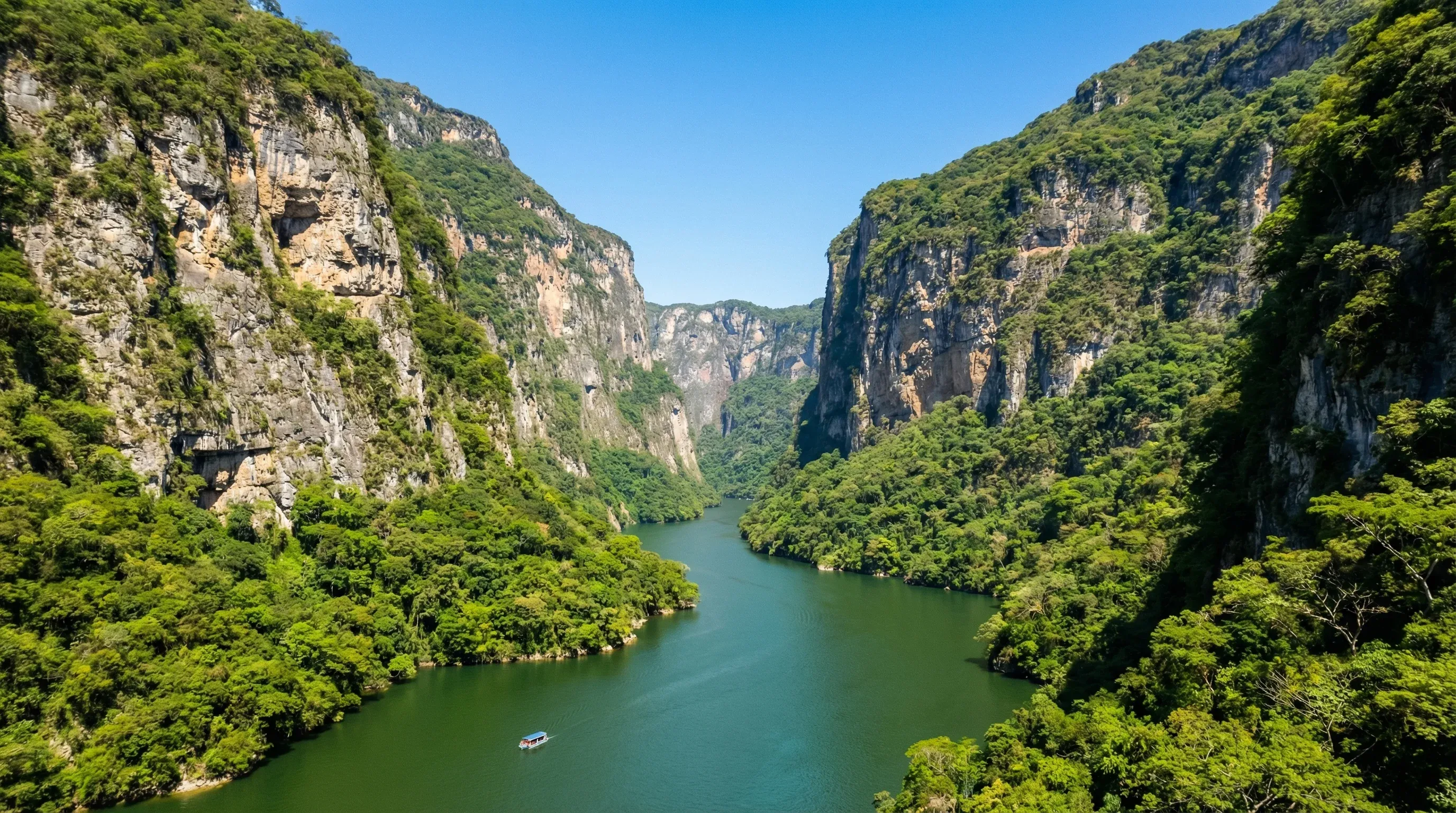
The Palenque Archaeological Zone is essential. Unlike the open plains of Chichén Itzá, Palenque is nestled deep in the jungle; kids can often spot howler monkeys in the trees above the ruins. Nearby, the Cascadas de Agua Azul offer a series of stunning blue waterfalls where families can swim in designated areas (avoid the strong currents). A boat trip through the Cañón del Sumidero National Park is a highlight, with canyon walls rising up to a kilometer high and crocodiles sunning themselves on the riverbanks.
In the highlands, the town of San Juan Chamula Village offers a unique cultural experience. The church here has no pews, the floor is covered in pine needles, and ceremonies involve candles and chanting (note: photography is strictly forbidden inside). For a relaxing afternoon, the Jardín Botánico Dr. Faustino Miranda in Tuxtla highlights the incredible plant diversity of the region.
Practical Advice
The best time to visit is November to April to avoid the heavy rains. Nights in San Cristóbal are cold; bring warm layers. Road blockades by local communities can occasionally delay travel, so allow extra time and travel during daylight hours only.
Food & Drink
Typical meal times: Breakfast 7:00 am to 10:00 am, Lunch 1:00 pm to 3:00 pm, Dinner 7:00 pm to 9:00 pm. San Cristóbal has many cafes open all day.
Typical meal costs: Very affordable. A hearty meal costs MXN 150–300 (approx. $8–17 USD / €7–15 EUR). Coffee is excellent and cheap.
Dietary requirements: Vegetarian options are abundant in San Cristóbal due to the expat influence. In rural areas, beans and eggs are staples.
Signature dishes:
- Tamales de Chipilín – Corn dough mixed with a local leafy green (chipilín) and cheese/chicken, wrapped in banana leaves.
- Sopa de Pan – A hearty soup made with bread, boiled eggs, plantains, and spices, traditional to San Cristóbal.
- Pox – (Pronounced 'posh') A traditional ceremonial corn and sugar cane spirit (for parents).
Why this score?
The region features dense tropical jungles, remote Maya ruins, and the deep Sumidero Canyon, requiring significant travel between sites. It offers a truly rugged experience with less-developed tourist infrastructure compared to coastal regions.
Why this score?
Modern medical facilities are concentrated in Tuxtla Gutiérrez and San Cristóbal, but they are basic compared to Mexico City. Rural areas and jungle zones have very limited access to emergency care and English-speaking medical professionals.
Why this score?
While Palenque and San Cristóbal are iconic stops on the backpacker circuit, Chiapas lacks the mass-market resort infrastructure of the Yucatán. It remains a moderate-volume destination for cultural and nature-focused travelers.

Chiapas is one of Mexico's most affordable regions. Accommodation in charming colonial hotels costs MXN 800–1,500 (approx. $45–85 USD / €40–75 EUR). Tours and entry fees are low. A family can travel comfortably here for significantly less than in the Yucatán or Baja.

Getting Here & Around
Getting Here
- Airports – Tuxtla Gutiérrez (TGZ) is the main gateway. Palenque (PQM) has very limited flights. Villahermosa (VSA) in neighboring Tabasco is a 2-hour drive from Palenque.
- Bus – ADO buses connect Tuxtla, San Cristóbal, and Palenque. The routes are scenic but very winding.
Getting Around
- Organized Tours – Due to complex roads and occasional social unrest, booking van tours for day trips to attractions like Cascadas de Agua Azul is often safer and easier than driving.
- Colectivos – Shared vans are the main way locals travel between villages. They are cheap but cramped.
- Walking – San Cristóbal is very walkable, with pedestrian-friendly streets.
Nearby Airports (2 airports)
Tapachula International Airport
TAPTapachula
Francisco Sarabia
TGZTuxtla Gutierrez
View full flight map for Mexico →
Official Links

Packing List
Roads between San Cristóbal and Palenque are extremely winding (hundreds of curves)
San Cristóbal is at high altitude and gets very cold at night
Mosquitoes in the Palenque jungle are aggressive
Required for entering temples or homes where shoes must be removed
Strictly required in cenotes and marine parks to protect ecosystems; regular sunscreen is often confiscated.
Essential for protecting feet on rocky cenote floors and hot sand; widely used by locals.
High-altitude cities like Mexico City and San Cristóbal get surprisingly cold at night, even in summer.
Many colonial towns have uneven cobblestone streets that make strollers difficult to use.
Easier to apply on squirming kids than spray and essential for preventing dengue in tropical areas.

Activities & Best Times

Hiking, wildlife, outdoor exploration, ecotourism
Offers world-class jungle immersion and iconic waterfalls like Agua Azul, best seen in the dry season when waters are turquoise. Heavy summer rains from June to September make jungle trails difficult and turn rivers silty, degrading the experience for families.

Urban tourism, museums, historical sites, architecture
Features the atmospheric colonial heritage of San Cristóbal de las Casas and the peerless Maya ruins of Palenque. The dry winter months provide comfortable walking temperatures and clear conditions for exploring archaeological sites compared to the humid summer rainy season.

Beach resorts, marine activities: diving, snorkelling, kite surfing, wind surfing, sailing
Provides a more rugged and authentic Pacific coast experience at Puerto Arista and Boca del Cielo for families seeking a detour from the highlands. Conditions are most favorable during the dry season when humidity is lower and sunny days are consistent.

Sport tourism, fitness activities, active recreation
Infrastructure for caving, ziplining, and trekking is well-developed at sites like Rancho Nuevo and El Arcotete. For safety and comfort, these activities are best pursued when trail and cave conditions are dry during the winter months.

Amusement parks, family entertainment venues
Eco-centric parks like Aluxes and adventure centers like Amikupe offer localized entertainment focused on regional biodiversity and terrain. Activity is highest during dry months and peak domestic school holidays in July and August.

Attractions (20 total)



Public Holidays & Calendar Next 12 months
Public holidays, festivals, cultural celebrations, and seasonal natural phenomena coming up in Chiapas & Maya Highlands over the next 12 months.
Loading holidays and events...

Travel Advisory
All major agencies maintain a baseline of increased vigilance for Mexico. While many tourist areas remain accessible, widespread criminal activity and recent localized spikes in cartel-related violence in western states necessitate a high degree of caution.
Safety Topics
Traveller Advice (4 groups)

While major cities and resort destinations are generally accepting, social attitudes in rural regions can be conservative. Travelers should be mindful of local sentiments regarding public displays of affection.

Female travelers should remain particularly alert as incidents of harassment and sexual assault have been reported, even in tourist areas. It is safer to travel in groups and use reputable, pre-arranged transportation.

Stay within well-known tourist zones and travel primarily by air. If driving is necessary, use toll roads during daylight hours and avoid secondary or isolated routes. Monitor local news constantly for sudden security changes or roadblocks.

Older travelers should consider the physical demands of high-altitude destinations like Mexico City. Ensure comprehensive health insurance is in place, as private medical care in cities is excellent but expensive, whereas rural facilities are often limited.
Agency Summaries
New Zealanders should exercise heightened caution because of pervasive violent crime and drug-related conflicts. Specific regional warnings are in place for many states where travelers are advised to avoid non-essential trips.
Travelers should be extremely careful due to prevalent crime and kidnapping. While the national level is set at increased caution, specific states carry 'Do Not Travel' warnings because of extreme violence. U.S. government personnel face restricted movement in many high-risk zones.
Irish citizens are advised to be very cautious across the country. Travel to Jalisco is currently discouraged entirely due to ongoing security operations and violence. Many other states are designated for essential travel only due to high levels of insecurity.
The security situation is unpredictable and potentially dangerous in several states. Travelers in Jalisco are advised to stay indoors following significant unrest and road blockades. Violent incidents, including arson and armed confrontations, have increased following a major law enforcement operation.
A high level of vigilance is required due to the persistent threat of violent crime. Recent security incidents in Jalisco and neighboring states have led to shelter-in-place advisories and significant transportation disruptions, including flight cancellations in major tourist hubs.
Canadians are urged to remain highly vigilant throughout Mexico due to widespread criminal activity. Emergency shelter-in-place orders are currently active in Jalisco and Nayarit following violent clashes between security forces and criminal groups. High levels of violence and organized crime are reported in many regions.
Information is provided for general guidance only and does not constitute travel, safety, medical, or legal advice. Conditions may change. Users are responsible for independently verifying information before travel.