
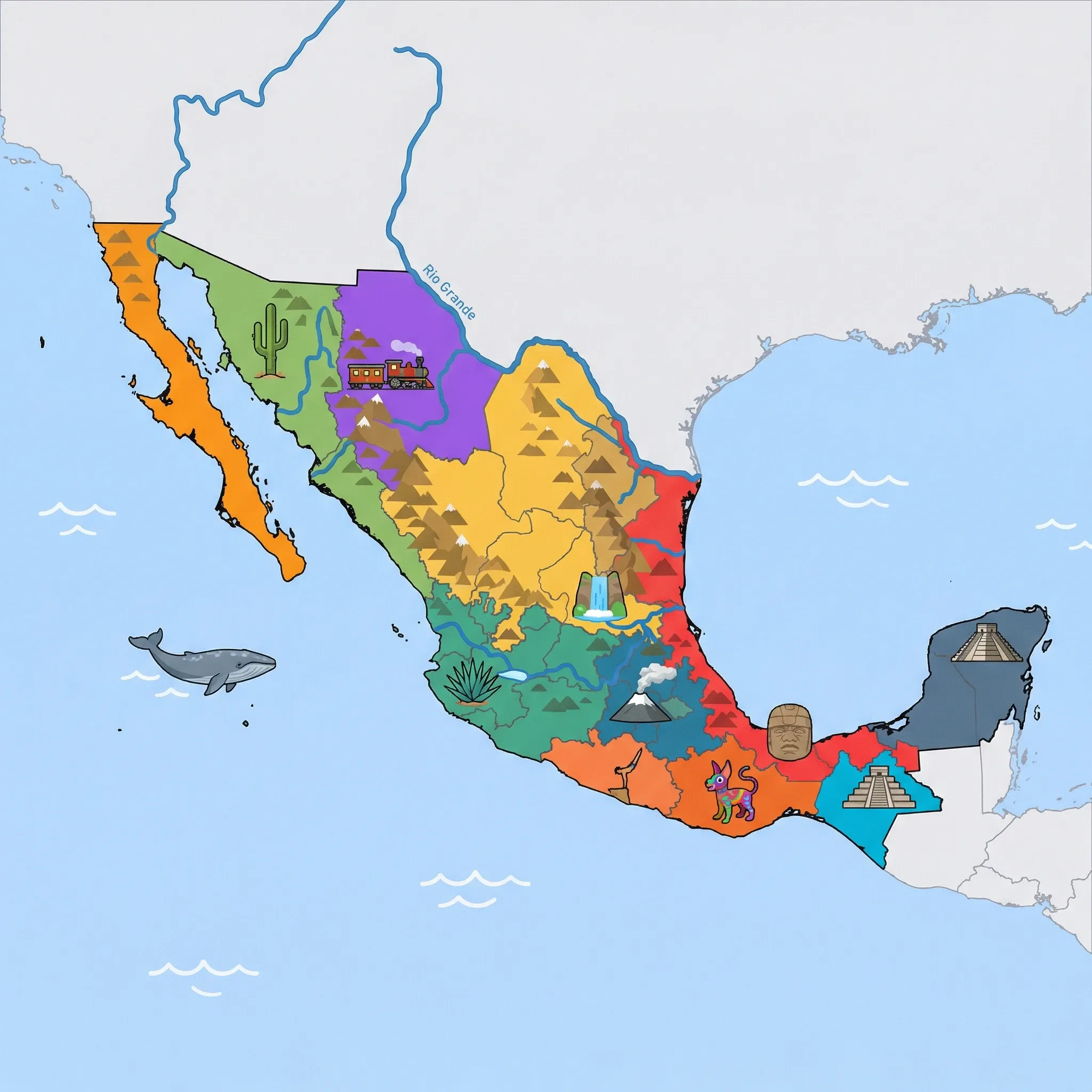
Click a region to explore
⚠️ SAFETY WARNING: Government agencies (including USA, UK, and Canada) advise travelers to reconsider travel to this region and avoid Zacatecas state entirely due to serious security concerns and cartel activity. San Luis Potosí city is generally considered safer, but caution is required on highways. Families should verify the latest security maps, avoid driving at night, and consider staying within the safer zones of San Luis Potosí.
The North-Central Highlands are steeped in the history of New Spain. This was the silver heart of the empire, and the wealth generated here built cities of stunning stone architecture. The landscape is high desert, punctuated by dramatic mountain ranges and hidden oases. For families, the appeal lies in the "Wild West" feel of the old mining towns and the bizarre, beautiful natural features of the Huasteca Potosina (the lush eastern part of San Luis Potosí).
While parts of this region face security challenges, the Huasteca area offers incredible eco-tourism: turquoise rivers, waterfalls, and jungle adventures. The city of San Luis Potosí is an elegant, understated capital with lovely plazas. The region feels adventurous and off-the-beaten-path, ideal for families who have visited Mexico before and want to see something unique, like the ghost town of Real de Catorce, accessible via a long, one-way tunnel through a mountain.
Key Attractions
The absolute highlight for families is Las Pozas in Xilitla (San Luis Potosí). Created by eccentric Englishman Edward James, it is a surrealist sculpture garden set in the jungle, with concrete staircases to nowhere and giant stone flowers—it feels like a real-life video game level. In the city, the Museo Leonora Carrington displays the work of another famous surrealist and is fascinatingly weird for kids.
For a unique experience, visit Real de Catorce, a semi-ghost town in the high desert that feels frozen in time. Families can ride horses (or "Willys" jeeps) into the desert. Nature lovers will be awed by the Sótano de las Golondrinas (Cave of Swallows), a massive pit where thousands of birds spiral out at dawn—a spectacular natural show. The San Luis Potosí Historic Center is great for a safe, pedestrian-friendly stroll to see colonial architecture.
Practical Advice
The region is vast. Focus your trip on San Luis Potosí and the Huasteca to avoid the more dangerous areas of Zacatecas. The best time to visit is spring or late autumn. Summers can be hot, and winters in the high desert (Real de Catorce) can be freezing.
Food & Drink
Typical meal times: Standard Mexican times apply. Lunch 2:00 pm to 4:00 pm.
Typical meal costs: Affordable. Dinner runs MXN 250–500 (approx. $14–27 USD / €12–25 EUR) per person.
Dietary requirements: Meat is central to the diet (steak, goat). Vegetarians will rely on cheese enchiladas and nopales (cactus).
Signature dishes:
- Enchiladas Potosinas – Small, spicy corn tortillas filled with cheese and chili sauce, famous in San Luis Potosí.
- Asado de Boda – A rich pork stew in a red chili and chocolate sauce, traditionally served at weddings.
- Zacahuil – A massive tamale (often 1-2 meters long) cooked in a wood oven, typical of the Huasteca region.
Why this score?
The Huasteca Potosina area is famous for its waterfalls and deep swallow caves, offering significant physical adventure. The high desert landscape and abandoned mining towns like Real de Catorce provide a remote and atmospheric experience.
Why this score?
Regional capitals like San Luis Potosí have solid medical infrastructure with modern hospitals. However, in the high-adventure rural areas, access to emergency medical services is often distant and difficult.
Why this score?
While colonial cities like Zacatecas and San Luis Potosí are stunning, they attract far fewer international tourists than San Miguel de Allende. The region is an emerging destination, particularly for eco-tourism in the Huasteca Potosina.

Aside from boutique hotels in Real de Catorce or Xilitla, this is a budget-friendly region. A good hotel is MXN 1,200–2,000 (approx. $65–110 USD / €60–100 EUR). Street food is very cheap.

Getting Here & Around
Getting Here
- Airports – San Luis Potosí (SLP) has international connections (mostly from Houston/Dallas). This is the safest point of entry.
- Bus – First-class buses (ETN, Primera Plus) connect San Luis Potosí with Mexico City and Querétaro. Avoid second-class buses.
Getting Around
- Private Driver/Tour – For the Huasteca Potosina (waterfalls and Las Pozas), hiring a certified driver/guide is highly recommended for navigation and safety.
- Walking – The historic centers of San Luis Potosí and Real de Catorce are best explored on foot.
Nearby Airports (3 airports)
Durango International
DGODurango
Ponciano Arriaga International
SLPSan Luis Potosi
La Calera Airport
ZCLZacatecas
View full flight map for Mexico →
Official Links

Packing List
Real de Catorce's Ogarrio Tunnel and desert paths can be dark
Essential for the waterfalls and rivers of the Huasteca
Real de Catorce is at 2,700m and gets very cold
Strictly required in cenotes and marine parks to protect ecosystems; regular sunscreen is often confiscated.
Essential for protecting feet on rocky cenote floors and hot sand; widely used by locals.
High-altitude cities like Mexico City and San Cristóbal get surprisingly cold at night, even in summer.
Many colonial towns have uneven cobblestone streets that make strollers difficult to use.
Easier to apply on squirming kids than spray and essential for preventing dengue in tropical areas.

Activities & Best Times

Hiking, wildlife, outdoor exploration, ecotourism
Sótano de las Golondrinas is a world-class natural wonder (largest known cave shaft) and the region features unique high-desert ecosystems. The classification text describes 'world-class natural wonders' - this language supports an excellent rating for truly exceptional global-level adventure opportunities.

Urban tourism, museums, historical sites, architecture
Home to the stunning UNESCO-listed Zacatecas and the unique high-desert atmosphere of Real de Catorce, providing authentic Mexican heritage. Peak visitation aligns with major cultural festivals in April and October, and the dry, sunny conditions of late autumn and early winter.

Sport tourism, fitness activities, active recreation
Exceptional canyoning and river-based activity centers at Micos and Puente de Dios offer high-quality infrastructure for active families. Activity is optimal when river levels are stable and clear, whereas the peak summer rainy season can make these water-based activities dangerous or impossible.

Amusement parks, family entertainment venues
The region hosts several large thermal water parks like Paraíso Caxcán that are popular regionally but lack the immersive storytelling of international theme parks. These are best visited during the hot, dry months before the summer rains, as the highland winters are too cool for aquatic recreation.

Attractions (16 total)



Public Holidays & Calendar Next 12 months
Public holidays, festivals, cultural celebrations, and seasonal natural phenomena coming up in North-Central Highlands over the next 12 months.
Loading holidays and events...

Travel Advisory
All major agencies maintain a baseline of increased vigilance for Mexico. While many tourist areas remain accessible, widespread criminal activity and recent localized spikes in cartel-related violence in western states necessitate a high degree of caution.
Safety Topics
Traveller Advice (4 groups)

While major cities and resort destinations are generally accepting, social attitudes in rural regions can be conservative. Travelers should be mindful of local sentiments regarding public displays of affection.

Female travelers should remain particularly alert as incidents of harassment and sexual assault have been reported, even in tourist areas. It is safer to travel in groups and use reputable, pre-arranged transportation.

Stay within well-known tourist zones and travel primarily by air. If driving is necessary, use toll roads during daylight hours and avoid secondary or isolated routes. Monitor local news constantly for sudden security changes or roadblocks.
Older travelers should consider the physical demands of high-altitude destinations like Mexico City. Ensure comprehensive health insurance is in place, as private medical care in cities is excellent but expensive, whereas rural facilities are often limited.
Agency Summaries
New Zealanders should exercise heightened caution because of pervasive violent crime and drug-related conflicts. Specific regional warnings are in place for many states where travelers are advised to avoid non-essential trips.
Travelers should be extremely careful due to prevalent crime and kidnapping. While the national level is set at increased caution, specific states carry 'Do Not Travel' warnings because of extreme violence. U.S. government personnel face restricted movement in many high-risk zones.
Irish citizens are advised to be very cautious across the country. Travel to Jalisco is currently discouraged entirely due to ongoing security operations and violence. Many other states are designated for essential travel only due to high levels of insecurity.
The security situation is unpredictable and potentially dangerous in several states. Travelers in Jalisco are advised to stay indoors following significant unrest and road blockades. Violent incidents, including arson and armed confrontations, have increased following a major law enforcement operation.
A high level of vigilance is required due to the persistent threat of violent crime. Recent security incidents in Jalisco and neighboring states have led to shelter-in-place advisories and significant transportation disruptions, including flight cancellations in major tourist hubs.
Canadians are urged to remain highly vigilant throughout Mexico due to widespread criminal activity. Emergency shelter-in-place orders are currently active in Jalisco and Nayarit following violent clashes between security forces and criminal groups. High levels of violence and organized crime are reported in many regions.
Information is provided for general guidance only and does not constitute travel, safety, medical, or legal advice. Conditions may change. Users are responsible for independently verifying information before travel.