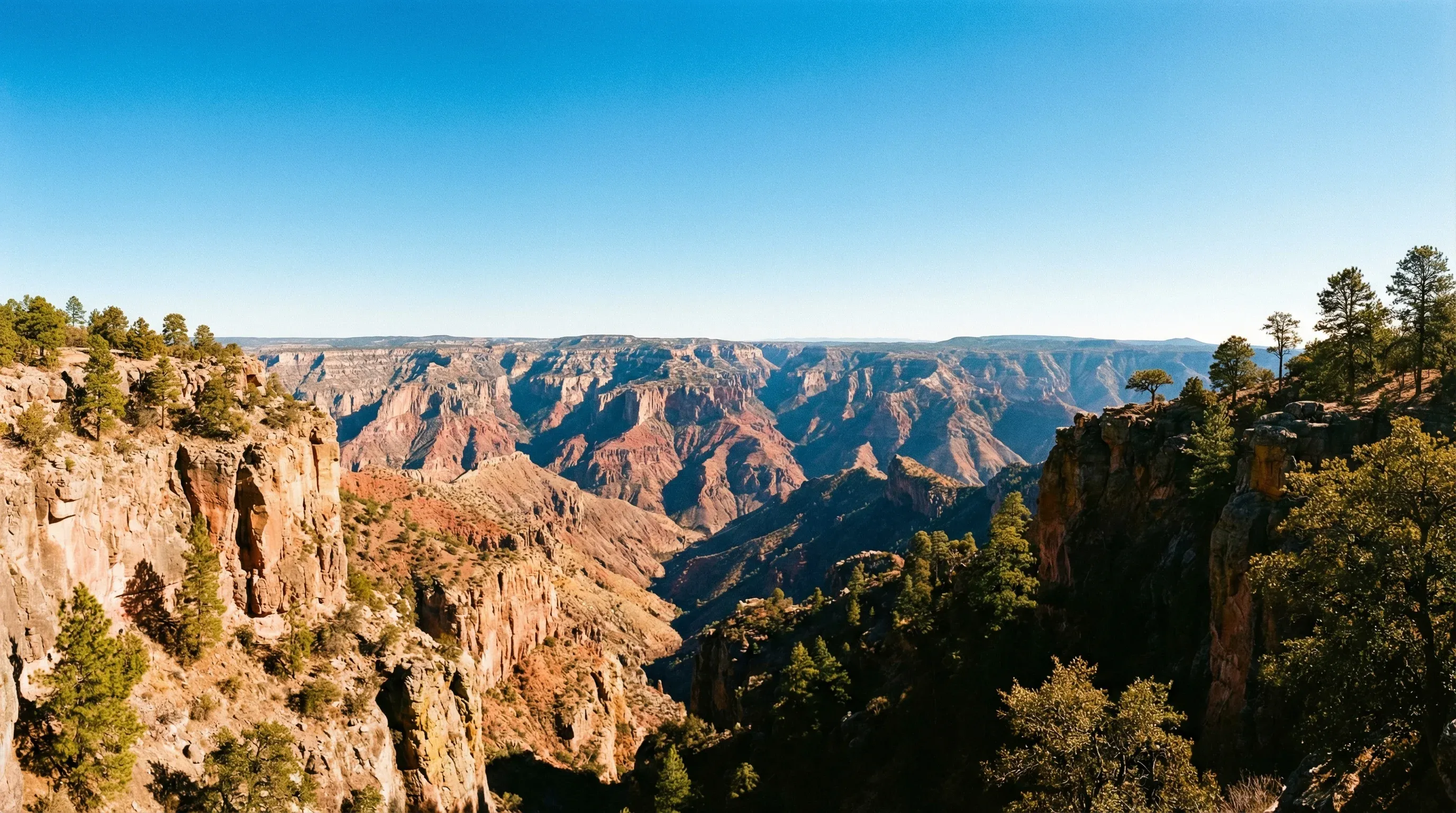

Northern Borderlands & Chihuahuan Desert
Canyons deeper than the Grand Canyon 🚂🏜️
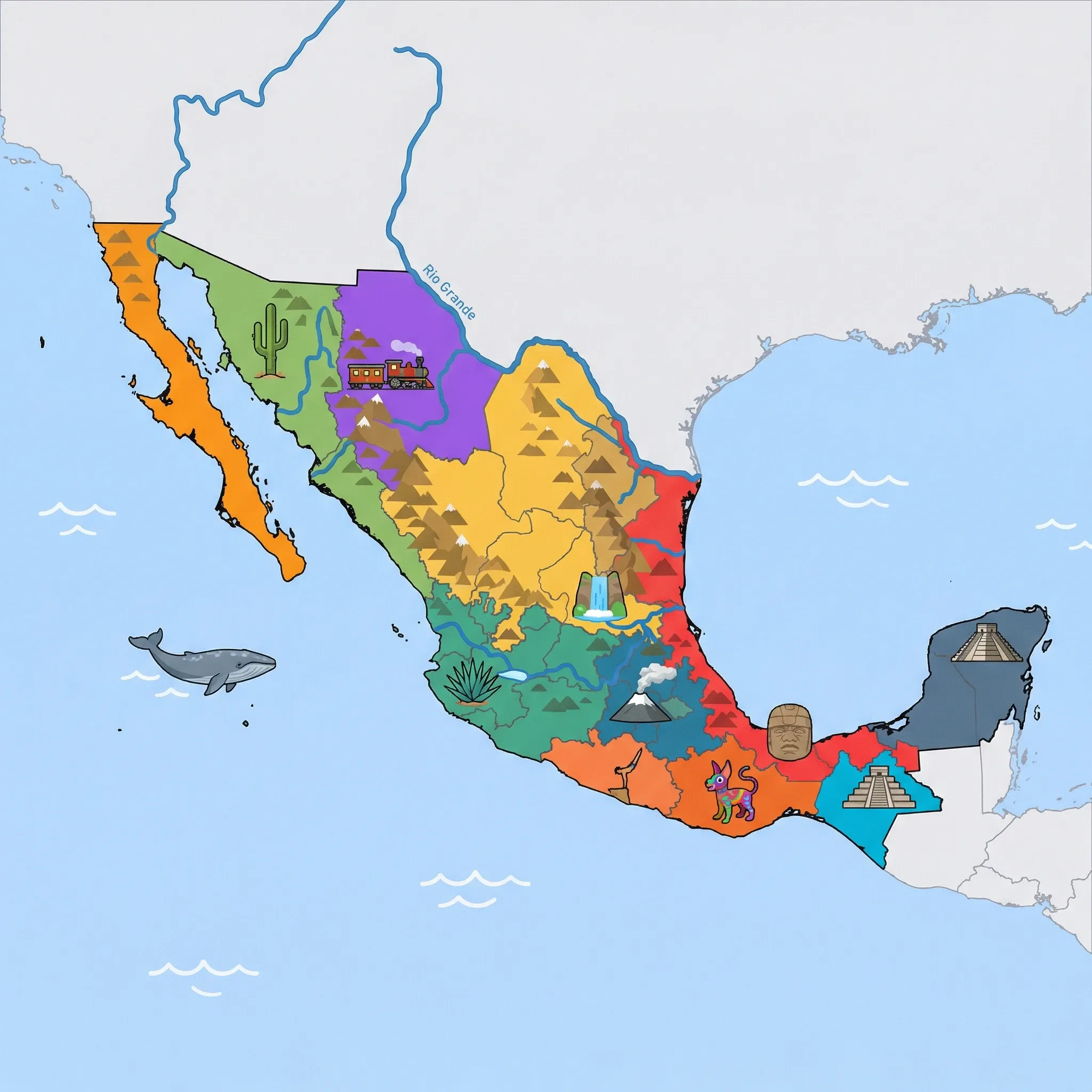
Click a region to explore
⚠️ SAFETY WARNING: Government agencies (including USA, Canada, and UK) advise travelers to avoid all travel to Tamaulipas and large parts of Chihuahua due to crime and kidnapping risks. However, the specific tourist corridor of the Copper Canyon (via the Chepe train) and the city of Monterrey are generally accessible with caution. Families should strictly avoid driving across the border or between cities and stick to organized tours and major transport hubs.
This massive region is defined by its industrial power, vast deserts, and rugged mountains. While much of it is not tourist-oriented, it holds one of Mexico's greatest treasures: the Copper Canyon (Barranca del Cobre). This canyon system is four times larger than the Grand Canyon and is traversed by the "Chepe" train, an engineering marvel that is safe, comfortable, and incredibly scenic. It is a bucket-list trip for families who love trains and nature.
Beyond the canyon, the city of Monterrey (in Nuevo León) is a modern, wealthy metropolis with excellent museums and parks, safe for urban exploration. The desert landscape is starkly beautiful, home to unique history like the Mexican Revolution (Pancho Villa) and prehistoric dinosaur remains. This is "Norteño" country—cowboy hats, grilled meats, and a culture that values hard work and hospitality.
Key Attractions
The Copper Canyon (Barranca del Cobre) is the main reason to visit. The train ride offers breathtaking views, and adventure parks along the rim (like at Divisadero) offer cable cars and zip lines that kids will love. Deep in the canyon, you can learn about the Raramuri (Tarahumara) indigenous culture. Nearby, the Cascada de Basaseachi National Park features one of Mexico's highest waterfalls.
In Saltillo/Coahuila, the Museo del Desierto (Living Desert) is a world-class natural history museum with impressive dinosaur skeletons found in the region—a guaranteed hit for children. In Chihuahua city, the Centro Cultural Universitario Quinta Gameros is a stunning Art Nouveau mansion that offers a glimpse into the opulent past. The Paquimé Archaeological Zone offers a look at a unique adobe-built ancient city, distinct from the stone pyramids of the south.
Practical Advice
Crucial: Do not drive to the Copper Canyon. Take the train. The best time to visit the canyon is spring or autumn; winter sees snow, and early summer is very dry. Monterrey is extremely hot in summer.
Food & Drink
Typical meal times: Lunch 1:00 pm to 3:00 pm. Dinner is hearty and meat-focused.
Typical meal costs: Monterrey is expensive (similar to US prices). Rural areas are cheaper. Meal cost: MXN 300–800 (approx. $16–44 USD / €15–40 EUR).
Dietary requirements: This is cattle country. Vegetarian options are limited to cheese and beans. Vegan options are hard to find outside Monterrey.
Signature dishes:
- Carne Asada – Grilled beef is a religion here. High-quality cuts grilled over mesquite wood.
- Cabrito – Roast kid goat, a specialty of Monterrey.
- Burritos – The real deal: flour tortillas rolled with stewed meat or beans (much smaller and simpler than the US version).
Why this score?
The Copper Canyon system is deeper and more extensive than the Grand Canyon, offering remote hiking and indigenous cultural encounters. The vast Chihuahuan Desert presents a harsh, rugged environment that is genuinely off-the-beaten-path.
Why this score?
Monterrey is one of Mexico's premier medical hubs, boasting high-tech hospitals that frequently treat international patients. In contrast, the remote canyon areas have extremely limited facilities, creating a significant gap in service coverage.
Why this score?
International tourism is largely focused on the Copper Canyon rail journey and business travel to Monterrey. The border cities see high transit but are not traditional leisure destinations for overseas visitors.

The Chepe train is priced for tourists and is relatively expensive (Luxury class is comparable to European rail prices). Monterrey is one of Mexico's most expensive cities. Rural areas are cheap, but access is difficult. Expect to pay MXN 3,000+ (approx. $165 USD / €150 EUR) per person for a train ticket.

Getting Here & Around
Getting Here
- Airports – Monterrey (MTY) is a major modern hub. Chihuahua (CUU) and Los Mochis (LMM) are the gateway airports for the Copper Canyon train.
- Train – The Chepe Express is the only passenger train of its kind in Mexico, running between Los Mochis and Creel. It is the safest and most scenic way to enter the mountains.
Getting Around
- Train – The Copper Canyon train is the primary mode of transit for tourists in the Sierra Tarahumara.
- Uber – Safe and reliable in Monterrey and Chihuahua city centers.
- Avoid Driving – Do not rent a car to drive between cities in this region.
Nearby Airports (9 airports)
Abraham Gonzalez International
CJSCiudad Juarez
Gen Fierro Villalobos Airport
CUUChihuahua
General Servando Canales International
MAMMatamoros
Monterrey International Airport
MTYMonterrey
Quetzalcoatl International Airport
NLDNuevo Laredo
Piedras Negras International
PDSPiedras Negras
General Lucio Blanco International
REXReynosa
General Francisco Javier Mina International
TAMTampico
Torreon International
TRCTorreon
View full flight map for Mexico →
Official Links

Packing List
The canyon views are vast, and spotting wildlife or distant waterfalls requires zoom
The desert air is extremely dry and will crack skin quickly
Temperature swings are huge; hot in the canyon bottom, freezing on the rim
Strictly required in cenotes and marine parks to protect ecosystems; regular sunscreen is often confiscated.
Essential for protecting feet on rocky cenote floors and hot sand; widely used by locals.
High-altitude cities like Mexico City and San Cristóbal get surprisingly cold at night, even in summer.
Many colonial towns have uneven cobblestone streets that make strollers difficult to use.
Easier to apply on squirming kids than spray and essential for preventing dengue in tropical areas.

Activities & Best Times

Hiking, wildlife, outdoor exploration, ecotourism
The Copper Canyon system offers world-class wilderness immersion and canyon exploration four times the size of the Grand Canyon. Peak seasons avoid the freezing winter sierra temperatures and the extreme Chihuahuan desert heat of June through August.

Urban tourism, museums, historical sites, architecture
Features the UNESCO-listed Paquimé archaeological site and the sophisticated cultural scene of Monterrey, blending revolutionary history with modern urban design. Best experienced during temperate months to avoid the severe continental climate shifts.

Sport tourism, fitness activities, active recreation
Home to specialized infrastructure like the Copper Canyon Adventure Park, featuring world-record zip lines and technical via ferratas. Activity is best in the spring and fall when humidity is low and temperatures allow for high-exertion sports.

Learning experiences, scientific sites, historical education
Limited to regional aquariums and local museums that provide educational value for families already in the region. These facilities do not constitute standalone international travel motivators compared to global benchmarks.

Amusement parks, family entertainment venues
Offers regional-scale family entertainment such as Paseo del Viejo Oeste and various water parks, which primarily serve domestic tourism. These are seasonal highlights best visited before the peak summer monsoon rains.

Attractions (15 total)



Public Holidays & Calendar Next 12 months
Public holidays, festivals, cultural celebrations, and seasonal natural phenomena coming up in Northern Borderlands & Chihuahuan Desert over the next 12 months.
Loading holidays and events...

Travel Advisory
All major agencies maintain a baseline of increased vigilance for Mexico. While many tourist areas remain accessible, widespread criminal activity and recent localized spikes in cartel-related violence in western states necessitate a high degree of caution.
Safety Topics
Traveller Advice (4 groups)

While major cities and resort destinations are generally accepting, social attitudes in rural regions can be conservative. Travelers should be mindful of local sentiments regarding public displays of affection.

Female travelers should remain particularly alert as incidents of harassment and sexual assault have been reported, even in tourist areas. It is safer to travel in groups and use reputable, pre-arranged transportation.

Stay within well-known tourist zones and travel primarily by air. If driving is necessary, use toll roads during daylight hours and avoid secondary or isolated routes. Monitor local news constantly for sudden security changes or roadblocks.
Older travelers should consider the physical demands of high-altitude destinations like Mexico City. Ensure comprehensive health insurance is in place, as private medical care in cities is excellent but expensive, whereas rural facilities are often limited.
Agency Summaries
New Zealanders should exercise heightened caution because of pervasive violent crime and drug-related conflicts. Specific regional warnings are in place for many states where travelers are advised to avoid non-essential trips.
Travelers should be extremely careful due to prevalent crime and kidnapping. While the national level is set at increased caution, specific states carry 'Do Not Travel' warnings because of extreme violence. U.S. government personnel face restricted movement in many high-risk zones.
Irish citizens are advised to be very cautious across the country. Travel to Jalisco is currently discouraged entirely due to ongoing security operations and violence. Many other states are designated for essential travel only due to high levels of insecurity.
The security situation is unpredictable and potentially dangerous in several states. Travelers in Jalisco are advised to stay indoors following significant unrest and road blockades. Violent incidents, including arson and armed confrontations, have increased following a major law enforcement operation.
A high level of vigilance is required due to the persistent threat of violent crime. Recent security incidents in Jalisco and neighboring states have led to shelter-in-place advisories and significant transportation disruptions, including flight cancellations in major tourist hubs.
Canadians are urged to remain highly vigilant throughout Mexico due to widespread criminal activity. Emergency shelter-in-place orders are currently active in Jalisco and Nayarit following violent clashes between security forces and criminal groups. High levels of violence and organized crime are reported in many regions.
Information is provided for general guidance only and does not constitute travel, safety, medical, or legal advice. Conditions may change. Users are responsible for independently verifying information before travel.