
Oaxaca & Southern Highlands
The land of seven moles and ancient traditions 🍛🧶
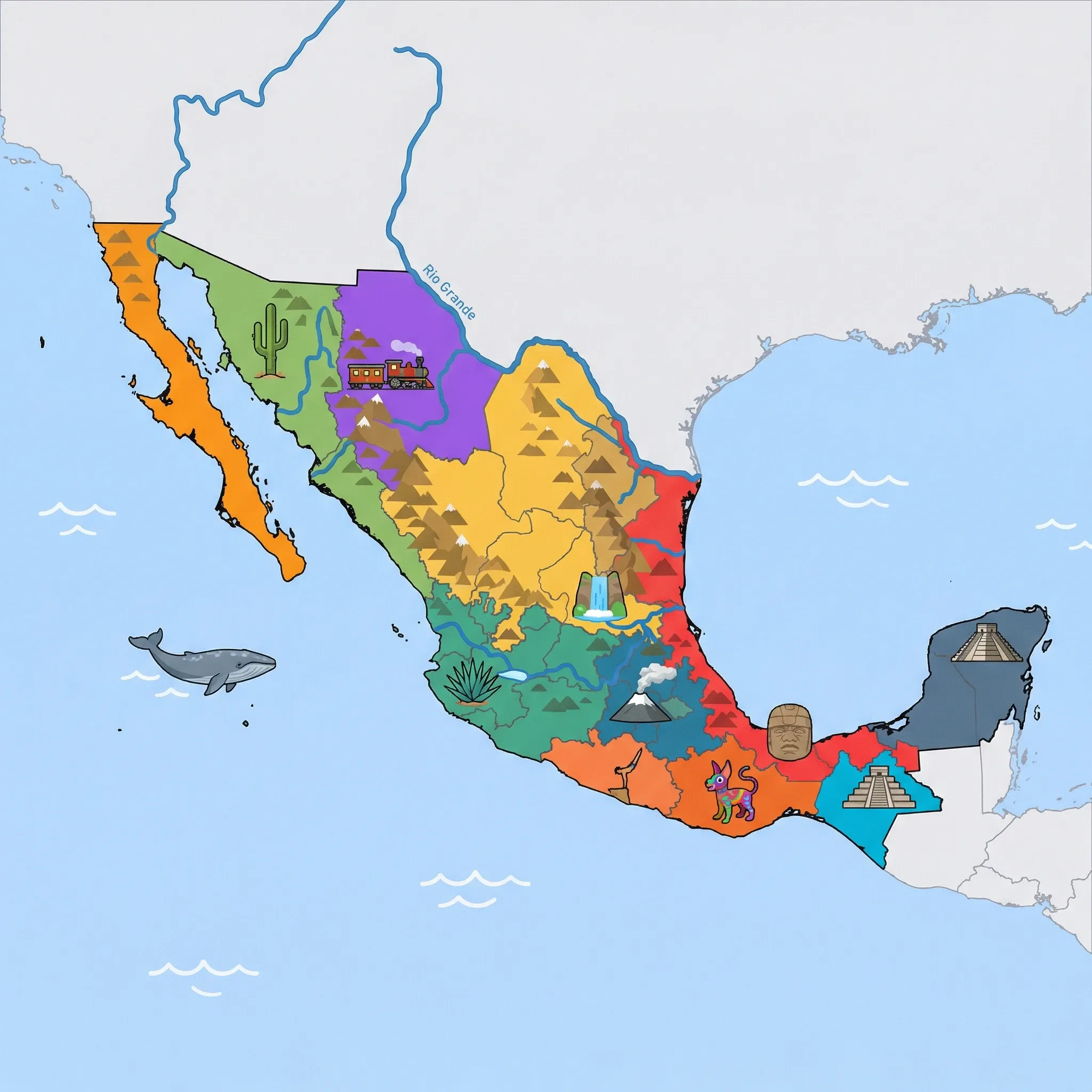
Click a region to explore
Oaxaca (pronounced "wa-ha-ka") is widely considered the most authentic and culturally rich destination in Mexico. It is a favorite for families because it stimulates all the senses: the smell of chocolate and mole in the markets, the bright colors of the alebrijes (fantastical wooden carvings), and the sounds of brass bands in the Zócalo. The region is divided between the Central Valleys, home to the colonial capital and ancient ruins, and the Pacific Coast, known for its surfing beaches and bays.
Oaxaca City is incredibly walkable and safe. It feels like a living museum where indigenous traditions are woven into modern life. Children will love the vibrant festivals and the hands-on craft villages nearby where they can see rugs being woven or clay being shaped. The coast offers two distinct vibes: the laid-back, surf-centric Puerto Escondido and the resort-focused, calm bays of Huatulco. Connecting the two is a journey through mountains that keeps the region feeling preserved and magical.
Key Attractions
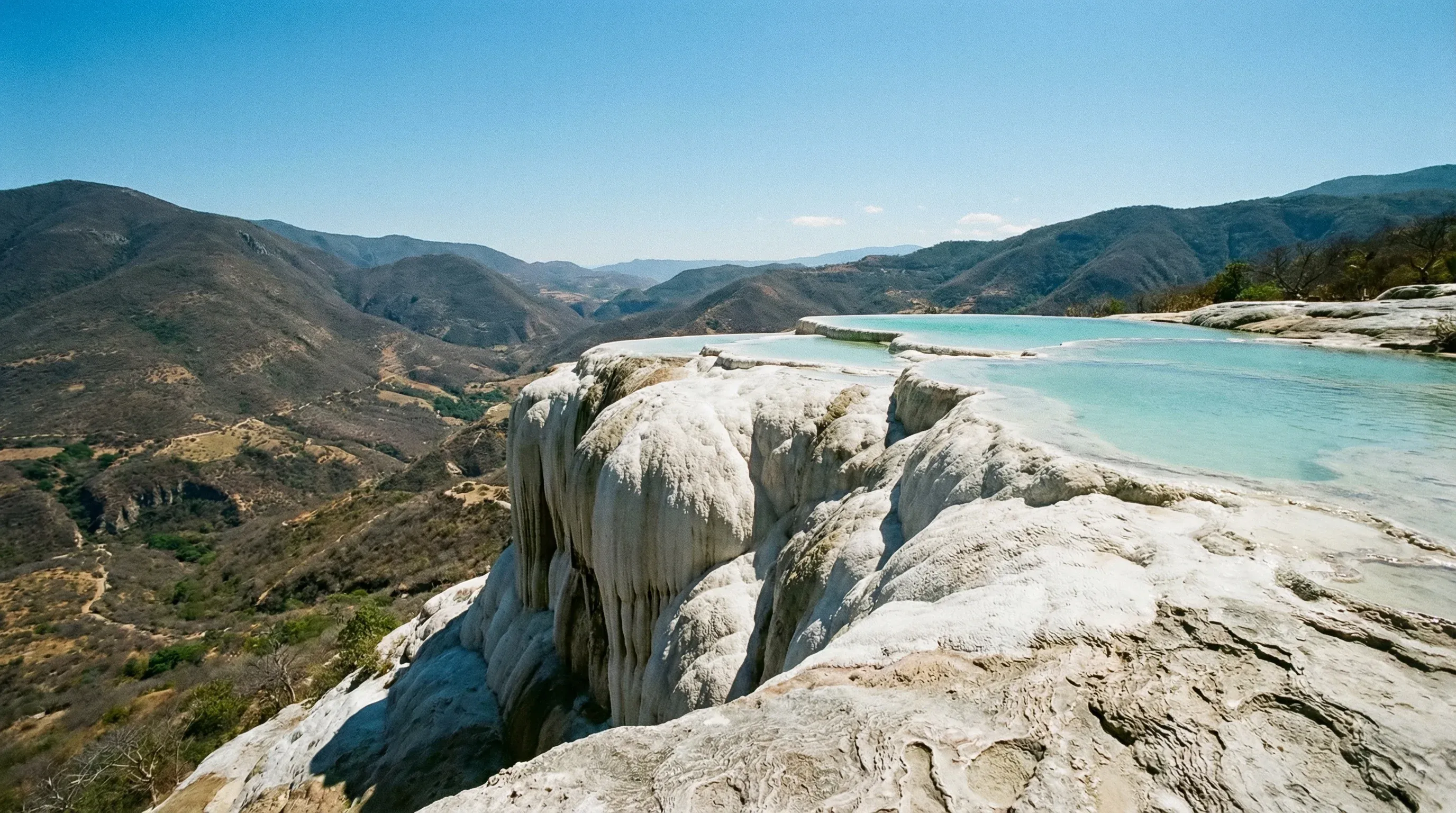
The Monte Albán Archaeological Site is a must-visit; it sits on a flattened mountaintop with 360-degree views of the valley. It's wide open, perfect for kids to run around (unlike the crowded jungle ruins). Hierve el Agua features stunning "petrified" waterfalls (mineral formations) and natural infinity pools where you can swim with a view of the mountains. In the city, the Templo de Santo Domingo de Guzmán is dazzlingly ornate, and the adjacent Jardín Etnobotánico de Oaxaca tells the story of the region through its plants (guided tours only).
On the coast, Huatulco National Park offers boat tours to pristine bays with excellent snorkeling. In Puerto Escondido, families can watch world-class surfing at Playa Zicatela (swimming is dangerous here) or swim safely in the calm cove of Playa Carrizalillo.
Practical Advice
The drive between Oaxaca City and the coast is long and winding (6+ hours). A new highway is opening sections, but flying or taking a small "aerotucan" plane is often better for kids prone to motion sickness. The Day of the Dead (Dia de Muertos) in late October is spectacular but requires booking months in advance.
Food & Drink
Typical meal times: Breakfast 9:00 am. Lunch 2:00 pm. Chocolate and bread are often eaten as a late supper.
Typical meal costs: Moderate. Incredible street food is cheap ($2 USD), while high-end restaurants cost MXN 600+ (approx. $33 USD / €30 EUR).
Dietary requirements: Excellent. Oaxaca has many vegetarian options (corn, beans, cheese, squash blossoms), though always ask if beans are cooked with lard.
Signature dishes:
- Mole Negro – The most famous of the 7 moles; a complex, dark sauce made with chocolate, chilies, and spices, usually served over chicken.
- Tlayudas – Often called "Oaxacan Pizza"—a giant, crispy tortilla covered in lard, bean paste, string cheese (quesillo), and meat.
- Chapulines – Toasted grasshoppers seasoned with lime and chili. A crunchy, protein-rich snack kids often dare each other to try!
Why this score?
The rugged Sierra Madre del Sur mountains offer winding, difficult roads and remote indigenous villages. The Pacific coast features powerful surf and less-developed beach towns, providing a more raw experience than the Caribbean coast.
Why this score?
Oaxaca City has several reliable private hospitals, but they are smaller and less advanced than those in Mexico City or Monterrey. Medical care on the coast in places like Puerto Escondido is adequate for basics but limited for major traumas.
Why this score?
Oaxaca City has become a global foodie and cultural pilgrimage site, while Puerto Escondido is world-renowned among surfers. It is a well-recognized destination but lacks the sheer volume of the mass-tourism hubs in Quintana Roo.

Oaxaca is generally cheaper than CDMX or the Yucatán. You can find beautiful boutique hotels for MXN 1,800–3,000 (approx. $100–165 USD / €90–150 EUR). Market food is very cheap, but the city also has a booming fine-dining scene that charges international prices.

Getting Here & Around
Getting Here
- Airports – Oaxaca City (OAX), Puerto Escondido (PXM), and Huatulco (HUX) all have international or domestic connections.
- Bus – ADO buses are comfortable but the route from CDMX to Oaxaca takes 6–7 hours.
Getting Around
- Walking – Oaxaca City is best explored on foot.
- Taxis/Colectivos – To visit craft villages or ruins like Mitla Archaeological Site, shared taxis (colectivos) or private drivers are affordable and efficient.
- Air – Small planes (Aerotucan) connect the city to the coast in 40 minutes, skipping the winding mountain roads.
Nearby Airports (3 airports)
Huatulco
HUXHuatulco
Xoxocotlan International
OAXOaxaca
Puerto Escondido
PXMPuerto Escondido
View full flight map for Mexico →
Official Links

Packing List
Essential if you plan to drive or bus from the city to the coast
You will buy bulky crafts (rugs, carvings, pottery); bring space for them
The sun at high altitude (Oaxaca City) burns faster than at sea level
Strictly required in cenotes and marine parks to protect ecosystems; regular sunscreen is often confiscated.
Essential for protecting feet on rocky cenote floors and hot sand; widely used by locals.
High-altitude cities like Mexico City and San Cristóbal get surprisingly cold at night, even in summer.
Many colonial towns have uneven cobblestone streets that make strollers difficult to use.
Easier to apply on squirming kids than spray and essential for preventing dengue in tropical areas.

Activities & Best Times

Hiking, wildlife, outdoor exploration, ecotourism
Boasts incredible biodiversity and immersion in the Sierra Norte highlands through established ecotourism centers. The dry winter season is optimal for mountain exploration, whereas the heavy summer rains often lead to difficult trail conditions.

Urban tourism, museums, historical sites, architecture
A UNESCO-listed colonial center with profound indigenous heritage, world-class gastronomy, and iconic archaeological sites like Monte Albán. Peak months offer ideal walking weather, while summer shoulder months remain popular despite the increased rainfall.

Beach resorts, marine activities: diving, snorkelling, kite surfing, wind surfing, sailing
Features iconic Pacific destinations like Puerto Escondido and Huatulco with significant surfing and coastal recreation. Best visited during the dry season for calmest seas and maximum water clarity for snorkeling.

Sport tourism, fitness activities, active recreation
Strong infrastructure for organized trekking and outdoor activities in established eco-parks. Peak conditions occur when trails are dry and stable, avoiding the significant erosion common in the peak rainy months.

Learning experiences, scientific sites, historical education
Centered on the internationally recognized Centro Mexicano de la Tortuga, offering high-quality marine conservation education. Peak months align with the primary nesting and hatching cycles of sea turtles and major family travel windows.

Amusement parks, family entertainment venues
Includes regional aquatic highlights like Cascadas Mágicas de Copalitilla. Best visited during the dry season to ensure optimal water clarity and safe access to the natural splash areas.

Attractions (15 total)



Public Holidays & Calendar Next 12 months
Public holidays, festivals, cultural celebrations, and seasonal natural phenomena coming up in Oaxaca & Southern Highlands over the next 12 months.
Loading holidays and events...

Travel Advisory
All major agencies maintain a baseline of increased vigilance for Mexico. While many tourist areas remain accessible, widespread criminal activity and recent localized spikes in cartel-related violence in western states necessitate a high degree of caution.
Safety Topics
Traveller Advice (4 groups)

While major cities and resort destinations are generally accepting, social attitudes in rural regions can be conservative. Travelers should be mindful of local sentiments regarding public displays of affection.

Female travelers should remain particularly alert as incidents of harassment and sexual assault have been reported, even in tourist areas. It is safer to travel in groups and use reputable, pre-arranged transportation.

Stay within well-known tourist zones and travel primarily by air. If driving is necessary, use toll roads during daylight hours and avoid secondary or isolated routes. Monitor local news constantly for sudden security changes or roadblocks.

Older travelers should consider the physical demands of high-altitude destinations like Mexico City. Ensure comprehensive health insurance is in place, as private medical care in cities is excellent but expensive, whereas rural facilities are often limited.
Agency Summaries
New Zealanders should exercise heightened caution because of pervasive violent crime and drug-related conflicts. Specific regional warnings are in place for many states where travelers are advised to avoid non-essential trips.
Travelers should be extremely careful due to prevalent crime and kidnapping. While the national level is set at increased caution, specific states carry 'Do Not Travel' warnings because of extreme violence. U.S. government personnel face restricted movement in many high-risk zones.
Irish citizens are advised to be very cautious across the country. Travel to Jalisco is currently discouraged entirely due to ongoing security operations and violence. Many other states are designated for essential travel only due to high levels of insecurity.
The security situation is unpredictable and potentially dangerous in several states. Travelers in Jalisco are advised to stay indoors following significant unrest and road blockades. Violent incidents, including arson and armed confrontations, have increased following a major law enforcement operation.
A high level of vigilance is required due to the persistent threat of violent crime. Recent security incidents in Jalisco and neighboring states have led to shelter-in-place advisories and significant transportation disruptions, including flight cancellations in major tourist hubs.
Canadians are urged to remain highly vigilant throughout Mexico due to widespread criminal activity. Emergency shelter-in-place orders are currently active in Jalisco and Nayarit following violent clashes between security forces and criminal groups. High levels of violence and organized crime are reported in many regions.
Information is provided for general guidance only and does not constitute travel, safety, medical, or legal advice. Conditions may change. Users are responsible for independently verifying information before travel.