

Overview
The Federated States of Micronesia (FSM) is not a single travel destination but a collection of four distinct states-Yap, Chuuk, Pohnpei, and Kosrae-spread across 1,700 miles of the Pacific Ocean. For families, this is an adventure into the "real" Pacific, far removed from mass tourism. Each island offers a different vibe: Pohnpei is a lush garden island with ancient ruins and waterfalls; Chuuk is a world-class diving destination with a massive lagoon; Yap is famous for its traditional culture and stone money; and Kosrae is a sleepy, unspoiled jewel known as the "Island of the Sleeping Lady."
Traveling here requires patience and a sense of adventure. The infrastructure is basic compared to Hawaii or Fiji, but the rewards are immense. Children will love the feeling of exploration-whether it's kayaking through mangrove tunnels, spotting manta rays, or learning how local families live in villages that have changed little over decades. The climate is tropical and humid year-round, with frequent rain showers that keep the islands emerald green. While often considered a diver's paradise, the shallow reefs and calm lagoons make it surprisingly accessible for young snorkelers too.
Key Attractions
The crown jewel of Pohnpei is Nan Madol, often called the "Venice of the Pacific." This ancient city, built on 92 artificial islets connected by canals, is a UNESCO World Heritage site that feels like a scene from an Indiana Jones movie. Families can hire a boat to navigate the canals and explore the massive basalt walls-an unforgettable history lesson for older children.
In Chuuk, the main draw is Truk Lagoon. While famous for deep technical diving, it is also incredible for snorkelers. Several WWII shipwrecks, such as the bow of the Fujikawa Maru, sit in shallow water where kids can look down to see guns, decks, and coral-encrusted machinery just a few feet below the surface. In Yap, a walk through a traditional village to see the giant Stone Money banks-massive limestone discs used as currency-is a unique cultural experience found nowhere else on Earth.
For nature-loving families, Kosrae offers the Lelu Ruins, a smaller but accessible ancient city, and the Blue Hole, a calm spot perfect for easy snorkeling. Back on Pohnpei, the Kepirohi Waterfall offers a stunning natural swimming pool with easy access, making it a perfect cooling-off spot for younger children after a day of exploring.
Practical Advice
Best time to visit: The dry season (roughly December to April) is best for travel, though rain is possible anytime. Pohnpei is one of the wettest places on Earth, so rain gear is essential.
Visa & Entry: US citizens need no visa. Most other nationalities receive a 30-day entry permit on arrival. Ensure you have proof of onward travel.
Local Customs: Modesty is very important. In Chuuk, Yap, and Kosrae, women (including teenagers) should cover their thighs; swim shorts or leggings are preferred over bikini bottoms. Sunday is strictly observed in Kosrae-everything closes, and fishing or swimming is often discouraged out of respect.
Food & Drink
Typical meal times: Breakfast 7:00 am to 9:00 am, Lunch 11:30 am to 1:30 pm, Dinner 6:00 pm to 9:00 pm.
Typical meal costs: Lunch $12–20 (approx. €11–18 EUR / £9–16 GBP). Dinner $20–45 (approx. €18–42 EUR / £16–35 GBP). Prices are higher than Southeast Asia due to reliance on imports.
Dietary requirements: Vegetarian options are limited and often rely on imported frozen vegetables or local root crops (taro, breadfruit). Gluten-free travelers should be cautious with soy sauce marinades. Fresh fish is abundant.
Family-friendly dining: Most hotel restaurants are family-friendly but simple. High chairs are rare outside of main tourist hotels. Kids will generally enjoy the simple grilled chicken or fish dishes.
Signature dishes:
- Mangrove Crab – A Kosrae specialty, these massive crabs are sweet, tender, and usually served steamed or with a chili sauce.
- Breadfruit (Mos) – A starchy staple fruit, served fried (like chips), baked, or steamed; a kid-friendly alternative to potatoes.
- Sashimi – With world-class tuna fisheries, raw tuna is served everywhere, often with a dipping sauce of soy, lime, and local pepper.
- Chicken Adobo – A popular comfort food influenced by Filipino cuisine, consisting of chicken stewed in vinegar and soy sauce.
Safety
Micronesia is generally safe for families, with low levels of violent crime. However, petty theft can occur. In Chuuk (Weno), crime rates are higher than in other states; avoid walking alone at night and stick to hotel grounds or organized tours after dark. Alcohol-related trouble can occur on weekends. Always check the latest advice for ocean conditions, as currents in channels can be strong.
Family Travel Notice
Minors are restricted from entering or leaving the country without a legal guardian or explicit written consent. Ensure you carry a certified letter if travelling with a child who is not your own.

While ground costs are mid-range, getting to FSM is expensive. A family can expect to spend $180–300 USD (approx. €165–275 EUR) per day on accommodation, car rental, and meals. Hotel rooms range from $120–200 USD. Inter-island flights are costly, often exceeding $200 USD per person per leg.
Age Suitability





Did you know? Micronesia welcomes approximately 18,000 international visitors per year. Most visitors come from East Asia and the Pacific.

Explore Regions
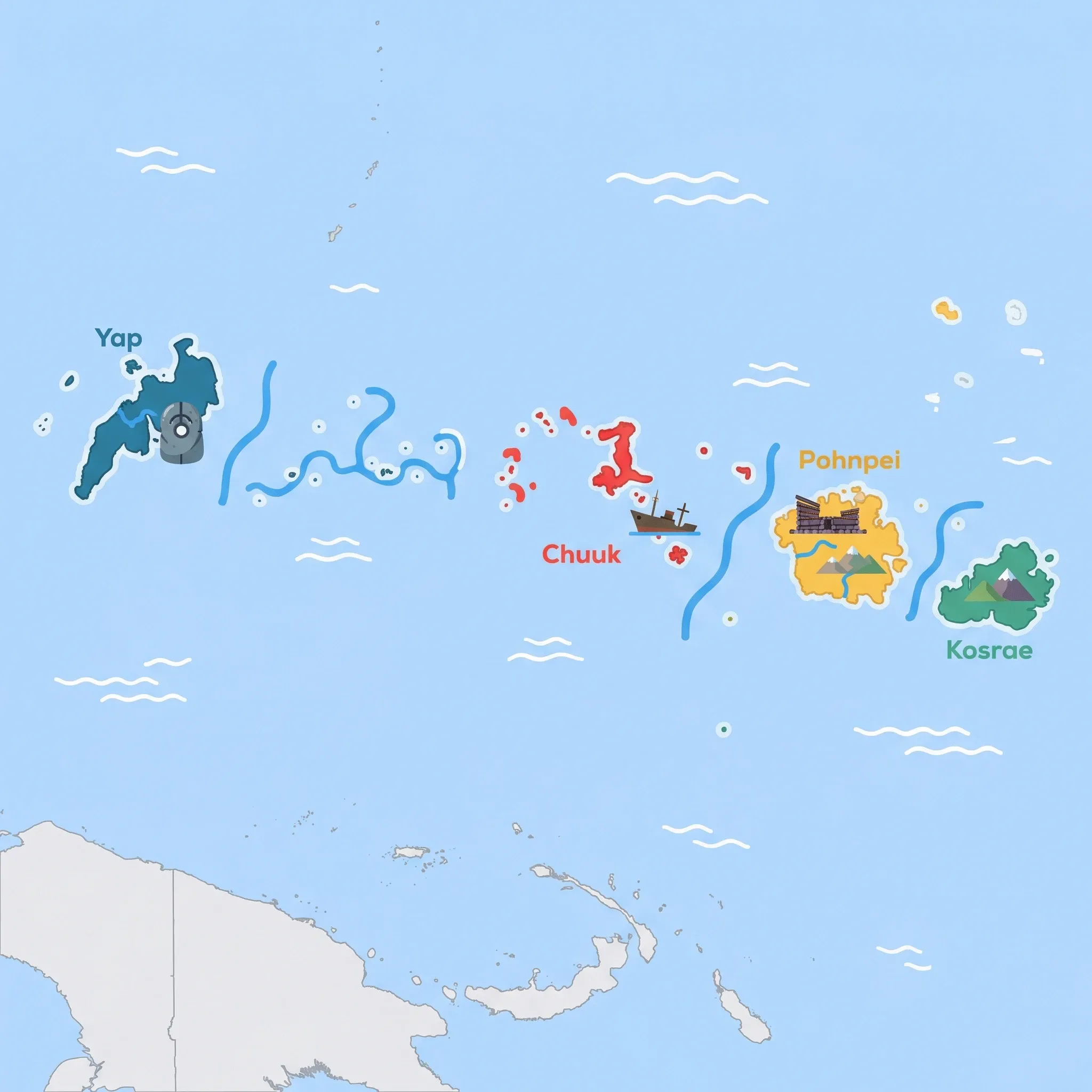
4 Regions
Chuuk (wreck diving)
Explore the world's greatest underwater museum ⚓️🐠
Kosrae
The Sleeping Lady's untouched paradise 🌺⛰️
Pohnpei (Nan Madol)
Home to the ancient Venice of the Pacific 🗿🌿
Yap (traditional culture)
Land of Stone Money and gentle giants 🪙🦈
Click on a region marker to explore details. Use the dropdown to color regions by activity suitability.

Getting There & Around
Getting There
- By Air – The "Island Hopper" (United Airlines) is the lifeline, connecting Guam and Honolulu to Chuuk, Pohnpei, and Kosrae. Nauru Airlines also connects Pohnpei to Brisbane (Australia) and Nauru.
- Entry Requirements – US citizens can enter visa-free to live and work. UK, EU, and most other citizens receive a 30-day entry permit on arrival. Check your government website for the latest visa requirements, or use the IATA Travel Centre entry-requirements checker.
- Departure Tax – A departure fee of $20–30 USD per person applies when leaving each state, payable in cash at the airport.
Getting Around
- Car Hire – Essential for families on Pohnpei and Kosrae to explore independently. Rentals are usually older Japanese sedans; book well in advance.
- Taxis – Available in main towns like Kolonia (Pohnpei) and Weno (Chuuk). They are inexpensive ($1–2 USD per person) and often operate on a shared basis.
- Boats – The only way to see the best sights in Chuuk or access Nan Madol. Hotel-arranged boat tours are reliable but can be pricey ($100+ USD/day).

Packing List
Essential for protecting the pristine coral environments; difficult to find locally.
Board shorts and rash guards are culturally required for women in Chuuk, Yap, and Kosrae (thighs covered).
ATMs are scarce or unreliable outside main towns; many smaller vendors and tour guides cash only.
Most activities involve small open boats where splashing is guaranteed.
Rental gear sizes for children are often unavailable or of poor quality.
Essential for the 'Island Hopper' flight stops and boat trips to outer reefs.

Activities & Best Times

Adventure & Nature
Very GoodHiking, wildlife, outdoor exploration, ecotourism
Offers unique immersion in a sunken maritime wilderness alongside tropical features like Wichon Falls and Mount Teroken. Best visited during the drier months to ensure safe access to natural sites and optimal lagoon conditions for exploring marine monuments.
Home to the world-renowned Yap State Manta Ray Sanctuary and authentic cultural villages, offering unique wildlife encounters and rural immersion. Peak conditions align with the dry season and manta mating cycles, while heavy monsoon rains from June to October degrade visibility and trail access.
Pohnpei offers rare, raw jungle immersion and unique archaeological wonders like Nan Madol and the dramatic Sokehs Rock. While rain is constant, the 'drier' months of January through March provide the best access to interior waterfalls and mountain summits before trails become excessively muddy.

Beach & Sea
GoodBeach resorts, marine activities: diving, snorkelling, kite surfing, wind surfing, sailing
Home to world-class hard coral reefs and the unique Blue Hole, Kosrae provides an authentic, uncrowded marine experience. Underwater visibility is optimal from December to April when swells are manageable and rainfall is not at its absolute peak.
Renowned for world-class wreck diving in Truk Lagoon, though constrained to a marginal rating by limited beach-focused infrastructure. Peak conditions occur during the drier trade wind season from December to April when underwater visibility is highest.
While Tagreth and Menu beaches offer coastal recreation, they are secondary to the island's diving and cultural appeal and lack world-class resort infrastructure. Best visited during the drier months when sea conditions are calmest.

City & Cultural
GoodUrban tourism, museums, historical sites, architecture
Rich in WWII Pacific history, featuring authentic sites like the Sapuk Lighthouse and the Kimiuo Aisek Memorial Museum. The drier months provide the most comfortable climate for walking tours of historic areas and archaeological ruins.
Features globally unique heritage including the Balabat and Rull Stone Money Banks and living history museums that preserve traditional Micronesian lifestyles. The dry season is optimal for exploring these outdoor heritage sites and stone paths without the disruption of intense tropical downpours.
Nan Madol is a UNESCO World Heritage site and a masterpiece of megalithic architecture that offers a profound cultural experience for sophisticated travelers. Visitors should prioritize the northern winter months to explore these outdoor ruins when the risk of extreme tropical deluges and typhoons is lower.

Sports & Active
GoodSport tourism, fitness activities, active recreation
Challenging hiking infrastructure at Sokehs Ridge and Mount Nanlaud provides rigorous activity for athletic families. These trails are best tackled during the seasonal precipitation minimums in the first quarter of the year to ensure safer footing on steep, volcanic terrain.
The island provides rugged, infrastructure-supported hiking trails like the Mt. Finkol and Menke Ruins routes that challenge active travelers. The mid-year monsoon-like conditions are excluded as the steep, muddy terrain becomes unsuitable for safe trekking.
The Mount Tonachau Trail provides a significant hiking route with lagoon views, though active infrastructure is otherwise limited. Hiking is best during the driest months to avoid slippery trail conditions and high tropical humidity.

Road Trips & Scenic
MarginalScenic drives, countryside tours, route-based travel
The Yap Island Scenic Loop and Maap Island Coastal Drive provide pleasant tropical vistas for families exploring by car. Driving is most enjoyable in the dry season when visibility is high and roads are not affected by heavy seasonal flooding.
The Pohnpei Island Circle Road offers a singular, scenic driving experience through dense tropical greenery and coastal villages. Driving is most pleasant during the early months of the year when clearer skies provide better views of the surrounding reef and lush interior mountains.
The circumferential coastal drive offers scenic views of the 'Sleeping Lady' mountain profile and authentic village life. While the road is well-maintained, the limited mileage makes it a minor scenic highlight rather than a standalone travel motivator.

Educational & Exploratory
MarginalLearning experiences, scientific sites, historical education

Public Holidays & Calendar Next 12 months
Public holidays, festivals, cultural celebrations, and seasonal natural phenomena coming up in Micronesia over the next 12 months.
Loading holidays and events...

Climate & Weather
Chuuk (wreck diving)
Show Details
| Month | Temp °C | Rain | Humidity |
|---|
Kosrae
Show Details
| Month | Temp °C | Rain | Humidity |
|---|
Pohnpei (Nan Madol)
Show Details
| Month | Temp °C | Rain | Humidity |
|---|
Yap (traditional culture)
Show Details
| Month | Temp °C | Rain | Humidity |
|---|

Travel Advisory
All major agencies agree that the Federated States of Micronesia is a safe destination where standard travel safety precautions are sufficient.
Safety Topics
Traveller Advice (4 groups)

Minors are restricted from entering or leaving the country without a legal guardian or explicit written consent. Ensure you carry a certified letter if travelling with a child who is not your own.

Individuals with an 'X' gender identifier on their passport may encounter difficulties or entry restrictions, as some local systems and officials may not recognize this designation.

Divers should be extremely cautious around Yap Harbour due to unexploded remnants from past conflicts. It is vital to use reputable tour operators with international safety standards and valid insurance.

Female travellers should avoid walking alone at night, particularly in isolated spots or on beaches, due to reports of physical and sexual assaults.
Agency Summaries
Travellers should maintain a standard level of safety awareness, similar to what they would practice in Canada. Specific attention should be paid to regional weather conditions and outdoor activity safety.
No specific travel warnings are in effect. Travellers are encouraged to have comprehensive insurance and stay informed about local health and weather conditions.
Irish citizens are advised to be mindful of their surroundings. Limited consular assistance is available locally, with support provided through the embassy in Manila.
British nationals are advised to take standard precautions. The guidance focuses on entry requirements, legal differences, and health considerations for the Pacific region.
The country is generally safe for visitors, though situational awareness is encouraged. Travellers are advised to monitor local news via social media due to a limited traditional media environment.
Micronesia is assessed as a low-risk destination. Visitors should be aware of seasonal weather hazards and take care in isolated areas.
Information is provided for general guidance only and does not constitute travel, safety, medical, or legal advice. Conditions may change. Users are responsible for independently verifying information before travel.