
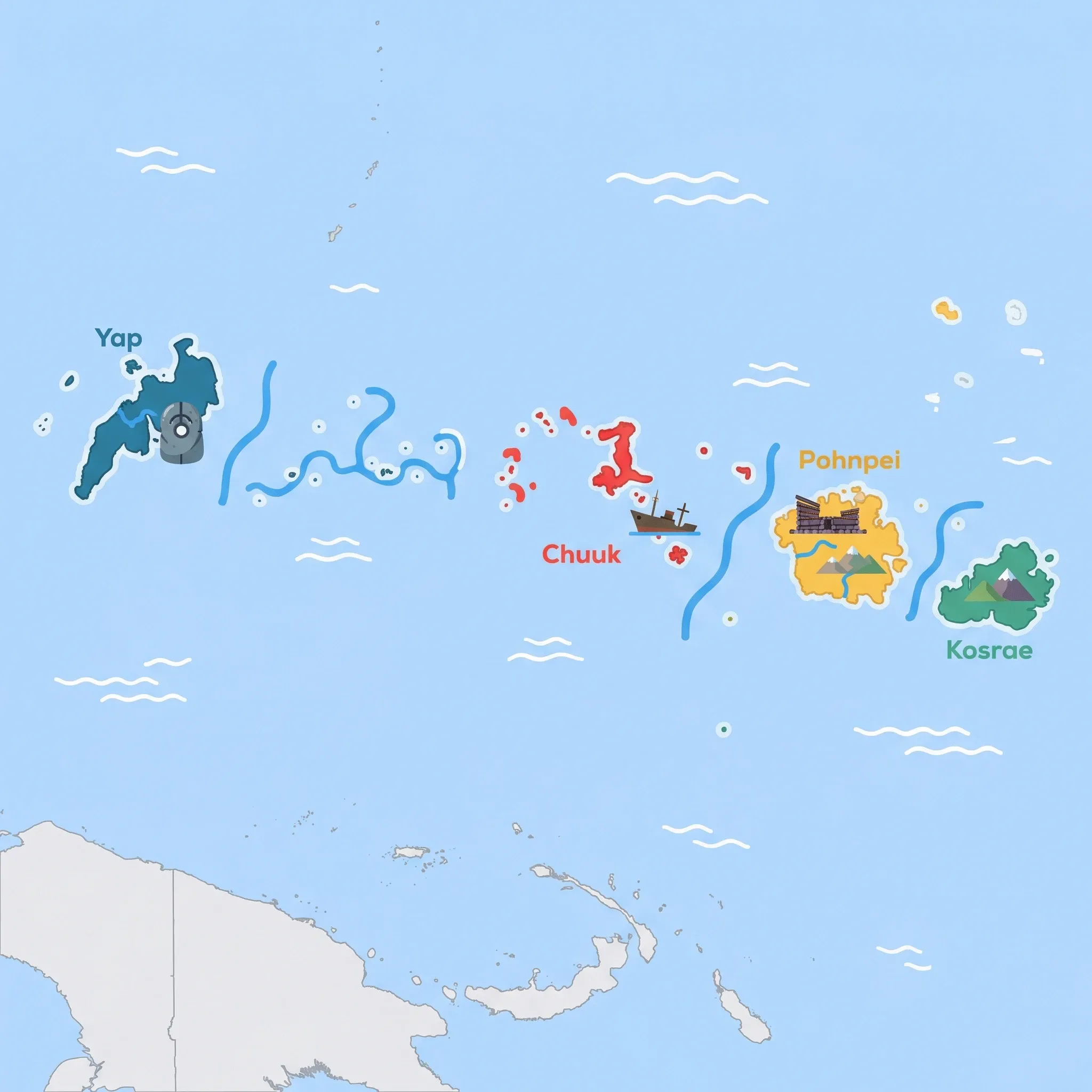
Click a region to explore
Overview
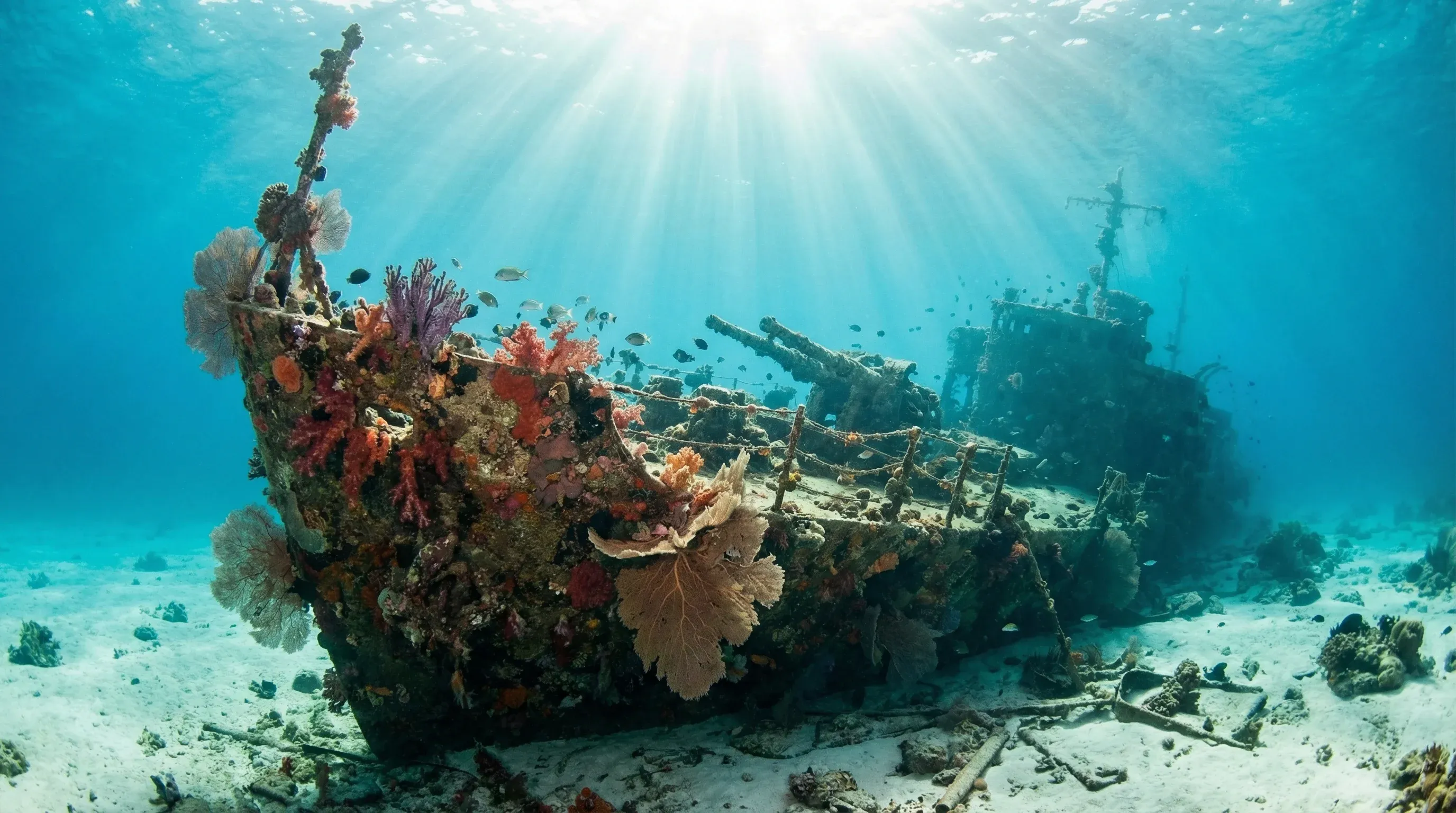
Chuuk State, often referred to by its former name Truk, is a place of profound historical weight and breathtaking natural beauty. For families, it offers a unique opportunity to engage with World War II history not through textbooks, but through tangible exploration. The region is dominated by Truk Lagoon, a vast body of water shielded by a protective barrier reef. Inside this calm turquoise expanse lie the remains of the Japanese Imperial Fleet, sunk during Operation Hailstone in 1944. While this sounds intense, many wrecks are situated in shallow, clear waters, making them accessible to snorkelers and young swimmers, transforming a history lesson into an aquatic adventure.
Beyond the wrecks, the islands themselves are lush, green, and volcanic, rising steeply from the ocean. Weno, the capital and commercial hub, is gritty and bustling, but the outer islands offer a glimpse into a slower, more traditional Micronesian life. The climate is tropical and humid year-round, with the water temperature remaining a bathtub-warm 84°F (29°C), perfect for children who might otherwise get cold quickly in the sea. While the infrastructure is developing and can be rustic, the warmth of the Chuukese people and the sheer uniqueness of the environment make it a memorable stop for adventurous families.
Key Attractions
The primary draw is undeniably Truk Lagoon. For diving families, this is a pilgrimage site, but even non-divers can enjoy the wonders here. Several wrecks, such as the Fumizuki destroyer or the Susuki patrol boat, have sections shallow enough to be seen from the surface. Snorkeling over a submerged deck encrusted with brilliant soft corals and teeming with clownfish is a surreal experience that captivates children. It is living history in the truest sense; tanks, trucks, and artifacts still sit on the decks of these silent giants.
On land, families can hire a guide to hike up Mount Tonaachaw on Weno. The hike provides panoramic views of the lagoon and is steeped in local legend as the home of the octopus god. The Sappuk Lighthouse, built by the Japanese, offers another excursion combining moderate physical activity with historical sightseeing, featuring guns and bunkers that kids often find fascinating to explore (with supervision). Boat trips to the smaller, uninhabited islands within the lagoon offer perfect picnic spots with pristine white sands and coconut palms, providing a relaxing break from historical tours.
Practical Advice
The best time to visit is during the dry season from December to April, though diving and snorkeling are year-round activities due to the lagoon's shelter. Chuuk is less polished than major tourist hubs; power outages can occur, and roads in Weno are often in poor condition. Families should bring reef-safe sunscreen and basic medical supplies, as pharmacies may not stock pediatric brands. Dress modestly when in towns (covering shoulders and knees) to respect local customs, though swimwear is fine on beaches and boats.
Food & Drink
Typical meal times: Breakfast is early, from 6:30 am to 9:00 am. Lunch is typically served from 11:30 am to 1:30 pm, and dinner runs from 6:00 pm to 8:30 pm. Restaurants may close early if business is slow.
Typical meal costs: A meal at a hotel or decent restaurant costs $15–25 (approx. €14–23 / £12–20) per person. Local takeout spots are cheaper, around $6–10 (approx. €5.50–9 / £4.50–8).
Dietary requirements: Fresh fish is the staple. Vegetarian options are limited to salads, rice, and imported vegetables. Gluten-free diners can rely on grilled seafood and rice but should be wary of soy sauce marinades. Allergies should be communicated clearly, as concepts of cross-contamination may vary.
Signature dishes:
- Kon – Pounded breadfruit, a starchy staple often served warm and boasting a dough-like consistency, perfect for soaking up sauces.
- Fresh Sashimi – With the ocean at the doorstep, raw tuna and wahoo are served incredibly fresh, often with a simple dipping sauce of soy and lime.
- Pounded Taro with Coconut Milk – A sweet and savory side dish where taro root is mashed and mixed with rich coconut cream.
Why this score?
The region offers high-intensity adventure centered on underwater exploration of 'ghost ships' and WWII relics. Above water, the islands are rugged with limited transport, requiring visitors to be self-sufficient and comfortable with basic conditions.
Why this score?
Medical facilities in Weno are very basic and often lack essential supplies for complex treatments. While a recompression chamber is available for diving emergencies, most serious medical issues require evacuation to Guam or Hawaii.
Why this score?
While Truk Lagoon is globally famous among the diving community for its WWII shipwrecks, the total number of annual visitors remains extremely low. It is a niche destination that lacks the infrastructure to support mainstream international tourism beyond specialized dive groups.

Chuuk operates on the US Dollar. Due to the high reliance on imported goods, supermarket prices can be surprisingly high. Accommodation ranges from budget motels to dedicated dive resorts. A mid-range family room typically costs $120–180 (approx. €110–165 / £95–140) per night. Boat fees for snorkeling trips are a significant extra cost, often running $50–100 (approx. €45–90 / £40–80) per person depending on the distance.
Family Travel Notice
Minors are restricted from entering or leaving the country without a legal guardian or explicit written consent. Ensure you carry a certified letter if travelling with a child who is not your own.

Getting Here & Around
Getting Here
- Airports – Chuuk International Airport (TKK) on Weno island is the main gateway. It is a key stop on the United Airlines "Island Hopper" route connecting Guam and Honolulu.
- Ferry – There are no regular scheduled passenger ferries connecting Chuuk to other major Micronesian states; air travel is the only practical entry method for international visitors.
Getting Around
- Car – Taxis are available in Weno and are generally inexpensive, but unmetered—agree on a price before getting in. Rental cars are available but road conditions can be extremely potholed and rough.
- Boat – Essential for seeing Truk Lagoon. Most resorts operate their own dive boats and skiffs to transport guests to wreck sites and picnic islands.
- Walking – Feasible within the small downtown area of Weno, but the heat and lack of sidewalks make it difficult for longer distances with children.
Nearby Airports (1 airport)
Truk
TKKTruk, Caroline Islands
View full flight map for Micronesia →
Official Links

Packing List
Essential for keeping phones and clothes dry during open skiff rides across the lagoon.
Supplies are limited locally and protecting the coral in the lagoon is critical.
The lagoon is deep in places; a vest provides safety and confidence for younger swimmers.
To capture the unique submerged WWII wrecks which are the region's main highlight.
Board shorts and rash guards are culturally required for women in Chuuk, Yap, and Kosrae (thighs covered).
ATMs are scarce or unreliable outside main towns; many smaller vendors and tour guides cash only.
Most activities involve small open boats where splashing is guaranteed.
Rental gear sizes for children are often unavailable or of poor quality.
Essential for the 'Island Hopper' flight stops and boat trips to outer reefs.

Activities & Best Times

Hiking, wildlife, outdoor exploration, ecotourism
Offers unique immersion in a sunken maritime wilderness alongside tropical features like Wichon Falls and Mount Teroken. Best visited during the drier months to ensure safe access to natural sites and optimal lagoon conditions for exploring marine monuments.

Urban tourism, museums, historical sites, architecture
Rich in WWII Pacific history, featuring authentic sites like the Sapuk Lighthouse and the Kimiuo Aisek Memorial Museum. The drier months provide the most comfortable climate for walking tours of historic areas and archaeological ruins.

Beach resorts, marine activities: diving, snorkelling, kite surfing, wind surfing, sailing
Renowned for world-class wreck diving in Truk Lagoon, though constrained to a marginal rating by limited beach-focused infrastructure. Peak conditions occur during the drier trade wind season from December to April when underwater visibility is highest.

Sport tourism, fitness activities, active recreation
The Mount Tonachau Trail provides a significant hiking route with lagoon views, though active infrastructure is otherwise limited. Hiking is best during the driest months to avoid slippery trail conditions and high tropical humidity.




Public Holidays & Calendar Next 12 months
Public holidays, festivals, cultural celebrations, and seasonal natural phenomena coming up in Chuuk (wreck diving) over the next 12 months.
Loading holidays and events...

Travel Advisory
All major agencies agree that the Federated States of Micronesia is a safe destination where standard travel safety precautions are sufficient.
Safety Topics
Traveller Advice (4 groups)

Minors are restricted from entering or leaving the country without a legal guardian or explicit written consent. Ensure you carry a certified letter if travelling with a child who is not your own.

Individuals with an 'X' gender identifier on their passport may encounter difficulties or entry restrictions, as some local systems and officials may not recognize this designation.

Divers should be extremely cautious around Yap Harbour due to unexploded remnants from past conflicts. It is vital to use reputable tour operators with international safety standards and valid insurance.

Female travellers should avoid walking alone at night, particularly in isolated spots or on beaches, due to reports of physical and sexual assaults.
Agency Summaries
Travellers should maintain a standard level of safety awareness, similar to what they would practice in Canada. Specific attention should be paid to regional weather conditions and outdoor activity safety.
No specific travel warnings are in effect. Travellers are encouraged to have comprehensive insurance and stay informed about local health and weather conditions.
Irish citizens are advised to be mindful of their surroundings. Limited consular assistance is available locally, with support provided through the embassy in Manila.
British nationals are advised to take standard precautions. The guidance focuses on entry requirements, legal differences, and health considerations for the Pacific region.
The country is generally safe for visitors, though situational awareness is encouraged. Travellers are advised to monitor local news via social media due to a limited traditional media environment.
Micronesia is assessed as a low-risk destination. Visitors should be aware of seasonal weather hazards and take care in isolated areas.
Information is provided for general guidance only and does not constitute travel, safety, medical, or legal advice. Conditions may change. Users are responsible for independently verifying information before travel.