
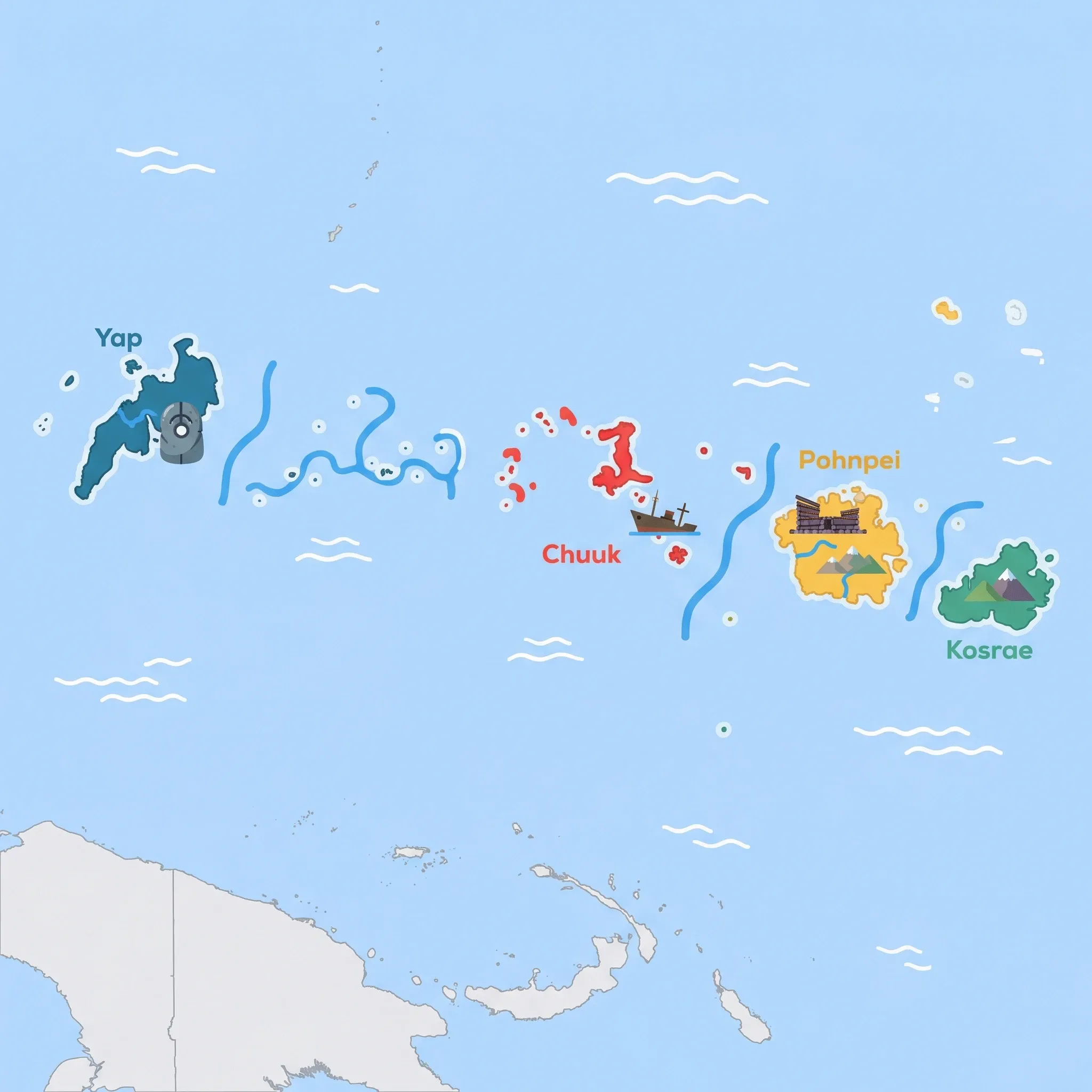
Click a region to explore
Overview
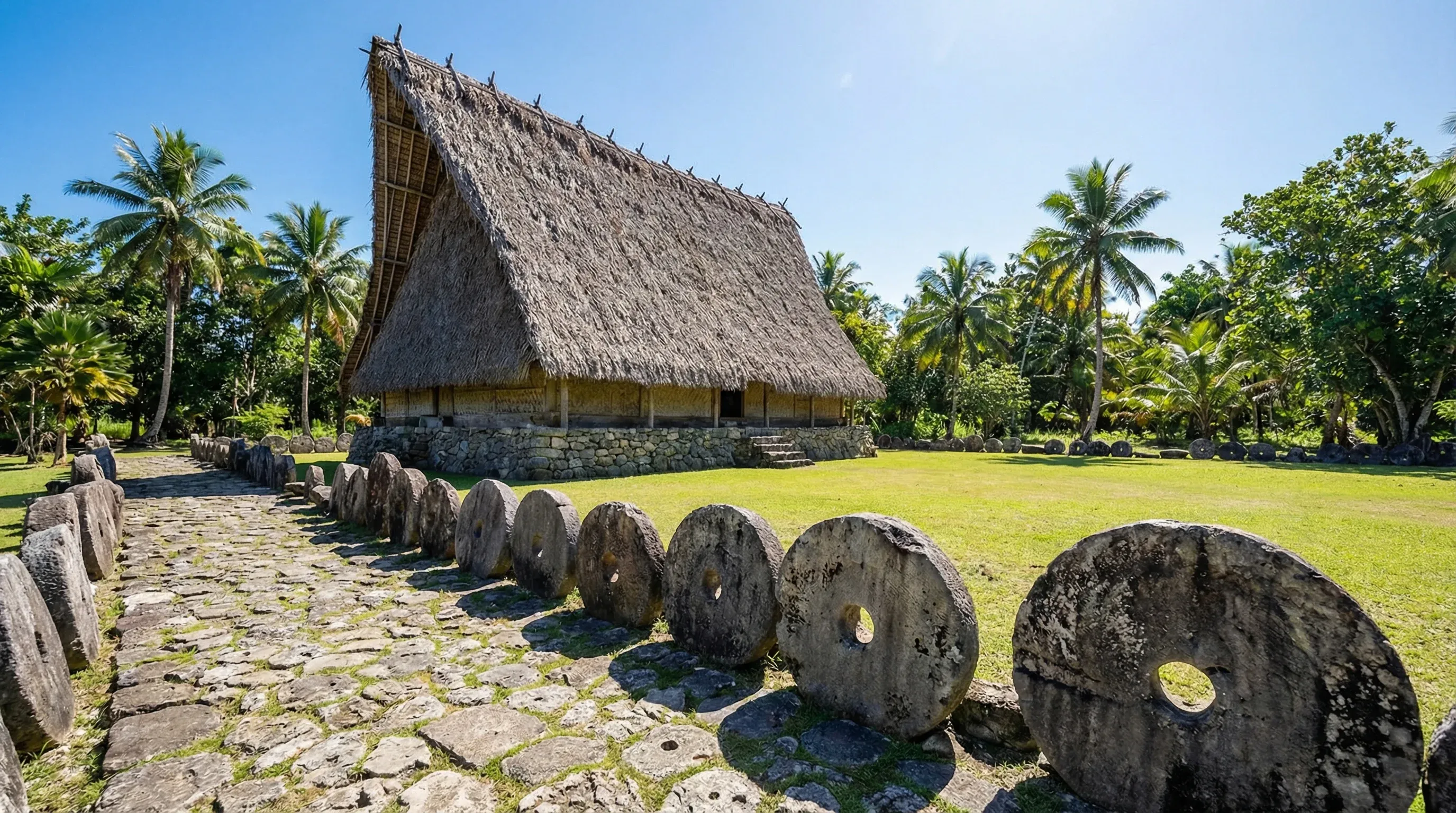
Yap is a destination that defies standard tourism categories. It is a place where ancient traditions are not just performed for visitors but are a part of daily life. The most iconic feature of Yap is its Stone Money (Rai)—massive, donut-shaped limestone discs that can be larger than a person. These are still used as currency for major traditional transactions like land deals or weddings. Seeing these "banks" lining the pathways of quiet villages is a surreal and educational experience for children, sparking conversations about value, money, and history.
Geographically, Yap is a cluster of four high islands connected by mangroves and waterways. It is hilly, green, and incredibly tidy. The Yapese take immense pride in their villages, which are connected by centuries-old stone paths. For families, the island feels safe and slow-paced. The culture is conservative; traditional dress (grass skirts for women, loincloths for men) is still worn in villages, though Western clothing is common in town. This cultural immersion is gentle and welcoming. The surrounding reef is world-famous for its resident population of Manta Rays, which can be seen year-round, offering one of the most reliable places in the world to snorkel or dive with these gentle giants.
Key Attractions
The Stone Money Banks are the headline attraction. You don't need a museum ticket to see them; they are integrated into the villages. Kaday Village offers a wonderful cultural tour where families can see traditional dances, learn about weaving and betel nut chewing (a local pastime), and walk the historic stone paths. It's an interactive history lesson that brings the island's heritage to life.
For wildlife lovers, the Manta Ray Bay area is world-class. While diving is the primary way to see the mantas, they often frequent cleaning stations in shallow enough water for snorkelers to observe them from the surface. Seeing a 10-foot manta ray glide beneath you is a bucket-list experience for older children and teens. The island also has several beaches, though they are often small and secluded. Village View Hotel offers access to a nice beach area suitable for swimming and picnicking.
Practical Advice
Yap is culturally conservative. When visiting villages, women (and girls over a certain age) should cover their thighs—wearing a lavalava (sarong) or long shorts is respectful. Do not step over the stone money or sit on it. The best time to see Mantas is generally December to April (mating season), though they are resident year-round. Internet connectivity can be slow. Bring cash, as ATMs are limited to the main town of Colonia.
Food & Drink
Typical meal times: Breakfast 7:00 am to 9:00 am; Lunch 11:30 am to 1:30 pm; Dinner 6:30 pm to 8:30 pm.
Typical meal costs: Meals are comparable to the US mainland. A dinner entree costs $18–28 (approx. €16–25 / £14–22). Local produce markets offer cheaper fruit and snacks.
Dietary requirements: Restaurants in Colonia cater to international divers, offering burgers, pizza, and fresh fish. Vegetarian options are decent, with salads and vegetable stir-frys available. Vegan options may require specific requests.
Signature dishes:
- Local Garden Food – A generic term for the high-quality organic produce served here, including taro, yams, and breadfruit, often steamed or roasted.
- Fresh Tuna – Often served as sashimi or poked, caught daily by local fishermen.
- Chicken Adobo – Reflecting Filipino influence in the region, this soy and vinegar stew is a common comfort food found in many local eateries.

Yap is a mid-range destination. A double room in a dedicated dive resort or hotel costs $130–190 (approx. €120–175 / £100–150) per night. Car rentals average $60 (approx. €55 / £48) per day. Cultural tours and manta snorkeling trips will be the significant expenses, costing around $50–90 (approx. €45–82 / £40–70) per person.
Family Travel Notice
Minors are restricted from entering or leaving the country without a legal guardian or explicit written consent. Ensure you carry a certified letter if travelling with a child who is not your own.

Getting Here & Around
Getting Here
- Airports – Yap International Airport (YAP) is the entry point. It is served by United Airlines flights typically connecting from Guam or Palau.
- Flight Frequency – Flights are limited (often late at night/early morning), so families need to prepare for potential overnight layovers in Guam or awkward arrival times.
Getting Around
- Car – Rental cars are available and recommended for exploring the island at your own pace. The roads are generally paved and traffic is very light.
- Taxi – Shared taxis exist but are not convenient for touring villages. Most hotels offer shuttle services for their guests.
- Walking – Walking the ancient stone paths is a highlight, but you need a vehicle to get to the trailheads from the main town.
Nearby Airports (1 airport)
Yap International
YAPYap, Caroline Islands
View full flight map for Micronesia →
Official Links

Packing List
Essential for women and girls to cover thighs when entering traditional villages (respecting local custom).
Street lighting is minimal to non-existent outside the main town; essential for walking at night.
Helps cut the glare on the water to spot Manta Rays from the boat before you even jump in.
Recycling facilities are limited; bringing your own bottle reduces plastic waste on this small island.
Essential for protecting the pristine coral environments; difficult to find locally.
Board shorts and rash guards are culturally required for women in Chuuk, Yap, and Kosrae (thighs covered).
ATMs are scarce or unreliable outside main towns; many smaller vendors and tour guides cash only.
Most activities involve small open boats where splashing is guaranteed.
Rental gear sizes for children are often unavailable or of poor quality.
Essential for the 'Island Hopper' flight stops and boat trips to outer reefs.

Activities & Best Times

Hiking, wildlife, outdoor exploration, ecotourism
Home to the world-renowned Yap State Manta Ray Sanctuary and authentic cultural villages, offering unique wildlife encounters and rural immersion. Peak conditions align with the dry season and manta mating cycles, while heavy monsoon rains from June to October degrade visibility and trail access.

Urban tourism, museums, historical sites, architecture
Features globally unique heritage including the Balabat and Rull Stone Money Banks and living history museums that preserve traditional Micronesian lifestyles. The dry season is optimal for exploring these outdoor heritage sites and stone paths without the disruption of intense tropical downpours.

Beach resorts, marine activities: diving, snorkelling, kite surfing, wind surfing, sailing
While Tagreth and Menu beaches offer coastal recreation, they are secondary to the island's diving and cultural appeal and lack world-class resort infrastructure. Best visited during the drier months when sea conditions are calmest.

Scenic drives, countryside tours, route-based travel
The Yap Island Scenic Loop and Maap Island Coastal Drive provide pleasant tropical vistas for families exploring by car. Driving is most enjoyable in the dry season when visibility is high and roads are not affected by heavy seasonal flooding.

Sport tourism, fitness activities, active recreation
Active exploration is limited primarily to the Malway Trail, which offers significant hiking opportunities through the island's interior. Hiking conditions are poor during the peak rainfall months (June–October) due to mud and high humidity.




Public Holidays & Calendar Next 12 months
Public holidays, festivals, cultural celebrations, and seasonal natural phenomena coming up in Yap (traditional culture) over the next 12 months.
Loading holidays and events...

Travel Advisory
All major agencies agree that the Federated States of Micronesia is a safe destination where standard travel safety precautions are sufficient.
Safety Topics
Traveller Advice (4 groups)

Minors are restricted from entering or leaving the country without a legal guardian or explicit written consent. Ensure you carry a certified letter if travelling with a child who is not your own.

Individuals with an 'X' gender identifier on their passport may encounter difficulties or entry restrictions, as some local systems and officials may not recognize this designation.

Divers should be extremely cautious around Yap Harbour due to unexploded remnants from past conflicts. It is vital to use reputable tour operators with international safety standards and valid insurance.

Female travellers should avoid walking alone at night, particularly in isolated spots or on beaches, due to reports of physical and sexual assaults.
Agency Summaries
Travellers should maintain a standard level of safety awareness, similar to what they would practice in Canada. Specific attention should be paid to regional weather conditions and outdoor activity safety.
No specific travel warnings are in effect. Travellers are encouraged to have comprehensive insurance and stay informed about local health and weather conditions.
Irish citizens are advised to be mindful of their surroundings. Limited consular assistance is available locally, with support provided through the embassy in Manila.
British nationals are advised to take standard precautions. The guidance focuses on entry requirements, legal differences, and health considerations for the Pacific region.
The country is generally safe for visitors, though situational awareness is encouraged. Travellers are advised to monitor local news via social media due to a limited traditional media environment.
Micronesia is assessed as a low-risk destination. Visitors should be aware of seasonal weather hazards and take care in isolated areas.
Information is provided for general guidance only and does not constitute travel, safety, medical, or legal advice. Conditions may change. Users are responsible for independently verifying information before travel.