

Overview
Tucked away between Romania and Ukraine, Moldova is a land of pastoral charm and surprising contrasts. For families, it offers a rare glimpse into a Europe that feels untouched by mass tourism. The countryside is a patchwork of vineyards, walnut groves, and sleepy villages where horse-drawn carts are still a common sight alongside modern cars. Geographically, it is defined by rolling hills and deep river valleys, particularly along the Dniester and Prut rivers, creating a landscape that is gentle and accessible for travelers of all ages. The climate is continental, meaning hot, sunny summers perfect for exploring nature, and crisp, snowy winters that turn the cities into quiet wonderlands.
Culturally, Moldova is a warm and communal society where children are adored. The vibe here is slow-paced and authentic. You won't find theme parks or mega-resorts; instead, the "entertainment" comes from exploring ancient cave monasteries carved into cliffs, riding electric carts through underground limestone cities, and experiencing the incredible hospitality of rural guesthouses. It is a place where families can disconnect from the digital rush and reconnect over simple pleasures-sharing a fresh plăcintă (pie), hiking through the Orheiul Vechi & Central gorge, or learning about local folklore in a village museum.
Key Attractions
A family trip should start in the capital, Chișinău, which is surprisingly green and walkable. The Stefan cel Mare Central Park is the city's living room, perfect for a stroller walk or letting kids run around the fountains. Nearby, the National Museum of Ethnography and Natural History is an absolute must-do for children; housed in a stunning Moorish-style building, it features a massive, complete skeleton of a Deinotherium (a prehistoric elephant relative) that leaves kids in awe. For a full day of fresh air, head to the Botanical Garden of the Academy of Sciences of Moldova or the Valea Morilor Park Beach, where you can rent paddle boats on the lake.
Just outside the capital lies one of Moldova's most unique claims to fame: its underground wine cities. While these are active wineries, they are fascinating for children due to their sheer scale. Mileștii Mici holds the Guinness World Record for the largest wine collection, and families can explore its 200km of limestone tunnels by car or bike. Similarly, Cricova Winery offers tours on electric "trains" through underground streets named after grape varieties-an adventure that feels like entering a secret subterranean world.
For a dose of history and nature, travel north to the Orheiul Vechi Archaeological Complex. This open-air museum features an Orthodox monastery carved high into a limestone cliff overlooking the Răut River. The hike up is manageable for active children, and the view is spectacular. The surrounding villages offer a peek into traditional life, with colorful houses and farm animals that younger kids will enjoy. While Transnistria is a unique region with Soviet relics like the Bender Fortress, families should strictly heed safety warnings before considering travel there.
Practical Advice
The best time to visit is late spring (May-June) or early autumn (September-October), when the weather is mild and the markets are overflowing with fresh fruit. Summers can be quite hot, often exceeding 30°C (86°F). Visas are generally not required for citizens of the EU, US, UK, and Canada for stays up to 90 days. English is spoken by younger people in the city, but less so in rural areas and by older generations, where Romanian (official) and Russian are dominant. Medical facilities in Chișinău are adequate for minor issues, but comprehensive travel insurance including evacuation is essential given the regional context.
Food & Drink
Typical meal times: Lunch is the main meal, typically eaten between 12:00 pm and 2:00 pm. Dinner is usually served from 6:00 pm to 9:00 pm.
Typical meal costs: 150–300 MDL (approx. $8–16 USD / €7.50–15 EUR) for a mid-range meal. Street snacks like pies cost 15–30 MDL (approx. $0.80–1.60 USD / €0.75–1.50 EUR).
Dietary requirements: Traditional food is heavy on meat, cheese, and dough. Vegetarians will enjoy potato or cabbage pies (plăcinte) and grilled vegetables, but vegan options can be limited in rural areas. Gluten-free awareness is low, so strict celiecs should be very cautious as flour is ubiquitous.
Family-friendly dining: Moldovans are very family-oriented, and children are welcome everywhere. While specific "kids' menus" are rare, the food is naturally kid-friendly-mashed potatoes, chicken soup (zeamă), and mild pastries are staples. Highchairs are common in city restaurants but less so in village guesthouses.
Signature dishes:
- Plăcinte – Thin, flaky pastry filled with soft cheese (brânză), potatoes, cabbage, or sour cherries. The ultimate Moldovan comfort food.
- Mămăligă cu Brânză și Smântână – A firm cornmeal polenta served with grated sheep cheese and sour cream, often used as a bread substitute.
- Zeamă – A rich, sour chicken noodle soup made with homemade noodles and lovage, perfect for lunch.
- Cușma lui Guguță – A dessert of crepe rolls filled with sour cherries and stacked in a pyramid with whipped cream, named after a famous children's book character's hat.

Moldova is one of the most affordable destinations in Europe. A family of four can travel comfortably for 1,800–2,800 MDL (approx. $100–155 USD / €90–140 EUR) per day, covering accommodation, hearty meals, and entry fees. Public transport is incredibly cheap, with city trolleybus tickets costing just 6 MDL (approx. $0.33 USD / €0.30 EUR).
Age Suitability





Did you know? Moldova welcomes approximately 254,000 international visitors per year. Most visitors come from Europe.

Explore Regions
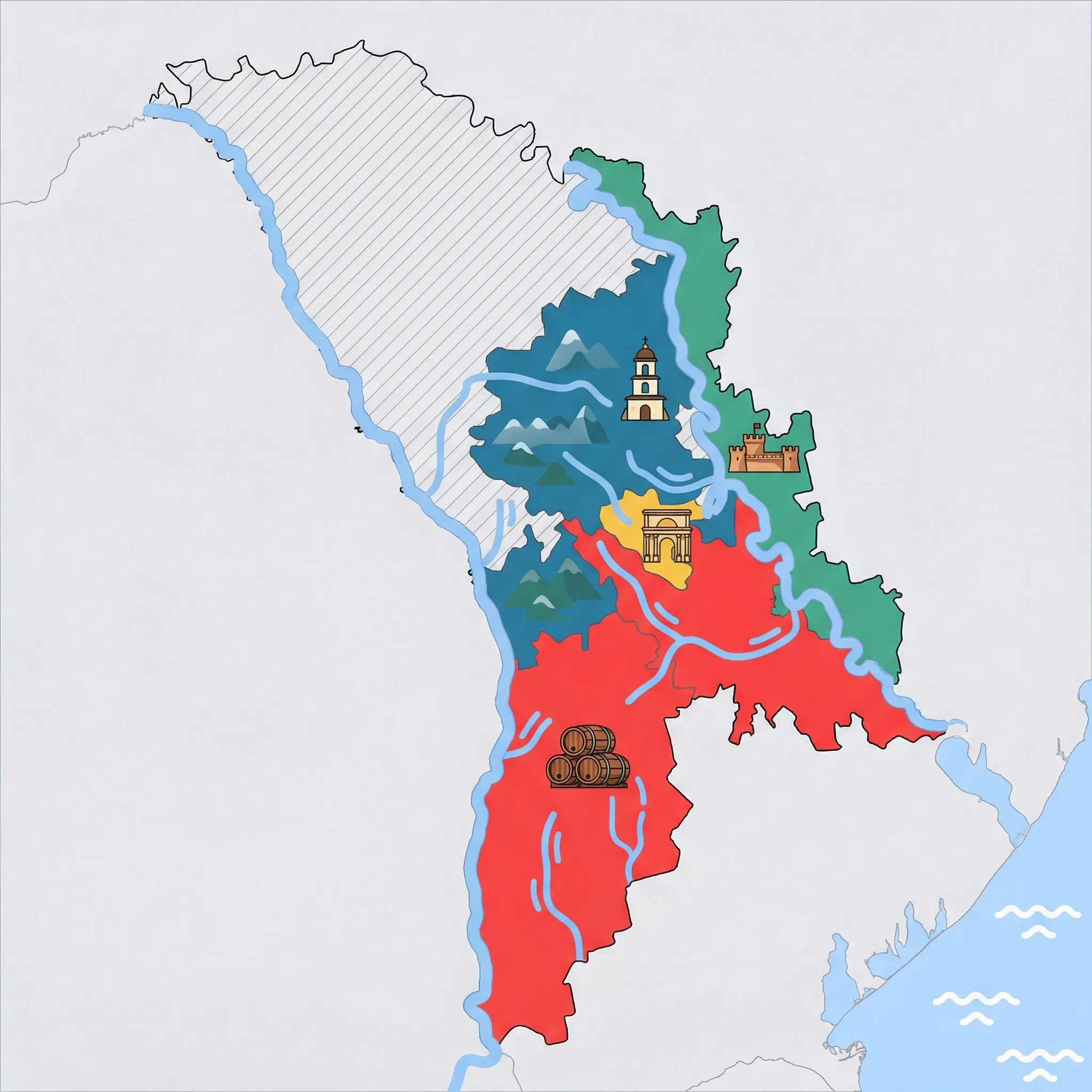
4 Regions
Chișinău
The green capital where urban culture meets relaxing nature 🌳
Orheiul Vechi & Central
Timeless cave monasteries and village traditions 🏺
Transnistria
A living time-capsule of the Soviet era ☭
Wine Country (Cricova, Mileștii Mici)
Explore the world's largest underground wine cities 🍷
Click on a region marker to explore details. Use the dropdown to color regions by activity suitability.

Getting There & Around
Getting There
- By Air – Chișinău International Airport (RMO) is the main gateway, with direct flights from major European hubs like London, Vienna, and Warsaw.
- By Train – The "Prietenia" (Friendship) night train connects Bucharest (Romania) to Chișinău daily. It is a slow but safe and nostalgic Soviet-style sleeper experience that adventurous kids might enjoy.
- By Bus – Frequent bus connections run from Iași and Bucharest in Romania. The ride from Iași takes about 3–4 hours.
- Entry Requirements – Citizens of the EU, UK, US, and Canada do not need a visa for stays up to 90 days. Check your government website for the latest visa requirements, or use the IATA Travel Centre entry-requirements checker.
Getting Around
- Trolleybuses & Buses – In Chișinău, the trolleybus network is extensive, frequent, and extremely cheap (6 MDL per ride). It's a fun and authentic way for families to see the city.
- Minibuses (Rutieras) – The backbone of inter-city transport. They are cheap and go everywhere, but can be cramped and drive fast. Not recommended for families with very small children or bulky luggage.
- Taxis – Affordable and convenient in the capital. Use apps like Yandex Go or iTaxi to avoid language barriers and ensure fair pricing.
- Car Hire – The best option for families wanting to explore Orheiul Vechi & Central or Wine Country at their own pace. Main roads are decent, but rural roads can be pot-holed. Drive carefully.

Packing List
You will frequently remove shoes when entering homes and monasteries; slip-ons make this much easier.
Street lighting in villages and even some city parks can be very sparse or non-existent at night.
Credit cards are rarely accepted outside Chișinău; small shops and rural markets operate almost exclusively on cash.
Public restrooms, especially at bus stations or in rural areas, often lack toilet paper and soap.
Essential for entering Orthodox monasteries and churches, where covering your head is a strict requirement.

Activities & Best Times

City & Cultural
Very GoodUrban tourism, museums, historical sites, architecture
Home to the globally significant Orheiul Vechi cave monastery complex and Curchi Monastery, providing deep historical and spiritual authenticity. Spring and autumn offer the most pleasant conditions for exploring these sprawling archaeological and religious sites.
While the underground wine cellars are unique and impressive, they represent a specialized niche attraction rather than broad cultural significance. 'very_good' should be reserved for regions with multiple major cultural institutions or UNESCO-level heritage. Moldova's wine cellars are notable but not equivalent to major European cultural capitals.
The city provides an authentic blend of Brutalist architecture, grand Orthodox cathedrals, and expansive botanical gardens that appeal to travelers seeking off-the-beaten-path urban heritage. Peak months coincide with active street life and major cultural festivals like National Wine Day, while avoiding the grey and cold winter period.

Adventure & Nature
GoodHiking, wildlife, outdoor exploration, ecotourism
The limestone cliffs and cave formations are interesting but Moldova lacks the trail infrastructure, elevation variation, and outdoor recreation facilities to compete internationally for adventure tourism. 'very_good' should indicate nationally outstanding adventure infrastructure - 'good' better reflects the actual offering.
Chișinău offers access to the Codru forest reserves and the unique cliff monasteries of Orheiul Vechi, providing authentic hiking and wildlife experiences for families. Peak seasons avoid the freezing winters and muddy spring thaws, focusing on the lush late spring and the vibrant autumn foliage.
The region offers unique rural experiences including sturgeon farm tours and hiking through the Dniester valley's limestone cliffs. Peak conditions occur in late spring and early autumn when the temperate climate is ideal for nature exploration without the mid-summer heat.

Road Trips & Scenic
GoodScenic drives, countryside tours, route-based travel
Well-established wine routes like the Codru Wine Route connect historic estates and scenic viewpoints across the rolling Moldovan countryside. September and October are the definitive peak periods, coinciding with the grape harvest and spectacular autumnal colors.
The Central Wine Route and drives to nearby historical sites like Orheiul Vechi offer scenic vistas of undulating vineyards and rural landscapes. May, June, September, and October provide the best visibility and landscape colors, whereas winter months can present challenging road conditions and bleak scenery.
The Central Moldova Wine Route and the Răut River Gorge scenic drive offer high-quality landscape touring and rural discovery. September and October are optimal due to the grape harvest and vibrant autumn foliage in the gorge.

Sports & Active
GoodSport tourism, fitness activities, active recreation
Dedicated cycling routes from the capital to the major wineries and family-oriented adventure parks like OrheiLand provide solid infrastructure for active travelers. Winter months are unsuitable due to sub-zero temperatures and potential snow making trails and outdoor parks inaccessible.
Known for its established cycling routes that connect the capital to famous underground wineries, the region caters well to active families looking for soft-adventure. Peak activity is limited to the warmer months when dedicated outdoor infrastructure and adventure centers are fully operational.
Established cycling routes and modern adventure parks like Catherine Park offer structured activity for families. The most favorable conditions for these active pursuits are during the mild, sunny months of May, June, and September.

Educational & Exploratory
MarginalLearning experiences, scientific sites, historical education

Theme Park & Entertainment
MarginalAmusement parks, family entertainment venues
Regional water parks like Vara Vara offer standard family entertainment but do not reach the level of international destination theme parks. Operation is strictly seasonal, limited to the warmest summer months.
The region features several regional-scale amusement and water parks, such as Vara Vara and Aqua Magic, which provide reliable family entertainment during the summer. These are primarily domestic-tier facilities and are entirely seasonal, remaining closed or inactive during the cooler majority of the year.
Regional amusement parks and aquatic centers offer local family entertainment but do not meet the scale or facility standards of world-class international parks. Visits are best timed for the height of summer when aquatic facilities are fully operational.

Public Holidays & Calendar Next 12 months
Public holidays, festivals, cultural celebrations, and seasonal natural phenomena coming up in Moldova over the next 12 months.
Loading holidays and events...

Climate & Weather
Chișinău
Show Details
| Month | Temp °C | Rain | Humidity |
|---|
Orheiul Vechi & Central
Show Details
| Month | Temp °C | Rain | Humidity |
|---|
Transnistria
Show Details
| Month | Temp °C | Rain | Humidity |
|---|
Wine Country (Cricova, Mileștii Mici)
Show Details
| Month | Temp °C | Rain | Humidity |
|---|

Travel Advisory
All major agencies recommend exercising a high degree of caution or increased vigilance throughout Moldova, primarily due to the regional security environment and political tensions resulting from the nearby conflict in Ukraine. The breakaway region of Transnistria carries a much higher risk level, with several agencies advising against all travel there.
Safety Topics
Traveller Advice (3 groups)

Female visitors are encouraged to review safety resources specifically for solo or group women travellers before arriving, as standard safety precautions for women should be strictly followed.

Accessibility features in public spaces and transportation may be limited; those with mobility or other disabilities should research specific facility standards in advance.

It is recommended that LGBTQ+ travellers consult specialized guides on local social attitudes and legal frameworks to ensure their safety and comfort during their stay.
Agency Summaries
Due to the regional instability, visitors are urged to be extremely cautious, monitor local news closely, and strictly avoid the breakaway Transnistria area.
Increased safety precautions are necessary across the country because of the unpredictable security landscape and the proximity of military activity in Ukraine.
A state of emergency and regional conflict necessitate heightened awareness. Visitors are advised to steer clear of all political gatherings and the Transnistria region.
While most of the country is accessible, all travel to the Transnistria region is discouraged due to volatile security and restricted consular access. Potential energy shortages may affect infrastructure.
Vigilance is advised because of the persistent tensions surrounding the separatist Transnistria territory and the broader regional security situation linked to the war in Ukraine.
Travellers should remain highly vigilant due to the ongoing spillover effects from the conflict in neighboring Ukraine and the potential for sudden civil disturbances or demonstrations.
Information is provided for general guidance only and does not constitute travel, safety, medical, or legal advice. Conditions may change. Users are responsible for independently verifying information before travel.