

Mongolia is one of the last few places on Earth where true wilderness and ancient traditions remain largely untouched by the modern world. For families, it offers a profound sense of freedom that is impossible to find elsewhere. The geography is vast and varied, shifting from the golden sands of the Gobi Desert in the south to the lush alpine forests of Northern Mongolia. Traveling here is more of an expedition than a holiday; you don't just visit sights, you journey across sweeping landscapes in a rugged 4x4, stopping to watch herds of yak or wild horses graze by the roadside.
Culturally, Mongolia is incredibly welcoming to children. The nomadic lifestyle is centered around family, and locals are delighted to see young visitors. Staying in a ger (yurt) camp is a highlight for kids-these circular felt tents are cozy, warm, and often located in breathtaking scenic spots with no fences or traffic nearby. While the distances between attractions are long, the journey itself is the adventure, filled with opportunities to hunt for dinosaur fossils, climb rocks, and taste local treats like yak cheese and fried dough.
Key Attractions
Start your adventure in Ulaanbaatar, where the Natural History Museum of Mongolia (often housing impressive dinosaur skeletons) and the Gandantegchinlen Monastery provide a cultural primer. Just outside the city, the 13th Century National Park brings history to life with costumed warriors and traditional crafts that kids can try. In the central region, the UNESCO-listed Orkhon Valley Cultural Landscape is essential. Here, families can visit the legendary Erdene Zuu Monastery built from the ruins of the ancient capital Karakorum, and picnic by the Ulaan Tsutgalan Waterfall.
For the truly adventurous, the Gobi Desert is unmissable. Children will love rolling down the massive singing sands of Khongoryn Els Sand Dunes and spotting ice in summer within the deep gorges of Yolyn Am (Eagle Valley) in Gurvan Saikhan National Park. Further north, Lake Khövsgöl-known as the "Blue Pearl"-offers gentler scenery with opportunities for boating, horse riding, and visiting reindeer herders in the surrounding forests of Lake Khövsgöl National Park.
Practical Advice
The best time to visit is mid-June to late August when the weather is warmest and the countryside is green. The Naadam Festival in July is a spectacular display of wrestling, archery, and horse racing. Be prepared for long car journeys on bumpy tracks; a private driver and guide are essential for families to navigate safely. Pack layers, as even summer nights can be freezing. Medical facilities are limited outside the capital, so bring a robust first-aid kit.
Food & Drink
Typical meal times: Lunch is usually 1:00 pm to 2:00 pm, and dinner is served from 7:00 pm to 9:00 pm. In rural ger camps, meals are often set times arranged by the host.
Typical meal costs: 15,000–35,000 MNT (approx. $4.50–10.50 USD / €4–9.50 EUR) for a standard local meal. High-end dining in Ulaanbaatar costs 80,000–120,000 MNT (approx. $24–35 USD / €22–33 EUR).
Dietary requirements: Traditional Mongolian diet is extremely meat and dairy heavy (mutton, beef, goat). Vegetarians may struggle in rural areas without a guide to help communicate; however, tourist ger camps usually offer pasta or rice dishes. Vegan and gluten-free options are rare outside Ulaanbaatar.
Family-friendly dining: Mongolian food is generally simple and not spicy, which suits many children. Fried dumplings and noodles are popular with kids. Highchairs are rare outside the capital.
Signature dishes:
- Buuz – Steamed dumplings filled with minced mutton or beef, onions, and garlic. The national dish and a staple at every celebration.
- Khuushuur – Deep-fried mutton pancakes or flat dumplings. Crispy, greasy, and delicious-perfect finger food for children.
- Tsuivan – A hearty stew of stir-fried noodles, meat, and vegetables (usually carrots and onions/potatoes).
- Boortsog – Butter-fried dough nuggets, often eaten as a snack or breakfast with tea/cream. Essentially a rustic, less sweet donut.
- Aaruul – Dried curds made from yak or cow milk. A very common sour snack that kids often find challenging but interesting to try.

Daily costs are low, but the necessity of hiring a private 4x4 vehicle and driver for rural travel increases the overall trip price. A typical family meal is cheap at 50,000–100,000 MNT (approx. $15–30 USD / €14–28 EUR) total. Ger camp accommodation ranges from 100,000–250,000 MNT (approx. $30–75 USD / €28–70 EUR) per person including meals.
Age Suitability




Did you know? Mongolia welcomes approximately 727,000 international visitors per year. Most visitors come from East Asia and the Pacific.
Explore Regions
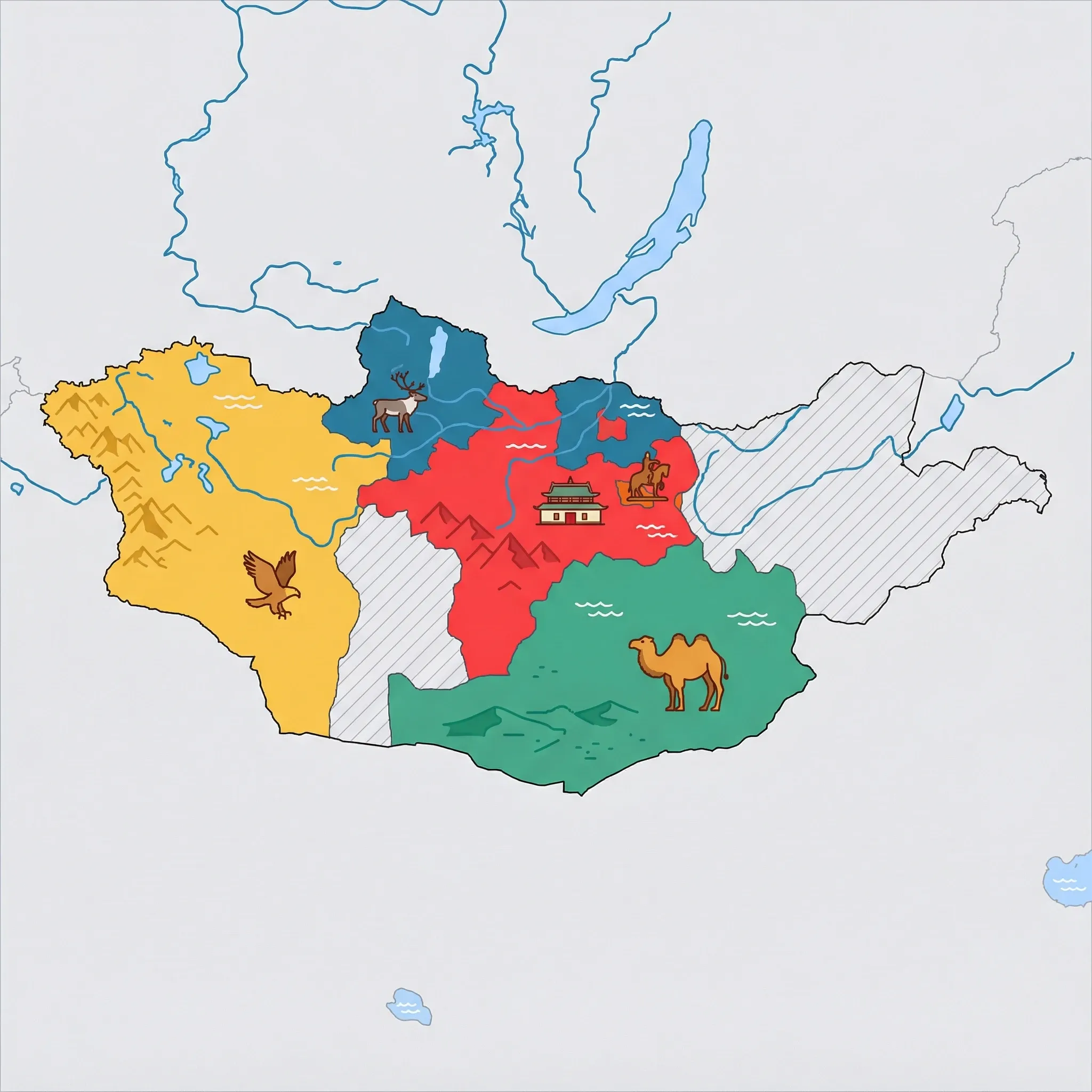
5 Regions
Central Mongolia (Kharkhorin, Orkhon Valley)
Where the ancient empire meets living nomadic traditions 🐎
Gobi Desert
Land of dinosaurs, singing dunes, and endless horizons 🐫
Northern Mongolia (Lake Khövsgöl)
The Switzerland of Mongolia 🌲🛶
Ulaanbaatar
The vibrant gateway to the steppes 🏙️🦖
Western Mongolia (Altai)
Where eagles hunt and mountains touch the sky 🦅🏔️
Click on a region marker to explore details. Use the dropdown to color regions by activity suitability.

Getting There & Around
Getting There
- By Air – Chinggis Khaan International Airport (UBN) is the main gateway, located about 50km from Ulaanbaatar. Major connections fly via Seoul, Istanbul, Beijing, and Frankfurt.
- By Train – The Trans-Mongolian line connects Ulaanbaatar to Beijing (China). As of mid-2025, passenger services from Beijing have resumed, offering an epic rail journey for families. Connections north to Russia are currently unpredictable due to geopolitical situations.
- Entry Requirements – Citizens of 60+ countries (including US, most EU, UK, Australia, NZ) can enter visa-free for tourism (typically 30–90 days) during the "Years to Visit Mongolia" campaign (2023–2025/26). Check your government website for the latest visa requirements, or use the IATA Travel Centre entry-requirements checker.
Getting Around
- Car Hire with Driver – The only viable option for families exploring beyond the capital. Self-driving is risky due to lack of road signs and difficult terrain. A Russian Porgon van is iconic, fun for kids, and handles the bumps well.
- Domestic Flights – Aero Mongolia and Hunnu Air connect Ulaanbaatar to remote hubs like Dalanzadgad (for the Gobi Desert) and Murun (for Northern Mongolia), saving days of driving.
- Taxis – In Ulaanbaatar, official taxis are scarce; ride-hailing apps like UB Cab are safer and easier for tourists than hailing unmarked cars.

Packing List
Ger camps and outhouses often lack electricity at night; hands-free lighting is essential for bathroom trips.
You must remove shoes every time you enter a family's ger. Laces become very frustrating very quickly.
Showers can be scarce in the remote steppes. Wipes are the standard 'Mongolian shower' for days on the road.
It is customary to offer small tokens to the children of host families when visiting their gers.
Electricity in rural camps is often limited to a few hours of generator time or solar power.
To carry your own trash out of remote areas (leave no trace) and protect electronics from fine Gobi dust.

Activities & Best Times

Adventure & Nature
Very GoodHiking, wildlife, outdoor exploration, ecotourism
Features extraordinary landscapes like the 'Singing Dunes' and ice-filled Yolyn Am gorge, offering authentic wilderness immersion for active families. Best visited in summer to avoid extreme sub-zero temperatures and high-velocity spring sandstorms.
Features the 'Blue Pearl' of Mongolia with pristine taiga wilderness and major trekking routes through the Khoridol Saridag mountains. Summer offers the only viable window for families to explore these remote high-altitude landscapes safely.
Altai Tavan Bogd offers world-class trekking and glacial landscapes that are both authentic and visually stunning for experienced families. Peak summer months provide the only viable window for high-altitude exploration before extreme sub-zero temperatures return.

City & Cultural
Very GoodUrban tourism, museums, historical sites, architecture
Centers on significant heritage sites like Ongi Monastery and the historic Flaming Cliffs, providing deep insights into nomadic traditions and paleontological history. Visitation is concentrated in summer when cultural infrastructure is fully accessible and conditions are pleasant for exploration.
Home to the world-class Uushigiin Uvur Deer Stones and authentic nomadic heritage, offering a unique window into Bronze Age history and shamanic traditions. Peak visitation aligns with the summer months when nomadic camps are fully established and accessible.
Home to significant Buddhist monasteries and the Winter Palace, the city offers a deep dive into Central Asian history. Winter months are classified as off-peak due to extreme sub-zero temperatures and significant urban heating pollution.

Sports & Active
Very GoodSport tourism, fitness activities, active recreation
The region offers internationally recognized routes for multi-day trekking and cycling through diverse terrain like the Khuisiin Naiman Nuur. Facilities and guide services are optimized for the short summer window, with shoulder months requiring specialized gear for freezing nights.
Provides high-quality hiking and cycling opportunities along recognized routes in Yolyn Am and the Khongoryn Els dunes. Peak season offers manageable temperatures and accessible trails, while winter makes these physically demanding activities dangerous due to extreme cold.
The region offers internationally recognized trekking and hiking routes along the western shoreline and into the mountains. The brief summer window provides the only safe conditions for active exploration before subarctic temperatures return.

Educational & Exploratory
GoodLearning experiences, scientific sites, historical education
Home to globally significant fossil sites where families can engage with natural history at the South Gobi Museum and dinosaur information centers. Operational seasons are limited to the warmer months when specialized museums and field sites are staffed for tourists.
Small local museums and visitor centers offer insights into the lake's unique ecosystem and regional shamanism. While informative for families, they serve as supplementary activities rather than primary travel motivators.
Features the Natural History Museum of Mongolia, known for its dinosaur fossils, and the unique International Intellectual Museum. These facilities are best visited during the primary tourist season when support services and guided tours are fully operational.

Road Trips & Scenic
GoodScenic drives, countryside tours, route-based travel
Rugged scenic routes like the Mörön-Khatgal road provide dramatic transitions from steppe to taiga, though they require high-clearance vehicles. Travel is restricted to summer as winter ice and spring thaws make the unpaved tracks impassable for families.
Serves as the starting point for the Orkhon Valley Heritage Route and Terelj scenic drives. Roads are most accessible and landscapes most vibrant during the summer, while winter snow and ice make rural transit hazardous.
The AH4 and Altai expedition circuits offer legendary overland routes through some of Central Asia's most spectacular and remote mountain terrain. Travel is restricted to the brief summer window when mountain passes are clear of snow and road conditions are safest.

Relaxation & Wellness
MarginalSpa retreats, wellness centers, peaceful getaways
Natural hot springs at Bulnai and Mogoin offer a rustic, traditional wellness experience in a spectacular wilderness setting. These remote facilities lack international luxury standards and are largely inaccessible during the frozen winter months.
Natural hot springs like Khujirt offer a unique, traditional spa experience rooted in local history rather than modern luxury. These facilities are primarily accessible in summer when the surrounding ger camps are operational, providing a rustic restorative getaway for adventurous travelers.

Festivals & Seasonal
MarginalEvents, celebrations, seasonal attractions
The world-renowned Naadam Festival in July is the region's premier cultural event, showcasing traditional wrestling, archery, and horse racing. Outside of this specific window, there are few festivals of international significance.
The Golden Eagle Festival is a globally recognized cultural event showcasing traditional Kazakh falconry against the Altai mountain backdrop. This is a highly seasonal experience, with primary international interest focused specifically on the October event window.

Theme Park & Entertainment
MarginalAmusement parks, family entertainment venues

Public Holidays & Calendar Next 12 months
Public holidays, festivals, cultural celebrations, and seasonal natural phenomena coming up in Mongolia over the next 12 months.
Loading holidays and events...
Climate & Weather
Central Mongolia (Kharkhorin, Orkhon Valley)
Show Details
| Month | Temp °C | Rain | Humidity |
|---|
Gobi Desert
Show Details
| Month | Temp °C | Rain | Humidity |
|---|
Northern Mongolia (Lake Khövsgöl)
Show Details
| Month | Temp °C | Rain | Humidity |
|---|
Ulaanbaatar
Show Details
| Month | Temp °C | Rain | Humidity |
|---|
Western Mongolia (Altai)
Show Details
| Month | Temp °C | Rain | Humidity |
|---|

Travel Advisory
All major international agencies currently designate Mongolia as a low-risk destination where standard safety measures are sufficient. There are no active regional travel prohibitions or heightened security warnings beyond typical urban crime awareness.
Safety Topics
Traveller Advice (4 groups)
Rural travel requires significant preparation for extreme weather and limited infrastructure. It is recommended to travel with local guides, carry a satellite phone for communication in remote areas, and pack ample water and supplies.
Accessibility in Ulaanbaatar is very limited. While some sidewalks have tactile paving, most public buildings and transport systems remain inaccessible for wheelchair users, and elevators are often too small for standard equipment.

While same-sex relationships are not illegal, there is a lack of legal recognition for same-sex unions. Members of the community may face social discrimination, verbal abuse, or harassment, so discretion in public is recommended.

Female visitors should avoid solo travel, particularly at night, due to reports of harassment and infrequent sexual assault. It is safer to use registered taxi apps rather than hailing cars on the street.
Agency Summaries
No specific travel restrictions are in place, but visitors should be aware of the global threat of terrorism. Petty theft occurs in crowded areas. Road travel outside the capital can be hazardous due to poor infrastructure.
Irish citizens can visit Mongolia visa-free for tourism for up to 30 days until the end of 2026. Consular assistance is managed through the embassy in Beijing, as there is no local mission.
The overall risk is low, but tourists must register with local immigration authorities within 48 hours of arrival. Be cautious of scams involving fake police officers and exercise care during extreme winter weather conditions.
New Zealand does not have a specific travel advisory for Mongolia, suggesting a standard security environment. Travellers should focus on health precautions, particularly regarding water safety and winter air quality.
While generally safe, there is an upward trend in street crime and occasional violent incidents in larger cities. Visitors should stay in well-lit areas and use reputable transport. Female travellers are encouraged to avoid travelling alone.
Travellers should remain alert in urban centers where petty crimes like pickpocketing are frequent. Increased vigilance is recommended during major public holidays and festivals due to higher crime rates. There are reports of individuals impersonating police to rob visitors.
Information is provided for general guidance only and does not constitute travel, safety, medical, or legal advice. Conditions may change. Users are responsible for independently verifying information before travel.