
Central Mongolia (Kharkhorin, Orkhon Valley)
Where the ancient empire meets living nomadic traditions 🐎
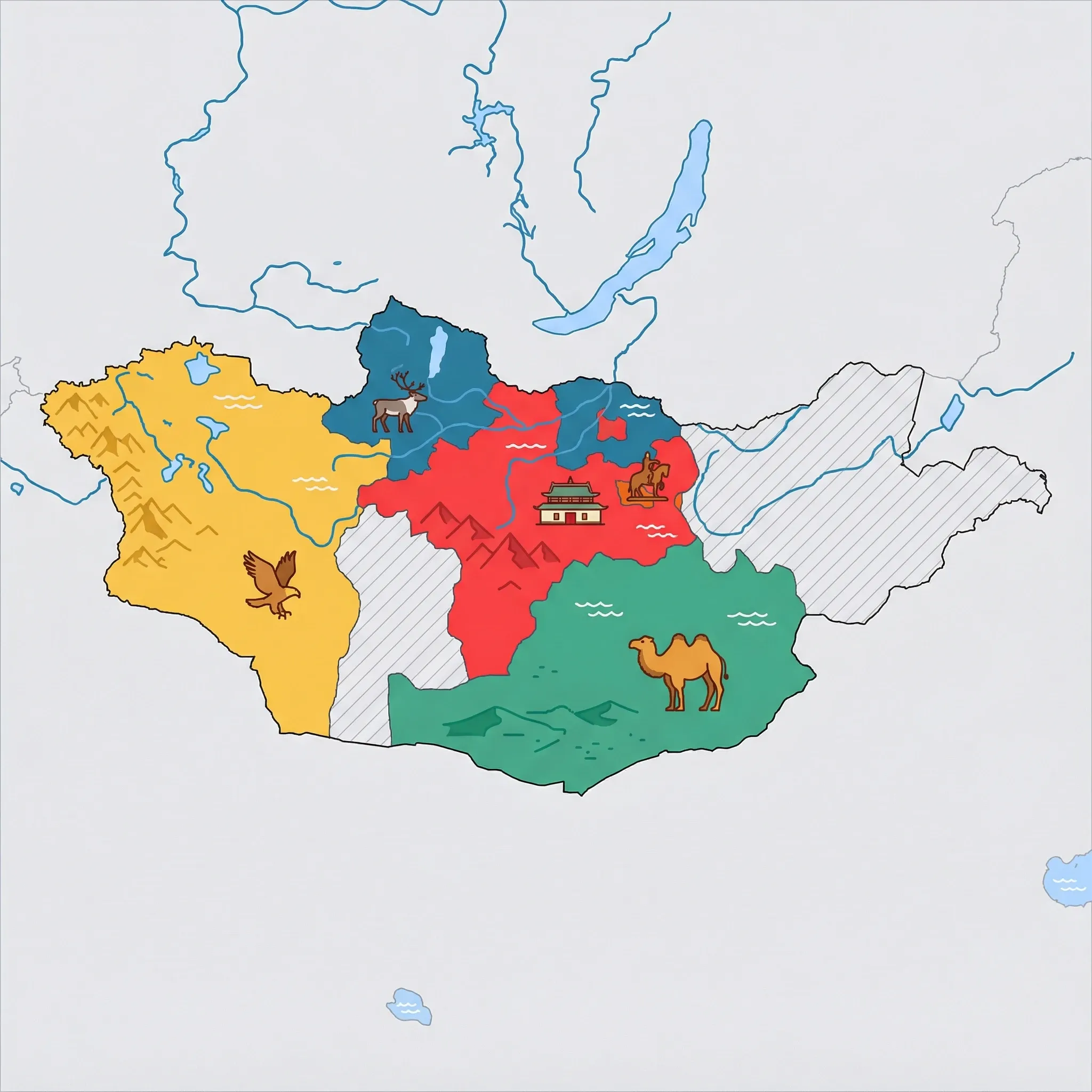
Click a region to explore
Central Mongolia is widely considered the cradle of Mongolian civilization and constitutes the most popular destination for families visiting the country for the first time. The region is defined by the UNESCO-listed Orkhon Valley Cultural Landscape, a sprawling expanse of emerald-green pastureland, meandering rivers, and volcanic geology that has supported nomadic life for millennia. For parents and children, this region offers the quintessential Mongolian experience: staying in a felt ger (yurt) next to a herder family, watching yaks graze on the hillsides, and experiencing the vast, fence-free openness of the steppe. Unlike the harsh extremes of the Gobi or the rugged remoteness of the Altai, Central Mongolia offers a gentler climate and greener landscapes, making it more forgiving for younger travelers.
Culturally, this area is dense with history. It was here that Genghis Khan established his capital, Karakorum, which served as the supply point for the Mongol Empire. While the ancient city has largely vanished, the energy of the place remains, anchored by significant religious sites and museums. The landscape is not just open grass; it is punctuated by basalt cliffs, pine forests, and waterfalls, providing a varied backdrop for hiking, horse riding, and photography. Families will find that the local hospitality is incredibly warm; children are often welcomed by herders to see baby animals or taste fresh dairy products. The proximity to Ulaanbaatar (relative to other regions) means less time in a vehicle and more time exploring, which is a crucial factor when traveling with energetic kids.
Key Attractions
The region's headline act for wildlife lovers is undoubtedly Hustai National Park (Khustain Nuruu). This reserve is the success story of the Takhi (Przewalski’s horse), the only truly wild horse species in the world. Families can take guided safaris to spot these sandy-colored horses grazing on the ridges. The park is also home to marmots—which children find hilarious as they pop out of their burrows—and red deer. The visitor center provides excellent educational displays about the ecosystem.
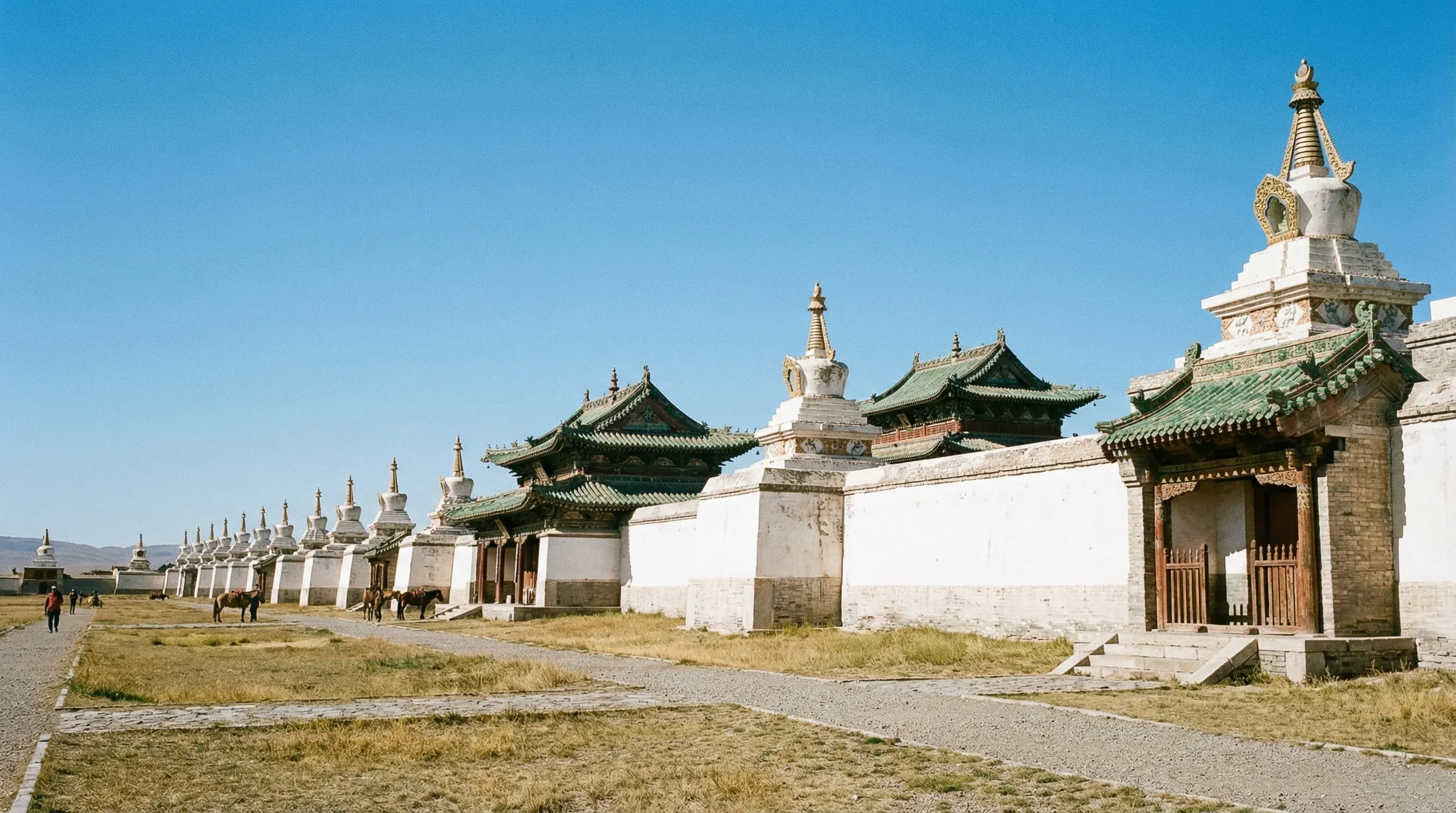
History comes alive at Erdene Zuu Monastery in Kharkhorin. As the oldest surviving Buddhist monastery in Mongolia, its massive white walls famously feature 108 stupas that invite children to count them as they walk the perimeter. Inside, the grounds are spacious and peaceful, allowing kids to roam while parents admire the intricate temples. Just nearby, the Kharakhorum Museum offers a modern, bite-sized look at the Mongol Empire, with archaeological finds including ancient toys and kiln remnants that help kids visualize life in the 13th century.
For a dose of nature, the Ulaan Tsutgalan Waterfall (Orkhon Waterfall) is a thrilling excursion. Created by volcanic eruptions and earthquakes, the waterfall drops 20 meters into a gorge. It is a fantastic spot for a family picnic, and the surrounding lava rocks provide a natural playground for scrambling (with supervision). In winter, the falls freeze into a stunning ice sculpture, though most families visit during the lush summer months.
Practical Advice
The best time to visit is from June to August when the steppes are greenest and temperatures are pleasant (20°C to 25°C). July can be rainy, so waterproofs are essential. Roads here are a mix of paved highways (to Kharkhorin) and dirt tracks (to the waterfall/monasteries), so hire a sturdy 4WD vehicle and a driver. Motion sickness bands are recommended for children. "Ger camps" are the standard accommodation—tourist versions offer beds and central dining halls, while authentic family stays are more rustic with no running water (outhouse toilets).
Food & Drink
Typical meal times: Breakfast is served from 8:00 am to 9:30 am, lunch around 1:00 pm to 2:00 pm, and dinner from 7:00 pm to 8:30 pm.
Typical meal costs: Tourist ger camps usually include full board. Independent meals at roadside guanz (canteens) cost around 15,000–25,000 MNT (approx. $4.50–7.50 USD / €4–6.50 EUR) per person. Higher-end camp meals may run 40,000–60,000 MNT (approx. $12–18 USD / €11–16 EUR).
Dietary requirements: Central Mongolia is meat-heavy (mutton/beef). Vegetarians will be offered rice, potatoes, and carrots. Gluten-free travelers must bring their own supplies (bread/snacks) as flour is a staple thickener and ingredient.
Signature dishes:
- Khuushuur – Deep-fried dough pockets filled with minced mutton and onions, essentially a Mongolian meat pasty that kids usually love.
- Airag – Fermented mare's milk, the national beverage. It has a sour, fizzy taste—an acquired taste for kids, but culturally essential.
- Aaruul – Dried cheese curds, often hard and sweet or sour, eaten as a travel snack by nomads.
Why this score?
It offers a balanced adventure experience where families can enjoy horse riding and nomadic stays on the steppe without extreme isolation. The terrain is rolling and accessible, though the lack of paved roads and reliance on traditional lodging maintains a rugged feel. It serves as an excellent introduction to Mongolian wilderness for those not ready for the deep desert or high mountains.
Why this score?
Medical facilities in towns like Kharkhorin are very basic and generally unequipped for complex cases or English-speaking patients. While it is closer to the capital than other regions, any serious medical emergency usually requires a long road transfer back to Ulaanbaatar. Tourist insurance typically mandates evacuation for anything beyond minor ailments.
Why this score?
This region is the heart of Mongolia's historical tourism circuit, drawing visitors to the UNESCO-listed Orkhon Valley and the ancient capital of Karakorum. Despite its significance, international visitor numbers remain low compared to global standards, reflecting Mongolia's niche status as a destination. Infrastructure is improving but consists mostly of seasonal ger camps and basic guest houses.

Costs are moderate due to the high concentration of tourist camps. A standard tourist ger camp charges 150,000–280,000 MNT (approx. $45–82 USD / €40–75 EUR) per person per night, usually including 3 meals. Car hire with a driver averages 250,000–350,000 MNT (approx. $75–105 USD / €65–95 EUR) per day plus fuel. Entry to museums like <a data-attraction-id="51696">Kharakhorum Museum</a> is nominal, around 5,000–10,000 MNT (approx. $1.50–3 USD / €1.30–2.70 EUR).

Getting Here & Around
Getting Here
- Driving – The region is accessible via a paved road from Ulaanbaatar to Kharkhorin (approx. 360km). The journey takes 5–6 hours. To reach the inner Orkhon Valley Cultural Landscape, you must continue on off-road dirt tracks.
- Bus – Public buses run daily from the Dragon Bus Terminal in Ulaanbaatar to Kharkhorin. The ride is affordable but crowded and takes longer than a private car.
- Air – There are no commercial airports in the immediate vicinity; driving from the capital is the standard entry method.
Getting Around
- Car – A 4WD vehicle (Land Cruiser or Russian UAZ Furgon) with an experienced local driver is mandatory for visiting sights like Ulaan Tsutgalan Waterfall (Orkhon Waterfall). The tracks are bumpy, muddy after rain, and un-signposted.
- Horseback – This region is Mongolia's premier destination for horse trekking. Families can hire gentle horses and guides for short hour-long rides or multi-day treks between camps.
- Walking – While distances between attractions are too vast to walk, the areas around Erdene Zuu Monastery and the waterfall are perfect for exploring on foot.
Nearby Airports (1 airport)
Chinggis Khan International Airport
UBNUlaanbaatar
View full flight map for Mongolia →
Official Links

Packing List
Ger camps often turn off generators at night and outhouses are unlit.
Showers may be unavailable in remote areas; essential for quick hygiene.
Essential for constantly entering and exiting gers (shoes must be removed).
Instant photos are a treasured gift to leave with nomadic families you visit.
Ger camps and outhouses often lack electricity at night; hands-free lighting is essential for bathroom trips.
You must remove shoes every time you enter a family's ger. Laces become very frustrating very quickly.
It is customary to offer small tokens to the children of host families when visiting their gers.
Electricity in rural camps is often limited to a few hours of generator time or solar power.
To carry your own trash out of remote areas (leave no trace) and protect electronics from fine Gobi dust.

Activities & Best Times

Hiking, wildlife, outdoor exploration, ecotourism
The UNESCO-listed Orkhon Valley and Eight Lakes region offer profound immersion into the Mongolian steppe and volcanic landscapes, ideal for nomadic-style trekking. Peak summer provides the only reliable window for comfortable camping and nature exploration, as extreme Siberian winters render the wilderness inaccessible.

Urban tourism, museums, historical sites, architecture
As the historical heart of the Mongol Empire, the region features world-class heritage sites like the Erdene Zuu Monastery and Karakorum ruins. The experience is highly authentic, though tourism is strictly seasonal due to the extreme cold, with cultural museums and sites being most vibrant during the warmer months.

Sport tourism, fitness activities, active recreation
The region offers internationally recognized routes for multi-day trekking and cycling through diverse terrain like the Khuisiin Naiman Nuur. Facilities and guide services are optimized for the short summer window, with shoulder months requiring specialized gear for freezing nights.

Scenic drives, countryside tours, route-based travel
Named routes from Ulaanbaatar through the Heartland provide iconic steppe vistas and access to rural nomadic life, though infrastructure remains rugged. Summer offers dry conditions and long daylight hours necessary for navigating unpaved trails, which become impassable during the snowy off-season.

Learning experiences, scientific sites, historical education
Specialized museums like Khushuu Tsaidam provide destination-level insights into Turkic and Mongol history, appealing to intellectually curious families. These indoor facilities are best visited as part of a summer cultural itinerary before regional logistics are hampered by the sub-zero winter climate.

Spa retreats, wellness centers, peaceful getaways
Natural hot springs like Khujirt offer a unique, traditional spa experience rooted in local history rather than modern luxury. These facilities are primarily accessible in summer when the surrounding ger camps are operational, providing a rustic restorative getaway for adventurous travelers.




Public Holidays & Calendar Next 12 months
Public holidays, festivals, cultural celebrations, and seasonal natural phenomena coming up in Central Mongolia (Kharkhorin, Orkhon Valley) over the next 12 months.
Loading holidays and events...

Travel Advisory
All major international agencies currently designate Mongolia as a low-risk destination where standard safety measures are sufficient. There are no active regional travel prohibitions or heightened security warnings beyond typical urban crime awareness.
Safety Topics
Traveller Advice (4 groups)

Rural travel requires significant preparation for extreme weather and limited infrastructure. It is recommended to travel with local guides, carry a satellite phone for communication in remote areas, and pack ample water and supplies.
Accessibility in Ulaanbaatar is very limited. While some sidewalks have tactile paving, most public buildings and transport systems remain inaccessible for wheelchair users, and elevators are often too small for standard equipment.

While same-sex relationships are not illegal, there is a lack of legal recognition for same-sex unions. Members of the community may face social discrimination, verbal abuse, or harassment, so discretion in public is recommended.

Female visitors should avoid solo travel, particularly at night, due to reports of harassment and infrequent sexual assault. It is safer to use registered taxi apps rather than hailing cars on the street.
Agency Summaries
No specific travel restrictions are in place, but visitors should be aware of the global threat of terrorism. Petty theft occurs in crowded areas. Road travel outside the capital can be hazardous due to poor infrastructure.
Irish citizens can visit Mongolia visa-free for tourism for up to 30 days until the end of 2026. Consular assistance is managed through the embassy in Beijing, as there is no local mission.
The overall risk is low, but tourists must register with local immigration authorities within 48 hours of arrival. Be cautious of scams involving fake police officers and exercise care during extreme winter weather conditions.
New Zealand does not have a specific travel advisory for Mongolia, suggesting a standard security environment. Travellers should focus on health precautions, particularly regarding water safety and winter air quality.
While generally safe, there is an upward trend in street crime and occasional violent incidents in larger cities. Visitors should stay in well-lit areas and use reputable transport. Female travellers are encouraged to avoid travelling alone.
Travellers should remain alert in urban centers where petty crimes like pickpocketing are frequent. Increased vigilance is recommended during major public holidays and festivals due to higher crime rates. There are reports of individuals impersonating police to rob visitors.
Information is provided for general guidance only and does not constitute travel, safety, medical, or legal advice. Conditions may change. Users are responsible for independently verifying information before travel.