
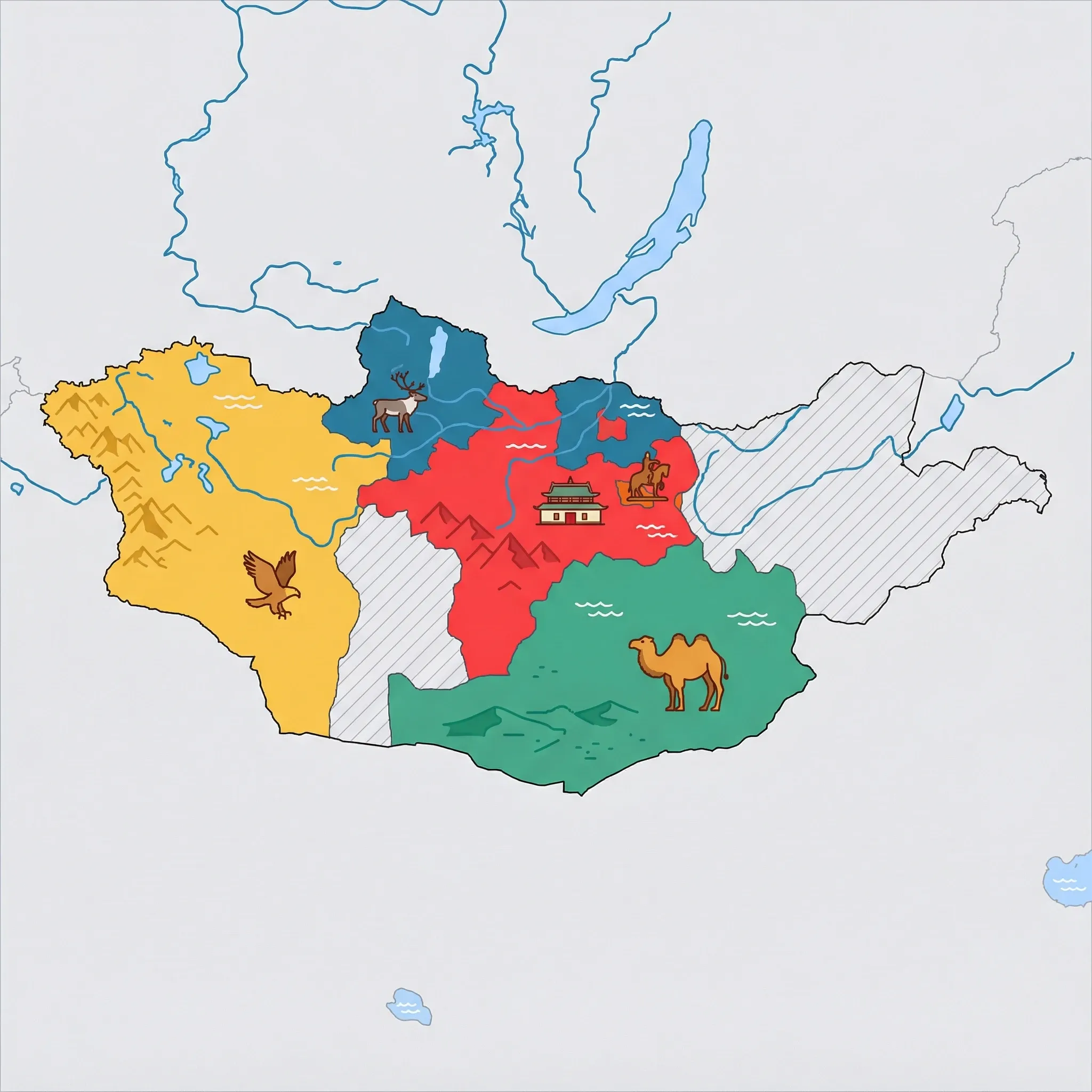
Click a region to explore
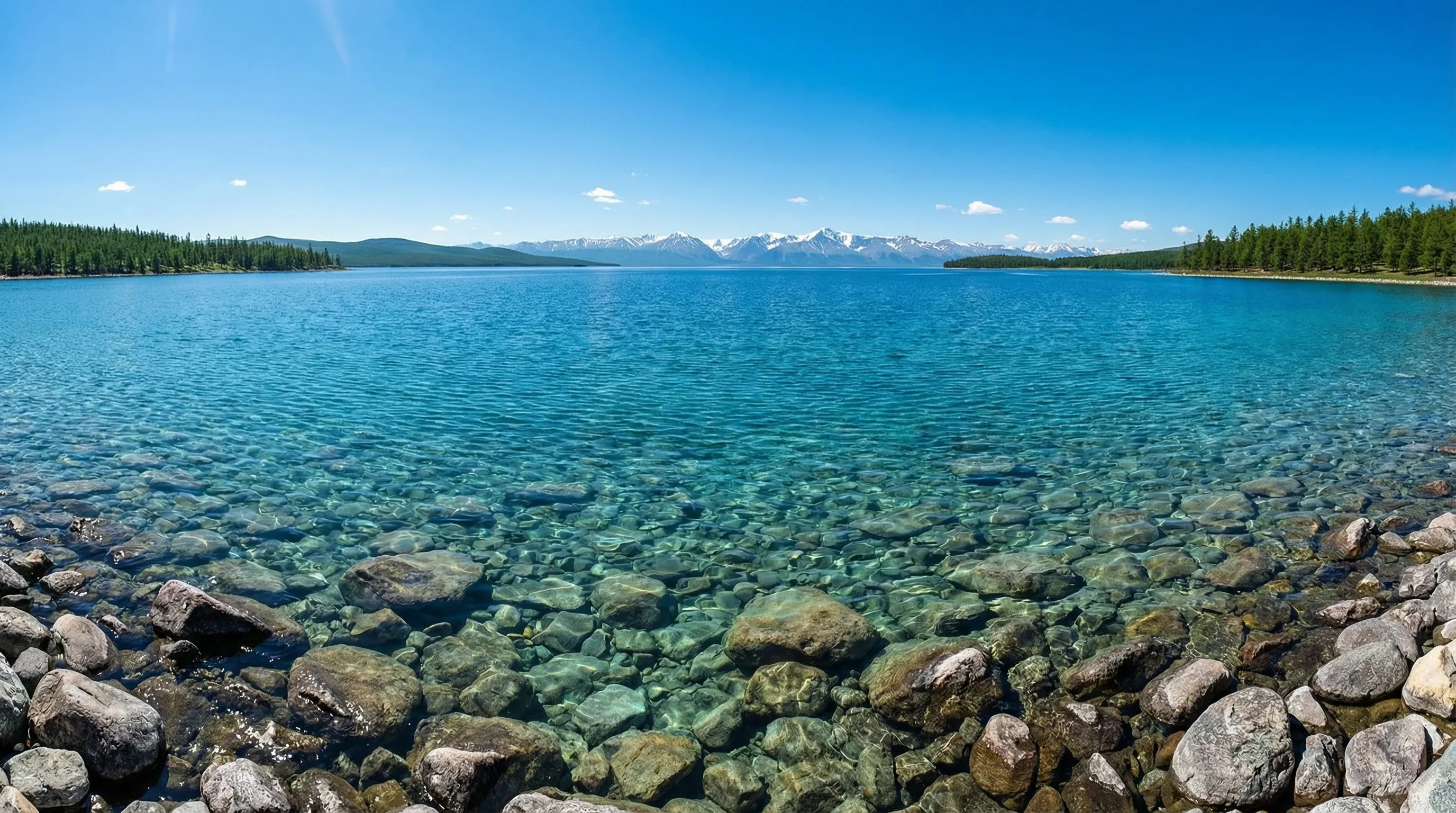
Northern Mongolia feels entirely different from the rest of the country. Gone are the arid plains; here, you find the Siberian Taiga—thick forests of larch and pine, wildflowers, and wet, mossy grounds. The jewel of the region is Lake Khövsgöl, one of the world's ancient lakes, holding nearly 70% of Mongolia's fresh water. For families, this is the premier destination for relaxation and water-based activities. The air is fresh and pine-scented, and the landscape is mountainous and green, earning it the nickname "The Switzerland of Mongolia."
This region is particularly special because it is home to the Tsaatan (Dukha) people, nomadic reindeer herders who live in teepees (ortz) rather than round gers. Meeting the Tsaatan is a magical experience for children, akin to stepping into a storybook. While the true Taiga camps are hard to reach, many families move closer to the lake in summer, allowing tourists to see the reindeer and learn about their unique culture without a grueling multi-day horse trek. The vibe here is slower; families often base themselves in a single camp on the lake shore for several days, swimming (if they brave the cold water), kayaking, and hiking, rather than moving location every day.
Key Attractions
Everything centers around Lake Khövsgöl. The lake itself is stunningly clear—you can see fish swimming meters below the surface. A popular activity is taking a boat tour from the main town, Khatgal, to visit islands or secluded beaches. The historic tugboat "Sukhbaatar" offers leisurely cruises that are very safe for young children. Along the shoreline, kids can skip stones, look for driftwoods, and engage in easy nature walks.
The surrounding Lake Khövsgöl National Park offers excellent trails. Families can hike up into the hills for panoramic views of the lake, which stretches over 130km long. Horse riding here is also distinct; the terrain is softer and forested, offering a different riding experience than the open steppe. In July, the region hosts the Ice Festival (in winter) but in summer, there is often a local Naadam festival in Khatgal which is much more intimate and accessible for families than the massive event in Ulaanbaatar.
Practical Advice
The season is short: July and August are the prime months. June and September can be quite cold at night. This region attracts more mosquitoes and horseflies than the Gobi, so strong insect repellent is mandatory. Evenings are chilly even in summer, so bring warm layers and waterproof jackets. Accommodations range from luxury wooden lodges to simple gers heated by wood stoves.
Food & Drink
Typical meal times: Breakfast 8:00 am – 9:30 am; Lunch 1:00 pm – 2:00 pm; Dinner 7:00 pm – 8:30 pm.
Typical meal costs: Tourist camps are slightly pricier due to remoteness. Meals approx. 20,000–30,000 MNT (approx. $6–9 USD / €5.50–8 EUR). Smoked fish bought from vendors costs 15,000–25,000 MNT (approx. $4.50–7.50 USD / €4–6.50 EUR).
Dietary requirements: This is the best region for fish lovers. Vegetarians will find standard options (rice/pasta/veg). Berries (blueberries, lingonberries) are abundant in late summer.
Signature dishes:
- Smoked Fish – Omul or Lenok fish, freshly caught from the lake and hot-smoked. Sold by vendors along the road and lakeshore, it’s a delicious, oily, finger-food snack.
- Reindeer Milk Tea – If visiting Tsaatan families, you might be offered tea made with rich reindeer milk.
- Wild Berry Jam – Locally made blueberry or cranberry jams, often served with breakfast bread or clotted cream (urum).
Why this score?
The region provides notable outdoor adventure through taiga forest trekking, yak riding, and kayaking on the massive lake. While the presence of established ger camps makes it more comfortable than the Gobi, the northern reaches toward the Russian border remain wild and challenging. It offers a pristine wilderness experience that requires a good level of physical fitness and adaptability.
Why this score?
Mörön and Khatgal offer basic medical clinics, but they are not prepared for international standards of care or complex emergencies. Language barriers are significant, and medical supplies can be limited in the rural north. Most international travelers would require an evacuation to Ulaanbaatar for anything beyond basic outpatient needs.
Why this score?
Known as the 'Blue Pearl,' this region is a top choice for domestic vacationers and international nature lovers seeking alpine scenery. While popular within the context of Mongolia, it lacks the mass international flow seen in similar lake regions like Baikal or the European Alps. Most visitors concentrate around the southern shore near Khatgal during the brief summer months.

Accommodation prices vary from budget gers at 60,000 MNT (approx. $18 USD / €16 EUR) to luxury wooden cabins costing 350,000+ MNT (approx. $105+ USD / €95+ EUR) per night. Boat hire costs roughly 80,000–150,000 MNT (approx. $24–45 USD / €22–40 EUR) per hour depending on boat size. Flights to Mörön are approx. 700,000–900,000 MNT (approx. $205–265 USD / €190–245 EUR) round trip.

Getting Here & Around
Getting Here
- Airports – Mörön Airport (MXV) is the gateway. Flights from Ulaanbaatar take 1.5 hours. From Mörön, it is a 1.5 to 2-hour drive on a paved road to Khatgal (the village at the lake).
- Driving – Driving from Ulaanbaatar takes at least 12–14 hours (approx. 800km) on mostly paved roads. It is a grueling trip for children; flying is highly recommended.
- Bus – Daily sleeper buses run from Ulaanbaatar to Mörön/Khatgal. They are cheap but take 14+ hours overnight.
Getting Around
- Car – Useful for exploring the western shore of Lake Khövsgöl, but the road deteriorates quickly into mud tracks north of Khatgal.
- Boat – The best way to see the lake. Motorboats can be hired for hourly excursions to islands or quiet bays.
- Horse & Yak – Short rides along the lakeshore are very popular. Yaks are slower and often a hit with small children for photo ops.
Nearby Airports (1 airport)
Moron Airport
MXVMoron
View full flight map for Mongolia →
Official Links

Packing List
The taiga forest and lake proximity mean horseflies and mosquitoes are common in summer.
Essential for keeping phones and spare clothes dry during boat trips or kayaking.
Nighttime temperatures can drop near freezing even in July.
The lake bottom is pebbly and rocky; protects kids' feet while swimming.
Ger camps and outhouses often lack electricity at night; hands-free lighting is essential for bathroom trips.
You must remove shoes every time you enter a family's ger. Laces become very frustrating very quickly.
Showers can be scarce in the remote steppes. Wipes are the standard 'Mongolian shower' for days on the road.
It is customary to offer small tokens to the children of host families when visiting their gers.
Electricity in rural camps is often limited to a few hours of generator time or solar power.
To carry your own trash out of remote areas (leave no trace) and protect electronics from fine Gobi dust.

Activities & Best Times

Hiking, wildlife, outdoor exploration, ecotourism
Features the 'Blue Pearl' of Mongolia with pristine taiga wilderness and major trekking routes through the Khoridol Saridag mountains. Summer offers the only viable window for families to explore these remote high-altitude landscapes safely.

Urban tourism, museums, historical sites, architecture
Home to the world-class Uushigiin Uvur Deer Stones and authentic nomadic heritage, offering a unique window into Bronze Age history and shamanic traditions. Peak visitation aligns with the summer months when nomadic camps are fully established and accessible.

Scenic drives, countryside tours, route-based travel
Rugged scenic routes like the Mörön-Khatgal road provide dramatic transitions from steppe to taiga, though they require high-clearance vehicles. Travel is restricted to summer as winter ice and spring thaws make the unpaved tracks impassable for families.

Sport tourism, fitness activities, active recreation
The region offers internationally recognized trekking and hiking routes along the western shoreline and into the mountains. The brief summer window provides the only safe conditions for active exploration before subarctic temperatures return.

Learning experiences, scientific sites, historical education
Small local museums and visitor centers offer insights into the lake's unique ecosystem and regional shamanism. While informative for families, they serve as supplementary activities rather than primary travel motivators.

Spa retreats, wellness centers, peaceful getaways
Natural hot springs at Bulnai and Mogoin offer a rustic, traditional wellness experience in a spectacular wilderness setting. These remote facilities lack international luxury standards and are largely inaccessible during the frozen winter months.




Public Holidays & Calendar Next 12 months
Public holidays, festivals, cultural celebrations, and seasonal natural phenomena coming up in Northern Mongolia (Lake Khövsgöl) over the next 12 months.
Loading holidays and events...

Travel Advisory
All major international agencies currently designate Mongolia as a low-risk destination where standard safety measures are sufficient. There are no active regional travel prohibitions or heightened security warnings beyond typical urban crime awareness.
Safety Topics
Traveller Advice (4 groups)
Rural travel requires significant preparation for extreme weather and limited infrastructure. It is recommended to travel with local guides, carry a satellite phone for communication in remote areas, and pack ample water and supplies.

Accessibility in Ulaanbaatar is very limited. While some sidewalks have tactile paving, most public buildings and transport systems remain inaccessible for wheelchair users, and elevators are often too small for standard equipment.

While same-sex relationships are not illegal, there is a lack of legal recognition for same-sex unions. Members of the community may face social discrimination, verbal abuse, or harassment, so discretion in public is recommended.

Female visitors should avoid solo travel, particularly at night, due to reports of harassment and infrequent sexual assault. It is safer to use registered taxi apps rather than hailing cars on the street.
Agency Summaries
No specific travel restrictions are in place, but visitors should be aware of the global threat of terrorism. Petty theft occurs in crowded areas. Road travel outside the capital can be hazardous due to poor infrastructure.
Irish citizens can visit Mongolia visa-free for tourism for up to 30 days until the end of 2026. Consular assistance is managed through the embassy in Beijing, as there is no local mission.
The overall risk is low, but tourists must register with local immigration authorities within 48 hours of arrival. Be cautious of scams involving fake police officers and exercise care during extreme winter weather conditions.
New Zealand does not have a specific travel advisory for Mongolia, suggesting a standard security environment. Travellers should focus on health precautions, particularly regarding water safety and winter air quality.
While generally safe, there is an upward trend in street crime and occasional violent incidents in larger cities. Visitors should stay in well-lit areas and use reputable transport. Female travellers are encouraged to avoid travelling alone.
Travellers should remain alert in urban centers where petty crimes like pickpocketing are frequent. Increased vigilance is recommended during major public holidays and festivals due to higher crime rates. There are reports of individuals impersonating police to rob visitors.
Information is provided for general guidance only and does not constitute travel, safety, medical, or legal advice. Conditions may change. Users are responsible for independently verifying information before travel.